


TOP FIVE FRIDAYS: NOVEMBER 18, 2022
Lead Image: Mikaela Shifrrin, the undisputed queen of the Killington World Cup, will have her chance to recreate this photo in just about a week as the resort has been given the greenlight to host two races. More on that below! Image: U.S. Ski and Snowboard Team on Facebook
#1: FIS News Update - Anticipation Peaks Ahead of Levi Races While Killington Gets the Greenlight to Host Next Week:
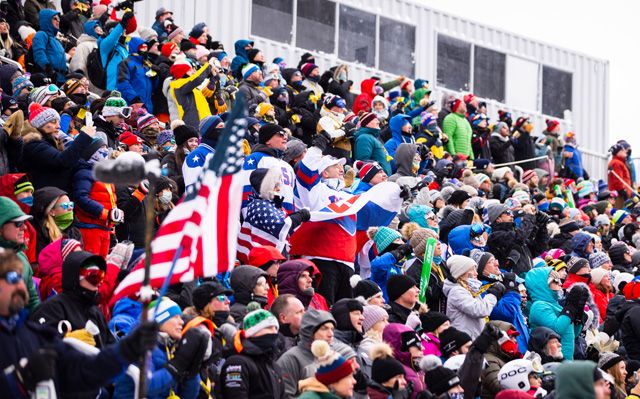
After a flurry of cancellations to start the year, Killington has been given the greenlight to play host once again to the most attended women’s World Cup events on the calendar next weekend. Image: Killington Resort on Facebook
Hello, and welcome to Top Five Fridays, the November 18, 2022 edition! Despite the fact that the FIS season’s gotten off to a terribly slow start, with seven of the first eight scheduled races being canceled due to snow conditions, we’re kicking things off this week with FIS news regardless, as we’ve got some good news finally from the World Tour. First, as we’ve previously mentioned, the women’s circuit is finally underway in Levi, Finland as the venue is set to host a pair of slalom races on the 19th & 20th. One of the hallmark stops on the tour, the winner of the Levi event is “gifted” a Lapland reindeer, resulting in instant holiday vibes and a treasure trove of adorable reindeer pictures. While the reindeer thing is definitely really exciting, the other part of this story that’ll have us on the edge of our seats is the competition between Petra Vlhova and Mikaela Shiffrin. Currently, Vlhova is the reigning champion of Levi, having won each of the last four races over the past two years, as well as a gold medal back in 2017. Hot on her heels however is Shiffrin, who has a combined total of four gold medals at the venue between 2013-2019. Last year, Shiffrin finished second in each race. So, while it’s been a slow start to the season for the women’s division, it’s only resulted in further anticipation for what was already one of the most highly anticipated stops on the calendar. You can bet that we’ll be back next week with a recap of the action. Until then, you can preview the event here.
In other news, while it was a snow making race to the finish line, cold weather and natural snow combined to enable Killington to get approval from Wednesday’s FIS snow control deadline, resulting in a greenlight for the women’s slalom and giant slalom events next weekend. This is huge news as not only does it allow the women’s season to continue without interruption while also keeping the world’s most attended women’s World Cup races on the calendar, but it also allows the U.S. Ski Team to follow through with plans to make this year’s event extra special. Last week, the U.S. Team announced that the Killington stop has officially been renamed the “2022 Heroic Killington Cup presented by Stifel”. We covered the Stifel side of this update a couple of weeks ago, but it’s the addition of the word “Heroic” that brings added importance to this year’s event. ALong with the title change the U.S. Ski Team shared the news that they’ll be launching a new initiative, named Heroic, aimed at increasing the number of women’s coaches on the U.S. Ski and Snowboard Team. Despite the fact that the women’s side of the sport is arguably more prolific in the U.S. than the men’s side, only 25% of the coaches identify as female. As a result, the U.S. Ski Team is leveraging the visibility of the Killington stop to let the world know about their commitment to supporting and developing more female coaches. All in all, it’s pretty cool stuff, and we’re really excited for next week’s event. To learn more about the event itself, click here. To learn more about the newly announced Heroic initiative, click here.
#2: The Little Cottonwood Canyon Gondola Saga Continues as Cost of Lift Rides Comes to Light:
In this report from September 21st, Fox 13 News covers the announcement of possible canyon tolls. While this week's report isn't able to embedded on our website, you can check it on the Fox 13 News YouTube page.
Next up this week is a recurring topic that we’ve discussed several times in the past: the proposed gondola up Utah’s Little Cottonwood Canyon. This week brought a new development in the story, but let’s start by recapping where we left off. The last time we checked in on this story, back at the start of September, the Utah Department of Transportation (UDOT) had made the gondola their official recommendation to solve traffic issues in the canyon. At that time, a 45-day window opened for the public to submit their final comments to be taken into consideration, with a final decision being made sometime this winter, after which will come the challenge of actually securing funds for the project, should UDOT decide to move ahead.
This week, Salt Lake’s Fox News 13 published a bit of investigative journalism which put an overlooked yet highly important metric directly under the microscope: the estimated cost of each ride per rider. In the piece, investigative reporter Nate Carlisle speaks with several people involved with the project in an attempt to determine what the cost of riding the gondola would be for each person using it. To start, he spoke with Craig Heimark, the volunteer town treasurer for Alta. According to Heimark’s calculations, the cost per rider on the gondola would be about $90, assuming the gondola operates consistently at full capacity. With more realistic ridership figures, Heimark estimates the actual cost could be closer to $200 per person per round trip. For an additional reference, back in 2019, the mayor of Alta estimated the cost to be $111 per rider. Either way, it feels safe to say that the cost per rider is safely within the $90-$200 range.
Now, there’s a couple of things to keep in mind here. First, the “cost per rider” metric we’re talking about doesn’t mean that’s what a lift ticket to ride the gondola will cost. Rather, it’s a reference to what it will cost UDOT. To be fair, we don’t exactly know if that figure is being calculated based on construction cost or operating costs as it’s never explicitly stated, but our assumption is that it takes both into account. The second thing to think about is that the lift rides will be subsidized in multiple ways. Based on the news segment, it seems as though all parties are in agreement that the lift ticket will have to be cheaper than the toll for driving up the road in order to encourage use. According to various people associated with the project, the current hope is that the toll for driving up the canyon will be $25-$30 per car, while the lift ticket will be around $17 per rider. Taking Heimark’s best case figure of $90 cost per rider, and the highest ticket prices, we can account for up to $47 of the $90 cost, leaving $43 per rider left to be paid by taxpayers under the best case scenario. Finally, as if it doesn’t feel like this concept is starting to spiral out of control already, other factors such as inflation likely resulting in the project going over budget, skiers and snowboarders being able to save money by carpooling, and the inability to access the backcountry from the gondola all add to the growing number of questions surrounding the concept. Unfortunately, the window of opportunity for the public to submit formal comments was closed on October 17th, giving this project the feeling of a disaster in the making. To learn more about this week’s update, check in with Fox News 13.
#3: As Ski Season Gets Underway, Unsolved Issues Appear to Approach Breaking Point:
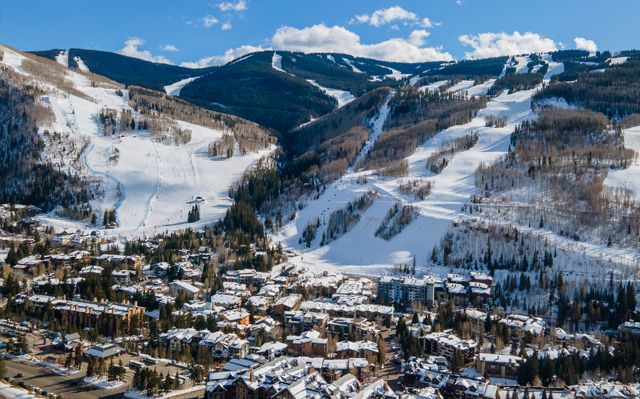
It’s no secret that the town of Vail and surrounding areas have been facing one of the most severe housing shortages in the ski industry, but a report from the Associated Press this week really drives the situation home. Image: Vail Mountain on Facebook
Next up in problematic ski news this week, we want to cover a couple of stories that highlight complex issues plaguing the industry that seem to only grow in intensity by the year: housing and overcrowding. We start that effort by sharing an article from the Associated Press that takes a deeper look into the housing crisis in Vail. Much like our previous highlight, it’s a story we’ve covered numerous times here, but this week’s article takes a deeper dive and really brings the issue home. While the focal point of the article is Vail’s battle to develop an apartment complex to house 160 of its workers, the intensity of the issue is hammered home by a number of supporting anecdotes. Take for instance the story of Karole Denning, a local radio station DJ and chef whose 103 square foot room (not apartment, “room”) costs him $900/month. Or that of Robyn Smith, the local owner of a consulting business whose husband operates a snowcat for the resort. She was lucky enough to win a 22 person lottery, awarding her the right to buy a $525,000, 1,200 square foot home in a deed-restricted subdivision. Two months ago, a similar unit in the same subdivision went up for grabs and 49 people entered the lottery. Elsewhere in the article, we’re reminded yet again of why housing matters, and we can’t simply say, “well, if you can’t find housing, maybe don’t live in a ski town?” Right at the start of the article, we’re told the story of Jenn Bruno, a boutique owner in downtown Vail. As the season gets underway, Bruno has just one employee: a teenager who can commit a few hours a week to working in her shop.
While we’ve heard this story time and time again, what we like about this article from the Associated Press is that it brings the issue home by providing several examples of why housing is such an important issue. Without affordable housing, there aren’t enough people to work the jobs both at the mountain as well as in town. Without staff to support businesses, mountain towns are at risk of losing their appeal as vacation getaways and instead begin the slippery slope towards becoming ghost towns. To learn more about the stories behind the Vail housing crisis, click this link.
The other issue that’s already sounding alarms in this youthful season is the growing concern around congestion. This is an issue that really took off last season as multipasses have lead to the consolidation of not just resorts, but of skiers as well. The result of course are massive lift lines and traffic jams. While many resorts are implementing paid parking plans in an effort to encourage the use of public transportation to alleviate congestion, many observers have also hoped that the market would begin to correct itself this year as skiers and riders begin to spread out again by opting out of multi passes. Early indications from the opening weeks of the season suggest however that this season is likely to be on par with last year. Of course, stories like this one coming out of Utah’s Big Cottonwood Canyon may simply be the result of limited resort access on opening weekend, so we’ll have to wait and see how this plays out. For now, we’re keeping an eye on it as it feels like another issue that hasn’t been solved in the off season. If you’ve already come across massive lines this season, we’d love to hear about it in the comments below.
#4: New Ski Company Hopes to Produce Skis That Offer “Shape Shifting” Properties:
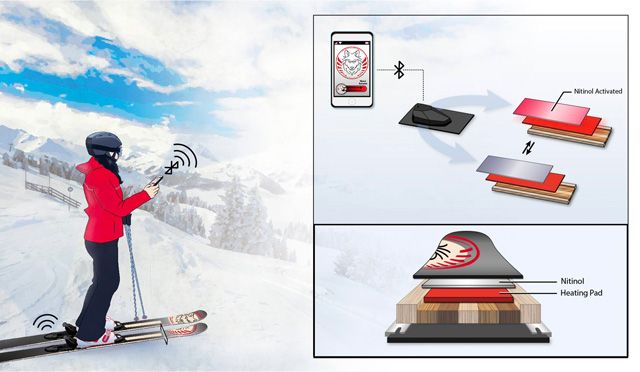
Ever wish you could make your skis a little softer, stiffer, or more rockered based on the day’s conditions? Well, a new ski startup is hopping to make your dreams come true. Image: Verispellis Skis on Facebook
Alright, enough of the heavy talk. Let’s round this week out with a story that got our gears turning. This week, we learned of a new ski startup called Verispellis Skis that has the lofty goal of revolutionizing ski equipment. Their product? A ski whose flex pattern and rocker shape you’ll be able to change by using an app on your phone. We’re admittedly piecing together our knowledge of this product from bite size descriptions found within this Yahoo! Finance article as well as their campaign on Start Engine, but from what we can tell, here’s how it works: Verispellis Skis and Snowboards are built with layers of a material called “Nitinol” in their core. This material is temperature reactive, meaning it can change properties based on whether it’s hot or cold. To make that adjustment possible, the team at Verispellis has added a battery powered heating element to their products which can communicate with an app via bluetooth. As a result, in theory, you could open the app and adjust the stiffness of the ski, as well as “up to 4 inches” of its rocker profile. Simply put, it’s pretty wild stuff.
Now, the company does make some claims in their campaign that we’d question, such as this being the first major tech innovation in skis since the 90’s (does rocker count?), but we’ll look past that considering a majority of their content is currently focused on attracting investors in order to fully develop their vision. Instead, we’ll do what we always do here and ponder the implications. Whether or not Verispellis can fight its way into a crowded ski market, the concept of a ski in which you can adjust the flex pattern and rocker profile from your phone is an incredibly intriguing idea. Obviously there are plenty of questions from manufacturing, durability, sustainability, and even economic standpoints, but the basic idea here is actually pretty simple: using your phone to control the temperature of a material within your skis to adjust the ski’s personality. While we don’t think this could ever truly produce a one ski quiver as the horizontal dimensions of skis matter just as much as its vertical properties, it’s cool to think about how brands could bring more versatility to their skis by giving users the ability to adjust flex patterns and rocker shapes. At the moment this brand and concept are both very young, but we’re very interested to see how they progress, and whether or not any more established brands attempt to mimic the concept. For now, know what we know by checking out this article from Yahoo! Finance, or by visiting the Verispellis Start Engine campaign, where you can become an investor in the company should you desire.