

Top Five Fridays: October 4, 2024
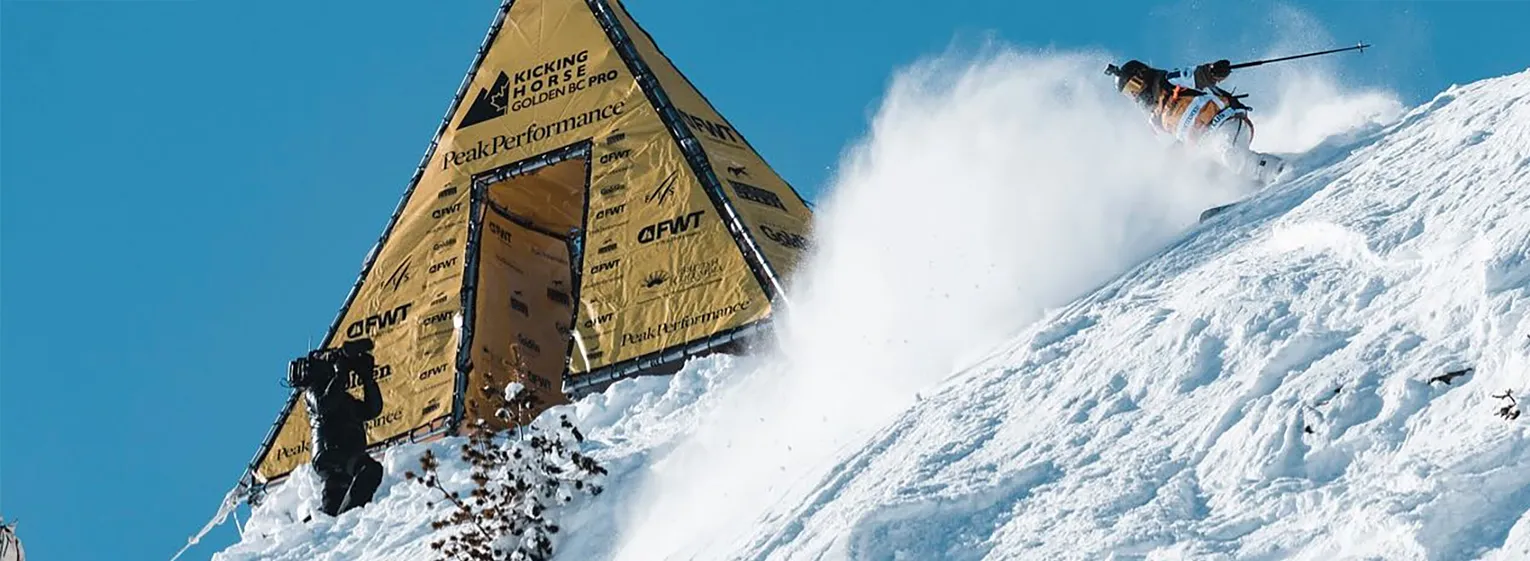
This week, the Freeride World Tour shared their official 2025 schedule, and with it came the announcement of a 6th venue. More details below! Image: Freeride World Tour on Facebook
#1: The FIS and UN Have Signed a Momentous Agreement in an Effort to Highlight and Combat Climate Change:
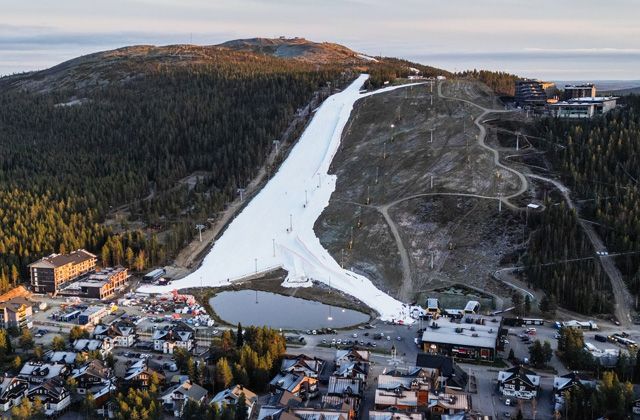
The scene at Levi, Finland last November. While Levi was able to host the two World Cup slalom races that were scheduled, the early part of last year’s FIS World Cup Calendar was littered with cancellations due to poor snow conditions. Image: Levi Ski Resort on Facebook
Hello, and welcome to Top Five Fridays, the October 4, 2024 edition! This week we’ve got a double-topic doubleheader for you, as we start things off with two pieces of news from the world of competitive skiing, and follow it up with two highlights on the theme of ski resorts. After that, we’ll share yet another solid round of ski edits as we’ve officially made it to the time of year when everyone shares last season’s projects in a collective effort to generate preseason hype. Sound good? Great! Then let’s get started.
Our first topic of discussion this week is a story that garnered significant attention from media outlets across the world: the FIS and the United Nations have formed a partnership in an effort to raise awareness of climate change. Here on Top Five Fridays, we’ve long taken note of the fact that the ski industry is in a unique position in regards to climate change, as it’s an industry that’s both one of the first to feel the impacts, as well as an industry that’s chock full of money and influential participants. This week, that dynamic made itself known as it was announced that the UN’s World Meteorological Organization (WMO) has signed its first ever agreement with a sports league. Under this agreement, which is technically a Memorandum of Understanding, the two organizations have agreed, “to work together to highlight the far-reaching impacts of rising global temperatures on snow and ice cover and to establish practical initiatives to strengthen scientific and sporting dialogue.” In other words, the partnership will likely pair scientific data with real world impacts on winter tourism, presenting the shared information to a variety of audiences in a variety of ways.
Kicking off the inaugural year of the partnership, the two parties will host a webinar on November 7th for all 137 FIS member nations, as well as event organizers and venue managers. In this webinar, information will be shared regarding climate change’s impact on snow and ice sports, as well as advanced forecasting tools that can be used to optimize snow management at ski resorts. It’s our hope that the forecasting portion of this presentation is ultimately used to improve scheduling of FIS events in an effort to prevent the volume of cancellations that we’ve seen in recent years. All told, this announcement is a positive development from an organization that has faced criticism for its lack of involvement in combating climate change in recent years, but one that’s well positioned to be a leader for the cause. To learn more about this week’s news, check out the press release from the FIS.
#2: The 2025 Freeride World Tour Calendar Has Been Announced, and Along With it, a New Stop:
Next up in competitive ski news is the full calendar announcement for the 2025 Freeride World Tour season! Earlier this week, the FWT posted a video on YouTube sharing the calendar for this year’s events. Compared to last year, it’s pretty similar, albeit with one significant change: the addition of a stop in Val Thorens, France, scheduled from January 27 - February 1st. While the additional stop on the tour is seemingly straightforward, it does raise some additional questions and considerations, which we’ll circle back to shortly. Before we do though, let’s take a look at the full schedule.
Prior to the stop in Val Thorens, Baqueira Beret in Spain is set to be the first stop of this year’s tour, with a weather window from January 18 - 23rd. From there, after the stop in Val Thorens, athletes will travel back to Kicking Horse, BC from February 7 - 13th. After the brief stint in North America, the tour heads back to Europe for its fourth stop, in Georgia from February 23 - March 1st, before heading to Fieberbrunn from March 8 - 13th. Finally, as always, the tour will conclude with a final stop at the ever intimidating Bec de Roses, in Verbier, Switzerland, from March 22 - 30th. Compared to last season, the calendar is pretty similar, with the only significant change being the addition of Val Thorens. To make room for that stop, the dates for Baqueira Beret have been shifted one week earlier while Val Thorens takes the space that Baqueira Beret held on last years’ schedule. In other words, the tour is set to start one week earlier this year.
Keeping all of that in mind, let’s get back to Val Thorens. The first part of this update that strikes us as interesting is the fact that this year’s schedule appears to feature the most events ever for an FWT calendar. (Editor’s note: the website does show 6 events in 2018, although one is labeled as a 4 start, so we believe it’s a simple display error). That of course leads us to ask, “why? What’s the reason for the increased number of events?” The two answers we can surmise are that it’s either a reaction to cancellations in recent years and a way for the tour to ensure that at least five events will be held, or it’s part of an effort by the FIS to bolster the sport of Freeride. As it works towards the sport’s inclusion in the Olympics, it would make sense for the FIS to increase the number of events in order to increase both overall interest and viewership. While we don’t know the true answer for the added event, we can say with absolute certainty that we’re here for it.
The other questions we have as a result of this announcement are in regards to how the additional event will change the qualification process for finals, if at all. In recent years, we’ve seen a shift in format where the first three events are treated as qualifying events, while the final two stops of the season are considered finals and feature a reduced field of athletes. As a result of the reduced field, the second to last stop, Fieberbrunn, has also moved to a two-run format. The question now is, with an additional event, when will the cut off for finals happen? It’s our guess that it will happen after the fourth event rather than the third, creating slightly more room for error across the first four stops. Whether that’s the official format, or if any other changes will be made, has yet to be seen. When further news comes our way though, you can bet we’ll be here to share it. For now, you can learn more about this week’s news directly from the Freeride World Tour.
#3: Vail Resorts Announces a Two-Year Transformation Plan in an Effort to Reduce Costs and Appease Investors:
While it remains a longshot, the local effort to buy Mt. Bachelor continues to hit new milestones, making the movement more powerful by the day. Image: Mt. Bachelor Community Inc. Official Website
Switching over to the second half of our doubleheader this week, we’re turning our attention from competitive ski news to the world of ski resorts, where we start by sharing some interesting news coming out of Vail Resorts. Late last week, Vail Resorts issued a press release that slipped under our radar, announcing a new two year Resource Efficiency Transformation Plan. Ultimately what this plan is, in layman’s terms, is a round of layoffs primarily at the corporate level, and a consolidation of operations. At the moment, it’s unclear as to how concerning this news should be as there are two ways to look at the announcement: the narrative that Vail shared by way of their press release, and the narrative that those outside of the companies can’t help but wonder about. Realizing that we’re beginning to sound a bit vague, let’s jump into the story.
In Vail’s press release last week, the company starts by summarizing their recent explosive expansion: growing from 10 resorts to 42 resorts across 4 countries, and a doubling of the company’s workforce. In the words of Vail, along with the resorts themselves, “the company captured initial acquisition synergies in corporate support functions and through technology integrations.” Or, to put it more clearly, when Vail acquired each resort, they also retained managerial level staff and technological infrastructure (presumably such as websites, payment systems, rental and inventory management systems, etc.) from each resort. While these supplemental acquisitions have helped Vail continue to operate each of these resorts, the company now finds itself in a place where, after ten years of rapid expansion, both its web of employees and technologies have become overly complex and financially inefficient. As a result they’re introducing their two year Resource Efficiency Transformation Plan, which aims to make the entire Vail ecosystem more efficient. By laying off 14% of its corporate workforce and 2% of its total workforce, as well as consolidating its technologies and operations, the company hopes to achieve approximately $100 million in cost savings per year, starting in 2026. That’s the Vail version of the story.
The other side of the story is that of the outside perspective, where investors and spectators alike are taking note of Vail’s recent financial trends. Back in December of 2023, Vail told investors that they should expect EBITDA (earnings before interest, taxes, depreciation, and amortization - a concept similar to net profits) to hit up to $968 million for the 2024 fiscal year. A month later, in January, that number was reduced to $912 million. In March it became $849 - $885 million, and in June it dropped again to become $825 - $843 million. By that time, as you can imagine, stock prices were also plummeting, sending shares of MTN all the way down to $167.58 - a far cry from its peak of $373.13 back on November 1, 2021. Ultimately, when last year was all said and done, 2024’s EBITDA came to $825.1 million and stock prices stabilized.
And that, more or less, is where things stand today. After a tumultuous financial year, Vail has found stable footing for the moment and has used it to announce a two year plan that they expect will increase profits by about $100 million each year. Applied to last year’s numbers, that would’ve taken the $825.1 million EBITDA to $925.1, presumably making investors happy. For Vail’s part, the strategy makes sense. It’s easy to understand how a company of their magnitude, who grew so rapidly through acquisitions, could have accrued a significant amount of inefficiencies. For investors though, the plan seems like something of a bandaid, as Vail will have to prove this season that operational inefficiencies aren’t their only problem. To learn more about this story, we recommend reading Vail’s press release here, as well as the Vail Daily’s coverage of it, here.
#4: It’s Official: Killington is Now in the Hands of Local Investors, Who Happen to Have Big Plans”:
Finally, we want to round out this week with an update from Killington, where a successful transfer of ownership, a number of new upgrades, and a refreshed vision for the future of the resort have just been announced. Coming to us by way of a press release accompanied by a short video, we’re excited to share the news that Killington is now officially owned by the Killington Independence Group - a group of investors who were able to purchase full equity resort in full without the need to take on any debt. Not only that, but along with the purchase being made official, the group also shared the news that they’ve raised an additional $30 million with which they plan to invest into the resort within the next 12-16 months. Amongst those planned upgrades are the full replacement of the Superstar lift, upgrades to the Skyeship gondola cabins and barn, and the implementation of 1,000 new low energy snowguns.
Perhaps the most exciting aspect about the latest updates from Killington though, is the vision for the future. As we all know, the biggest storyline with the Killington purchase is that the resort has returned to independence, being owned by local investors. This week, we learned two additional anecdotes that add to the value of that story. First, we learned that POWDR Corp has actually retained involvement in the resort, acting as a member in the investment group. When this story first broke, one of the subplots was the fact that POWDR appeared to be reducing its role in the ski industry in favor of National Parks contracts. While that remains true, their shift from owner to investor in Killington not only makes good business sense, but it also should provide some stability for Killington’s new owners, should they need it. With that additional piece of knowledge, we can’t help but think about the community effort to buy Mt. Bachelor, and wonder if a similar agreement could be forged there as well.
The second exciting anecdote from the press release is that the new investment group’s goal is to reinvest all of the profits earned by the resort in the next ten years, back into the mountain. That’s a pretty remarkable statement as it suggests that the new owners aren’t seeing the purchase as a way to earn a quick buck, but instead intend on truly committing to the long term well being of the resort. That, combined with the development plans surrounding the base area of the resort, have us feeling like the future of Killington is as bright as ever.
All in all, this week’s news from Killington is resoundingly positive, as it seems like the resort’s new ownership is doing and saying all the right things so far. To learn more about this week’s announcements, check out the press release from Killington.