2027 Faction Dancer 89 Ti, 99 Ti, 99 Introductions and First Impressions
At a Glance:
2027 Faction Dancer 89 Ti

| AVAILABLE SIZES | TURN RADIUS | SIDECUT | WEIGHT | PRICE |
|---|---|---|---|---|
| 153, 159, 166, 173, 179, 185 cm | 17m @ 173 cm | 126 / 89 / 115 mm | 1700g @ 173 cm | $829 |
2027 Faction Dancer 99 Ti

| AVAILABLE SIZES | TURN RADIUS | SIDECUT | WEIGHT | PRICE |
|---|---|---|---|---|
| 164, 171, 177, 183, 188 cm | 18 m @ 177 cm | 132 / 99 / 123 mm | 1890 g @ 177 cm | $879 |
2027 Faction Dancer 99

| AVAILABLE SIZES | TURN RADIUS | SIDECUT | WEIGHT | PRICE |
|---|---|---|---|---|
| 164, 171, 177, 183, 188 | 18 m @ 177 cm | 132 / 99 / 123 | 1840 g @ 177 cm | $829 |
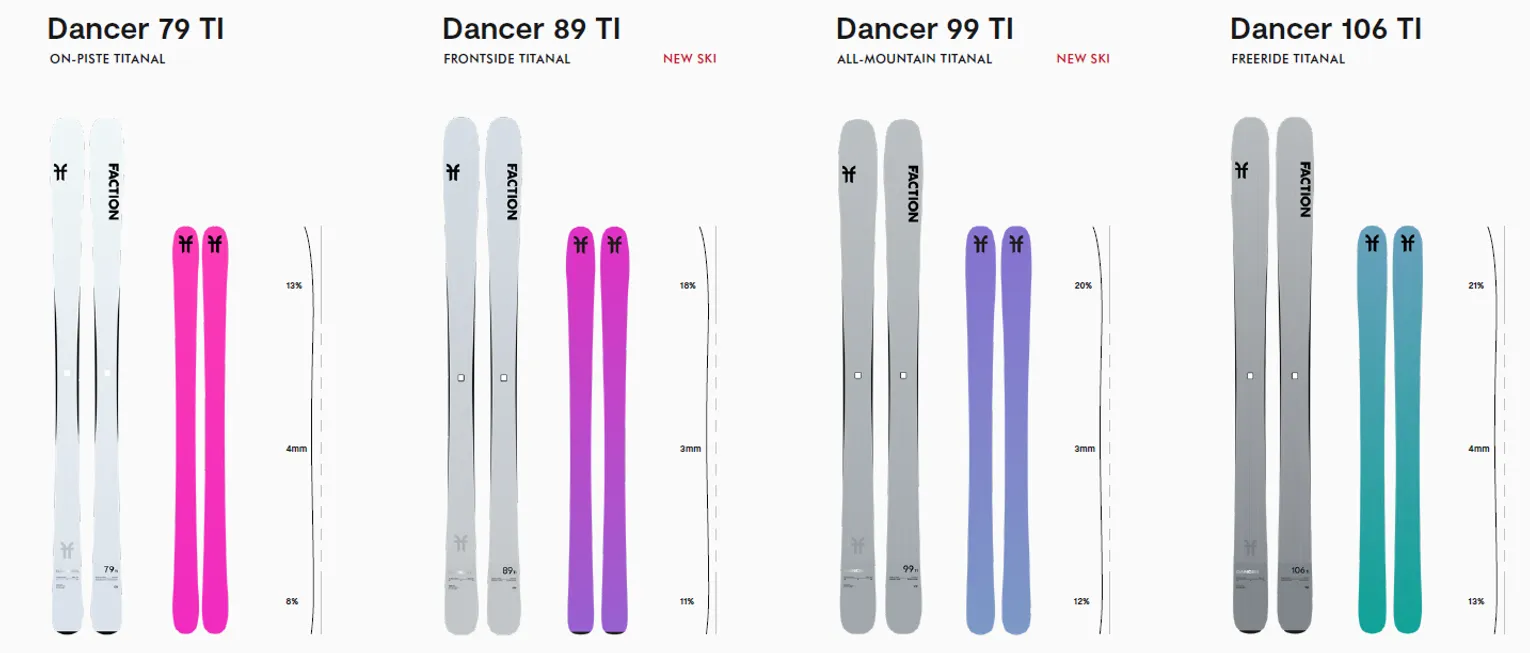
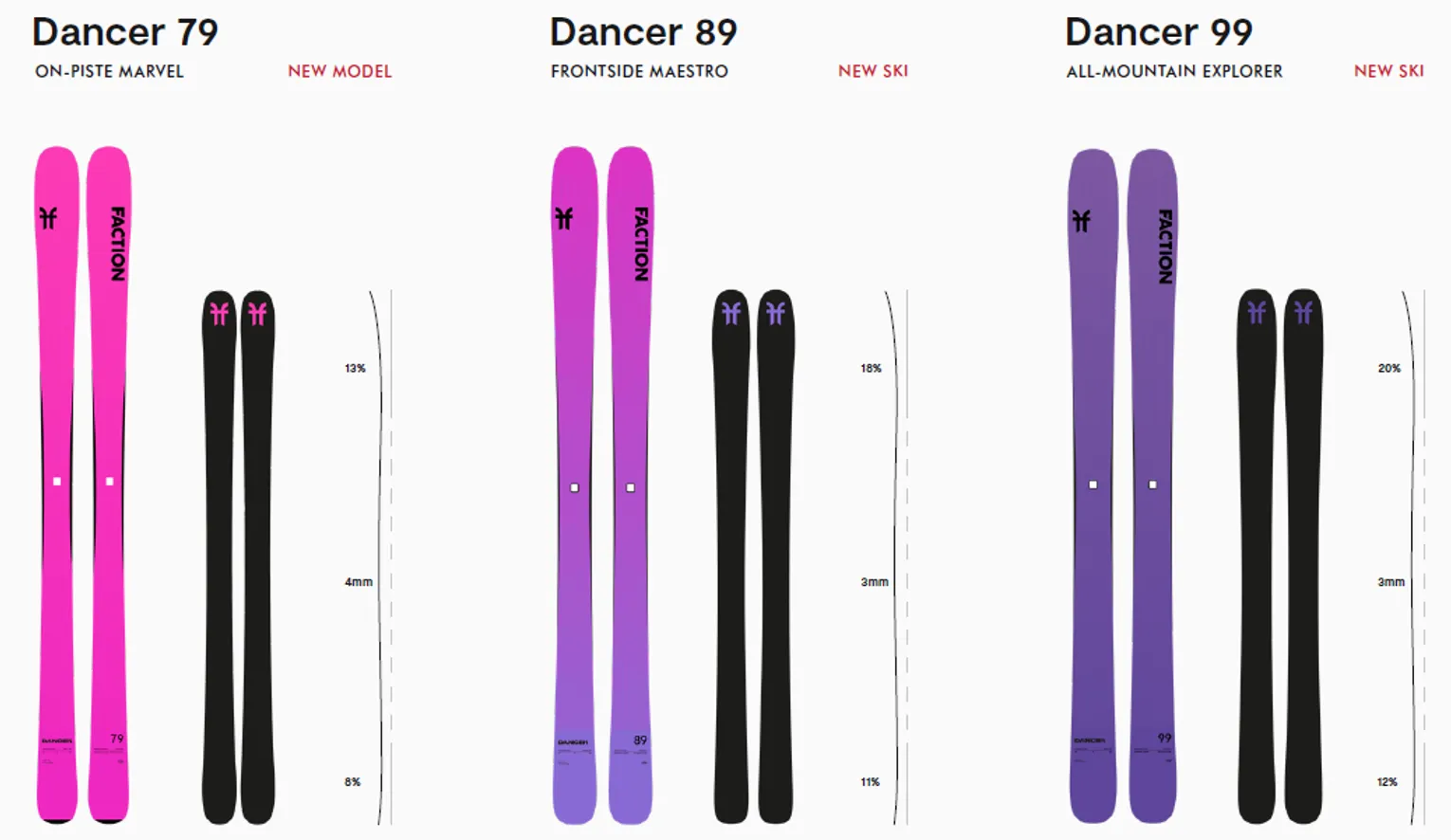
For 2027, Faction has a whole new Dancer lineup for your all-mountain carving needs. The lone carryover is the Dancer 79, which we really enjoyed at the end of last season. The rest are new, and employ much of the same construction techniques as the outgoing models, but in different shapes. Additionally, most Dancers now have a Ti and a non-Ti version, so we’ll do our best to keep the names with the appropriate skis. While the performance portion of this article and video is based primarily around the 89 Ti, 99, and 99 Ti models, we’ll touch on them all as we round out this impressive new line from Faction.
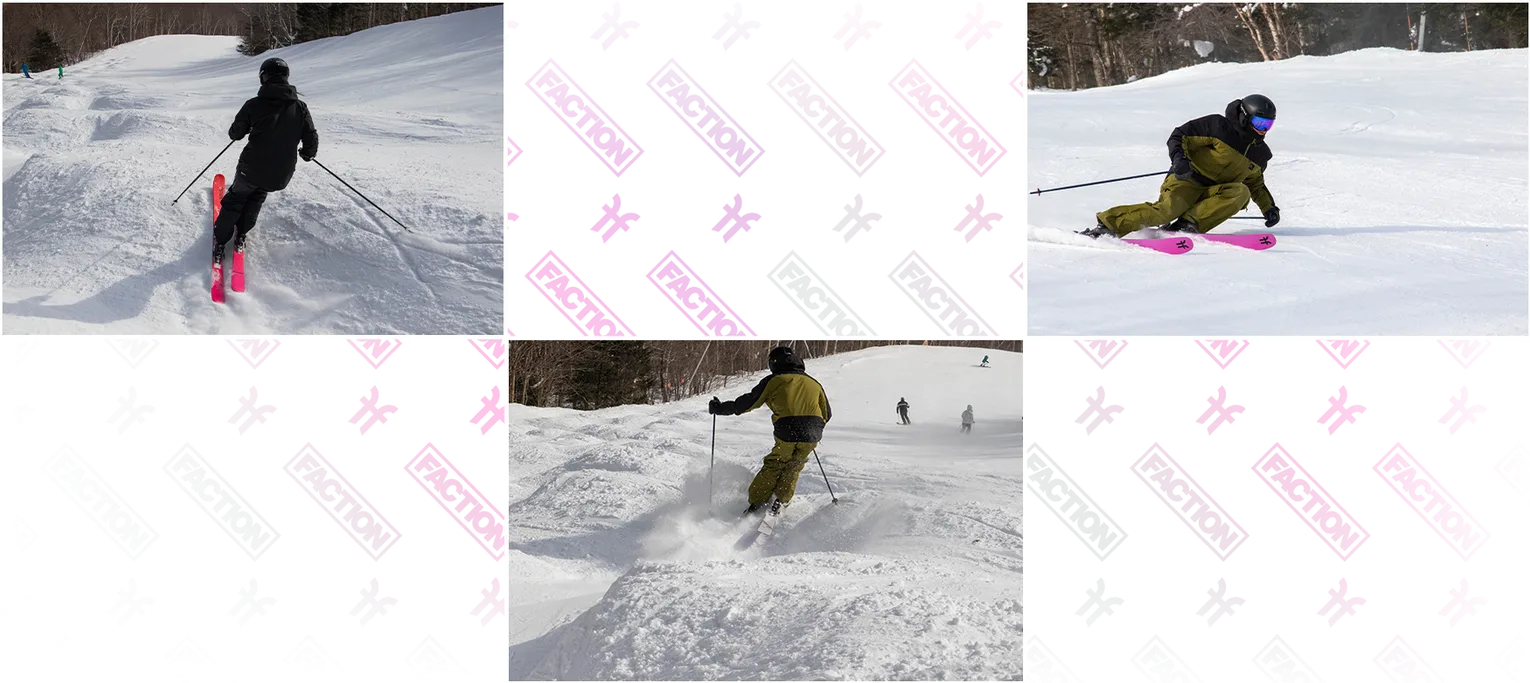
Starting with the narrow ones, the Dancer starts at 79, goes to 89, then to 99. These three widths are offered in Ti and non-Ti versions. The 106 Ti is the only one that doesn’t have a non-Ti counterpart. From a construction perspective, the Ti models use a full poplar wood core and two razor-thin laminates of metal. When you move to the non-Ti skis, all you lose is the metal. Removing the titanal takes roughly 80 grams off the weight, so the 89 goes from 1750 to 1830 g/ski in the 179 cm length. This construction is not new for Faction or Dancer, but now with multiple options at pretty much every length, there’s going to be a Dancer for everyone. The flex of the skis are not overbearing, and especially in the non-Ti skis, they are easier to bend into the turns. The Ti versions are a bit stiffer, and certainly more noticeable when it comes to off-piste skiing like bumps and trees.
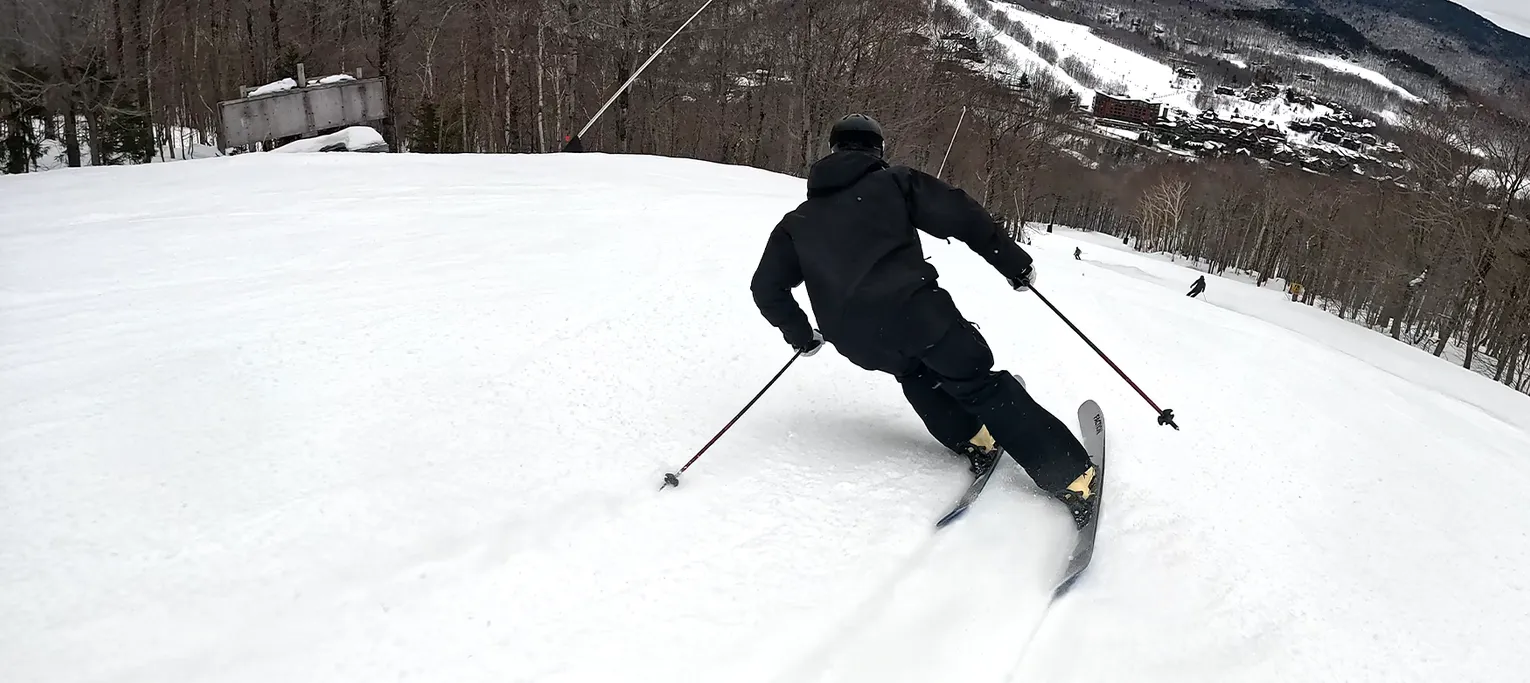
The new shaping, and naming for that matter, make more sense than the previous models. Now the name refers to the waist width and the overall intent of the ski. The 79 is for hardpack while the 106 allows for deeper and softer snow without missing out on wide carving ski fun. Each width in between has its own merits and limitations. Adding a non-Ti option really opens the versatility for the entire lineup. All skis operate on a similar chassis in terms of turn radius, with our test lengths all hovering around 18-meters. We see slight increases in rocker length as we go wider, but overall, the profile is quite similar from narrow to wide. All of the new models follow in the footsteps of the 79, which was introduced last year (this year) and has a bit more of a freeride/all-mountain flair than straight up frontside, which most skis at 79 mm find themselves to be. That philosophy carries through this line, and it’s interesting how it evens out in the 89 and 99, specifically.
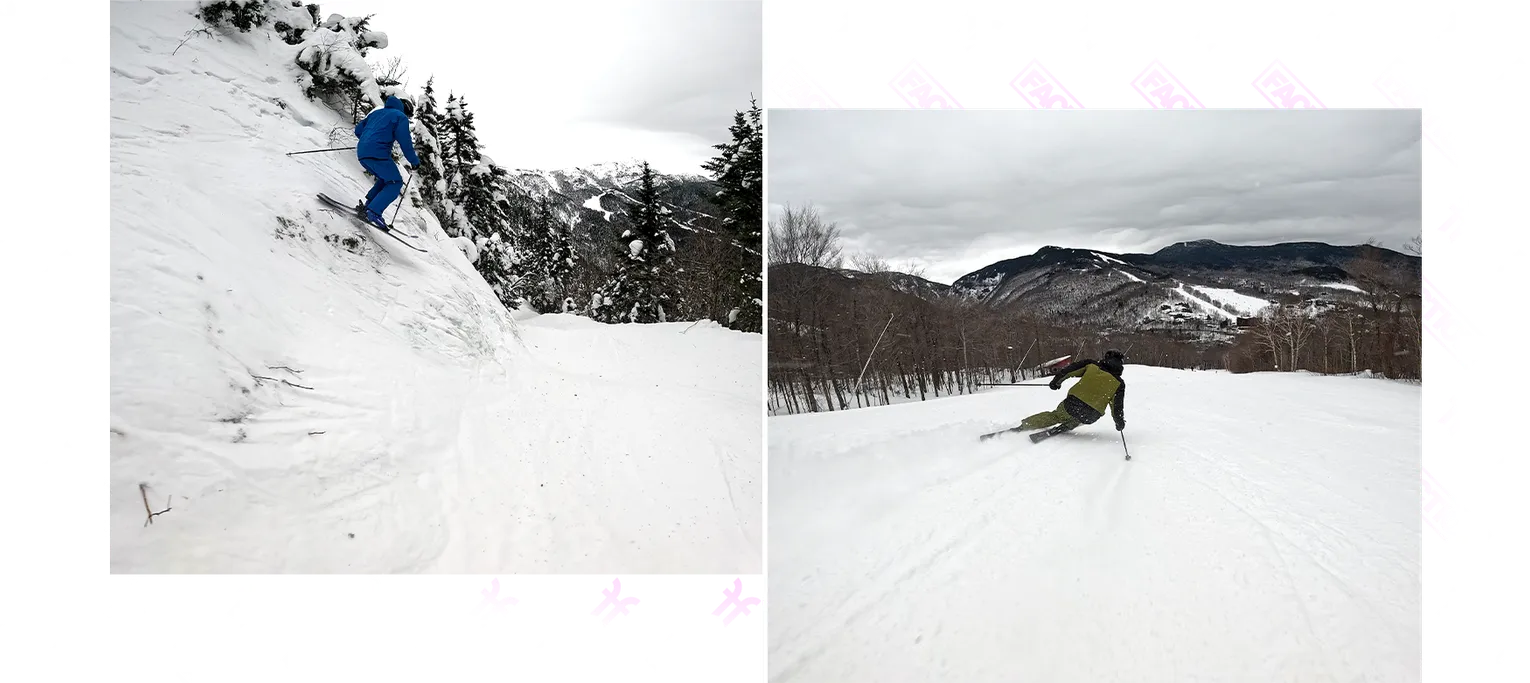
Starting with the 89 Ti, this is a Bob ski straight up. I really enjoyed my time on this, and I’m not terribly surprised. The 79 was a nice surprise last year and the 89 simply continues that with an extra level of width, stability, and versatility. Compared to other skis in this range, and we can include Mantras, Enforcers, and Anomalies in this conversation, the Dancer is a bit of a step below, but that doesn’t mean it’s short on fun. You can make all sorts of turn shapes and styles in this ski, from railing long radius arcs to short swing skids. On-trail, it’s about all you could ask for in an all-mountain ski, and off-trail, it’s easy to use, has an easy pivot in bumps and trees, and a nice moderate flex to absorb crud and chop. Overall, this is a relatively easy to use ski but has a very high end ceiling. Compared to the wider 99 Ti, there’s certainly more of a quick and agile nature to the 89 Ti, and the extra width does add more power and security, but the 99 Ti is harder to get up on the same edge angle and it does feel notably slower from edge to edge. The non-Ti 99 has a lot of the same quickness as this 89 Ti—more so than the 99 Ti for sure, but doesn’t quite have the crispness and power of the metal-clad 89. The 99 non-Ti is pretty easy when it comes to bumps and trees, and does carve a clean and sharp turn, but doesn’t like to be pushed quite as much as the 89. I could see many skiers choosing this 89 Ti as a daily ski because it does live between the realms of hard-charging carving and fun and agile versatility.
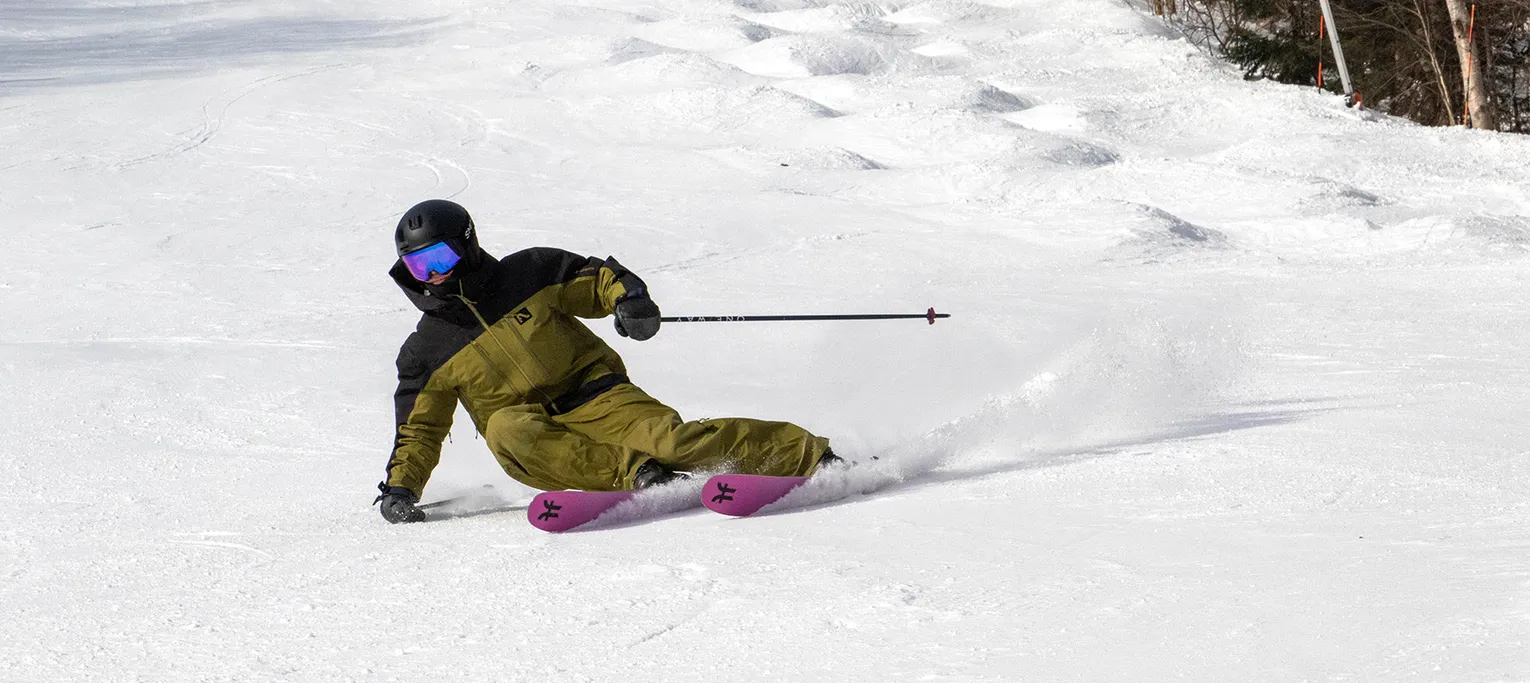
Jeff here! To be completely honest, I enjoyed skiing all these new Dancer skis. I think, from an overarching perspective, they are objectively good all-mountain skis (or I suppose freeride for the new 106 Ti). As Bob mentioned, they might not hit the level of power or precision as some existing skis on the market, but especially the Ti models have quite a lot of performance, while also having a significant fun factor. It feels to me like they really nailed the shapes for high performance all-mountain skis. Grip when you need it, but not completely locked in. The 89 Ti really impressed me with its blend of quickness and strength. It wiggles through bumps super easily and can lay down some impressive turns. The 99 Ti surprised me with its power. Adding 10 mm of material throughout the ski added a lot more composure than I thought, but for me, also took away some quickness. I also skied it on the 8th run of the day, so my legs were a bit tired by that point.
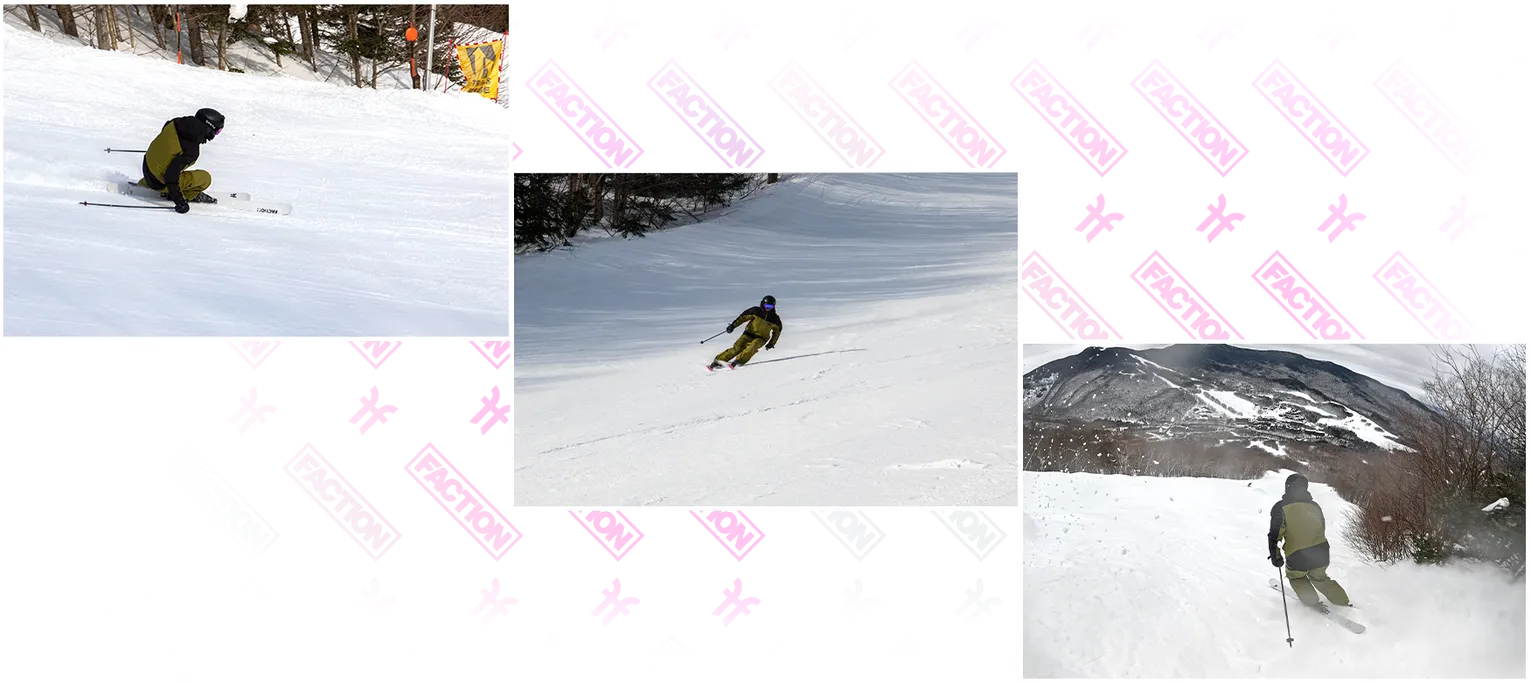
The 9th run of the day during this process, I was on the Dancer 99 (non-Ti). While it lacks some power in the carving department and certainly doesn’t have the vibration damping found in the Ti models, it is an exceptionally useful, fun, and versatile ski. It has the quickness of the 89 Ti, but a little more forgiveness both from the extra width (if you’re in variable conditions) and from the flex pattern. The tips and tails feel softer, which let you play with the terrain more easily and also allow for some mistakes without punishing you. It kind of felt like I was on a twin tip, just emotionally and through how I was skiing, which for me is really fun. I think a directional skier who doesn’t need a twin tip, but still wants a versatile, playful, highly capable ski will be quite pleased with this new Dancer 99.
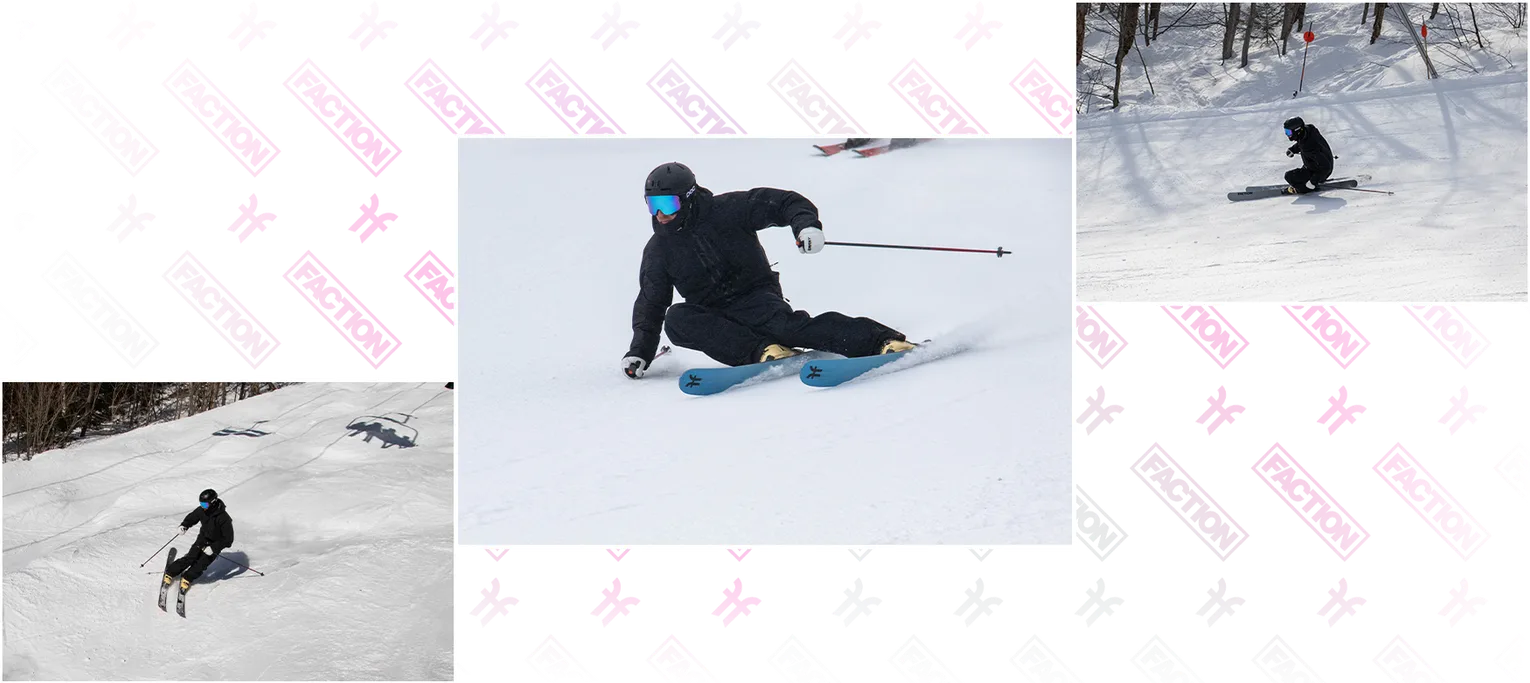
The 99 Ti is the ski that I would grab for if I had a choice between the 89 Ti, 99, and 99 Ti on a given day, simply because of my stylistic preferences. It’s wide but not too wide, stout, stable, and has a versatile shape. It was quickly apparent that these 99 Ti’s wanted to be pushed hard and rewarded creative freeride maneuvers with some carving in between. There is enough rocker and taper to put them sideways and smear turns when off groomed terrain, but then if you want to send it into a carve, tip them over and they absolutely rip. I kept thinking that the 99 Ti is like a more freeride feeling, more forgiving and playful Enforcer 99. There isn’t quite as much dampness or power, but the maneuverability ticks up a lot with Dancer 99 Ti in comparison. On steep pitched carves, I did not have any issues with edge grip as I felt fully confident putting all of my power into each turn. There wasn’t a ton of energy out of the turn, but they liked to have you apply consistent and even power throughout the turn so that you can feel the full load of g-forces throughout. Very cool. Moving to the 99 non-Ti, you notice the lack of metal right away with less dampness and smoothness, but you receive a more mobile and faster feel. The edge-to-edge transitions speed up, and you can get more playful and slashy while the 99 Ti takes a little longer to be playful. Due to the dense core, there is still some decent edge hold and carving performance here, but you don’t get the same confidence and smoothness as the Ti version, which is expected. The 99 is more creative in its encouragement while the 99 Ti desires more intensity. Moving to the 89 Ti, it is lightly quick in its transitions and is happy to switch up turn shapes at the drop of a hat. For an 89 mm underfoot ski, it is supremely versatile. When skied flat, they can pivot easily, which is a huge help in the bumps and trees, but once out on trail you can link together longer gs-style turns with more short swing turns in sequence with ease. Very intuitive, you don’t need to think about your next move all that much. To bring it back to the 99 Ti, I can see many skiers with a similar style to me picking them up as their daily driver.