2025 Dynastar M-Tour 100

- Recommended terrain
- Touring, Powder, All-Mountain
- Ability level
- Advanced, Expert
- Rocker profile
- Rocker/Camber
- Construction
- Paulownia Wood Core, PU, Sintered Base
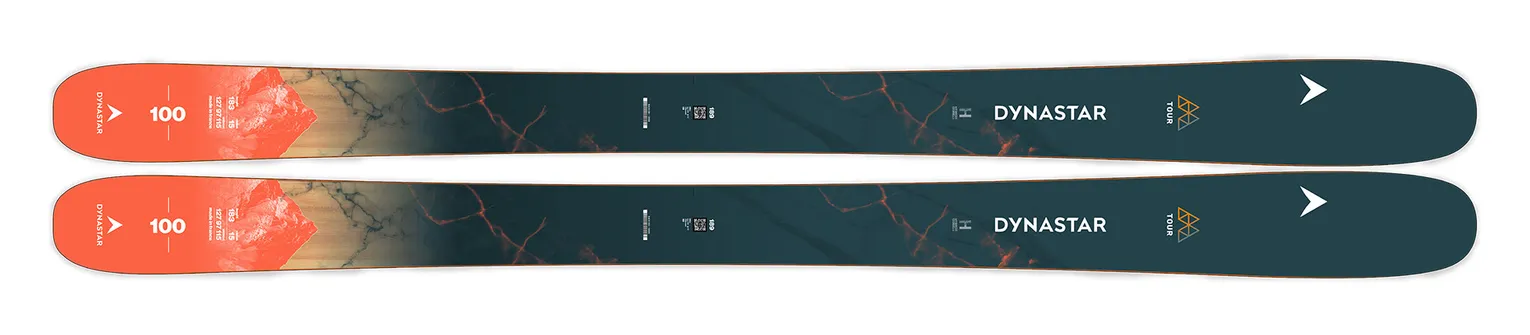
For 2025, the Dynastar touring world gets a bit brighter and more modern. They’ve done a great job over the years at simply looking out the window in Chamonix and wondering what ski would work well getting from the bottom to the top, and then back to the bottom. The M-Tour series has answered that query with force and vigor. While we have seen the M-Tour 99 operate in the ~100 realm for their needs over the past few years, the new shape and style of the M-Pro 100 is now filtering into the M-Tour world. As a result, we get a new touring ski for 2025, the M-Tour 100 F-Team.
Built with a very similar technique to the 99, the shaping, profiling, and sizing are the bigger difference makers here. These new 100’s use a blend of paulownia and polyurethane to make the skis both light and smooth. Paulownia is often used in touring skis because of its lightweight properties. At the same time, we’re always amazed at how stiff and responsive this wood can be. If you use it in a bit thicker of a profile, it makes the skis very strong and sturdy without being heavy. The PU layers along the sides add to the smoothness and silence of the ski and allow for a wonderful feel in all sorts of conditions and terrain. Dynastar also uses basalt into the mix to absorb more energy. In the 178, we’re seeing a stated weight of 1350 grams per ski, which is pretty darn light for something of this shape.
By using the same mold as the new M-Pro 100 Ti, the M-Tour 100 has a strong alpine base on which to start. The skis are a bit wider in the tips and tails than they used to be, and this creates a slightly shorter turn radius. This is the bigger difference for these new skis versus their predecessors. In that 178, the turn radius hits 17-meters, down from 20 in the previous version. That’s a significant drop and makes the ski a lot more turny and carvy than it was before. There’s also more of a traditional rocker profile here, as the ski loses the long and dramatic tip shape of yesteryear and brings in a more modest bend. This makes the ski feel a bit less unique, which we think will add to its overall appeal to a wider range of skier.
This is still very much a touring-specific model that’s built and shaped to tackle adventurous terrain with confidence and poise. As such, skiers do have to know what they’re looking for and getting into here. There’s not a lot of hybrid/resort application as these skis are made more for pure backcountry and adventure. That’s fine, because they are a specific tool for a specific job.
Explore More