

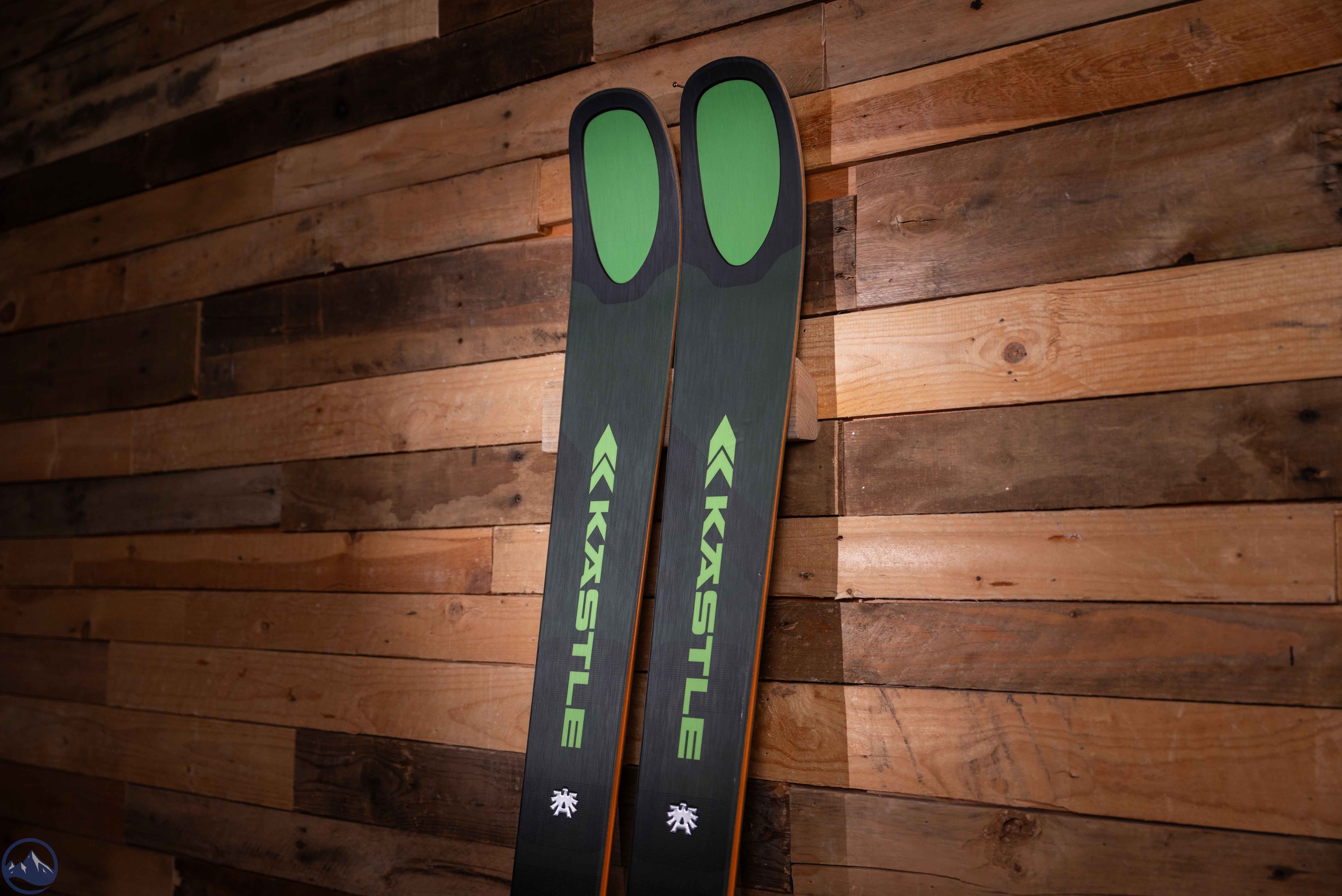
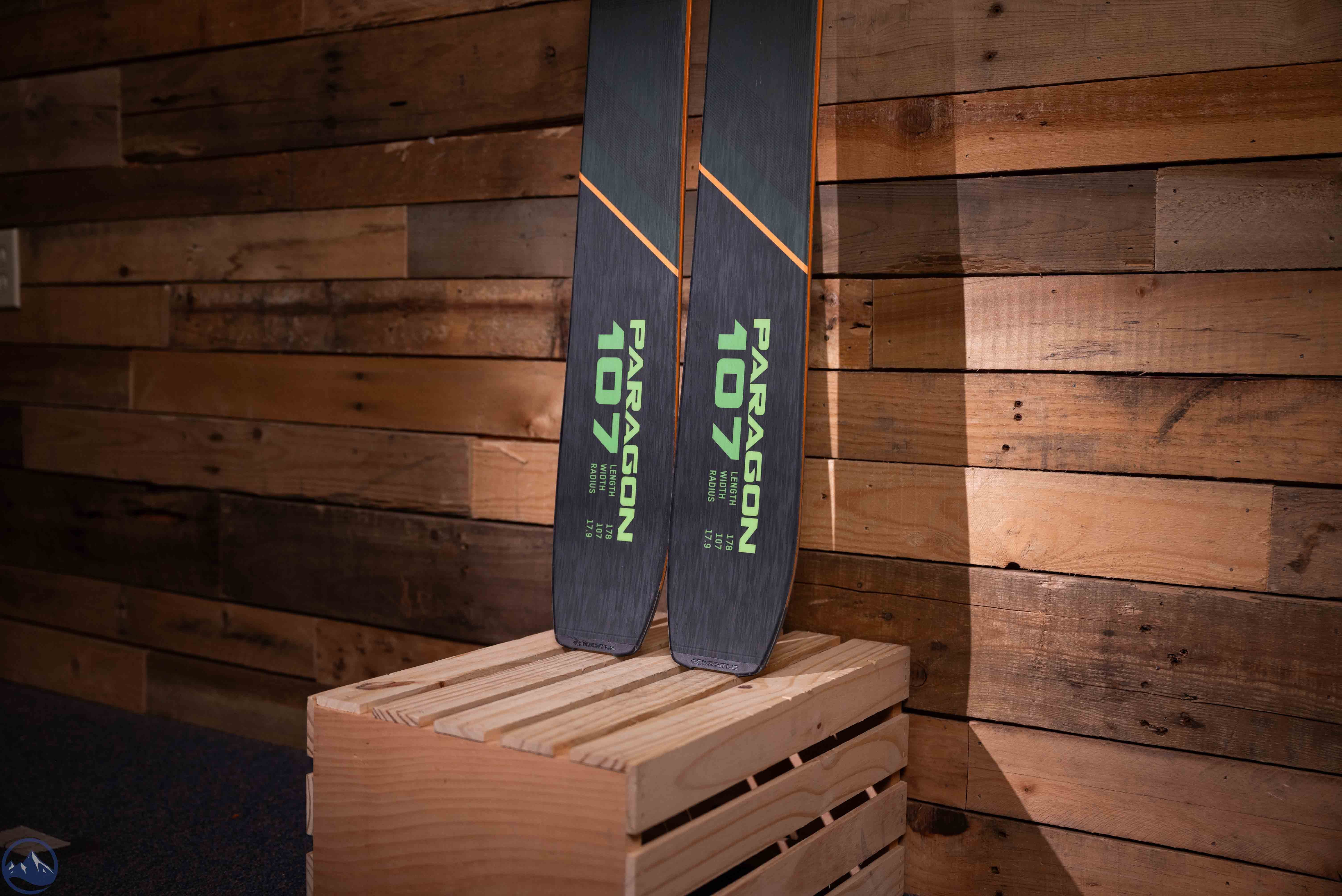
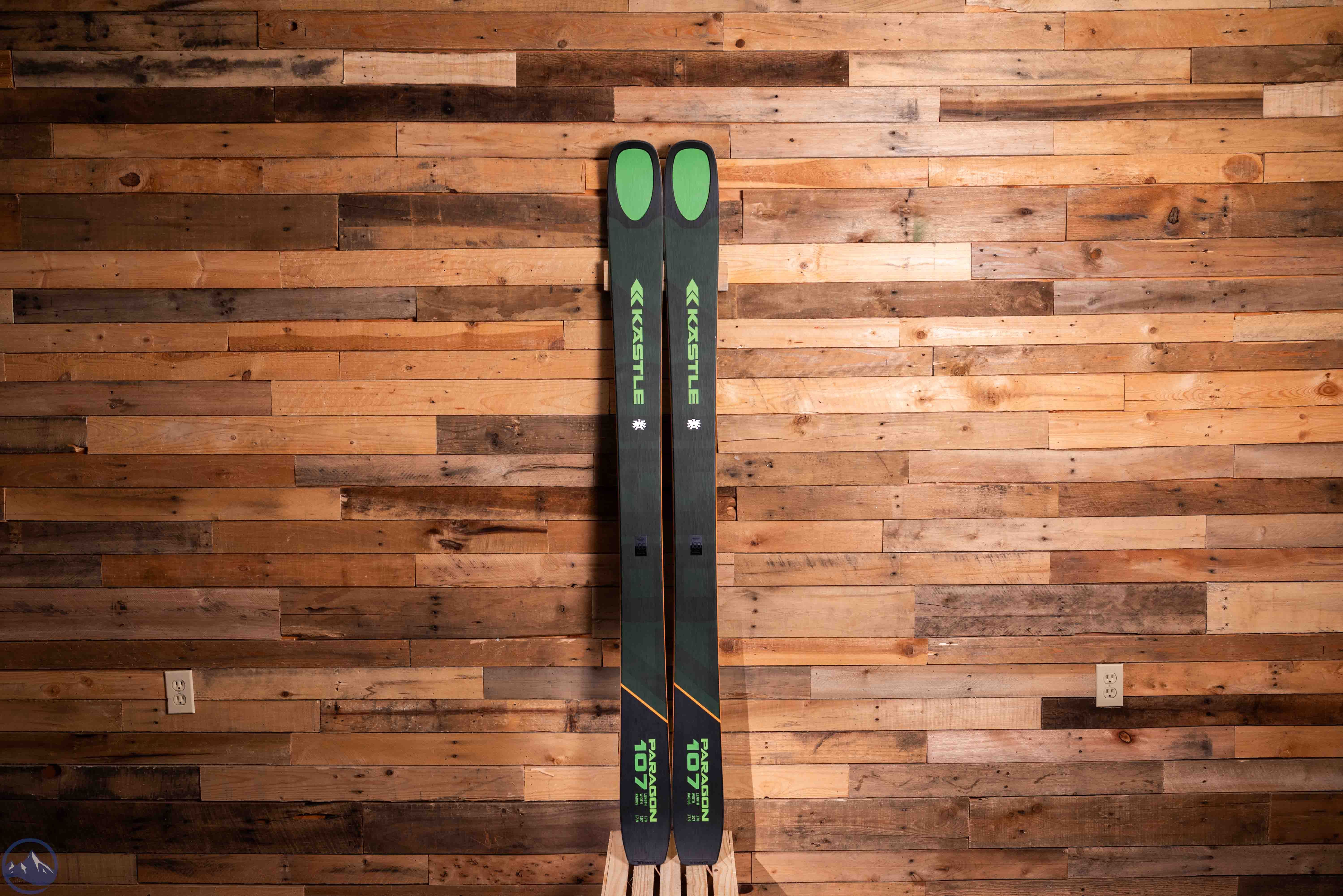
2026 Kastle Paragon 107



As a carryover model for this year, the 2026 Kastle Paragon 107 is an absolute rocket ship of a ski. As the widest of the Paragon line, it’s the floatiest, obviously, but it’s also the hardest charging. Versus the totally capable 101, the 107 is just more stable, stouter, and more amenable to higher speeds and longer turns. You could argue that the skis have a limit in the shorter turning and slower speed zones, but that’s not what they’re built or designed for. This mixing of attributes pays dividends out there on the hill, mixing stability and power with flotation and versatility. At the end of the day, this ski is happier at speed and driven rather aggressively. When done properly, skilled skiers can unlock playfulness and creativity. Unfazed in any terrain or snow conditions, this ski is a total freeride weapon.
- Recommended terrain
- All-Mountain, Big Mountain, Freeride
- Ability level
- Advanced, Expert
- Rocker profile
- Rocker/Camber/Rocker
- Construction
- Poplar/Beech Wood Core, Titanal, Fiberglass
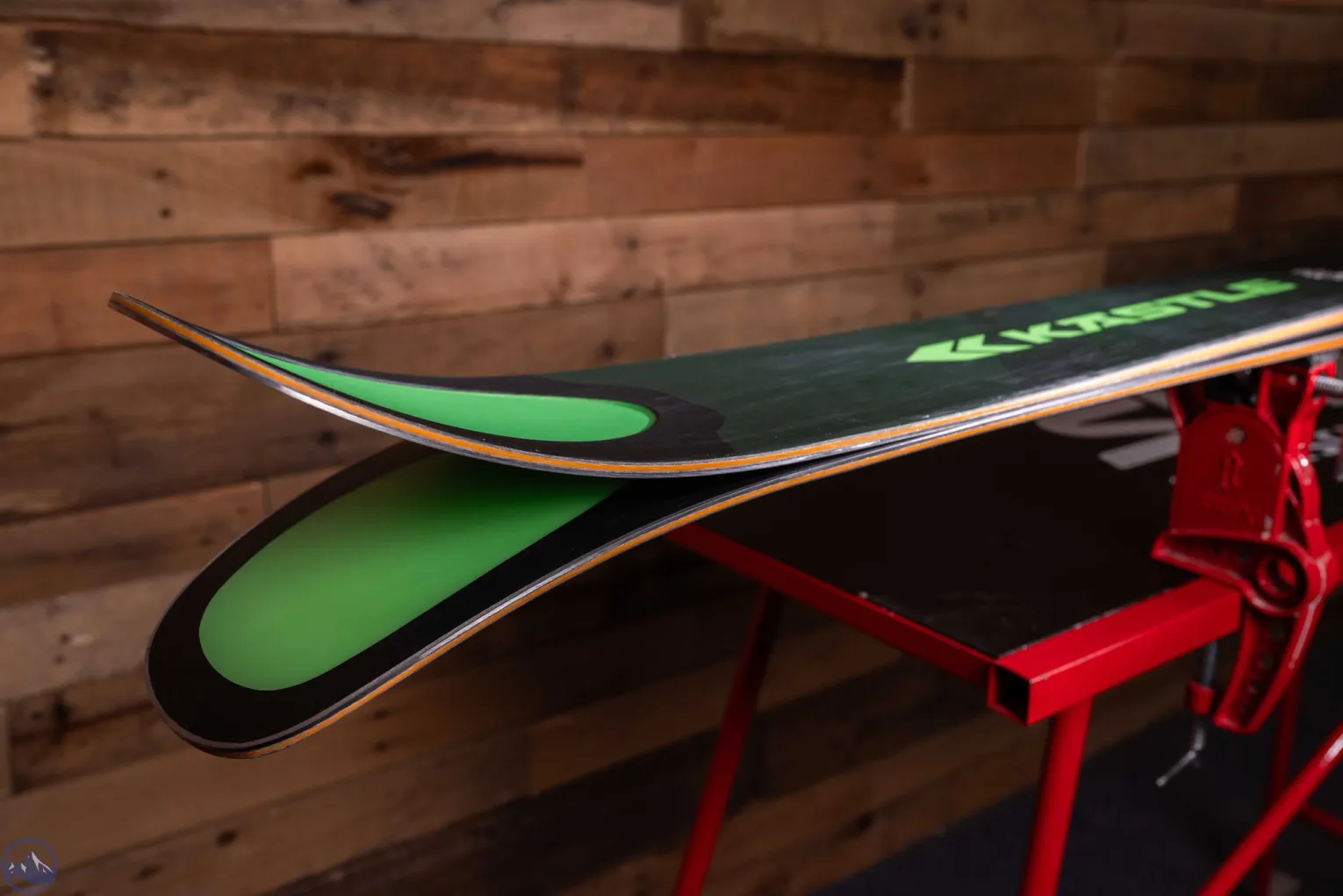
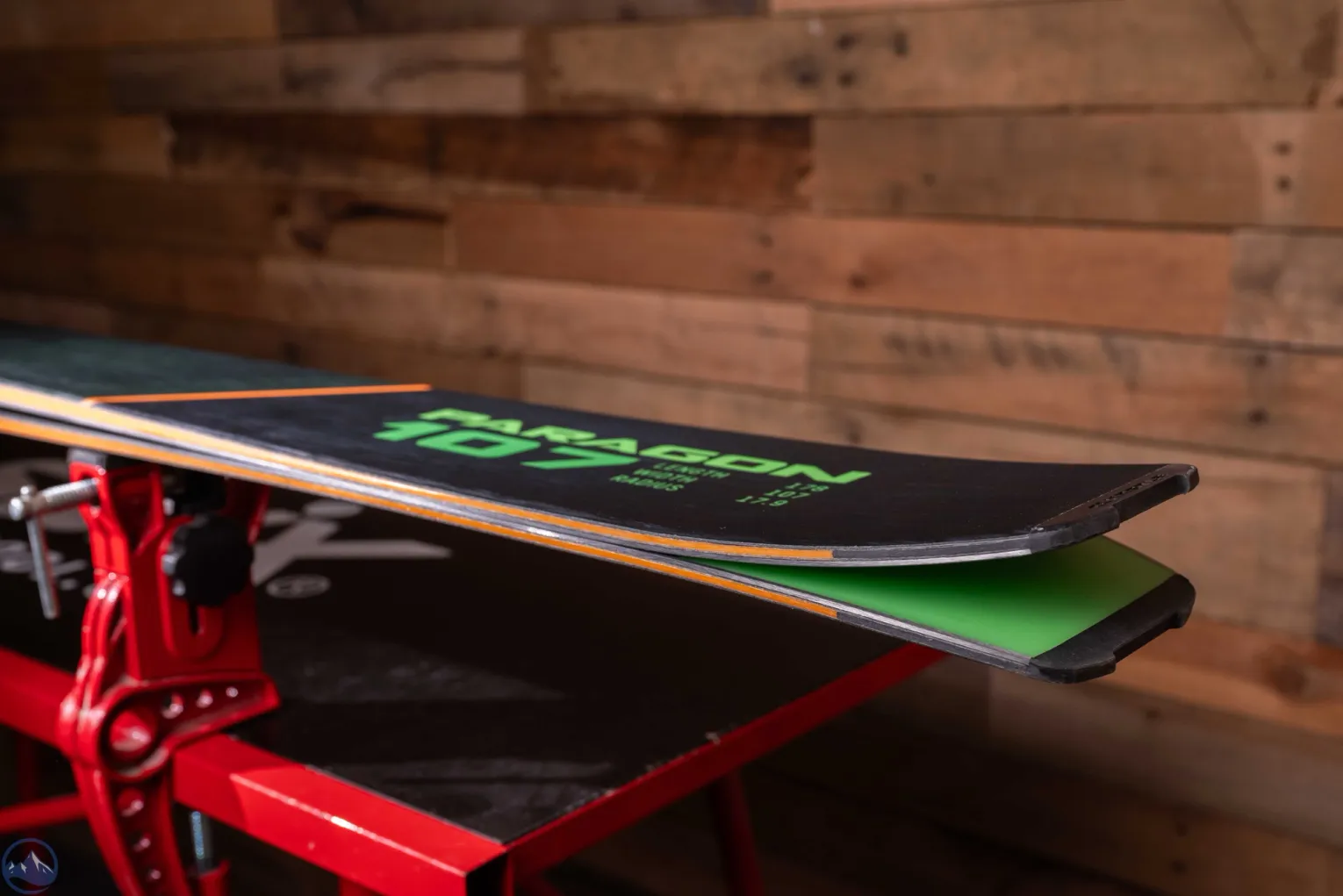
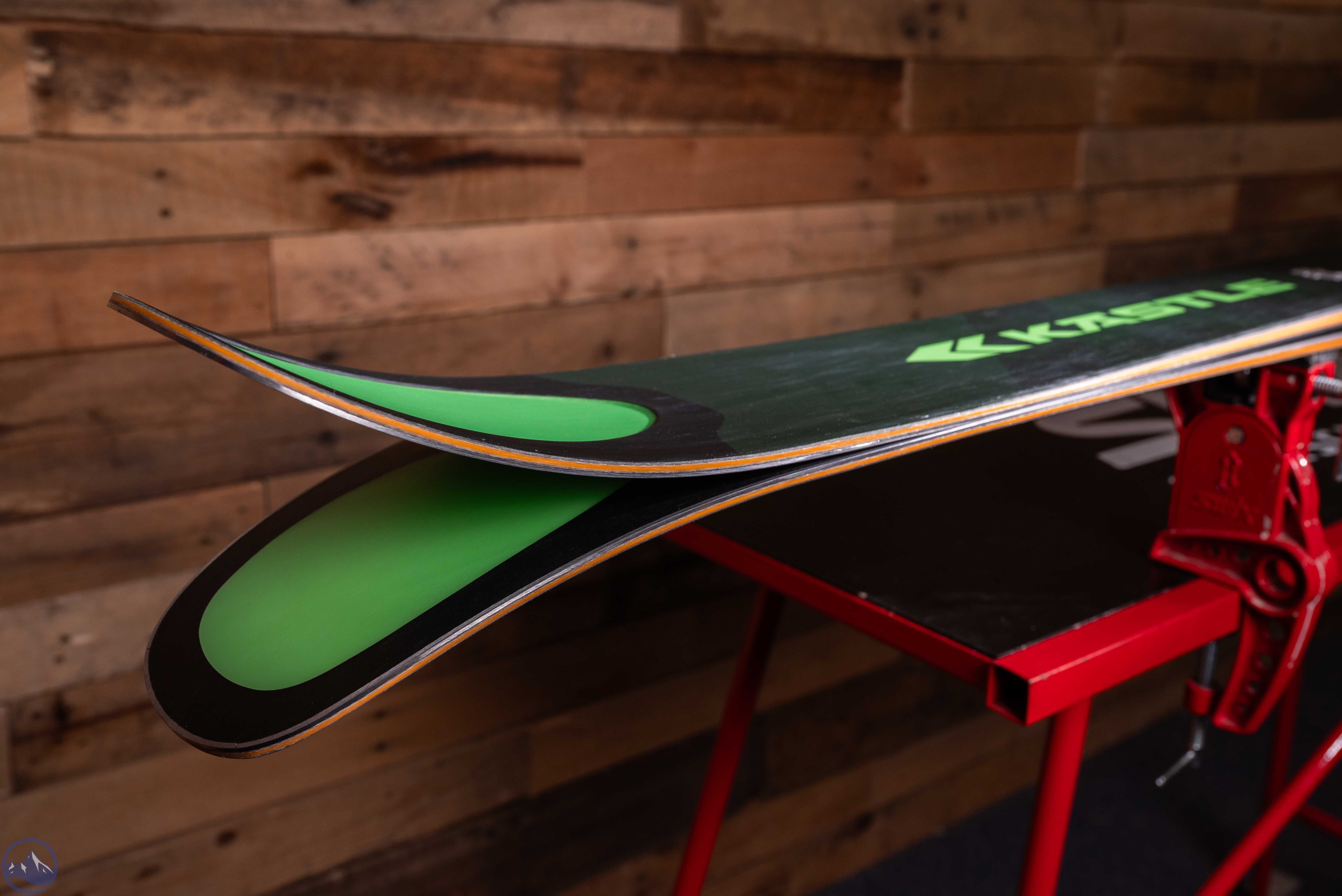
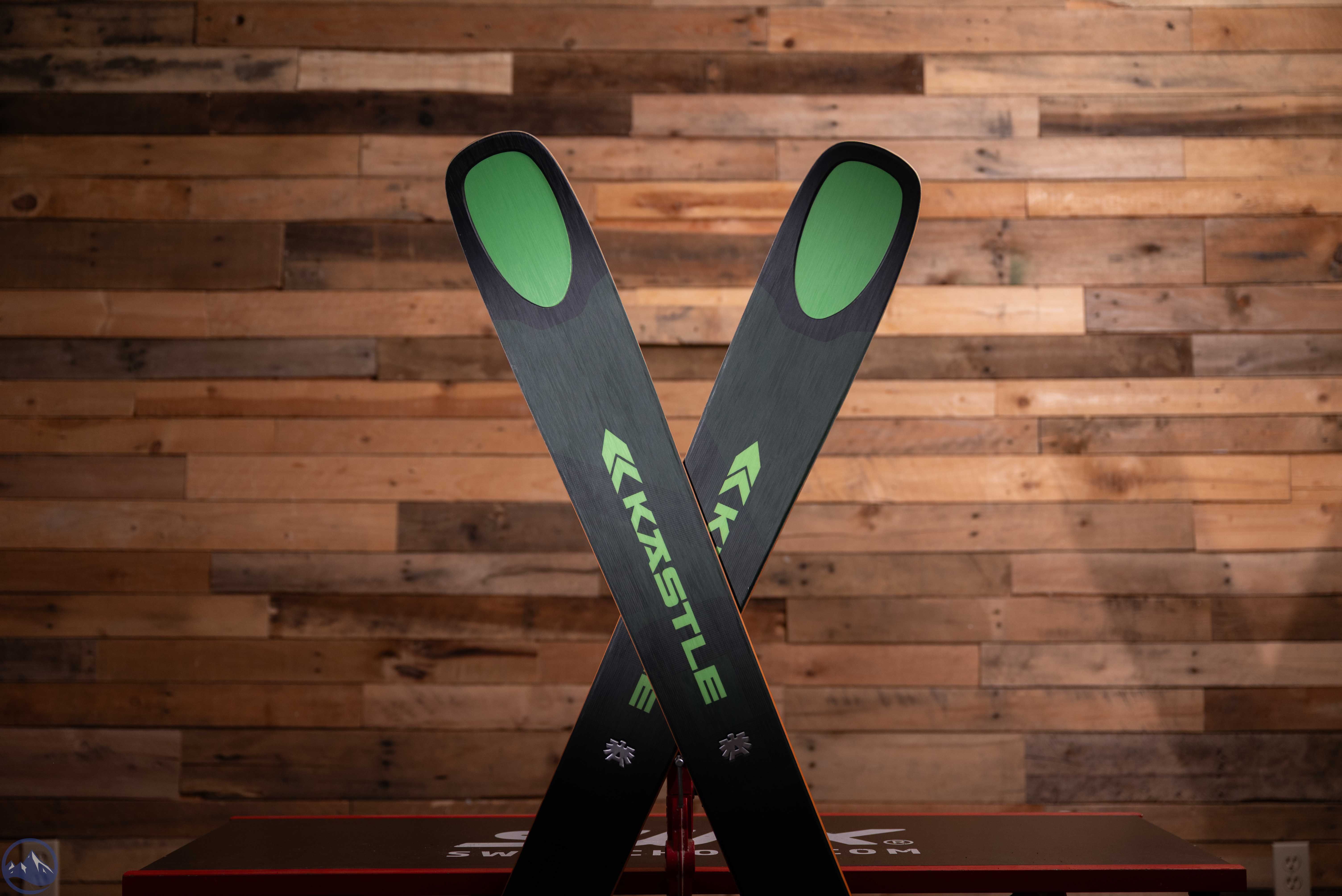
When it comes to the build, Kastle does not shy away from innovation. Kastle uses their InfiniCore construction to mix different levels and layers of beech, poplar, and paulownia wood to create the desired effect. The dense beech stringers are found mostly underfoot and through the mid-section of the ski while the lighter poplar and paulownia take up more space along the sides. This allows the engineers limitless creativity when designing the flex and performance of the ski. In addition, we get two full sheets of metal that stop just before the hollowtech tips. This makes the fronts of the ski lighter and more amenable to quicker turns and increased agility. In the 184, the ski weighs just over 2kg at 2053 grams per ski. This is sturdy enough to keep it on track at high speeds while remaining agile enough for mobile zones and creative skiing. Tester Ben Grunow calls it “Super stable and damp, 100% ripened through, easy to turn and feel super stable full speed.”
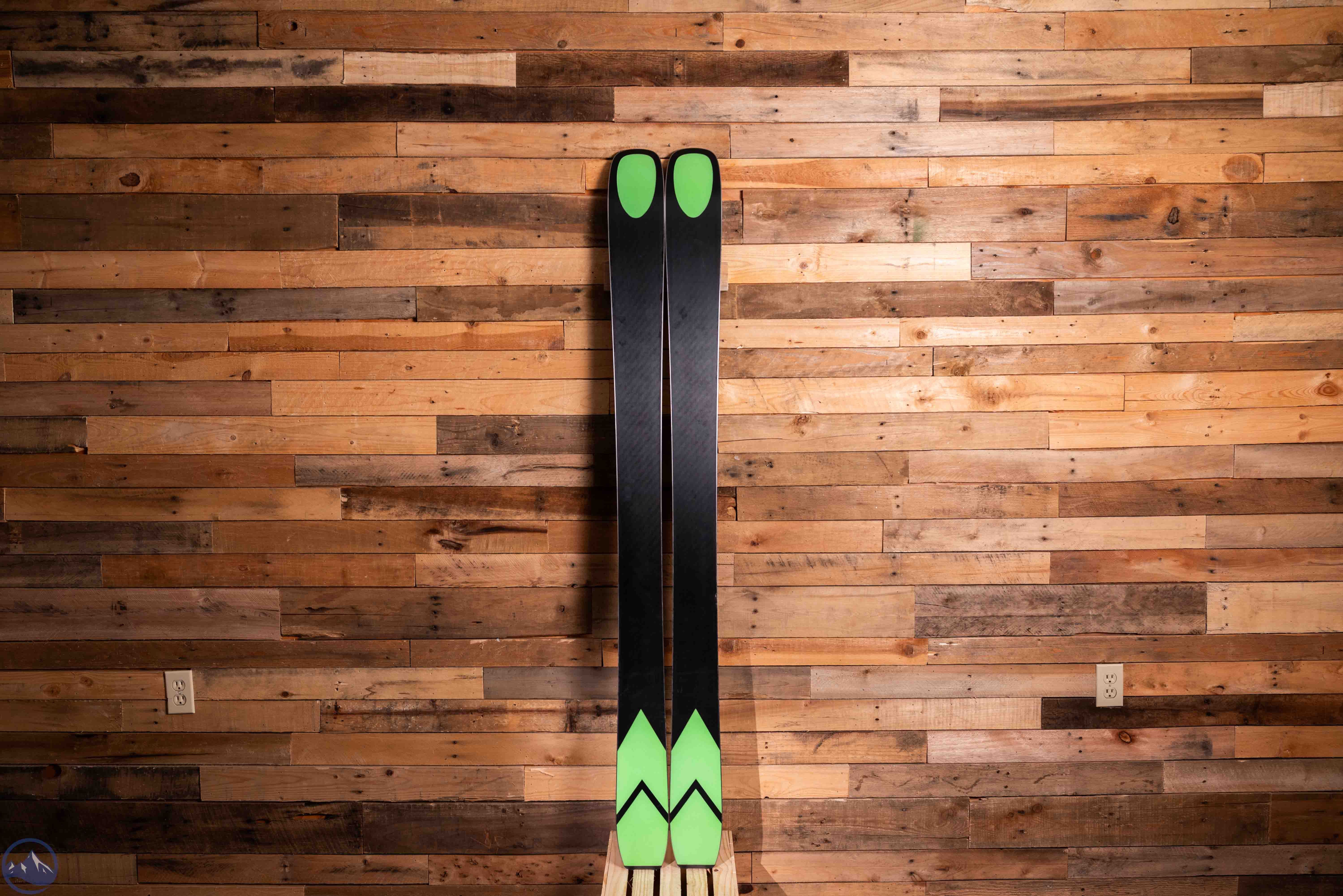
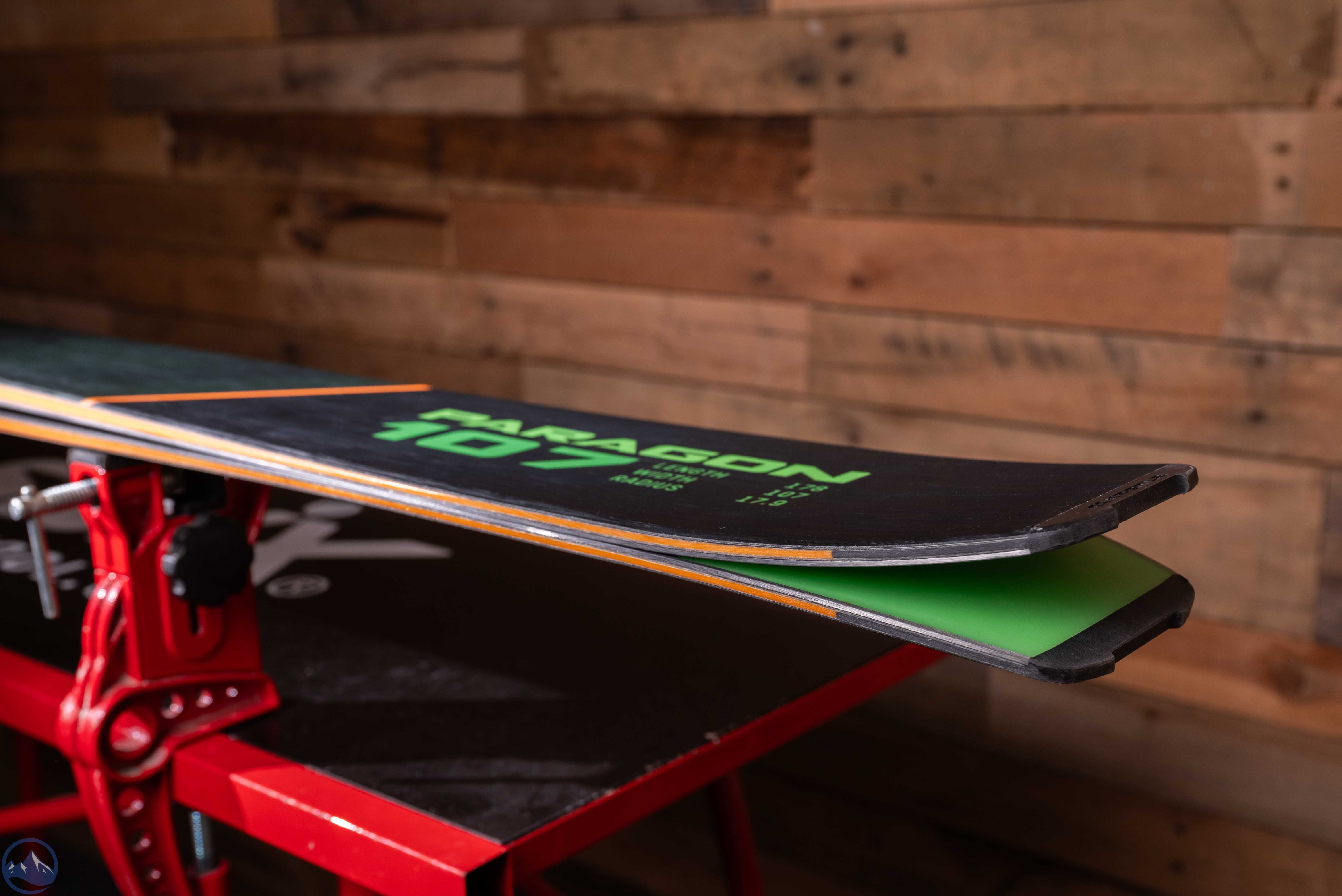
 The Rocker / Camber / Rocker profile of the 2026 Kastle Paragon 107
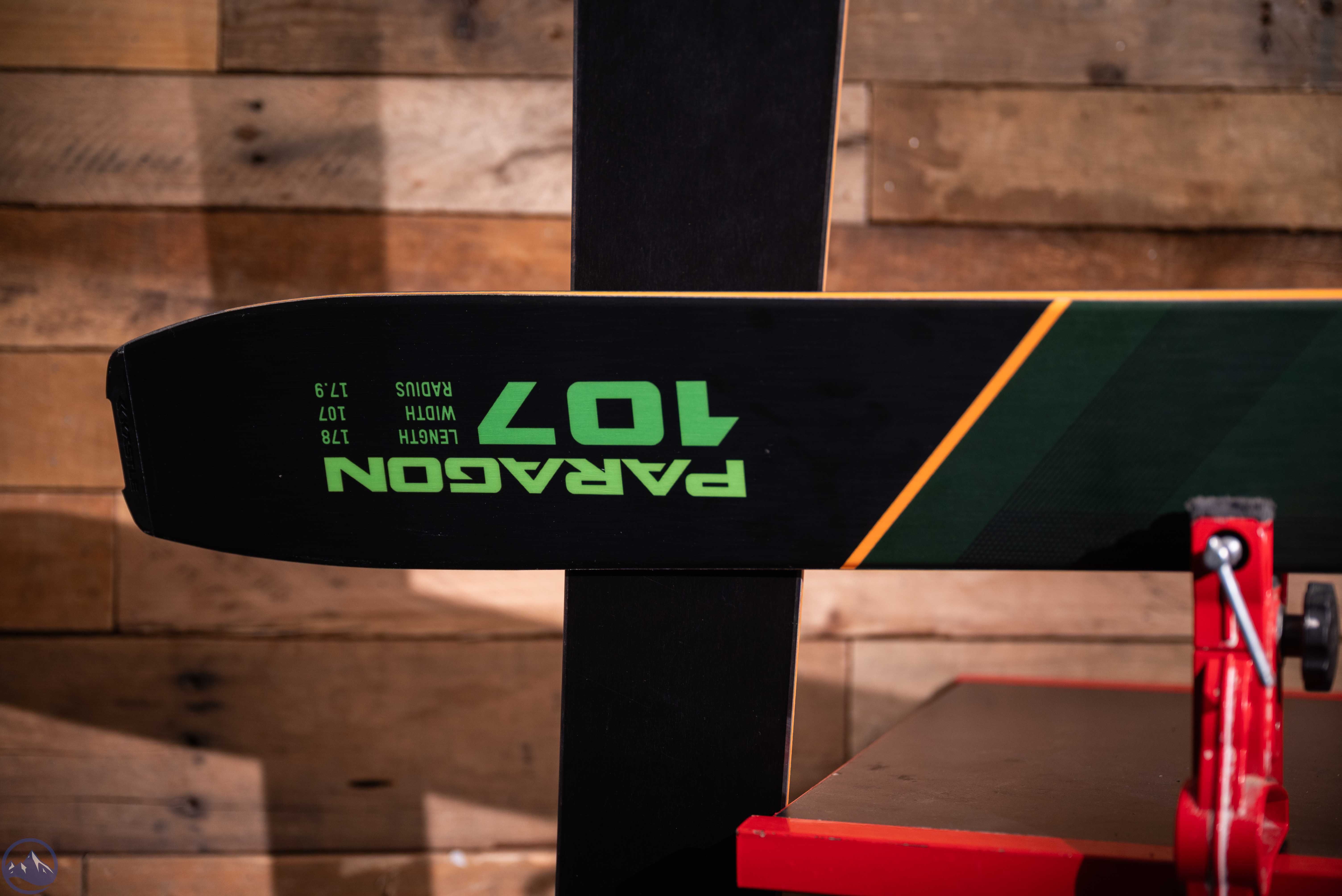
This is surely a directional freeride ski. By sharing a mold with the ZX 108, they’re not only able to keep costs slightly lower, but also to cash in on a fun and freeridey shape. This makes sense when considering the stiffer flex and stronger build. The 184 produces a 19.2-meter turn radius which is great for mixing high speed carves with crud busting capabilities. Matt Stromecki states that “It's a fairly locked in feeling freeride ski due to the minimal tail rocker but for chargers, this is a great fall line orineted ski that rewards skier input and physicality. It comes alive when speed amps up and the snow becomes a little more variable. It's long turning radius does lend it to prefer more open terrain where you can let the ski do it's thing. It's stiff but also forgiving, precise yet maneuverable, and damp yet energetic.”
This is a whole lot of ski here. The 107 feels more like the expert-only option in the Paragon line, and that’s no mistake. When you’re looking to take your skills to the next level and push some boundaries, you’ll need a ski like this on your feet. Paragon has a lot of upsides here for fans of going fast and charging hard. We’re not sure there’s a lot of intermediate skiers who will have much success here—better stay in the ZX range or look narrower in Paragon. If speed and stability are a big part of your repertoire, then by all means, Paragon 107 for sure.



Explore More



