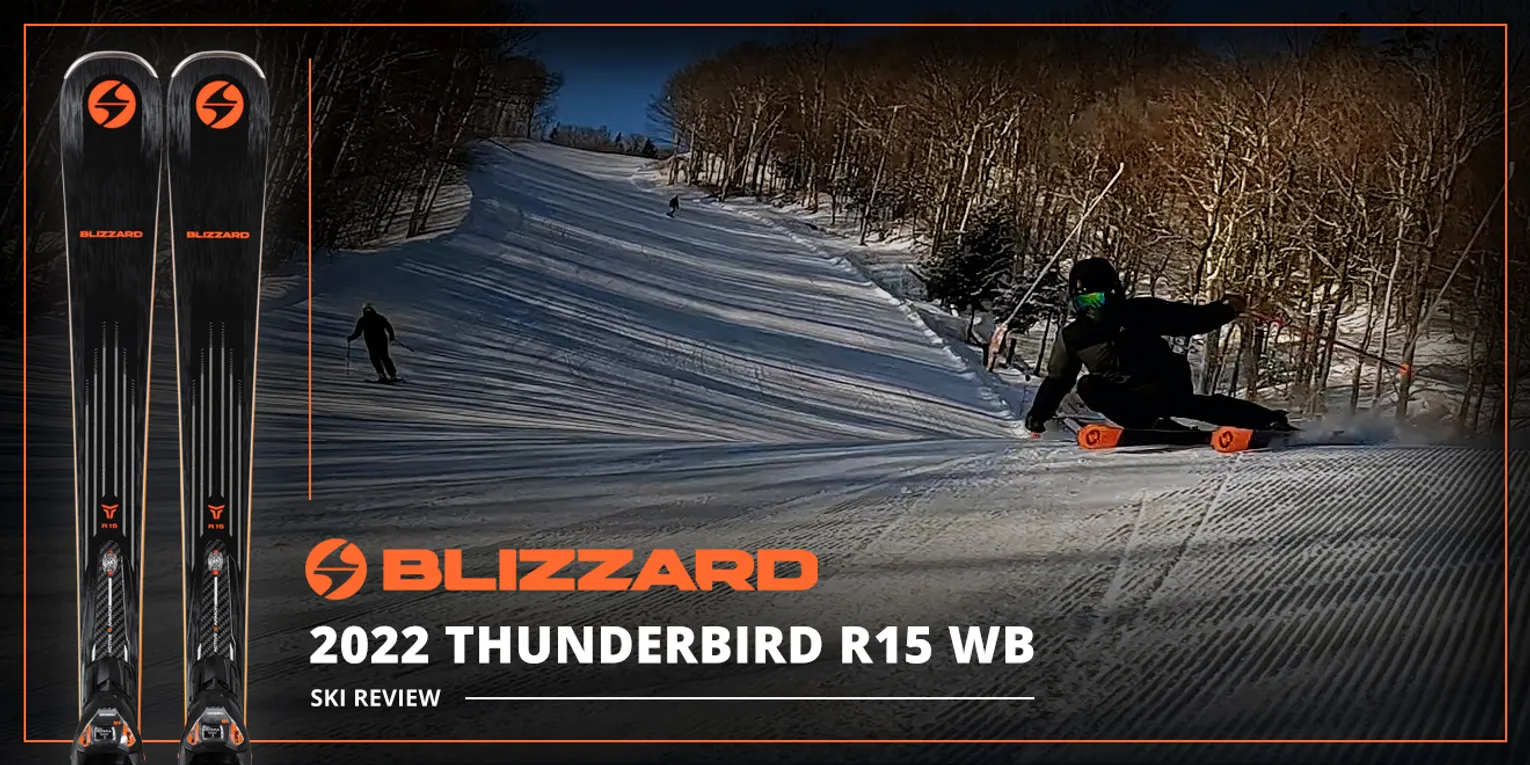
2022 BLIZZARD THUNDERBIRD R15 WB SKI REVIEW
It’s really refreshing to get on something new and different, and that’s not only how we felt when we first skied the Thunderbird R15 WB last winter, but also how our experience went this past week. We (as ski society) get pretty bogged down in a world of skis that are at least 88mm wide, and that’s okay—there's a ton of good stuff out there in that category, but we are missing out on a lot of great and fun skis that come in well below that waist width as well. At 76 mm underfoot, the Blizzard Thunderbird R15 WB falls pretty squarely into the front side category, complete with a 15-meter turn radius, but we’d be selling the ski short if we didn’t at least mention the all-mountain capabilities of the ski as well. If we’re being totally honest, there are a lot more skiers out there who will benefit from the strong on-trail character of this ski than not—I think we get caught up in the idea that we need wider skis for softer snow, but the reality of skiing tends to be quite different. This is where a ski like the Thunderbird R15 WB really shines.
AT A GLANCE
|
|
2022 BLIZZARD THUNDERBIRD R15 WB SKIS |
|

AVAILABLE SIZES |
TURN RADIUS |
SIDECUT |
|---|---|---|
158, 166, 174, 182 cm |
15 m @ 174 cm |
126 / 76 / 107 mm |
We like to boil down skis to shape, profile, and construction from a technical standpoint. These three things generally combine to create the character and personality of a ski. In terms of shaping, the Thunderbird R15 WB bases everything off of that 76-mm waist width. In the 174, the 126mm tips and the 107 mm tails give the ski it’s 15-meter turn radius, and that’s the crux of the ski right there. The shape stays the same in longer and shorter lengths, resulting in slightly different arcs, ranging from 13-meters in the 158 to 17-meters in the 182. This gives skiers more of a slalom-style of turn, while still allowing for an opening of that radius and higher speeds. Mostly, though, this shape makes the ski quick and grippy in a short, carved turn, and that’s a huge part of the appeal. I’ll combine profile into the shape paragraph, as it’s a minimal part of the ski. Blizzard is calling it 2mm of tip and tail rocker with the rest of the ski being cambered. This is pretty typical of skis like this, allowing for maximum edge grip and energy. The slight rocker in the tips and tails doesn’t do a whole lot in terms of flotation, and won’t make the ski feel shorter, but it does make it easier to get into and out of turns without feeling like you’re locked in. For non-racers, this is a good thing. Once you get it on edge, it’ll act like a fully-cambered ski, but for lower edge angles and skidded turns, this is a huge advantage. But basically, 2mm of rocker is a fairly fully-cambered ski.
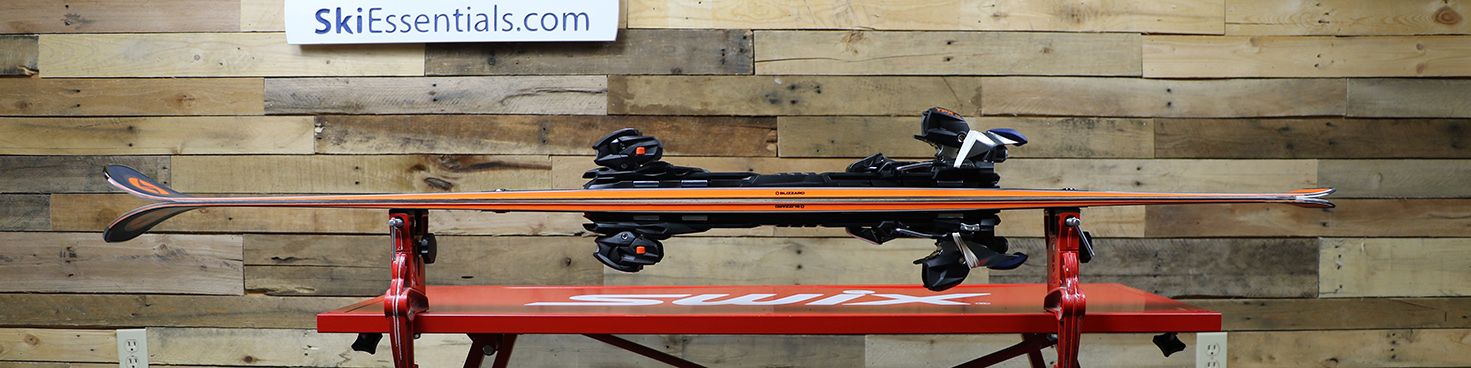
Construction is where this Thunderbird really starts to set itself apart from the outgoing Firebird Competition 76 that it’s replacing, as well as other skis that fit into this category. TrueBlend, the core construction technique that was introduced for the Bonafide, Brahma, and Black Pearl skis last year now gets stronger with the addition of True Blend On-Piste. While normal TrueBlend for the all-mountain skis have a 7 to 3 ratio of beech to poplar, the on-piste versions have 11 beech stringers to the 3 poplars. This gives the ski a stronger and more powerful feeling—better for carving and harder-charging than the more versatile and well-rounded all-mountain skis in the Blizzard line. It fits well with what Blizzard is doing with the Thunderbird line, and it filters through both the men’s and the women’s skis with that name. Two sheets of titanal on the top and bottom of the core add to the stiffness and dampness of the ski, lending to the high-performance aspect of the T-Bird. Blizzard is also able to specifically engineer the ski’s flex to be stronger underfoot, tapering evenly to softer in the tips and tails. The blend and application of the wood make for a great on-trail ski that carves like crazy but isn’t overpowering or abusive. For most skiers with a solid background, this ski will be more than enough in the power and stability departments. In addition to the wood and metal, the Thunderbird R15 WB also uses Active Carbon Armor to stiffen the underfoot zone and provide some suspension to the ski. It’sa blend of the Carbon Armor from the Firebird series skis and the IQ system from the Quattro RS/RX skis of yesteryear. With a floating carbon plate under the binding zone, the skis allow for proper flexion while keeping it stiff and stable. The resulting performance consists of clean and round turns, with an emphasis on round.
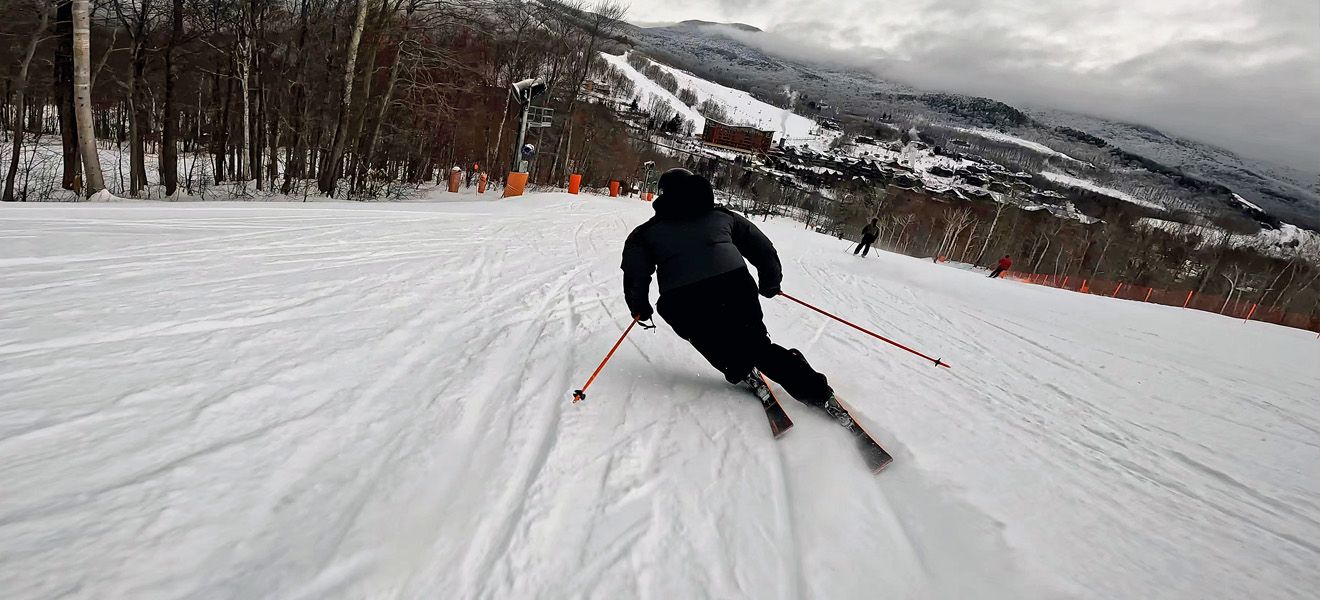
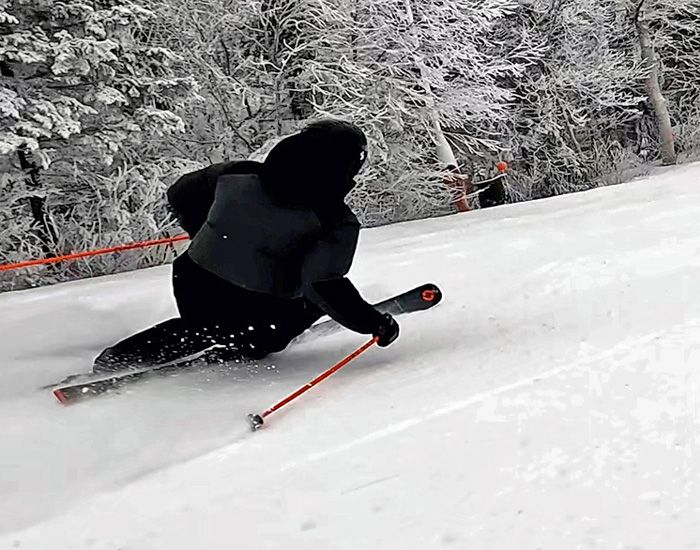
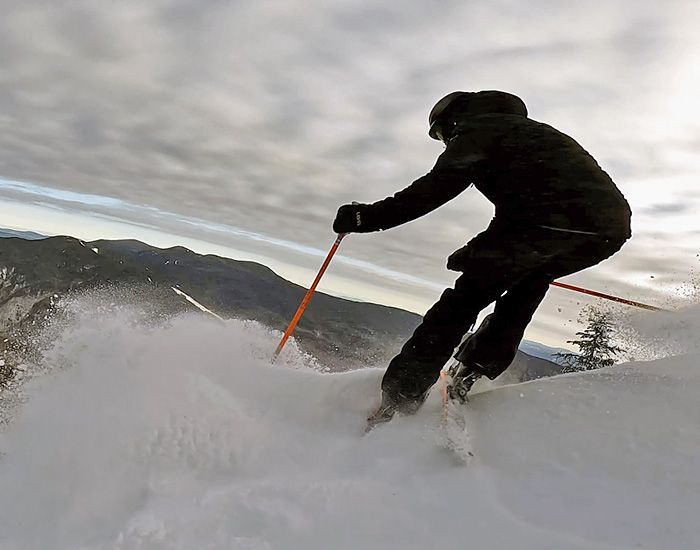
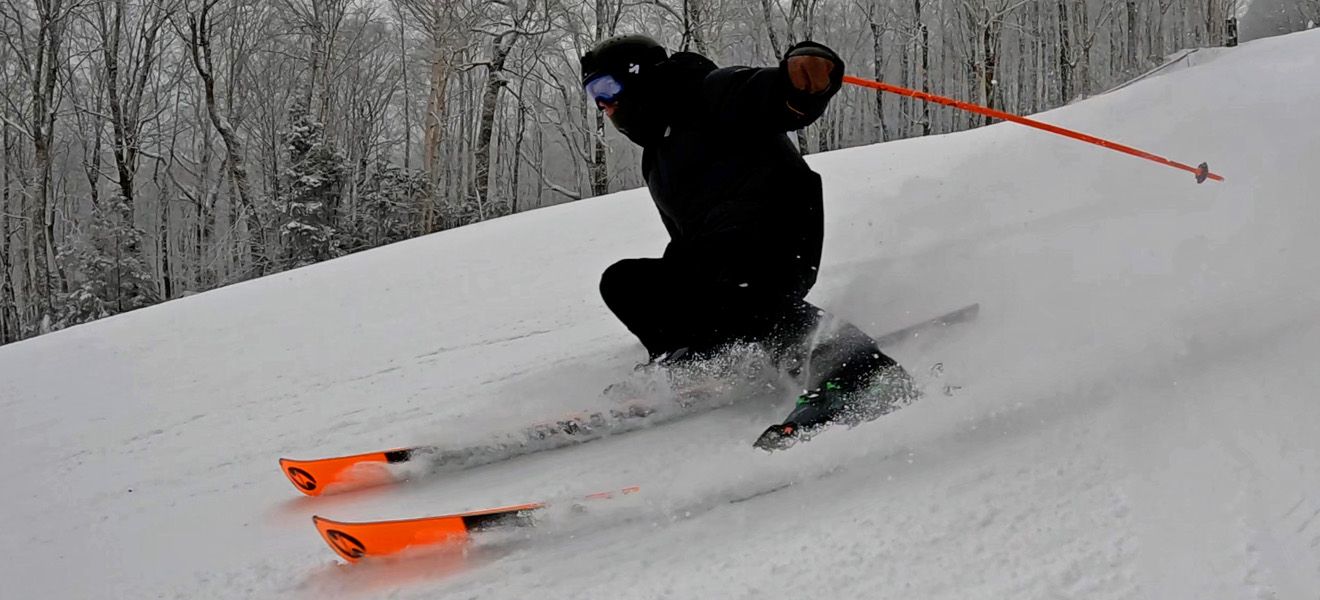
These three aspects of the ski combine to make a fantastic front side ski with some all-mountain benefits. When you tip the ski on edge, you get a strong response, but it’s not 100% instantaneous—it's certainly level with the intended audience and most advanced to expert skiers. Current or former racers might feel like they’re leaving a bit of top-end performance on the table, but most mortal skiers will encounter plenty of ski with the Thunderbird R15 WB. We both liked the 182 over the 175, as the slightly longer turn radius fits both of our styles quite well. Even in the 182, Jeff didn’t find the ski to be too long, and rather enjoyed the additional stability that the extra 7cm provided. From edge to edge, these skis feel very quick and responsive. The end result is that you can make short-swing turns or longer arcs depending on conditions, terrain, or skier choice. The interesting paradox with these skis is that they’re easy to ski, yet have a very high-performance ceiling, and that’s one of my most favorite things about it.
From an all-mountain perspective, it’s not that long ago that a ski 76 mm underfoot would be considered a “mid-fat,” yet today it’s one of the skinniest skis on the slopes. Sure, softer snow and powder is easier on wider skis, but that doesn’t mean these won’t float—it just takes more work and technique, and no, you’re not getting a surfy or playful ski in the pow unless you’ve got some serious skills. For most skiers, this width will be more than enough for a daily ski at most ski areas that aren’t Alta or Jackson Hole. Ski areas groom almost everything these days, so even after a six-foot dump at Mammoth, there’s going to be some groomed trails, and you can still ski a 76 mm underfoot ski. That said, unless I were hyper-focused on carving turns on groomers, I’d want something else in my quiver for the softer days, trees, or bumps. Even then, it’s a pretty darn good bump ski because it’s so quick. When compared to more race-like 76’s such as the Firebird HRC, Volkl Deacon 76, or Fischer Curve GT, I’d say the Thunderbird has more all-mountain capabilities than the above, making it a better choice for high-end carvers who want to take their skis all around.
We’ve come to the conclusion that everyone needs a ski like this. Here in VT, we’ve had a slow start in the natural snow department at the resort, so we find ourselves skiing groomers a lot. We end up having the discussion about conditions-appropriate equipment, and skis like come up frequently. This Thunderbird R15 WB has a whole lot of positives—very strong and stable, wide enough to be versatile, and friendly enough for every/all-day use. This ski makes a lot of sense for a lot of skiers, and makes a great complement for those with wider skis already, or could be a single-use ski for those who ski groomers most or all of the time. Either way, these skis are highly useful, a whole lot of fun, and very underrated.