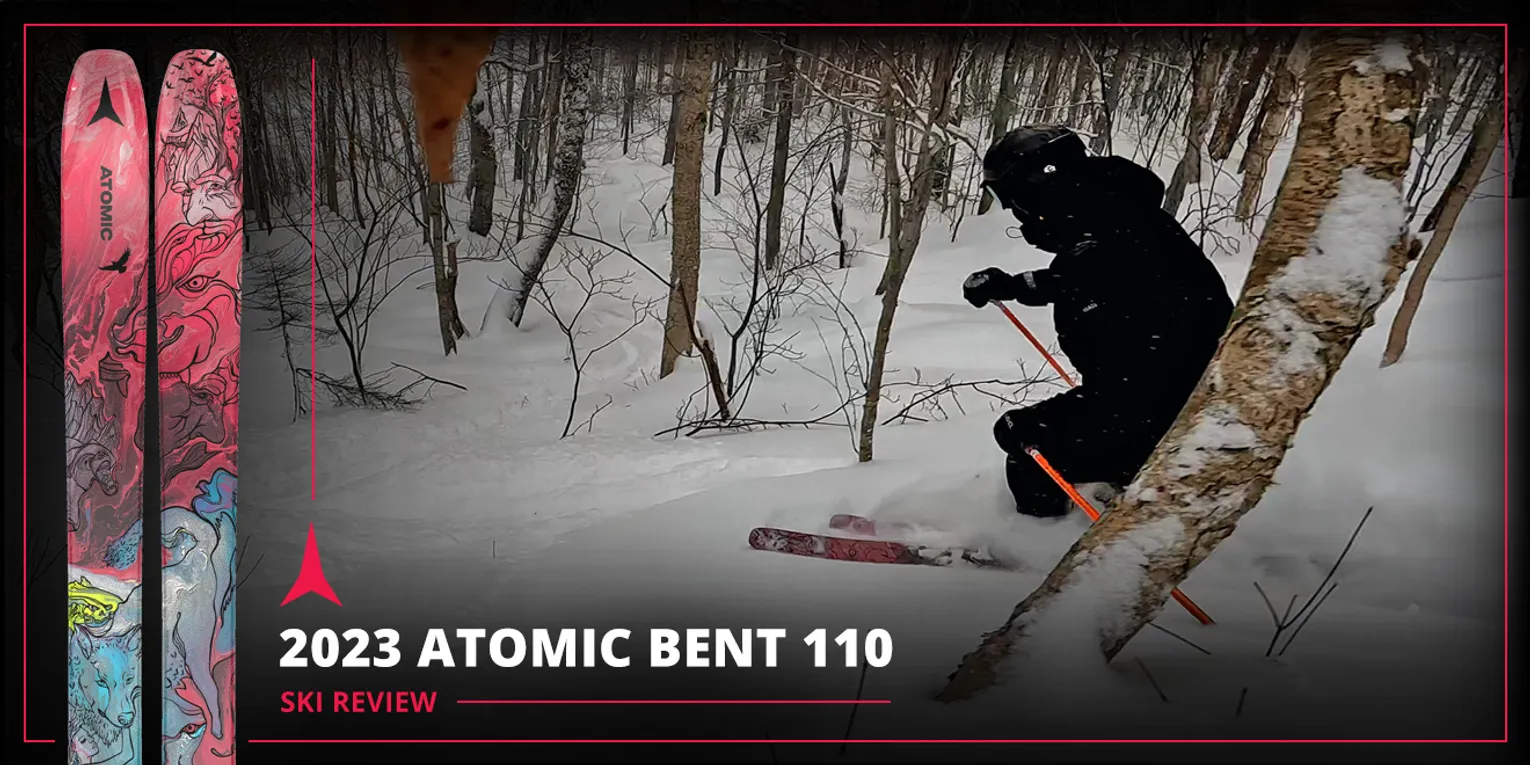
2023 ATOMIC BENT 110 SKI REVIEW
About a month ago we put out our introduction article and view on the new 2023 Atomic Bent (Chetler) ski collection. It immediately became obvious that there’s a whole heap of interest in these skis, and we know you’ve all been patiently waiting for a review. For the 110, we really wanted to wait for ideal snow conditions, and finally we got it. About 16 inches of snow fell at Stowe over a 48 hour period and we took full advantage of it, testing this ski in trees, open terrain, bumps, and basically anything else we could think of our find.
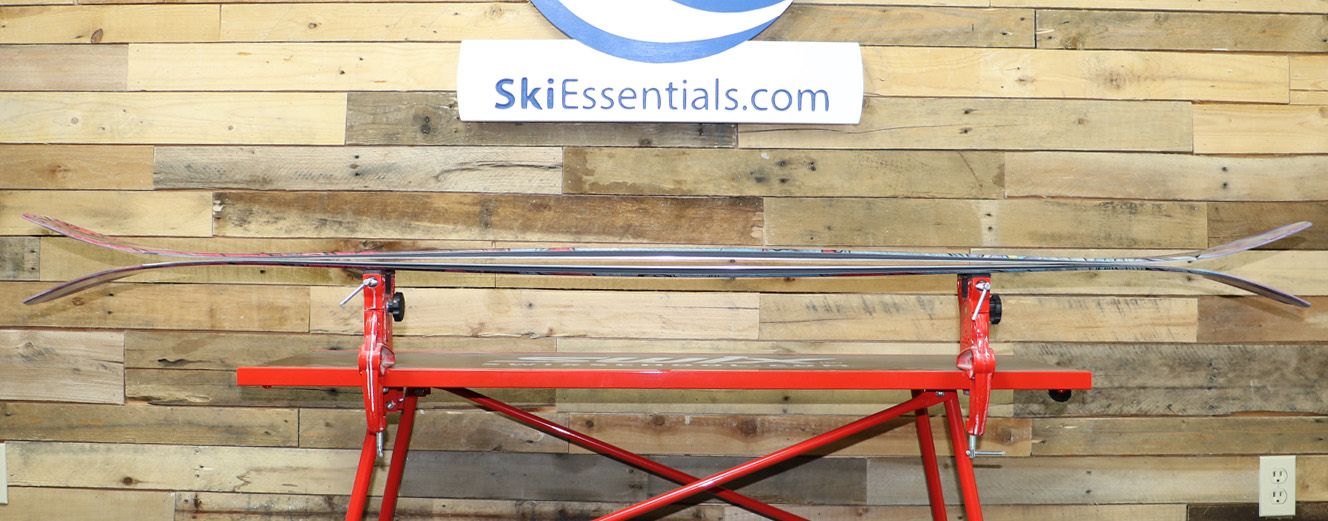
As a refresher, the Bent 110 is a relatively unique ski, at least in its width range and class. Construction isn’t necessarily what sets it apart, however, it’s more the shape. Atomic builds this ski with their Lightweight Wood Core and that’s about it. No carbon, no metal, no other crazy additives, just a wood core. That certainly doesn’t bother us, however, and feels like it’s following the trend of the Bent Chetler 100, which often started a conversation with, “it’s amazing how good a ski can be with just wood.” We get their Dura Cap Sidewall finish, as is used on all the Bent skis, which allows for a lot of control, great durability, yet pretty darn good transfer of energy too. The HRZN Tech tips and tails kind of blur the line between construction and shape. The surfboard-inspired convex shape of the tips and tails provides greater surface area in the tip, thus better displacement of snow, or in other words, better float. By creating more float, it’s also removing some upward pressure from the snow, allowing for easier and quicker edge release, which we’ll get to in a bit.
AT A GLANCE
|
|
2023 Atomic Bent 110 Skis |
|

AVAILABLE SIZES |
TURN RADIUS |
SIDECUT |
PROFILE |
WEIGHT |
|---|---|---|---|---|
172, 180, 188 cm |
18 m @ 180 cm |
133 / 110 / 124 mm |
Powder Rocker 25/50/25 |
1750g / 180 cm |
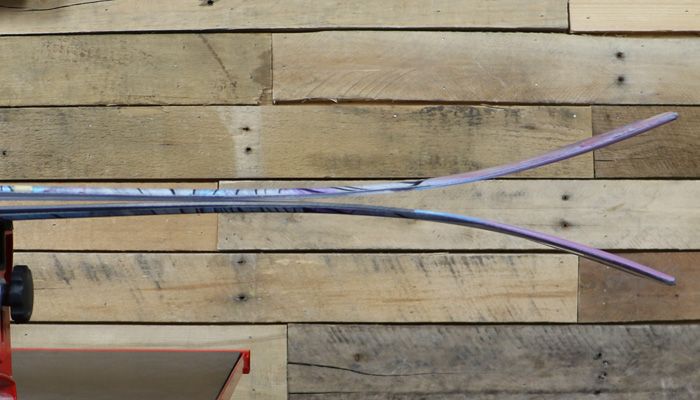
Now, we mentioned shape is important on this ski, and if anything that’s an understatement. Atomic refers to the Bent 110 somewhere in the marketing material as a directional ski. Technically that’s true, but it’s about as far from a directional ski as you’ll find in this width range. To start, the rocker profile is 25/50/25, meaning you get equal amount of tail rocker as tip rocker and that the ski is 50% rocker, which is a lot. Then there’s only a 9 mm difference in width between the tip and tail of the ski. That’s not far off from what we see in park skis. To finish off the shaping concept of this ski, the recommended mount point is only 3 cm back from true center. Go to the +2 line and you’re just 1 cm back. Even if you go all the way back to -2, the furthest back recommended line, you’re only 5 cm back from true center, which is significantly further forward than most directional skis. In other words, this is basically a symmetrical twin tip powder ski. Of course, no, it’s not truly symmetrical, but it’s about as close as you’re going to get, which really indicates its freestyle and freeski influence.
So, how does it feel on snow? This was an interesting ski for us (Jeff and Bob) to test, as it matches one of us very well, but doesn’t really jive with the skiing style of the other. Not to say we didn’t both enjoy it, but one of us found more limitations than the other. Let’s start with me (Jeff). If you guessed I’m the one it works great for, you’re right! I have a strong freestyle/park background and still spend a good amount of time on center mounted twin tips while coaching or skiing park on my own. The idea of a ski that’s 110 underfoot with equal tip and tail rocker is extremely intriguing to me. I like landing switch in powder, I like slashing and smearing and playing, but it’s always hard to find a ski that does that stuff well when the snow gets deep.
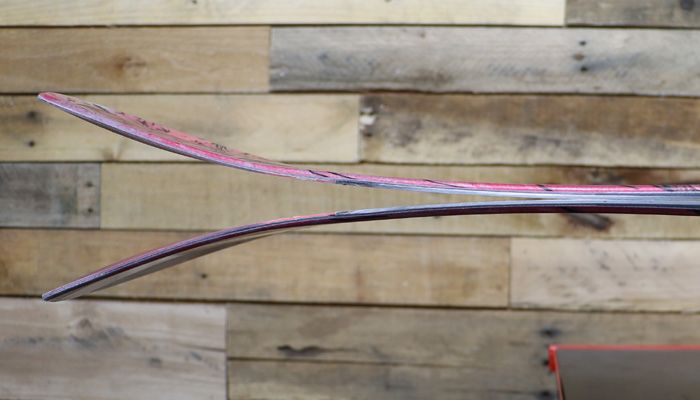
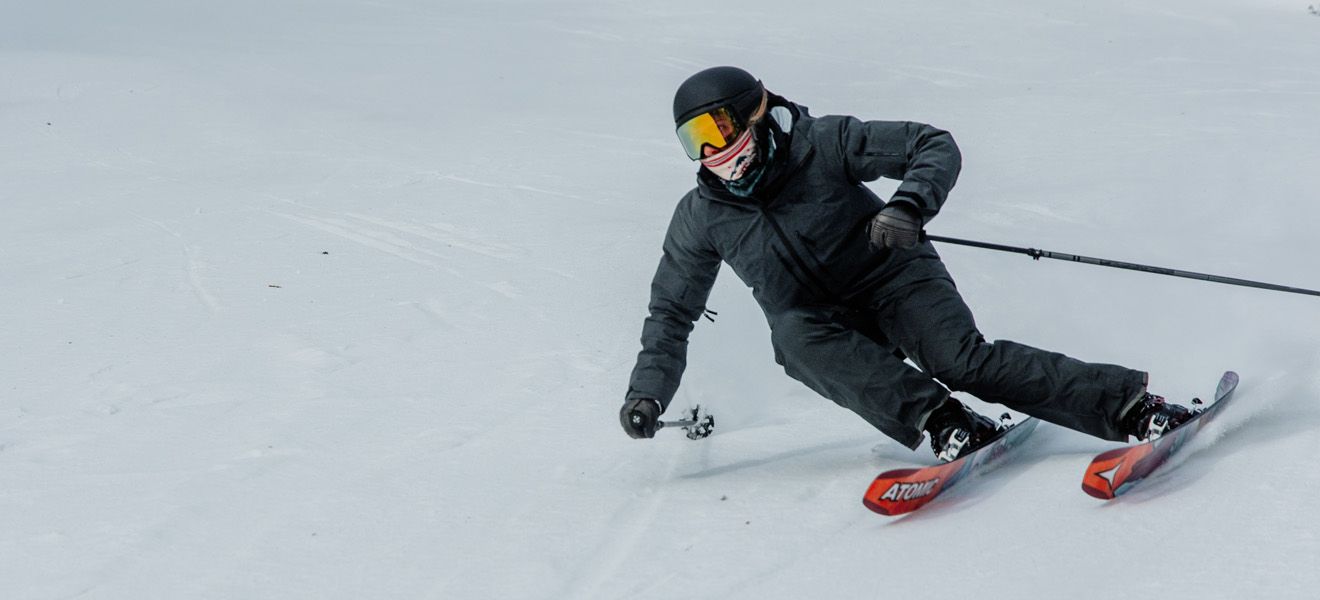
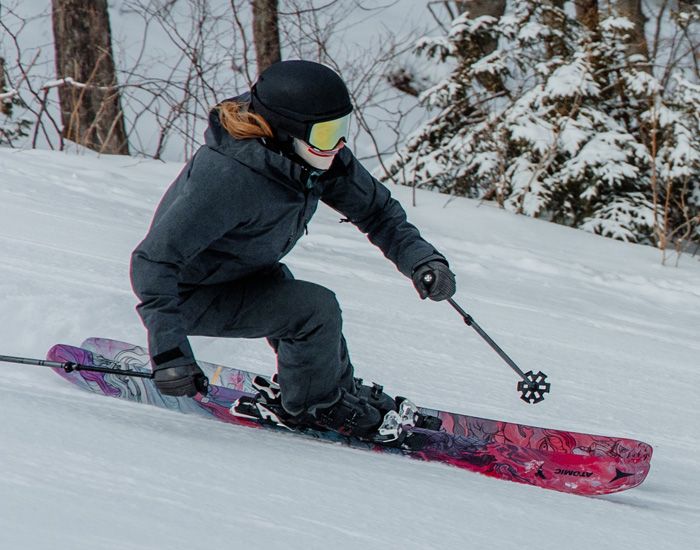
The first thing I noticed about this ski is how well it floats. 110 underfoot with that much tip rocker, plus the HRZN tech, provides an insane amount of float for a 110 ski. I’ve skied stuff much wider than this that doesn’t float as well, which is really cool. It’s also incredibly maneuverable. I’m not sure I’ve ever experienced tail release as easy as this ski, but remember that with a more centered mount point, there’s more ski behind you than some. That might feel weird to some skiers as first, but I didn’t have any trouble with it whatsoever. This ski loves when you ski it with a more centered, freestyle-inspired stance. It wants you to slash and flick it around. It wants to land sideways in deep snow and kick up a massive cloud of powder. It wants to go switch, it wants to butter, it’s incredible how much playfulness Atomic built into this ski. As I mentioned, I love landing switch in powder. It’s super fun and extremely rewarding. What’s always been harder for me, however, is getting back to forward. When you’re skiing switch in deep snow, it’s pretty easy for you to feel stuck, like you can’t get your tips to release. The way this ski just pivots through deep snow from switch to forward is insane, and maybe the best example of its capabilities. Jumping, slashing, spinning, and dancing through deep snow on wide trails was probably my favorite thing to do on it.
It also really shines in tight trees. The amount of float that it provides with the significant splay of the rocker profile allows for really easy speed control. It’s kind of like a swallow tail snowboard in the sense that you can let your weight go back, let the tail of the ski sink (and it does so effortlessly with that much rocker), which thus brings your tips higher and slows you down a little. Then you also benefit from that easy edge release. The same phenomenon I felt getting from switch to forward makes quick pivoting turns super easy too. The tail just cuts through the snow and never feels catchy due to the combination of rocker and HRZN Tech.
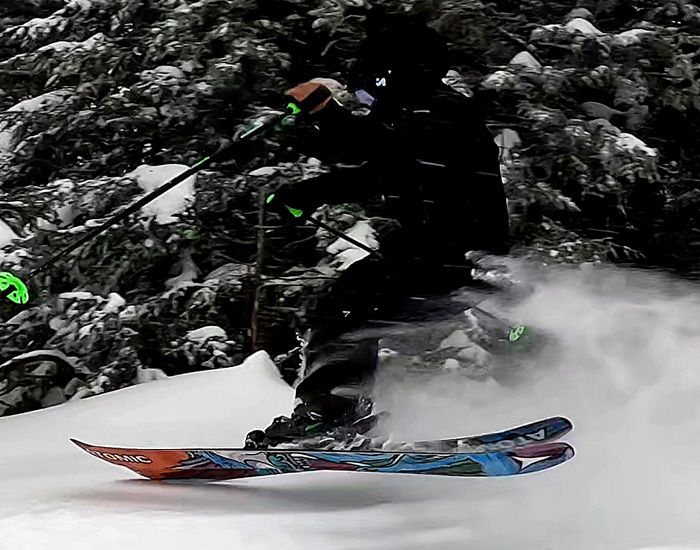
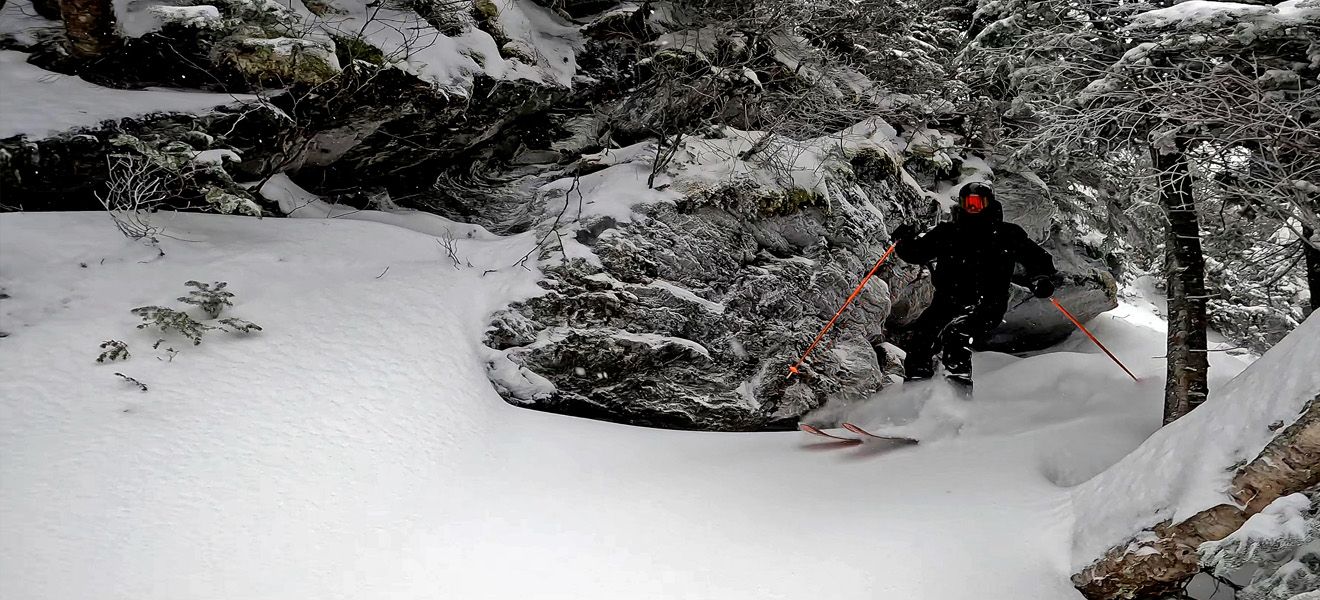
Now, I did have one instance when skiing the 180 cm length where I took a bit of a tumble. Landing off a small jump onto a steep pitch on Hayride, I tried to ride it out straight through some chop, but with the shorter tip length and abundant rocker, on that 180 cm length, the tip dove a little and I went right over the handlebars. No worries. Soft snow, a quick tomahawk, and I was right back on my feet. I switched to the 188 cm later in the day and I do think that if I was on that length, it wouldn’t have happened. Also, switching to the 188 cm, I was amazed that I experienced basically the exact same performance in its maneuverability as the 180. So, if you’re thinking about this ski, and you’re on the fence between two sizes, go with the longer length.
Bob exclusively skied the 188 cm length. He has about 4 inches and 75 lbs on me. Bob also has a technical mogul background, rather than a park background. He never skis center mounted skis. Bob found the same benefits as I did in the trees. Watching him wiggle around on it through tight Vermont trees was a ton of fun. He felt that same smooth, easy pivoting feel in deep snow, and also loved the amount of float the ski provides. For Bob, however, it was tough for him to get used to the shorter tip in front of him. He commented a couple times that he felt like his shoulders were over the front of the ski too far. I understand where he’s coming from and I think his feedback is really valuable for people considering this ski. If you’re a bigger skier like Bob AND a 100% directional skier that doesn’t like being centered, or at least isn’t used to it, you might find the same limitations Bob did. That said, I think you have to be BOTH of those things to feel that. If you’re a bigger skier with a freestyle background, you’ll love it. Similarly, if you’re a directional skier, but you’re lighter like me, you’ll probably really like it to.
If you want a powder ski that’s center mounted, or close to it, this is your ski. If you want to do tricks in powder, build backcountry jumps, land switch, do nose butter 360s, and all that good stuff, this is your ski. Of course, the 120 is sweet too, so if you’re somewhere where you get a TON of snow, maybe stick with that one, but this 110 did feel much more appropriate here at Stowe. If you’re not going to do nose butter 360s or land switch, that’s fine too, we just think it’s important to be aware of the shaping concept of this ski. If you prefer moderate speeds and lots of turns, it could certainly work for a directional skier. If you’re a powerful, directional charger, however, there are better skis. We also thought it would be nice to end with the fact that this is also one of the lightest skis in its class. The 180 cm length is just 1750 g, which is pretty darn light for a ski of this width. That makes it a great choice if you want something to take into the backcountry. More and more skiers are taking their park tricks and applying them to natural terrain, and if you like that kind of stuff, it doesn’t get much better than the Bent 110.