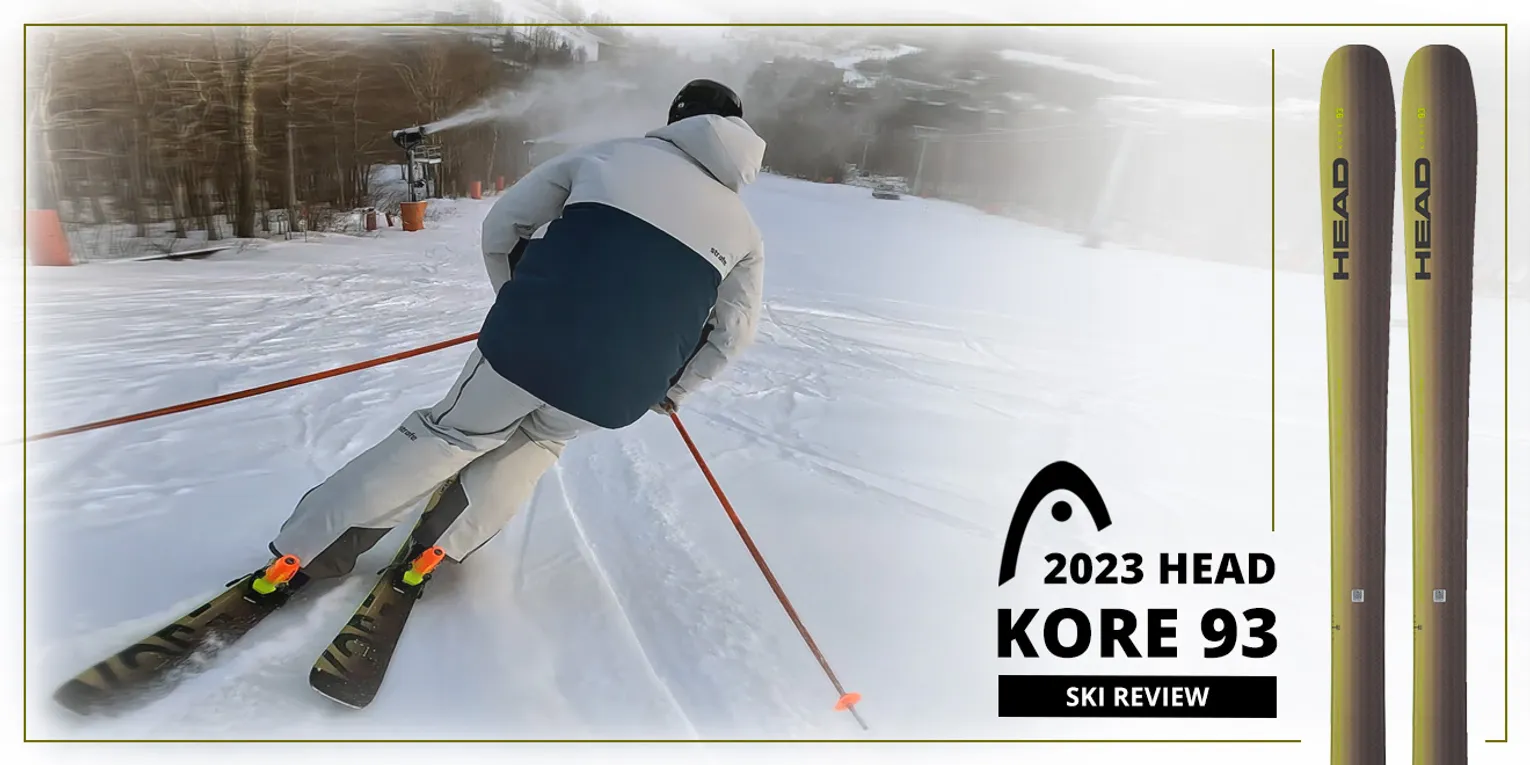
2023 HEAD KORE 93 SKI REVIEW
I’ve been a Head Kore fan since inception. The premise was a little weird in that Head set out to make some of the lightest and stiffest alpine skis on the planet. They succeeded, and with the first iterations of Kore 93, we saw a ski that contained two sheets of carbon, graphene, and koroyd to go along with a karuba wood core. The mix worked, for the most part, offering skiers a highly maneuverable and reactive ski for true all-mountain performance. At our first ski test, we found that it was a bit dichotomous, in that some people were really fond of the sensations created by Kore, and others found it slightly off-putting. As a larger skier (6’2 225), my initial thought was that they were going to be too light for me, but the build and the shape of the ski quickly abated those fears. Those performance attributes have largely continued into the 2023 version of the ski, and while my particular fondness in the Kore line lies with the 99, I decided to get the 93 for myself as it fit a more glaring hole in my personal ski quiver. In addition, the Pivot Forza looks phenomenal on the yellow of the 93.
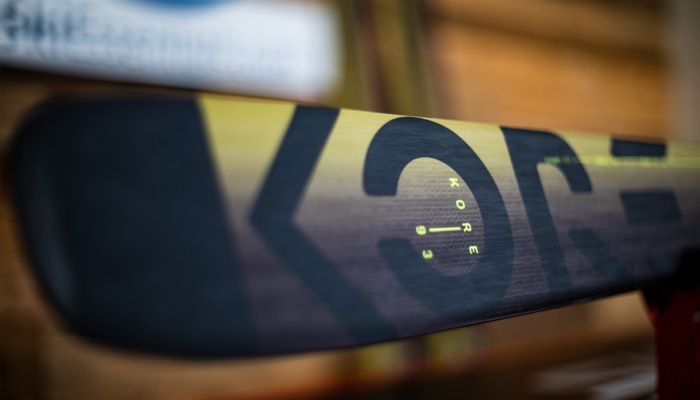
While most of the spirit of the ski has changed since 2017, the main parts and philosophy have remained the same. For the 2023 version, we get an updated graphic and the addition of an actual topsheet. That was always one of their big things—they simply omitted the top sheet as a way to save weight. While it worked in that realm, it also made the skis somewhat prone to chipping and peeling. The new version, with a real topsheet, is a bit sturdier and certainly quieter, all the while keeping the weight down and the stiffness up. Built with a wood core consisting of karuba and poplar stringers, we see the initial weight savings with the use of karuba. Bolstered by denser poplar, it nevertheless has a feeling of a high-end ski. There’s a lot more in this ski, though, so bear with me. The bottom layers, under the core, consist of one fiberglass layer and one flat carbon laminate. We also see damping layers under the sidewall material in this realm, and that goes a long way in keeping the ski less chattery than the carbon and the weight may let on. The sidewalls are thick as well—extending into the ski in order to provide more dampness and stability. They’re chamfered (curved) the sides to match the topsheet and the upper laminates of the ski. On top of the core, we see another damping layer, a strip of graphene for extra stiffness, another fiberglass laminate, and a curved carbon layer. We’ve talked about this before, but any time you’re using carbon (or any other material for that matter) in a 3-dimensional format, it adds stiffness. The curved carbon upper layer goes a long way in getting the appropriate amount of grip and energy to the edge, as the downward curve of the layer points directly at the snow creating a direct connection from boot to binding to edge. There’s a lot going on here, and these skis certainly lean to the more technological side of the spectrum, but that’s what you have to do if you’re looking for high-end performance in a light weight package.
AT A GLANCE
|
|
2023 Head Kore 93 Skis |
|

AVAILABLE SIZES |
TURN RADIUS |
SIDECUT |
PRICE |
|---|---|---|---|
156, 163, 170, 177, 184, 191 cm |
14.7 m @ 177 cm |
133 / 93 / 115 mm |
$749.00 |
In addition to that lengthy description about construction, there are a few more interesting things about sizing and shaping that are worthy of note. This ski comes in a huge range of sizes. From 159 to 191, breaking every 7cm, there’s a right Kore 93 length for almost everyone. Even given my larger size, I opted for the 184 rather than the 191, mainly because I felt that given the stiffness of the ski, it’s okay to keep it on the shorter side. The fact that it’s lighter makes it all the more attractive as well. In terms of width, the Kore 93 changes with size, so the 177 cm reference length is the 93 mm underfoot. My 184 jumps up to 95 while the shorter 170 drops to 91, so there’s a progression of width changes per size. If I were to go with the Kore 99 in the 184, I’d actually be on a 101. The goal here is to keep the turn radius more similar throughout the lengths. This trend follows through the Kore line, so with each model of Kore, it’s only the waist width in the reference length—something to keep in mind when ski shopping.
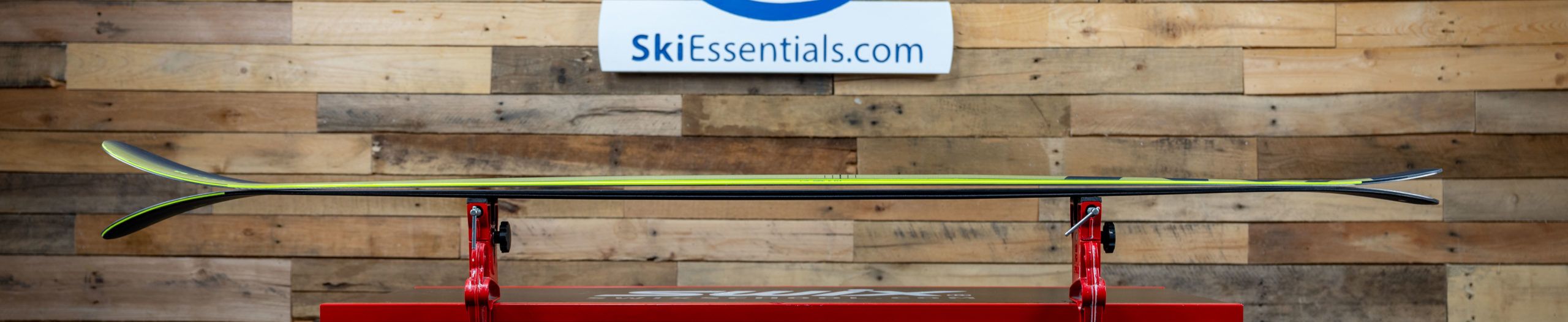
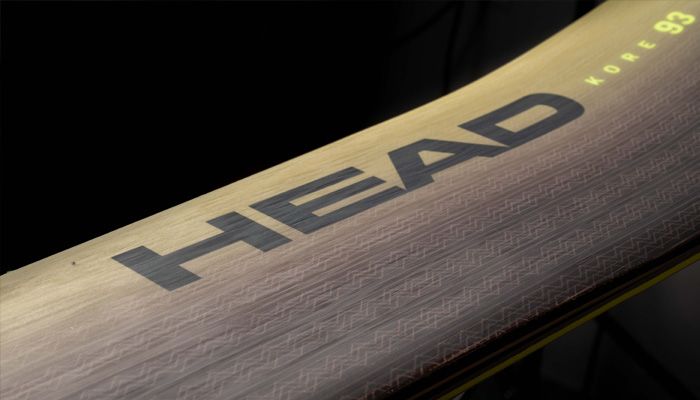
It took me a few days on snow to notice this, but there’s not a whole lot of camber built into the ski. it’s pretty flat overall. The main idea here is that the carbon and the graphene take care of the energy of the ski��there's no real reason to add it in in the form of camber. The tip and tail rocker is width and conditions-appropriate while the underfoot zone of the ski is pretty flat. If there was more significant camber, I don’t think the stiffness would pair well with it. The shovel of the ski has always been on the spoony side, with early taper that helps with soft snow performance. It’s always been kind of reminiscent of the Nordica Enforcer 93/94 in that it’s a narrower version of a benchmark freeride shape. I love the roundness of the shovel, and in some of the sugary and more granular snow that we’ve had so far this season here in Vermont, it feels great in terms of smooth initiation and quick transitions. This tip shape allows the skier to dictate the entry point of the turn, and the roundness and smoothness of it makes a lot of sense given the stiffness of the ski overall. If it were less tapered and more squared-off, then we’d be seeing characteristics more in line with the Supershape series rather than Kore. There’s nothing particularly interesting about the tail shape, which is fine, seeing as though that also means there’s nothing offensive about it, either. It releases appropriately, but is still subject to the stiffness of the ski which can make it seem or feel more intense than the weight lets on. Jeff had this issue with the tail more than I, mainly because I outweigh him by about 70 pounds.
This brings up the point that we found to be pretty true about the Kore 99 when we did a full review last winter. How much does skier weight and skill set fit into the picture that we’re painting about Kore? When they first came out, the general consensus was that these would be great skis for lighter skiers because they’re so maneuverable, and heavier skiers may end up finding that they’re too choppy or chattery to fully enjoy. Our stance has shifted since then, and the going knowledge now is that the Kore skis, and the 93 and 99 in particular, fit two pretty specific skier types. The first is still that lighter weight skier, but also happens to be on the less aggressive side of the spectrum. This skier uses shallower edge angles and operates at slower speeds. The benefit of the Kore to this skier is that the weight of the ski makes it easy to access and make quick and agile turns. In addition, the Kore provides excellent grip and reactivity for these skiers who are also looking for a high-end feel and a fair amount of precision. When you turn it, it goes, and that’s a huge plus to this large group of skiers who can vary in ability from intermediate to advanced. The second, and perhaps more interesting group, is skiers like myself. On the larger and more aggressive side of the spectrum, we generally lean to heavier skis with metal, but those aren’t always as quick. Kore 93 makes quick work of that second deficiency, adding agility and maneuverability to fantastic edge grip and energy. If you’re a bigger skier who prefers shorter and quicker turns, then the Kore 93 is right up your alley. On the flip side of this coin is a skier like Jeff, who has good technical skills and wants to ski the Kore like an Enforcer, but has a hard time reconciling the light weight and stiff flex combination. He likes to get his skis up on a high edge angle, but doesn’t quite have the mass to bend it fully. This results in chatter and some loss of control. Whereas I feel like my weight is a huge advantage in creating angles in this ski, Jeff doesn’t feel quite as comfortable. It’s an interesting spread of skiers that seem to like the Kore, and as usual, personal preference and style comes out on top as main determining factors.
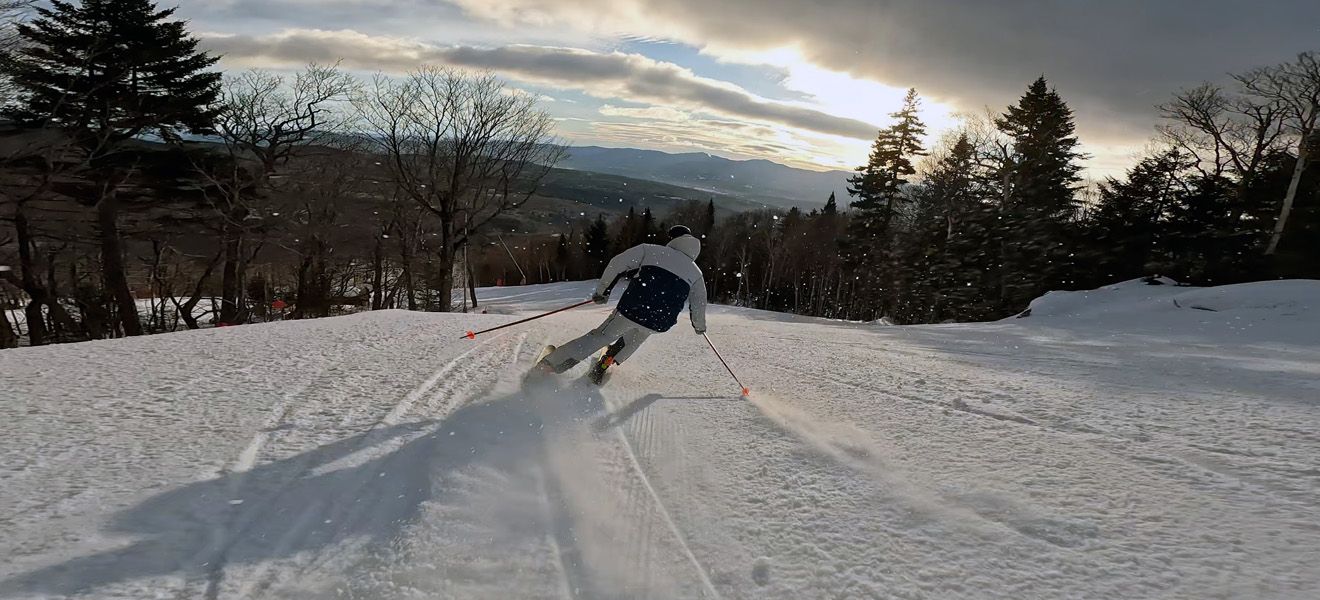
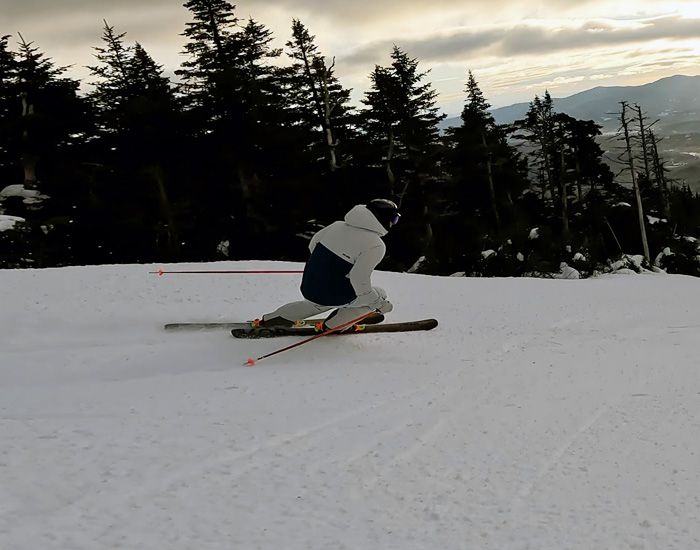
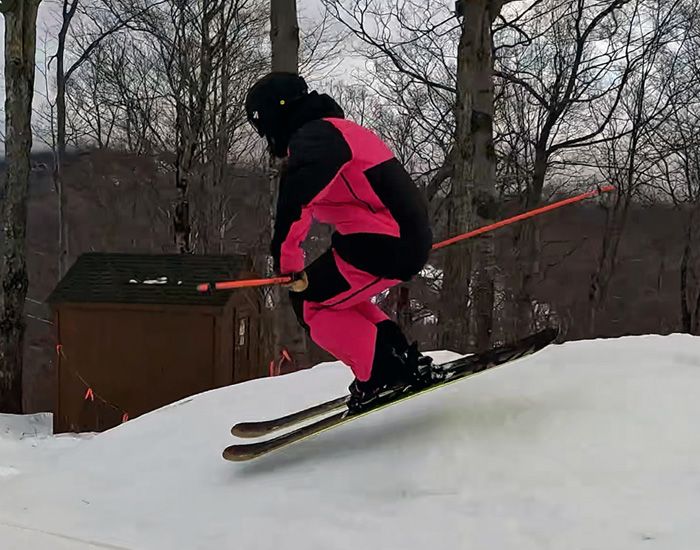
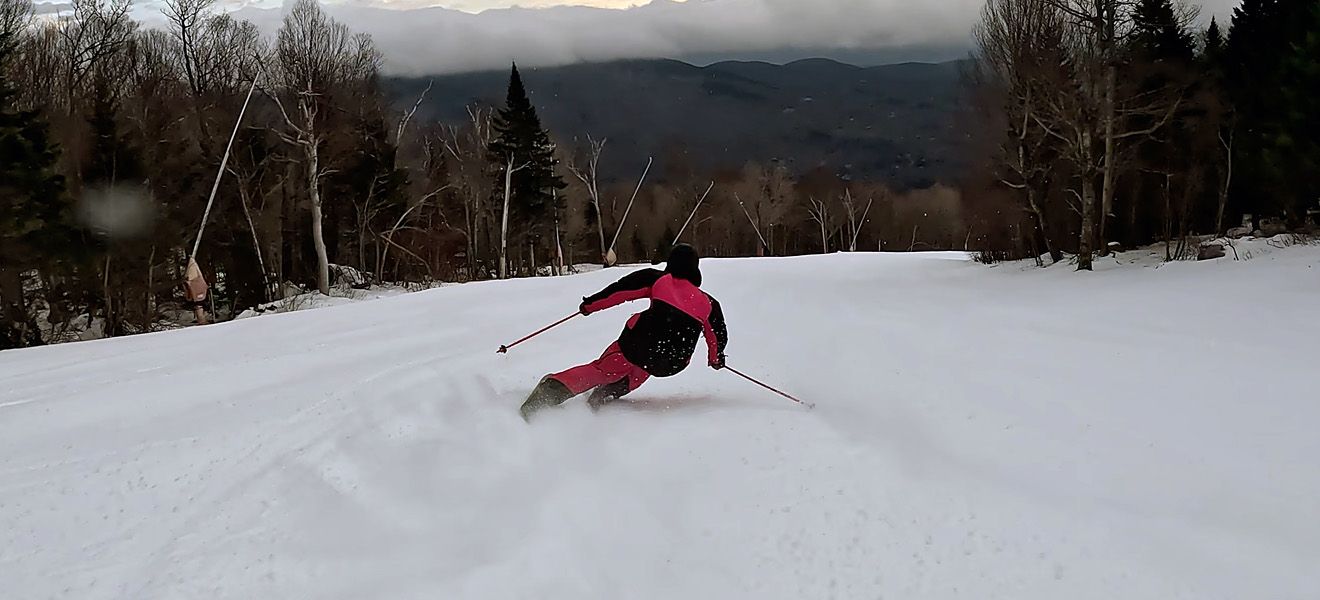
To add to the performance aspect of the ski, one of the main reasons I picked up the 93 as a personal option is that my kids are getting better and faster. I’ve always used an ~90mm twin tip for skiing with kids, and it’s great in most all situations, but now that they’re actually skiing real terrain, I wanted something that was maneuverable enough for slow-speed skiing while having that higher gear to crank it up. Whether I’m skiing with my family or by myself, the Kore has a much better performance spectrum than more playful twin tips. They’re so easy to ski in the woods, which is where we spend most of our time, and then when we pop back out on the trail, they absolutely rip carved turns. I love the confidence in the grip due to the carbon in this ski, and I've found that since I’ve grown older, I really am starting to gravitate to the carbon-powered skis of the industry. The technology and quality have come a long way, and it’s exemplified in skis like Kore 93. While those twin tips were more compliant in the bumps, at least from a zipper-line perspective, the Kore 93 handles moguls quite well, leaning heavily on the innate agility of the ski as a huge positive. Flotation in soft snow is better than average, mainly due to the lighter weight. All other things being equal, a lighter thing will float better than a heavier one. In crud and chop, the opposite is somewhat true, so heavier hitters in this range like Mantra or Bonafide will fare better in the manky snow, but again, everything is relative, and if you’re in the market for a lighter ski, you’ll have to deal with some limitations, and I feel that choppy snow is one of those realms. Overall, this ski performs soundly and is quite a bit sturdier than the weight may indicate. It’s a pleasure to ski in a variety of terrain and snow conditions, and holds up well to firm snow and ice, delivering predictable performance and a premium, precise feel.
I didn’t need new skis, but saw an opportunity to get something I always wanted, and the fact that I had the right bindings for the job helped out quite a bit. The Kore 93 is something that I can ski any day, in any conditions, at most all speeds. Skiers looking for that mid-90's do-it-all ski that falls on the lighter and stiffer side of the spectrum should certainly gravitate to the Kore 93. Those skiers who have been unsure in the past, there’s no need to worry, we’ve certainly pushed these things really hard, and they have stood up to the challenge each and every time.