2024 Candide Resort 101 Ski Review
Back in early November, news broke about the brand new Candide Skis, direct from the man himself, Candide Thovex. Since then, well, for one, it’s been practically impossible to get a pair (hopefully that will change soon), but luckily we’ve had a collection at our disposal for further testing. Also, although current conditions aren’t necessarily reflective, we did have a great start to the season in Vermont. From early season groomers, to some superb December powder days, to now spring-like conditions through a bit of the r-word, we’ve been able to test the Resort 101 in a huge range of snow conditions. This has been a more individual-themed review compared to what we normally do, with me (Jeff) opting to take off the demo binding and mount it with a Marker Jester to my boot sole. Sorry Bob, although we did determine last spring basically all the Candide skis match my skiing style a bit more than yours.
Now, before we get into the review, we just want to say we do share your frustration with their availability. We’re somewhat left in the dark, just like the consumer. We’ve received word that our order is on the way, but its arrival is still pending, which is the case for every other domestic retailer we’ve spoken with. There have now been two European drops, which sold out quickly. So, while we absolutely wish we could give you a hard date on when you can purchase a pair in North America, I’m hesitant to do that as so far, most of what we’ve been told hasn’t come to fruition. Regardless, I’ve been spending a lot of time on them, people are still curious about them, and you’ll be able to buy them eventually, so I think this is still a valuable use of our collective time (both on my end and yours).
At a Glance:
2024 Candide Resort 101 Skis

| AVAILABLE SIZES | SIDECUT | WEIGHT | ROCKER LENGTH | CAMBER HEIGHT |
|---|---|---|---|---|
| 167, 173, 179, 184 cm | 129 / 101 / 125 mm | 1,800 g @ 184 cm | 440 mm Tip / 440 mm Tail | 2 mm Underfoot |
Back to the fun part. In our announcement article and video back in November, we talked quite a bit about construction and shape, but I think a refresher is in order. Starting with construction, they are relatively simple. Hand built in Europe, we get a poplar and paulownia wood core with a blended fiberglass and carbon laminate. Candide Skis claims Bio-Based Epoxy too, which has emerged as a theme among many ski manufacturers as the industry moves as a whole towards greater sustainability. These construction results in a lightweight ski, just 1800 g in the longest 184 cm length, as well as a very snappy, energetic, responsive flex pattern. It’s evident when you hand flex them, and that theme carries over to on snow performance too.
Shape is arguably a bit more interesting. Triple Radius Sidecut is paired with a distinct twin tip shape, and amount of variation in the radius is quite significant. Underfoot, the ski features a long, approximately 30 m turn radius. The tips and tails are tighter with 18 m in the tip and 20 m in the tail, but what’s most interesting to me is the portions of the ski with tighter radii are seemingly exactly correlated to where the rocker starts. If you think about it, that means those shorter radii, if your ski is completely flat, aren’t coming in contact with the snow whatsoever. The higher the edge angle, however, the more you’re engaging the tighter turn shape. That is, however, slightly countered by the soft flex pattern. It’s a super interesting phenomenon to me, and the result is less of a control of turn shape, as you’d expect from something like Volkl 3D.Radius, and more gives the ski two fairly different personalities depending on how you’re skiing it. Again, more on that later.
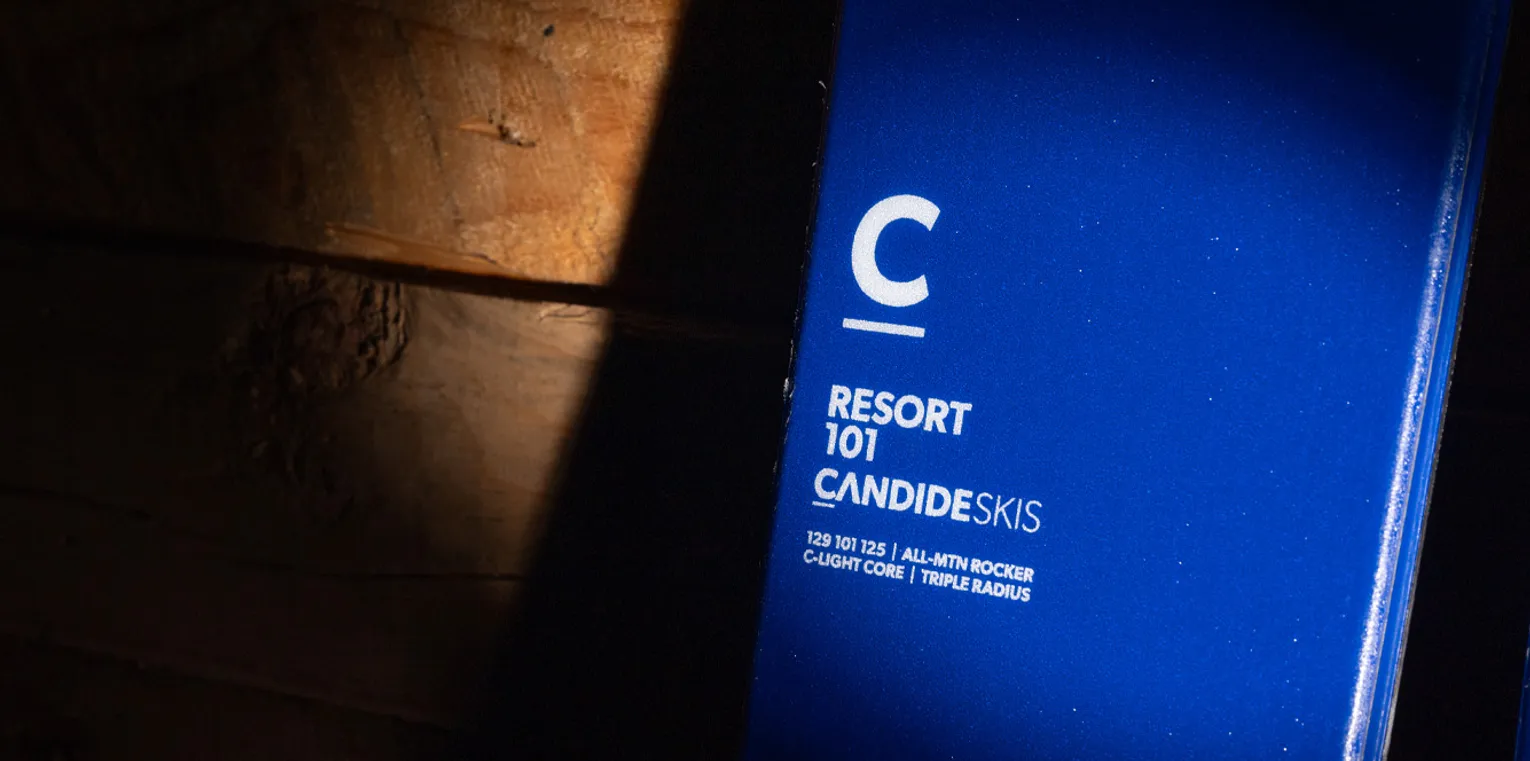
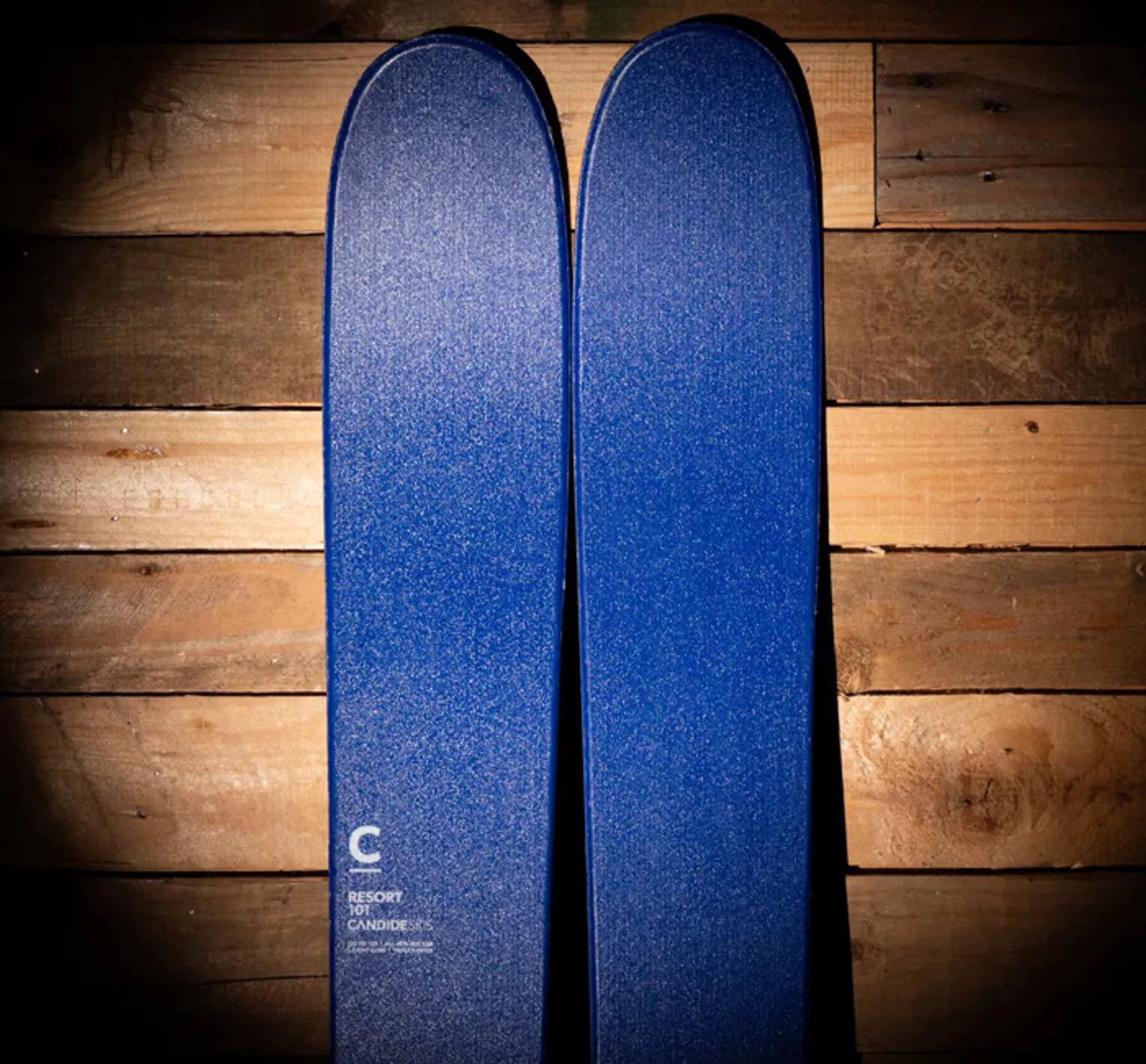
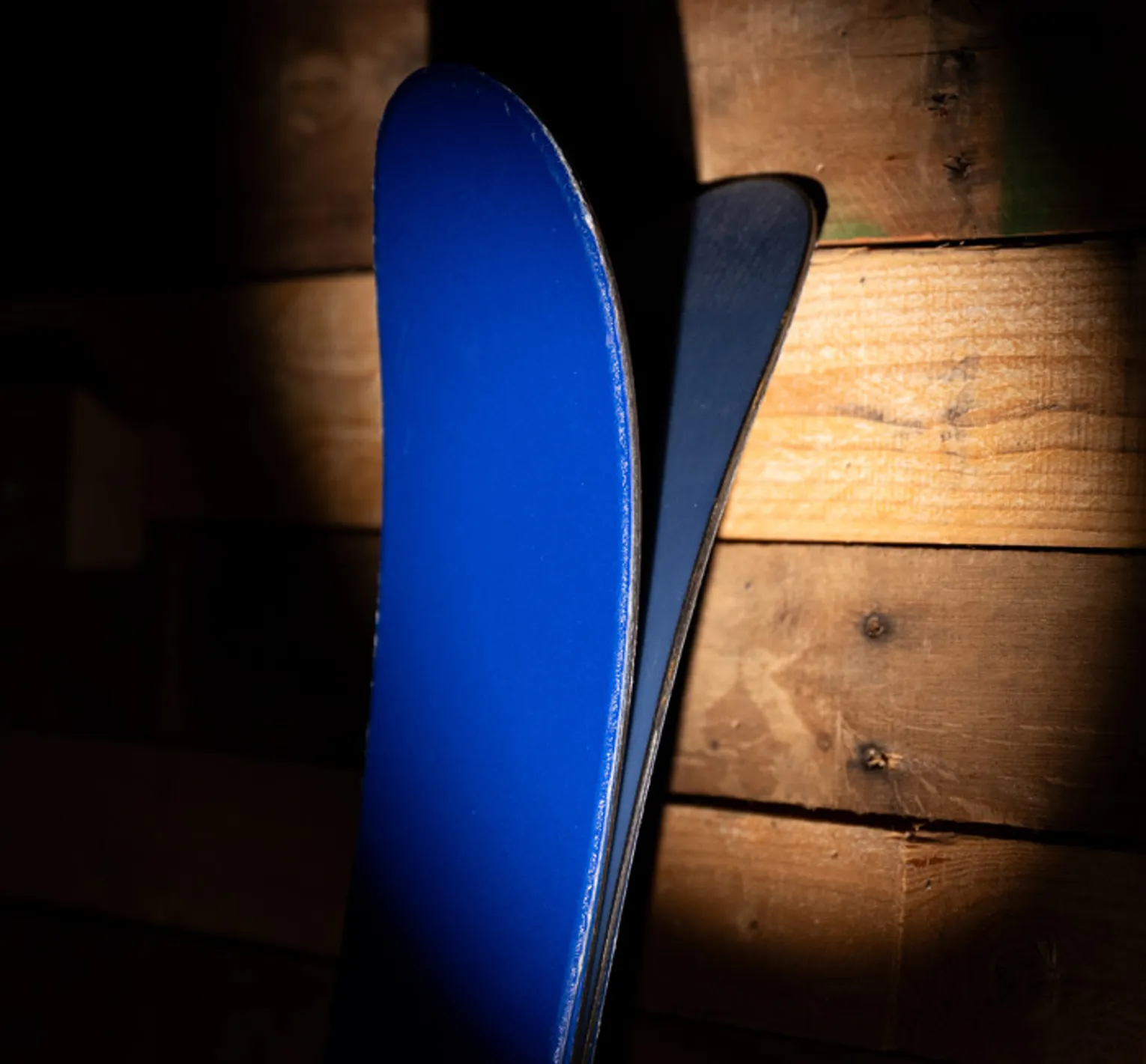
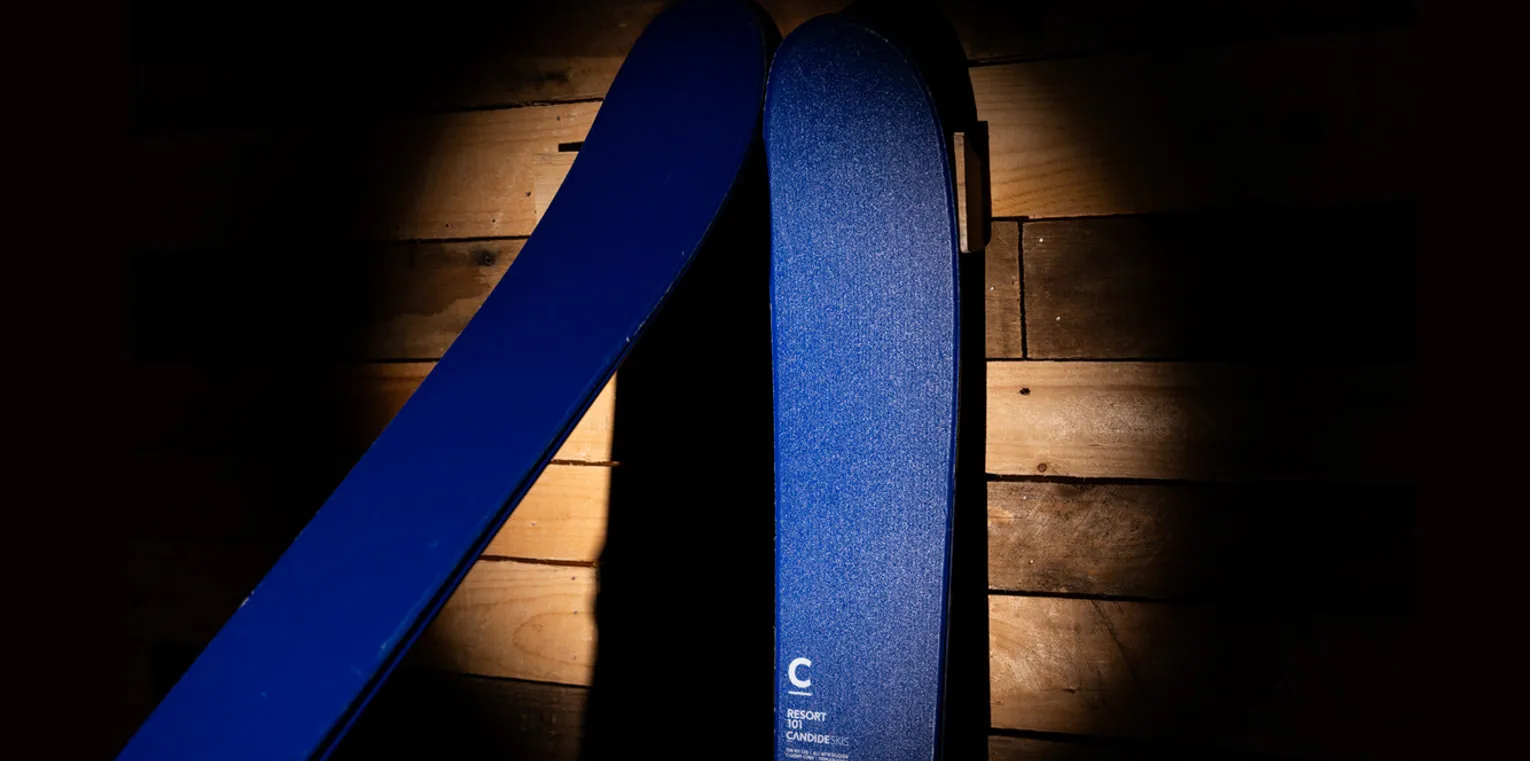
Last thing we’ll cover before we get into the meat of the review is mount points. Each Candide Ski features two mount points, “Regular” or “Candide.” The Regular line is about 7.25 cm back from true center, with Candide’s line about 3.25 cm back. I’ve read a fair amount of speculation that the Candide line would be true center, but it’s not surprising to me that it’s not. Candide, as far as I know, has never actually skied on truly center mountain skis, despite his prowess and past dominance in the park. Speaking of mount point, I originally tested them on the Candide line back in the spring, and also kept the Jester on that spot when removing the demo binding. If you know me, you might know my fondness for the Look Pivot binding, so why a Jester? One, I have no issues with the Jester, I’ve used it a lot. Two, Candide skis a Jester, and I thought it would be best to get to feel exactly what Candide is feeling.
Moving on to performance, we’ll start with groomers, because I think that’s a fun way to understand the shape of the ski, what it does well, and some of its limitations. I’ve been skiing the 184 exclusively, which is a bit longer than most of my recent twin tip choices, but is extremely manageable. On groomers, the standout feature to me is their energy, but more in a vertical sense than a longitudinal application. These skis are exceptionally bouncy. When I ski them, and especially when I look back at footage, I find myself popping, ollieing, and spending as much time in the air as possible. Popping to switch is super easy and they just give you this exceptionally playful feel anywhere you take them. Interestingly, that energy and pop doesn’t come through in turns as much as you might think, at least not carving turns. Short, skidded turns do feel very snappy and energetic, which is sweet, as it makes skiing the side of the tail as slower speeds feel like a fully immersive, dynamic experience. Carving, however, is interesting.
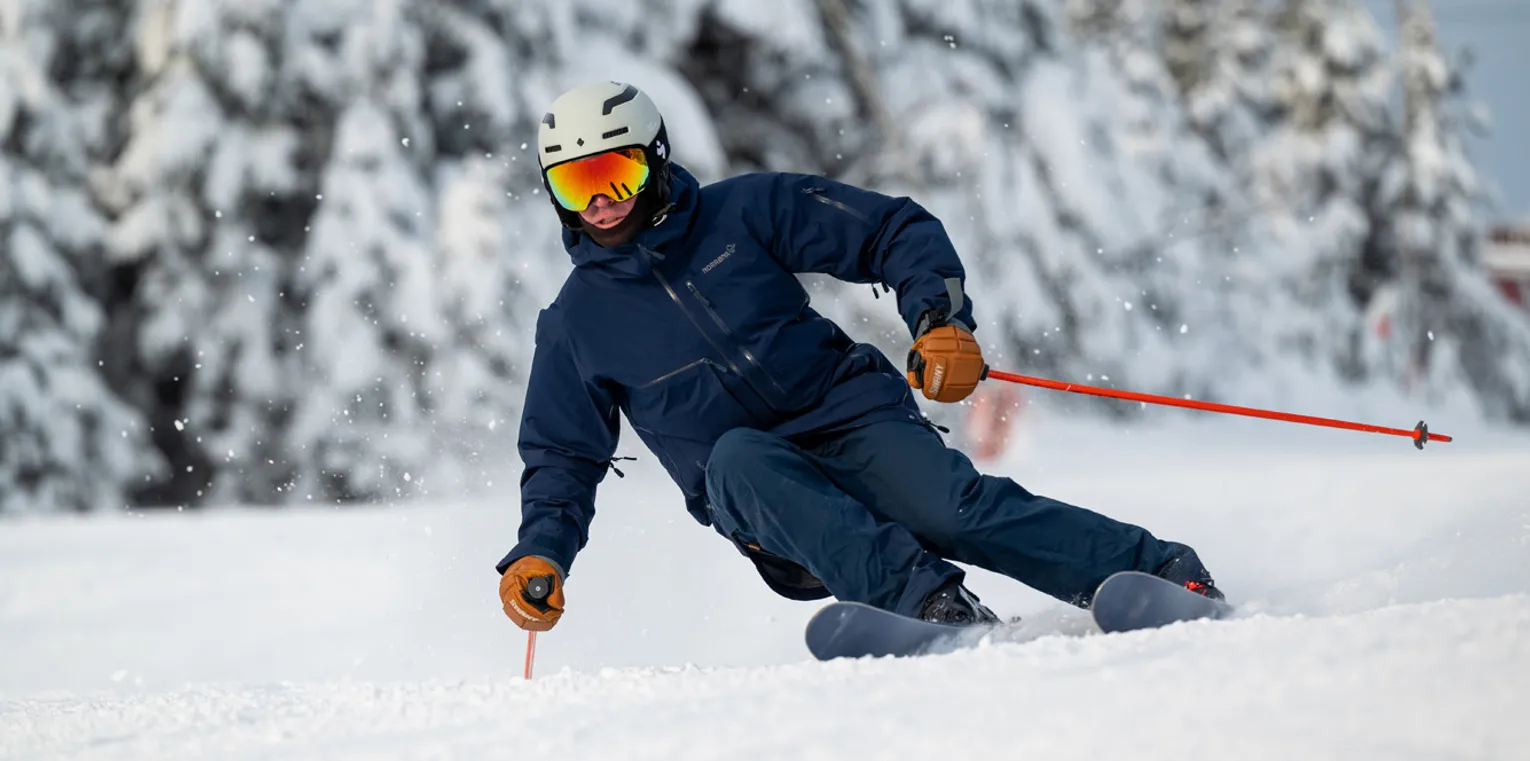
The word that I would use to describe carving on the Candide Resort 101 is delicate. It can do it, but it requires precision from the skier and someone with really good balance. A lighter-weight skier with a park background, such as myself, can make some awesome turns on it, but you can’t weight the forebody of the ski too much, which will be counter-intuitive for a more directional skier. The challenge is the portions of the ski that have the shorter radius, that in theory would help with carving, are also the softest sections of the ski, both longitudinally and, in my experience, in regards to torsional stiffness too. This is where it’s a bit of a delicate dance, as the further you tip the ski onto edge, the more it wants to turn, but the harder you push it, the more you feel like you might lose a bit of grip in the extremities. It’s not bad, it’s just interesting. It’s not a frontside carving ski, nor is it directional, so expecting high level carving out of it is somewhat irresponsible.
When I’m on a groomer on the Candide 101, I’ve learned to think like a park skier rather than a ski racer. That’s fun for me, and I think will be fun for a lot of other skiers out there. There are endless skis that satisfy ex-racers, so this doesn’t need to be another one. Go approach the mountain with a playful, jibby mentality. A lot of people have been somewhat surprised by this assessment when talking to me in person. It seems a lot of people expect a ton of stability and power out of these skis because of the way they’re used to seeing Candide ski. Remember, this ski requires precision and balance, and Candide is better at those two things than arguably any skier in the world. Also, he’s tiny. Candide makes me look huge, so he’s not pushing through its limits as easily as a heavier skier could or would.
That jibby mentality carries over to off-piste performance too, and in soft snow and un-groomed terrain, the ski has drastically surpassed by expectations. I’ve been opting for shorter lengths lately, so a 184 cm ski without much early taper and a relatively centered mount point felt like it was going to be a lot. I’m amazed at how quick and agile the ski is. Yes, it’s light, but there’s a lot of ski behind you to deal with. The way it slips and smears through soft snow and un-groomed chop is pretty amazing. It feels like there should be early taper back there, but there’s not, so you also get more float than most skis that achieve this quickness. It’s pretty darn awesome if you ask me. I give a ton of credit to the long radius underfoot, as the ski pivots on a dime, and the rocker profile too. It feels like the perfect shape to me when bouncing around in un-groomed snow. Super snappy, super poppy, loves to be in the air just like on a groomer, and there’s a reasonable amount of underfoot stability for landing and letting it run when you need to.
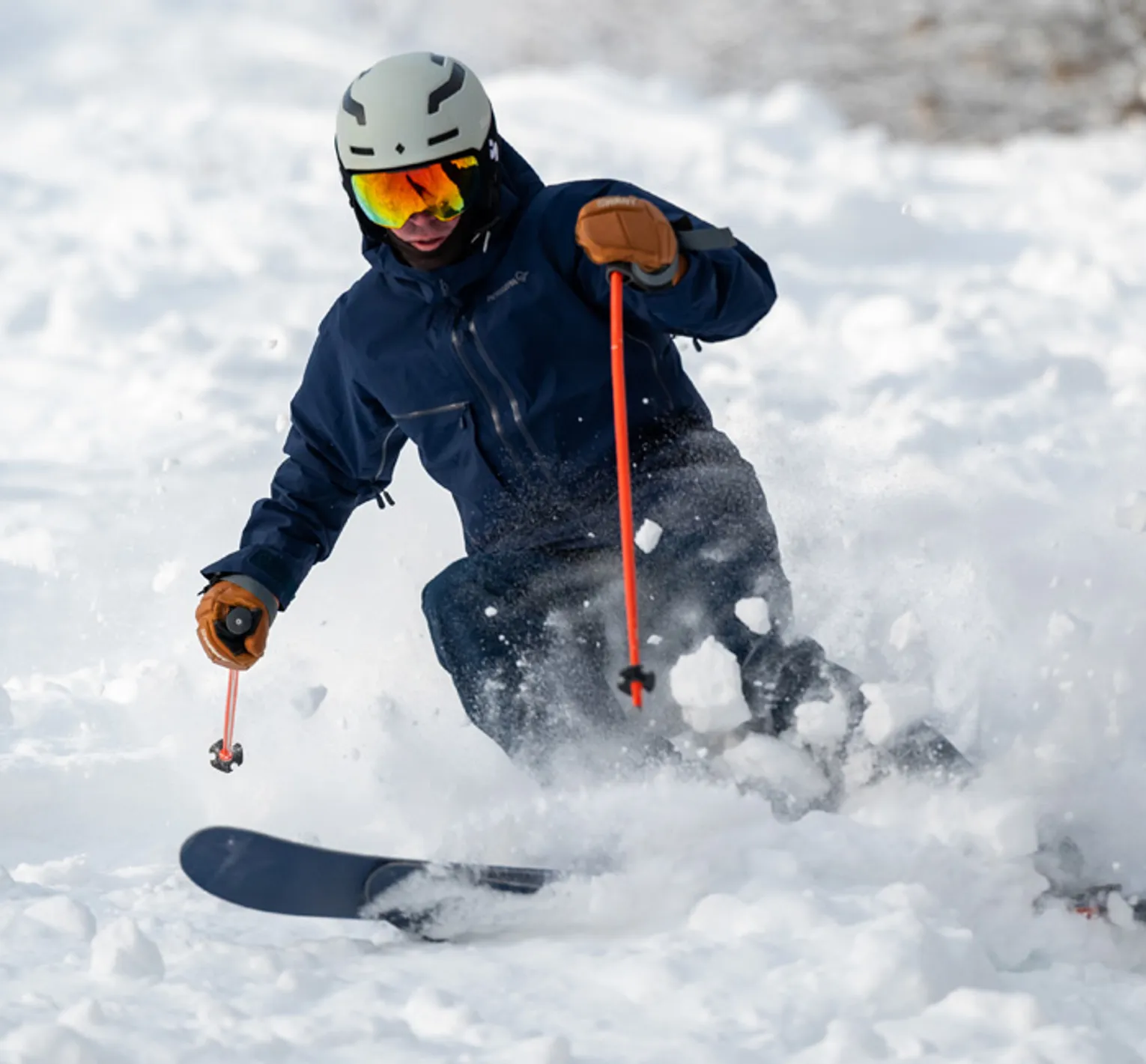
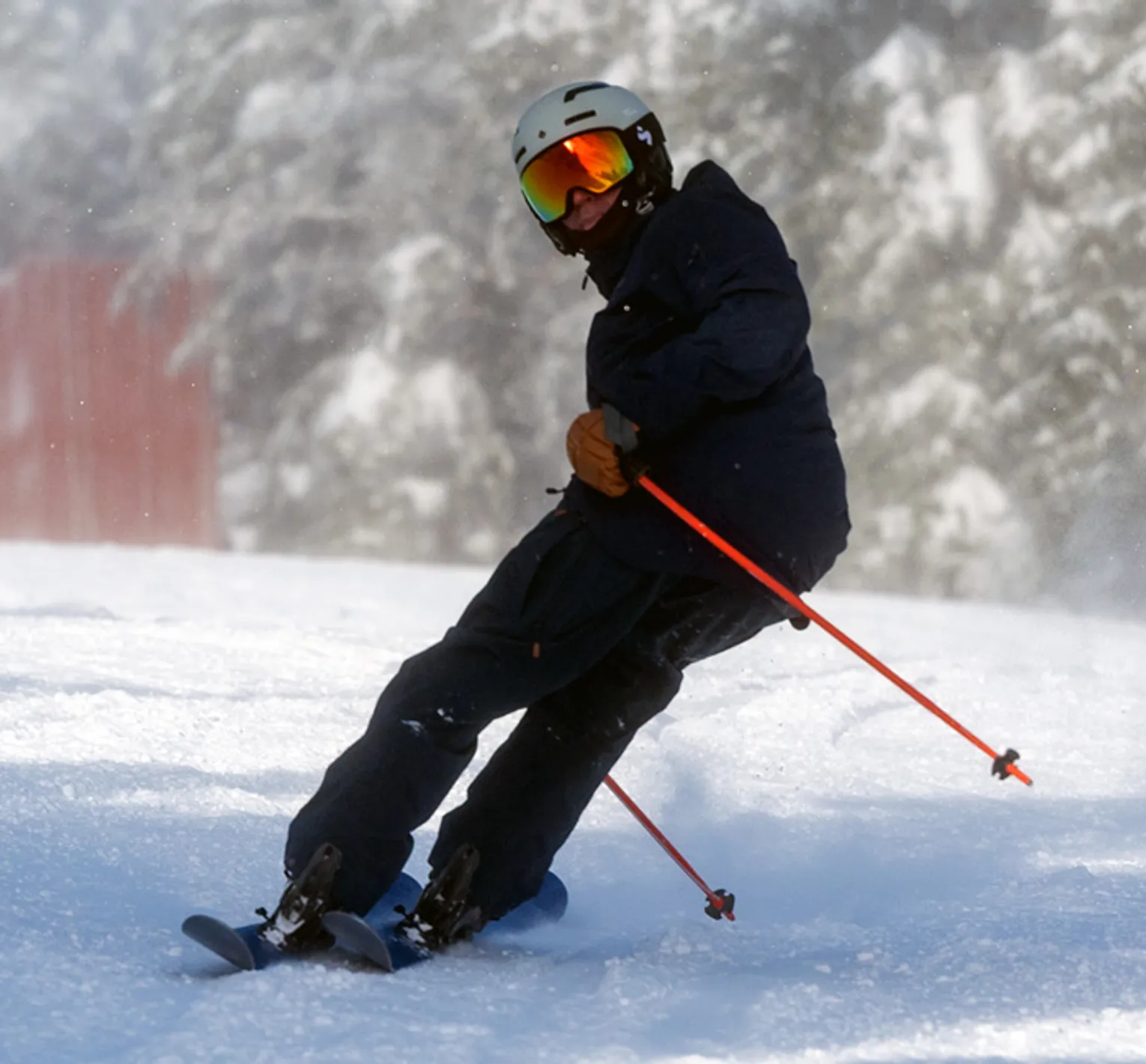
It is lightweight, however, and with its carbon-powered build, it can get deflected from time to time. What I’ve noticed both on and off a groomer is the softer the snow, the better the ski feels. On a groomer, you don’t notice the lack of torsional stiffness when the snow is soft and you’re creating trenches. Similarly in off-piste scenarios, when the snow is soft, the ski is buttery smooth and super quick. If you start hitting a bunch of frozen crap, however, the ski can get tossed around a little bit. Thinking about the Candide BC 111, that ski has a lot more power and composure when charging through choppy snow. If you think about Candide straight-lining through moguls, I feel like the 111 does that better than the 101, but again, if you’re Candide, you’re so balanced and talented you can do that on anything.
Taking the 184 cm length into the park was also a bit nerve-wracking. These days, my park skis rarely exceed 180, and even mid-170 feels a lot better to me. So, 184 is a lot. Incredibly, it skis so much shorter than that in the park, and I think I have to give credit to the weight, the long radius underfoot, and again the rocker profile. It never feels catchy, which still doesn’t really make sense to me, but it doesn’t. The swing weight is so low I found myself easily doing multiple switch ups on relatively short rails, something that’s typically hard for me to do on skis this long and/or this wide. It’s quite amazing. The flex pattern is a dream in the park too. Soft in the tips and tails, with a nice supple, yet supporting flex underfoot. It’s just what you need.
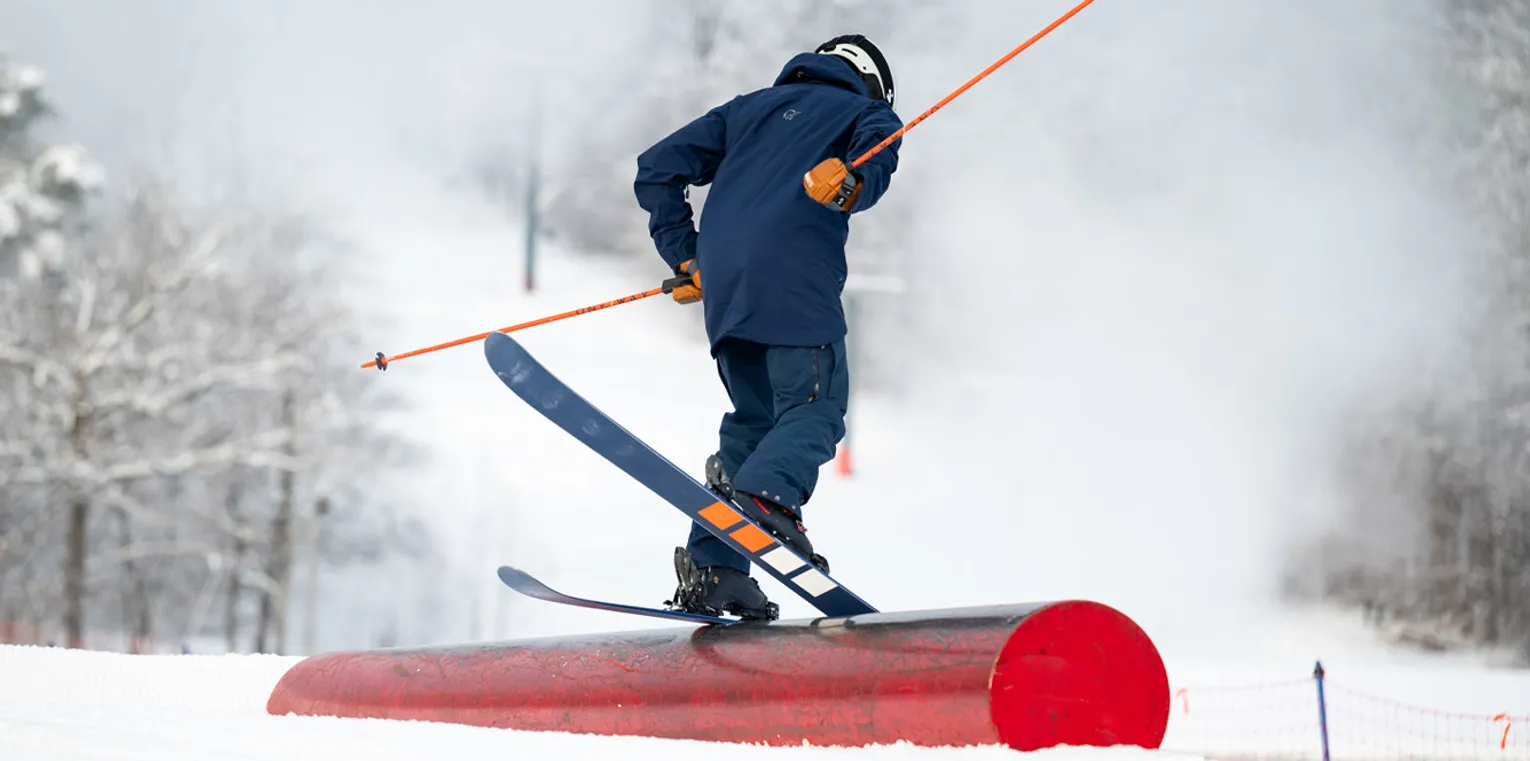
Here in Vermont, it’s tough to get on good sized park jumps this time of year, but having done some of that last season and taking it through the paces around the rest of the mountain, I’m confident they will excel. That’s probably the one spot I might opt for the 179, but I would also venture a guess it’s going to be more of a mental limitation than a physical limitation. I’ve never found the 184 to be catchy anywhere else, so why would I on park jumps? I’m going to keep that idea in the back of my head when I get the opportunity to get back on some jumps. In the meantime, I’m confident their combination of light swing weight, energy, responsiveness, and flex pattern created a tremendous ski for jumping.
All in all, is the Candide Skis Resort 101 a ski for everyone? No, certainly not. In fact, I would say there are a lot more skiers out there that wouldn’t like it than there are skiers that should be choosing it. That said, for the right skier, it’s an absolute dream, and I would argue that I fall pretty nicely into that category. There are other twin tips that I like just as much, of course, but generally for different reasons. Unleashed 98 is stronger and has drastically more edge grip. ARV/ARW 100 is softer and more agile with its increased taper, and smoother too. Bent 100 is a better directional ski. Playmaker 101 is a better soft snow ski with more float. Nightstick 97 is more well-rounded and more damp. Reckoner is softer and has a more buttery park feel. Candide Resort 101, however, might have the most precision. It might be the most unique. It might pop and ollie the best. I’m not sure, as all of those other skis are so much fun too, but what I am sure of is the Candide Resort 101 feels exactly how I would expect Candide’s skis to feel. So much so, that you’ll find yourself skiing more like him than you ever have before.