


2026 Kastle MX88 On Snow Ski Review
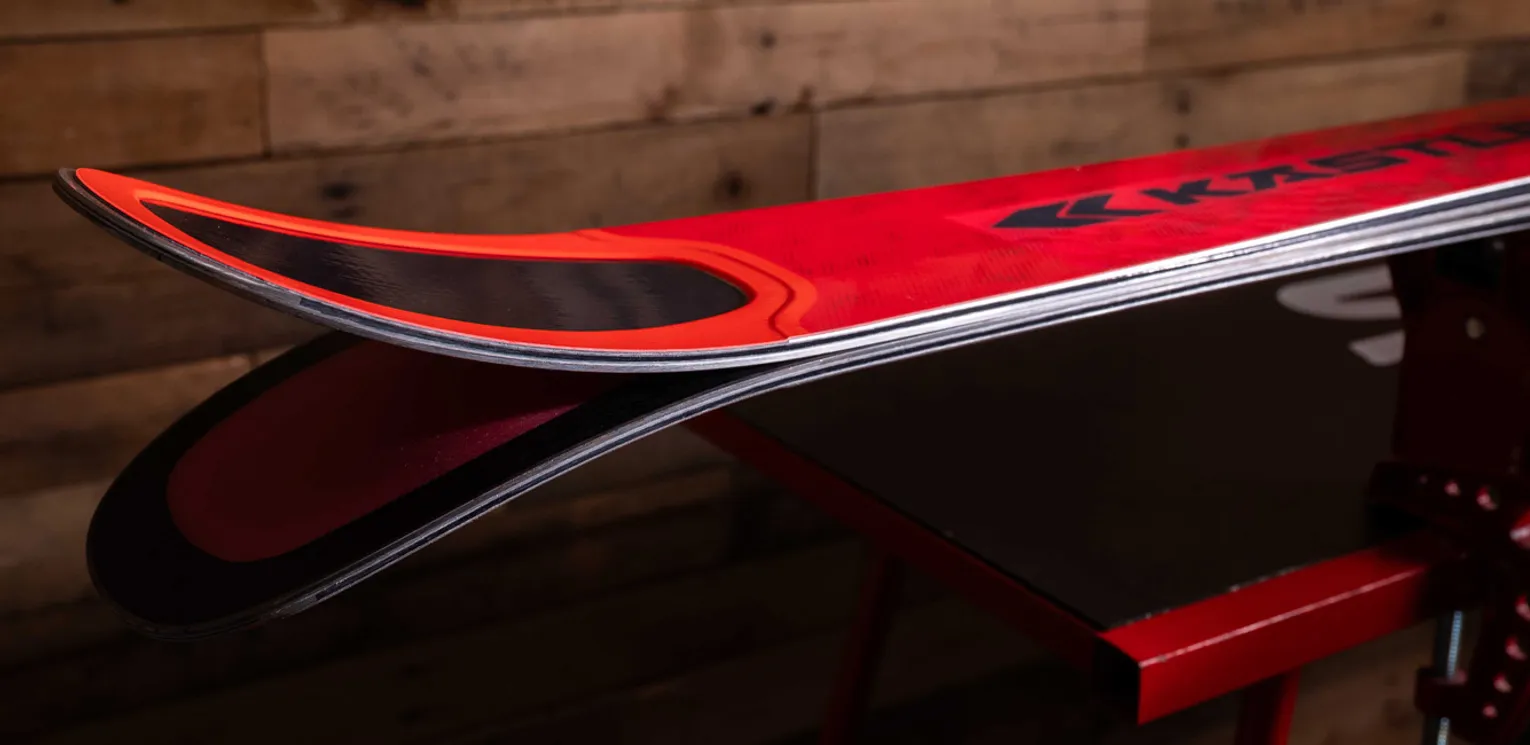
When it comes to precision and power-oriented skis, Kastle ranks right up there with the best of them. As the widest ski in the MX line of frontside/all-mountain skis, the 88 has the most versatility, stability at speed, and heart-pounding exhilaration. This is a high-octane ski that is directly connected to the snow, and lets you know all about it. While the shovel, especially at the very end, is a bit flexible due to the implementation of their Hollow Tech construction, the rest of the ski is all business. The tail, especially, with its sharp, angular, and aluminum-filled character, holds tight to the turn until the very end.
At a Glance:
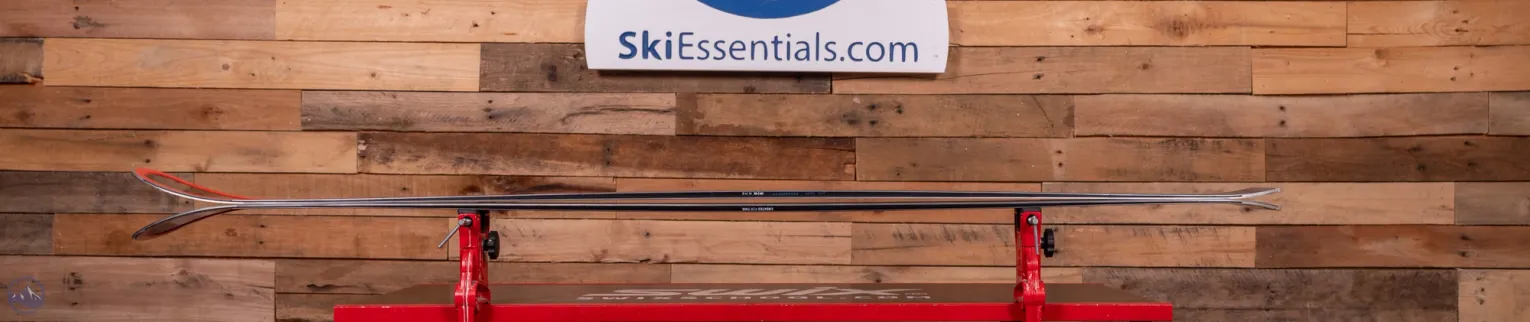
2026 Kastle MX88 Skis

| AVAILABLE SIZES | TURN RADIUS | SIDECUT | WEIGHT | PRICE |
|---|---|---|---|---|
| 167, 174, 181, 188 cm | 18.8 m @ 181 cm | 130 / 88 / 114 mm | 1,912 g @ 174 cm | $1,099.00 |
Built with Kastle’s Infinicore technology, the ski consists of what they call “impossibly thin” stringers of poplar and beech to set the stage for two full sheets of titanal and two layers of pre-preg fiberglass. The glass adds stiffness and energy to the mix while the metal keeps the ski locked in and super-stable. In our 181 cm test length ski, we get a turn radius of 18.8 meters, which is a lot, but it still feels like the shovel wants to start a shorter turn and the tail wants to let it run. As a result, this is a high-performance ski which suits the needs of experts and former racers who love the feel of a dialed and locked in ski for groomers and beyond.
Bob's Experience:
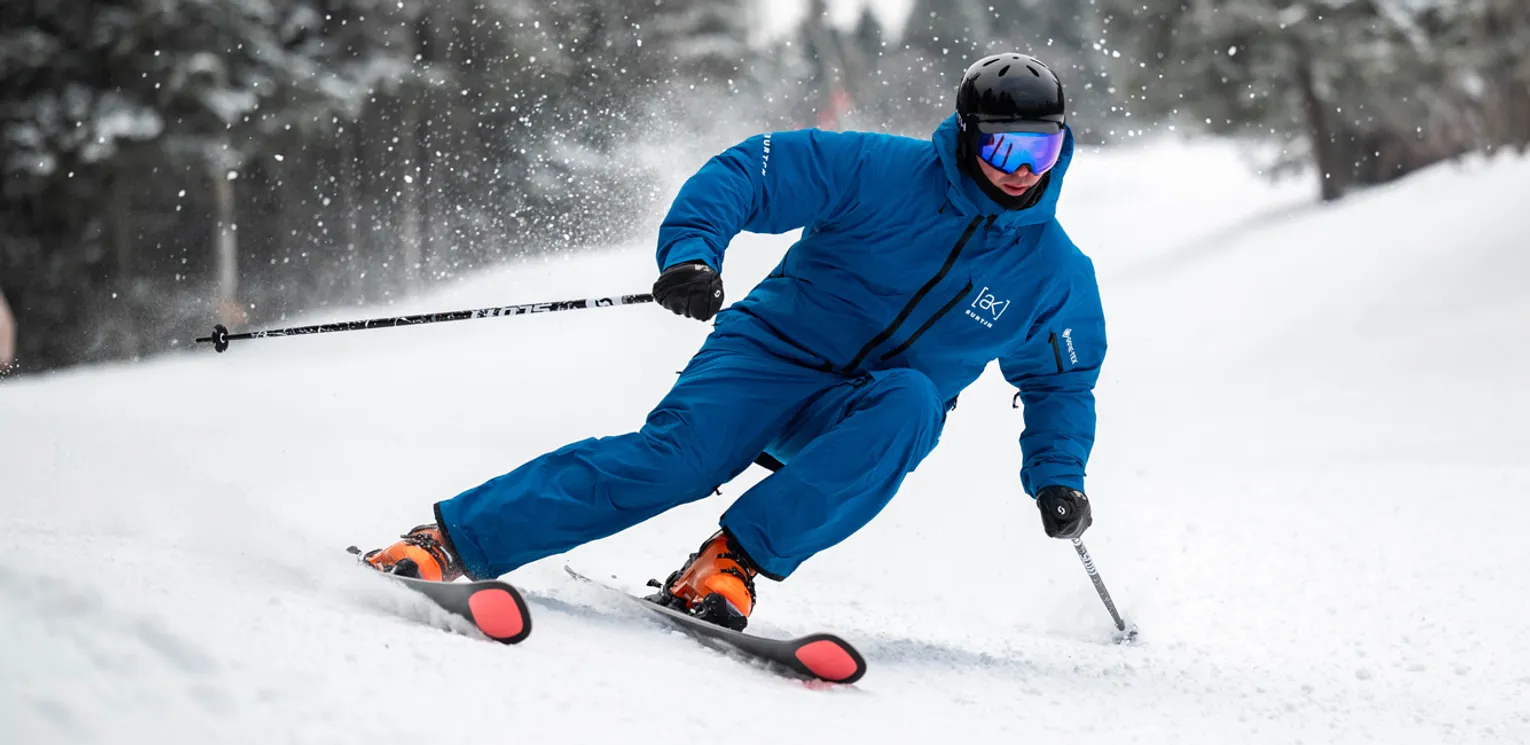
This ski is a pretty wild ride. When you get it going at speed and tip it on edge, you should be prepared to finish the job. The ski’s shovel can bend into the turn, and once you’re there, the ski takes over, and balance and strength are requisite for the completion of the carve. It has a race like feel and very minimal suspension to it in an on-piste and carving format. There’s a bit of a request here for a race plate, almost, to add that extra layer of damping and stability. As such, it feels like it is tip toeing the line between race and all-mountain, which isn’t a terribly comfortable place for a lot of skiers—this ski definitely fits more of a minority than a majority as it’s a specialized ski for high performance skiing.
Off-trail, or in less than groomed conditions, I actually really like this ski. It’s not terribly heavy, so it’s easy to maneuver; the shovel allows for decent flotation, and the short-turning capacity of the ski is more than accessible. In the crud and chop, it doesn’t power through like a heavier ski like Nordica Enforcer 89 or Blizzard Anomaly 88, it feels more like either a Rossignol Arcade 88 or a Volkl Mantra 88 in terms of lighter weight crispness and precision. If you want to ski through adversity, you have to have a deft and balanced touch.
Matt's Take:
Last year in my “What’s In Your Quiver” video, I mentioned that if I were to have a frontside carving oriented ski, that the MX88 would be a top contender. It has been a long time since I have skied them, so I was very excited to pick this ski for us to revisit on-snow. From what I remembered, these things were rocket ships and humbled me in a good way a few years ago. This time, I was excited to get back on them to see if my skills had progressed enough to the point where I could extract more out of them than last time. I was mostly filmer during this review, so I only had 1 or two full runs on them. But man, those were some great runs.
The conditions were challenging for sure. We were all struggling in one way or another. Luckily for my run, that heavy, wet, snow that was on top of the firm layer underneath had all been peeled away leaving a consistent and firm surface. The first thing I noticed was how much torsional stiffness there is underfoot. It’s crazy, you can push into them as hard as you want and they just keep tracking without a flinch. Of course, this changes when the snow becomes variable, but when the snow surface is consistent, it is insane how much confidence you get underfoot. The second characteristic that made itself clear right away was the stiffness and power that comes from the tail. It keeps you very honest, in that if you get even slightly out of position coming out of the turn, it will let you know right away. You need to be full-gas in the front of your boots to combat that, which is part of the fun of this ski as it challenged me to be better and be more fundamentally sound. The combination of focusing on my fundamentals with the confidence inspiring torsional stiffness underfoot brings out exponential progression from the start to the end of the run as you get more and more confident as the run goes on. That... That is what is so addictive about this ski, to me.
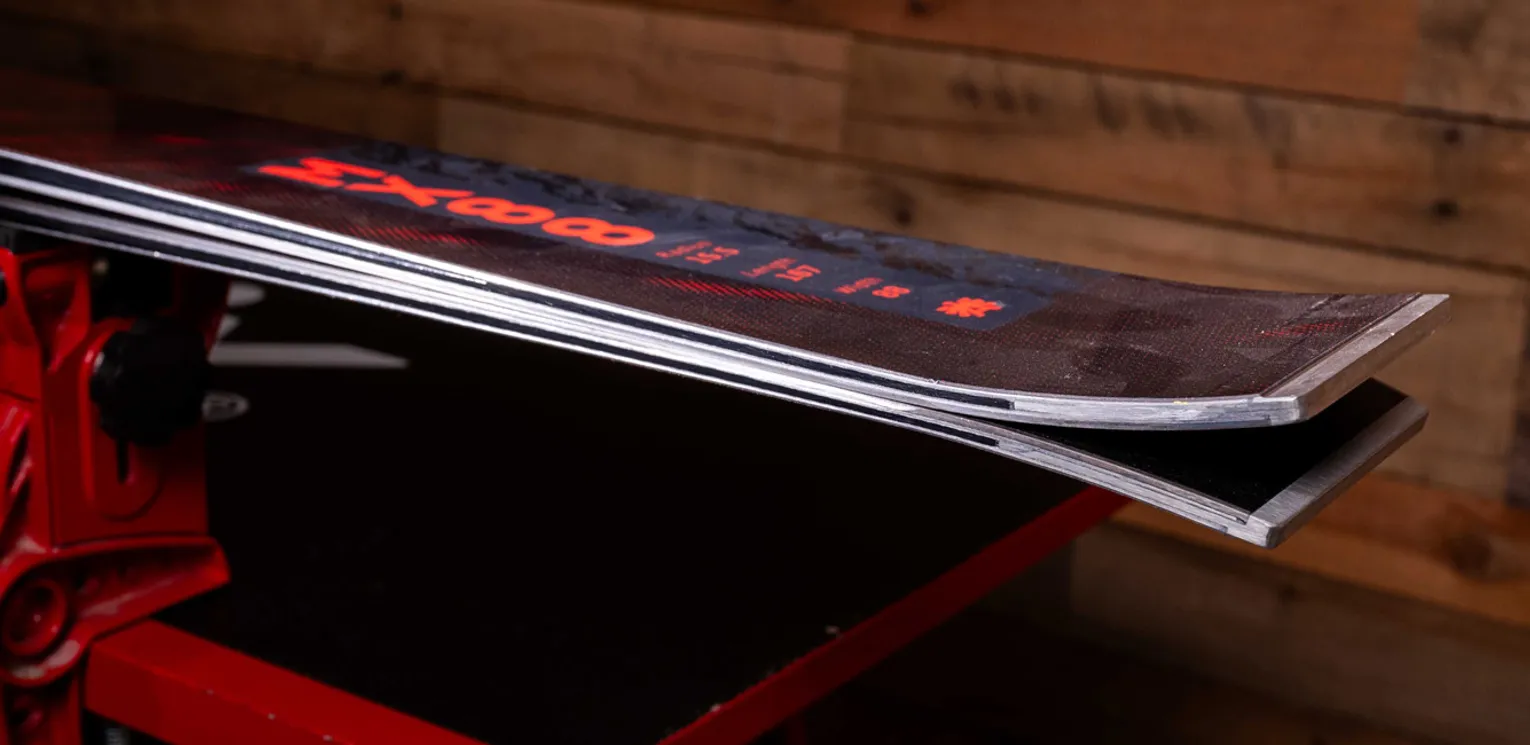
I should probably mention that I was on the 181 cm length and am 6’2” 195 lbs. The 181 felt fine, I would probably have liked the 188 cm length more in those conditions. But the 181 felt okay even in the more variable snow. The 181 cm felt incredibly reactive and snappy, only adding to that whole, “keeps you honest” theme. The 188 cm would have likely felt a bit more predictable and consistent, but the challenge of the reactiveness was super fun. The tips are quite soft with the HollowTech, so turn initiation was immediate and precise. That softer flex did make them more prone to be deflected off groomed surfaces, but the fact that they aren’t terribly heavy meant that you could recover right away. You just need a bit of technique to go along with it.
Overall, these things are awesome and completely understand how they are a premium product. If you want a sophisticated feel like a Stormrider but are aggressive and need something with a bit more raw power and precision, the is just what you need.
Jeff's Reaction:
I really enjoyed revisiting this ski as it’s admittedly been a while since I’ve skied a pair. Probably over a year. Hard to say. Anyways, it shocked me a little bit on our first day as to be frank, I wasn’t really having a great time. We had very variable snow with a frozen later underneath and a couple inches of wetter, heavier snow on top. I was skiing the 174 cm length and the combination was a little bit twitchy. The softer shovel of the MX88 would plow a little bit from time to time, or bend unexpectedly if I reached that firmer layer underneath too quickly. Don’t get me wrong, it was still a lot of fun, but I found myself needing to ski very carefully, which didn’t exactly align with my memory of the MX88. I wanted to ski fast, hard, and push as much as possible in each turn, and the combination of conditions and ski length just wasn’t letting me do that.
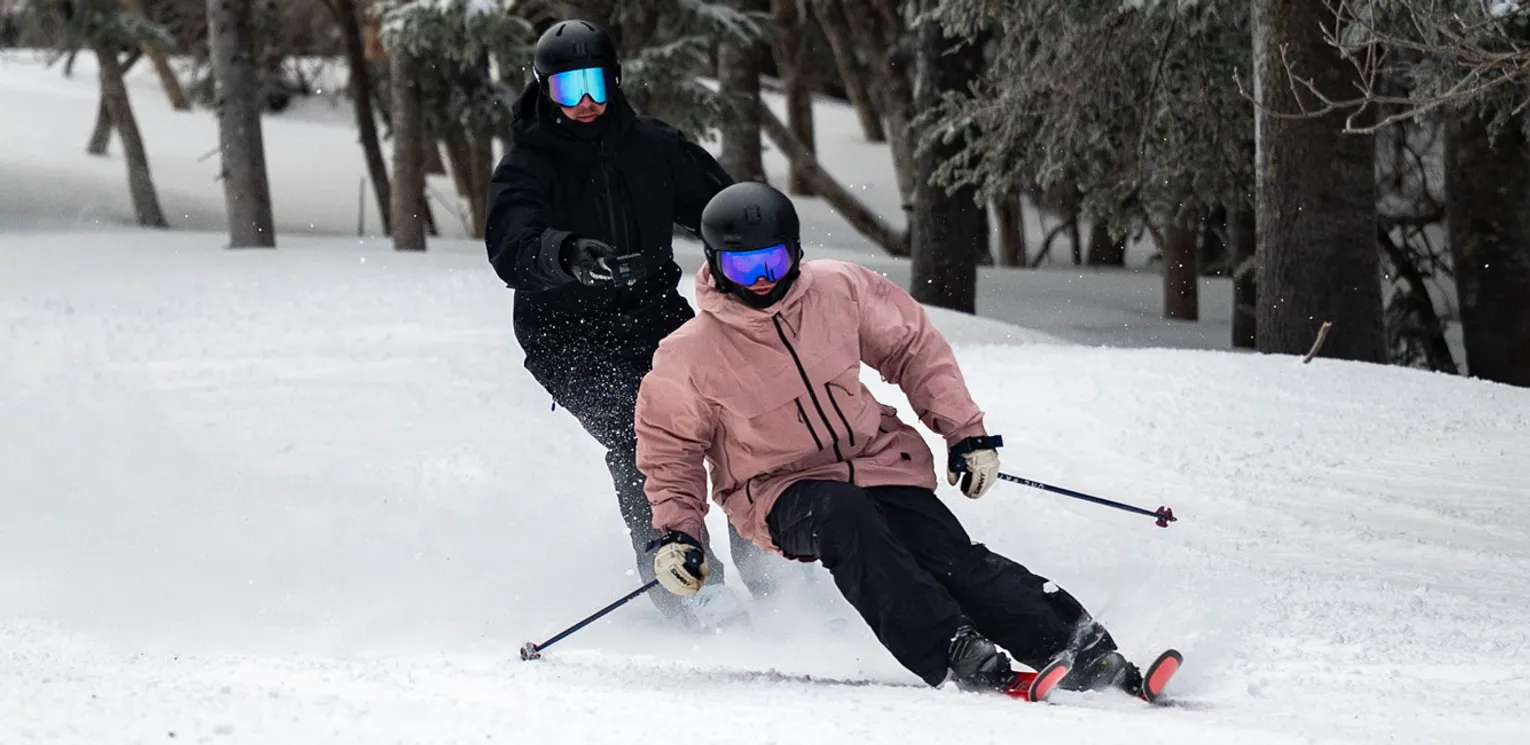
Switching with Bob and moving to the 181 cm length, however, I had much more success in the variable conditions. I found that instead of initiating all my turns with the shovel of the ski, I could rely more on the middle of the forebody of the ski, which is significantly stiffer than the actual shovel. That look away a lot of the uncertainty for me, which led to faster, smoother, and more confident turns. Looking back at footage, I wasn’t really getting it to rip across the fall line in the longer length, but it certainly felt better. If you eliminate the actual tip and the Hollowtech construction, the rest of the MX88 is stiff, strong, powerful, and very precise. The contrast between the uncertainly I had in the tip of the 174 with the power and precision of the rest of the ski was somewhat hard to handle, but moving to the 181, the entire experience felt more consistent and more in line with what I expect out of the ski.
Fast forward three days and the snow was much better. Some of the best, grippiest, coldest snow you’ll ever experience on a groomer. I wasn’t ready to write off the 174 cm length as on paper that should work for me. Gave it another go, and I was quite pleased. This is what I want out of an MX88. Absolute precision in each turn and unflinching confidence at high edge angles. That’s similar to what I experienced in variable conditions on the 181 cm length, but the perfect snow allowed me to make quicker, shorter radius, and arguably more dynamic turns on the 174. It brings up an interesting conflict of which length I would prefer. Considering the variability of New England skiing, around here, I think I would go 181. If I lived somewhere with perfect groomers almost every day (looking at you, Deer Valley), the 174 would be my pick. It’s counter-intuitive to me as generally if the snow conditions are more challenging, I want a shorter length, but it’s flipped in the MX line. I actually find more forgiveness in the longer lengths, which doesn’t happen very often.
To end our second day, we skied some bumps. Not really what the MX88 is designed to do, but it is an all-mountain ski. Bob said it best. It’s not a beginner mogul ski, that’s for sure. I’m not as good as Bob in the bumps, but on the right ski I can hold my own. I was struggling quite a bit on the MX88, but mostly when things got steeper. On mellow, soft bumps, it wasn’t bad at all. As soon as I felt like I needed to control speed by putting the skis a little bit sideways (Bob would tell me not to do that), it became very challenging.
My biggest takeaway after a couple days on the MX88? If you love carving turns on groomers and basically want a frontside ski in a wider platform, it’s excellent. If you want all-mountain versatility, you’re better off sticking with the Kastle Paragon line or even something like the Stockli Stormrider 88 we recently reviewed. Two very premium skis, the Stormrider 88 and MX88, but they have vastly different personalities.
Keep Exploring the 2026 Kastle MX 88 Skis: