

2026 Rossignol Sender Free 100 Ski Review
We’ve said it before, and we’ll say it again—give us a ~100 mm twin tip with a nice construction and we’re going to have a good time on it. The all-new 2026 Rossignol Sender Free 100 is a shining example of this philosophy. With a strong connection to the super-successful Sender Free 110 from a shape and profile perspective, the narrower 100 provides excellent all-mountain performance with a focus on freestyle and park execution. Due to the slimmed-down profile, the 100 doesn’t need as strong of a build as the wider 110 because of the natural increase in torsional stiffness, again with a streamlined view of slopestyle, jumps, and rails. One of the other interesting aspects of this new 100 is that there’s kind of a lot of potential crossover with Rossignol’s own Super Blackops 98. Whether this is more of a move to phase out that ski and streamline their twin tip line or something else, we’re not sure quite yet, but there’s no denying that having two twins within this range is, at the very least, rare. I suppose we’re seeing it from Nordica, with a more price-point oriented Unleashed 98 CA to complement the 98 Ti, or Faction’s Prodigy and Studio lines, but these are exceptions, rather than the norm. To be sure, the construction, shape, and style of the Blackops and the Sender Free are different, but they’re definitely close. With greater symmetry and a more mobile nature, this Sender Free 100 takes modern freestyle skiing to the next level.
When this ski was first shown to us and many others in the industry, there were some grumblings and groanings about how the 100 didn’t get the same exact build as the 110, and we get that, but given what they’re going for with this ski, it actually makes a lot of sense. To recap, the Sender Free 110 uses a poplar wood core (same as in new 100, Air Tip (same as 100), and a somewhat similar Carbon Alloy Matrix laminate. Missing, most notably, is the titanal beam found underfoot in the 110. This is where most of the lamenting comes from, but we’ve found that with the narrower shape, and the slight difference in the CAM laminate, it’s not entirely necessary for what this ski is designed to do. In the 100, the CAM laminate features a 2:1 Basalt to Carbon ratio and is found below the core while in the 110, we get a 1:1 B to C ratio layer on top of the core. This adds liveliness to the 100 as that energetic material is closer to the snow and is more reactive with the terrain. While the Air Tip allows for easier mobility and agility, this is still a ski on the heavy and somewhat stiff side. In the 184, we’re observing weights between 2010 and 2040 g/ski. Most of this is due to the thickness of the core profile rather than heavy additive materials. Underfoot is where most of the stiffness resides, and that also has a lot to do with the ski’s amount of positive camber—there's a lot of energy built into the middle of this ski while the tips and tails are on the more flexible, yet still supportive side. Due to this sturdy feel underfoot, and the “narrow” nature of the ski, I’m just not sure this ski is missing the metal at all. Maybe for a damping agent, but it probably wouldn’t have boosted the performance in any meaningful way, especially given its park proclivities.
At a Glance:
2026 Rossignol Sender Free 100 Skis

| AVAILABLE SIZES | TURN RADIUS | SIDECUT | WEIGHT | PRICE |
|---|---|---|---|---|
| 164, 172, 178, 184, 190 cm | 18 m @ 178 cm | 130 / 100 / 123 mm | 1,935 g @ 178 cm | $649.95 |
In looking at shape and profile, the Sender Free 100 certainly has more of those park leanings. With a more symmetrical shape than many of its competitors save for slopestyle-specific skis, the Sender Free’s sidecut dimensions shake out to 131/100/123 mm at 184 cm length with a 20-meter turn radius. This 8 mm drop in total taper is more well-rounded than most, and with a more central mount point, the ski certainly falls more on the dedicated twin tip side. Skiers get a choice of three different mount points here, a 0 line, which is 3.5 cm back from true center, a +2 and a –2. The +2 line, at about –1.5 from center, is ideal for park skiers and those looking for the most creative feel while the –2 helps directional skiers pressure the front of the ski more and get stronger and smoother carving performance. When you’re at the 0 line, it still feels quite central, and there’s a lot of tail behind you. Chances are, if you’re more of a directional skier, you’ll like this ski much more at –2, but that’s a journey that each skier must walk themselves. The overall footprint of the ski is where we see a bit more taper and splay than the Super Blackops 98 as well as the Sender Free 110. Those skis fall more to the freeride side of the spectrum, while this ski has more symmetrical splay that usually indicates more of a freestyle preference. This makes switch takeoffs and landings easier as well as decreasing the hookiness of the ski on big jumps and lips. In addition, this increases the ski’s smeary nature, especially if you’re in the more central mount points. There’s a good amount of camber in this ski, especially underfoot, attributing to the excellent energy and pop out of the ski.
While on-piste or carving isn’t a main focus of this ski, it’s tough to ignore that it holds an edge quite well. With most of our demo skis, the bindings are set to the 0 line, which makes sense, but without moving it back for more directional performance, it’s clearly a very central ski and should be used thusly. If you’re at 0 and are looking for smooth carving power, the Sender Free 100 is happier making rounder, more across the fall line carves. If you bump it back to –2, the ski does open up a bit, but the overall taper shape still keeps that tail popping up and energized. It doesn’t kill the ski by any means but should be paid attention to. If you’re using this 100 as a means to the park or if you’re not overly concerned about on-trail carving performance, you will be more than satisfied with the energy, edge grip, and slarvy overall feel of the ski. It’s a nice mix and even blend of pep and play. There are grippier and more stable skis in this range—I'd rather carve on a Salomon QST 100 or a Dynastar M-Free 100—both similarly built and weighted skis—and certainly there’s more power and heft in Nordica Enforcer 99, but you give up a lot in the freeride realm.
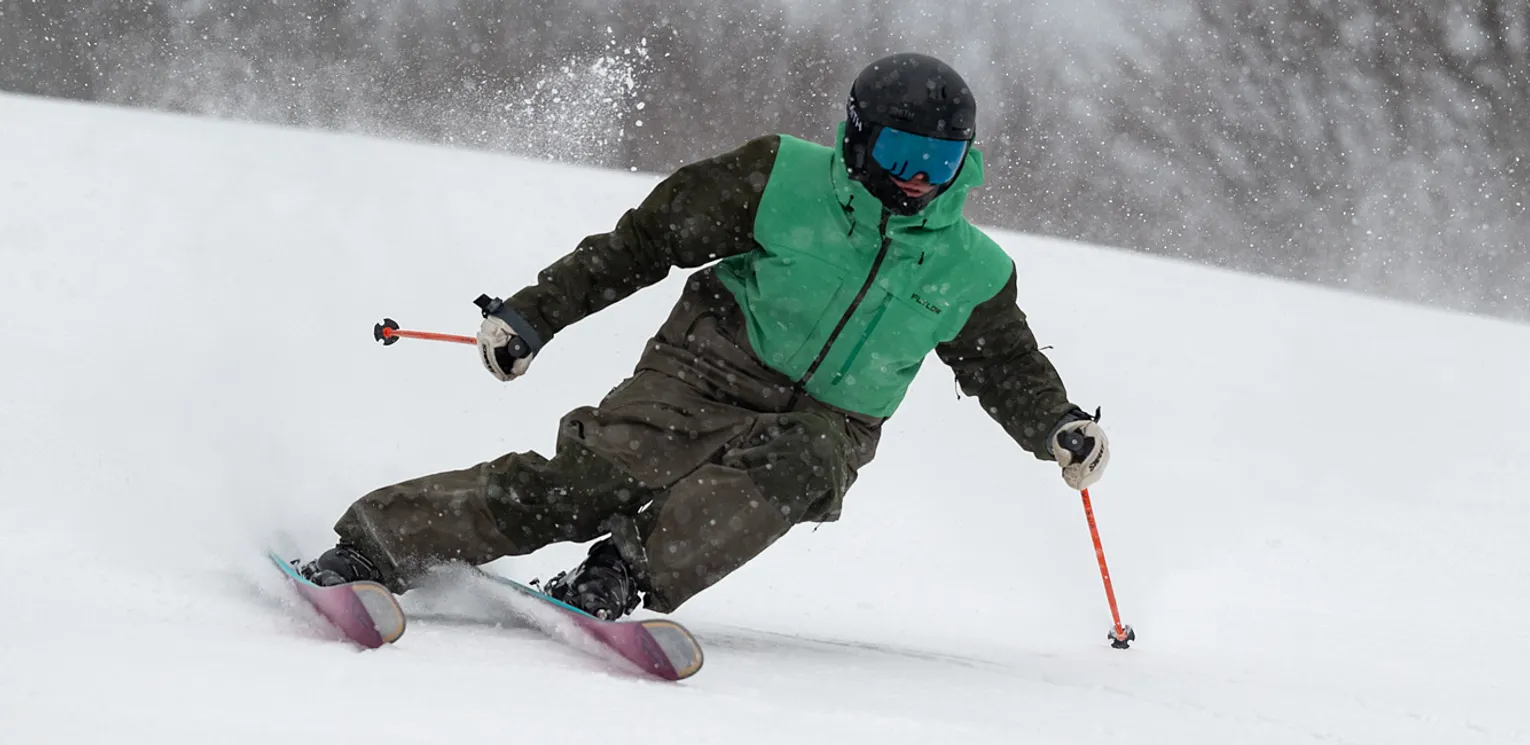
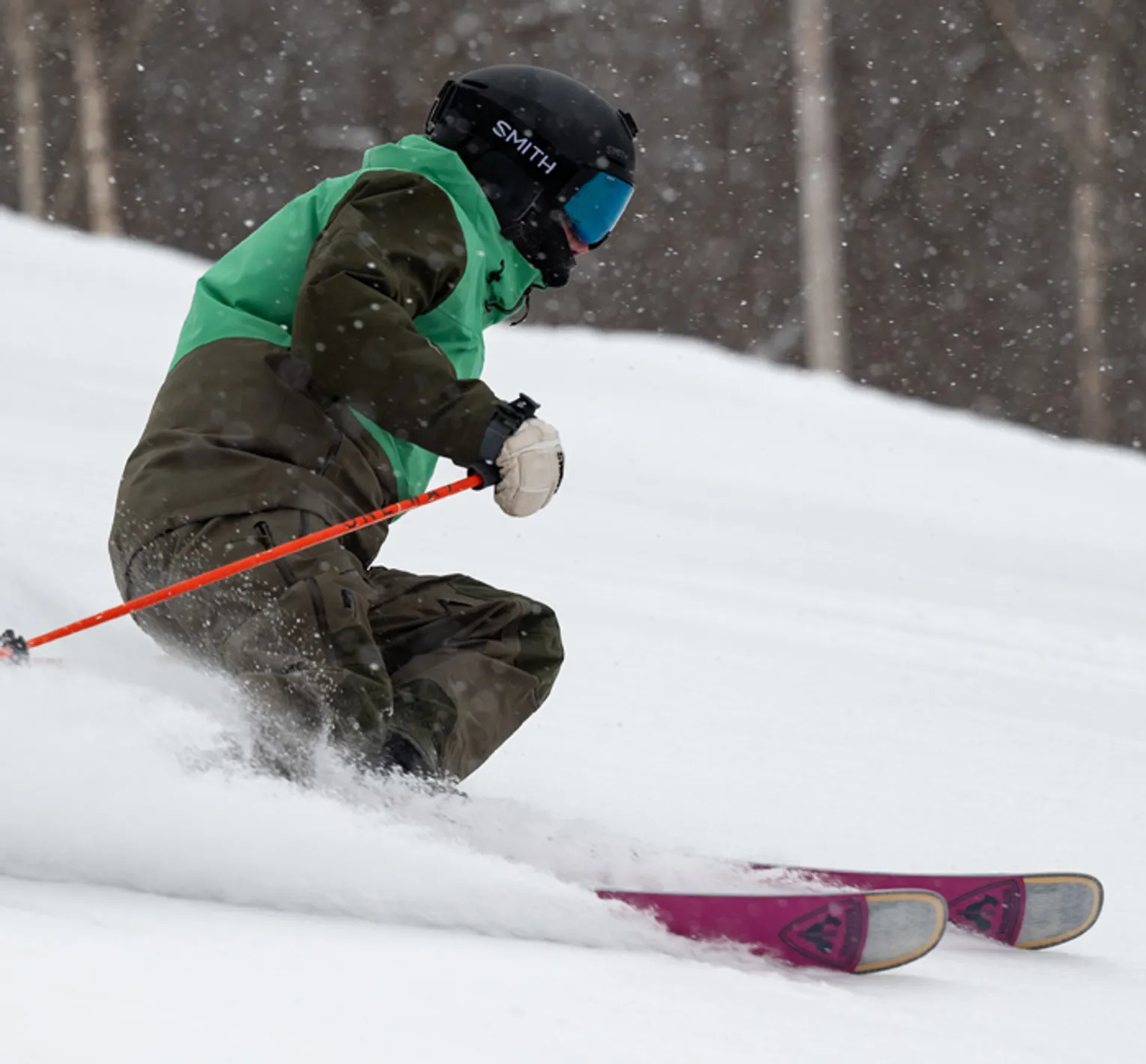
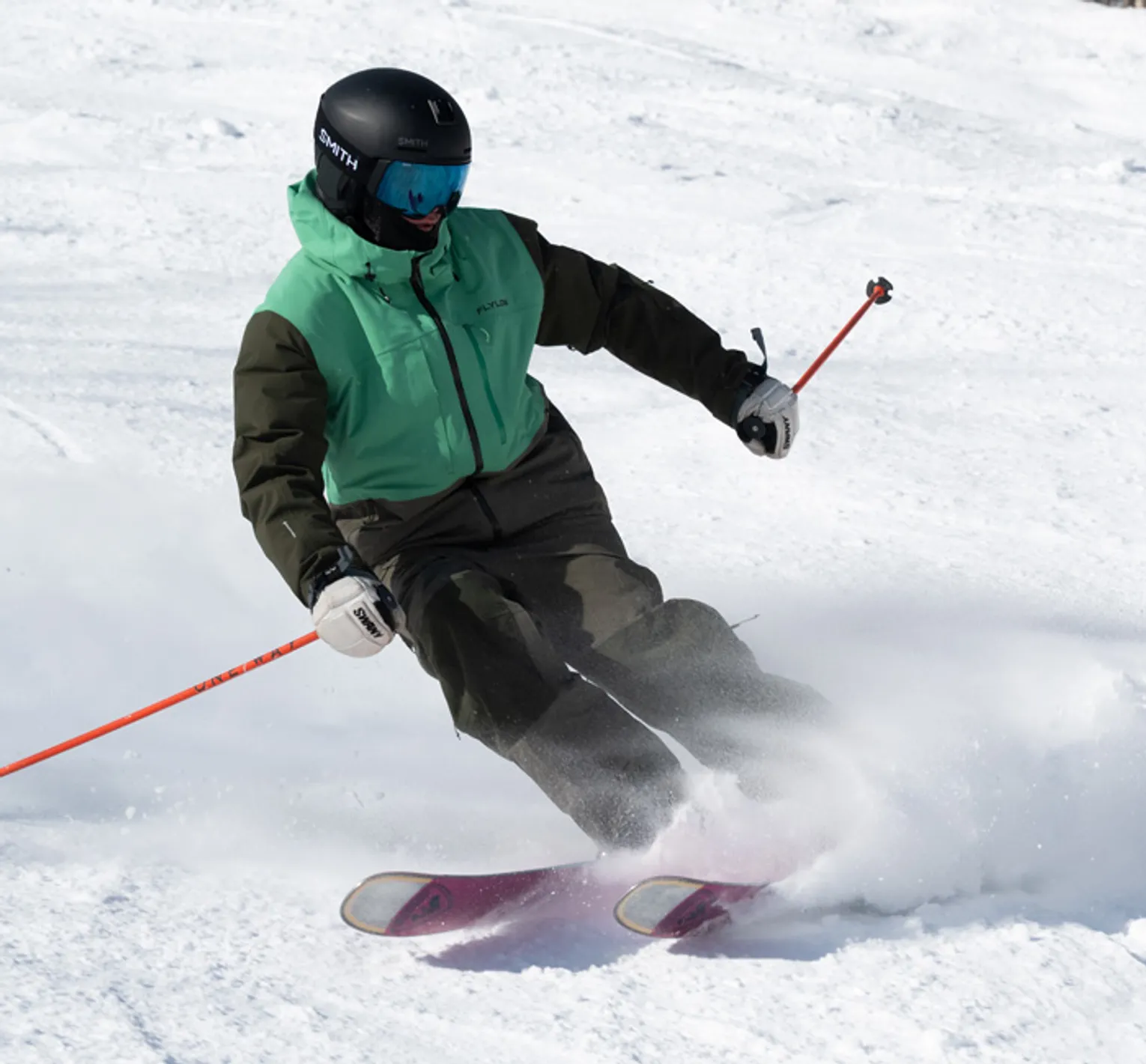
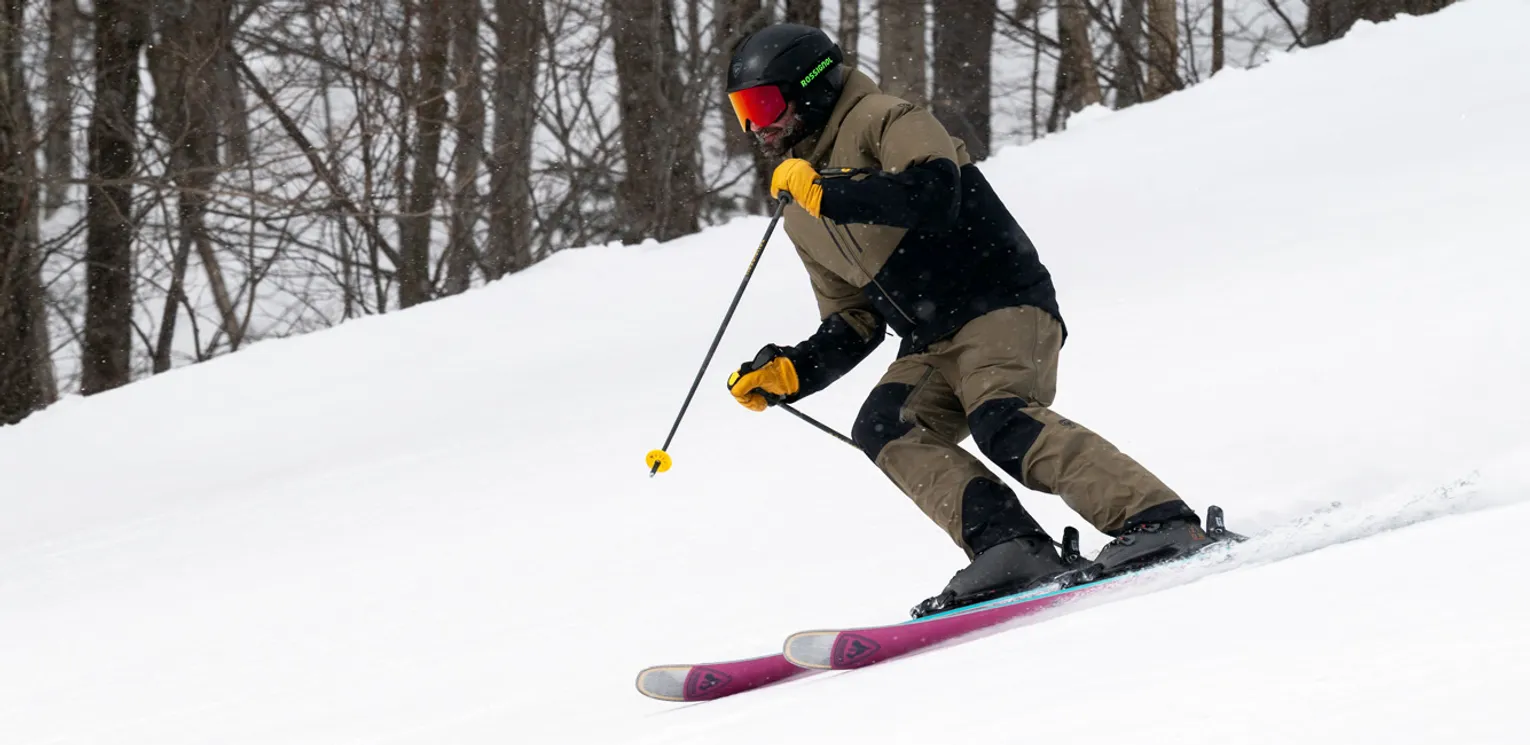
In the bumps, trees, and softer snow, the Sender Free 100 is a blast. While it’s still 2000 g/ski in the 184, it feels lighter and more mobile than most, partly due to the Air Tip, and partly due to the amount of tail rocker—this ski is built and shaped to smear with energy. You can wiggle through trees with ease but keep in mind the further forward you go, the more tail you add, which can decrease quickness if you’re looking for rearward ski agility. It’s not a freight train in the powder and crud—you have to have more of a deft and skilled touch to make it work at the highest level—this ski will not do it for you. Anything like this with a lot of camber can feel like a handful if you’re on the lazier side. We’ve seen this in skis like the Nordica Unleashed 98—not everyone gets along with it off-trail and in softer and more broken snow. Flatter and more flexible skis work better in these situations, with standouts like the Blizzard Rustler 10 and Faction Prodigy 2 leading the charge in this realm. For harder charging skiers looking for a ski in this zone, the Sender Free 100 will neither help nor hinder your experience. It’ll follow you along just fine, but won’t add a whole lot compared to some more energetic or directional skis.
Park Performance:
Jeff here to chat park performance! To start, I think it’s nice to put it out there that it’s not like this is designed as a pure park ski. Quite the contrary, actually. I think it should excel as an all-mountain ski and/or freeride ski first and be a good park ski second, and I think Rossignol nailed it. I’ve personally never loved the Blackops 98 in the park. It’s a bit sluggish for me and not very dynamic. This is the opposite. The swing weight is far lighter, which makes spinning feel a lot easier and more natural. On the other hand, it’s supportive enough that it encourages you to go big. That’s something I felt from the moment I got on it. The ski just wants to go big and wants to do tricks. For being a 100 mm width ski that’s 184 cm in length, it feels very agile and very quick in the park too. Although it’s not a perfectly symmetrical ski, it also feels very, very balanced. There are skis out there that I do prefer in the park, like the Reckoner 102 for example, but basically anything that I prefer in the park doesn’t hold a candle to the Sender Free 100 outside of the park.
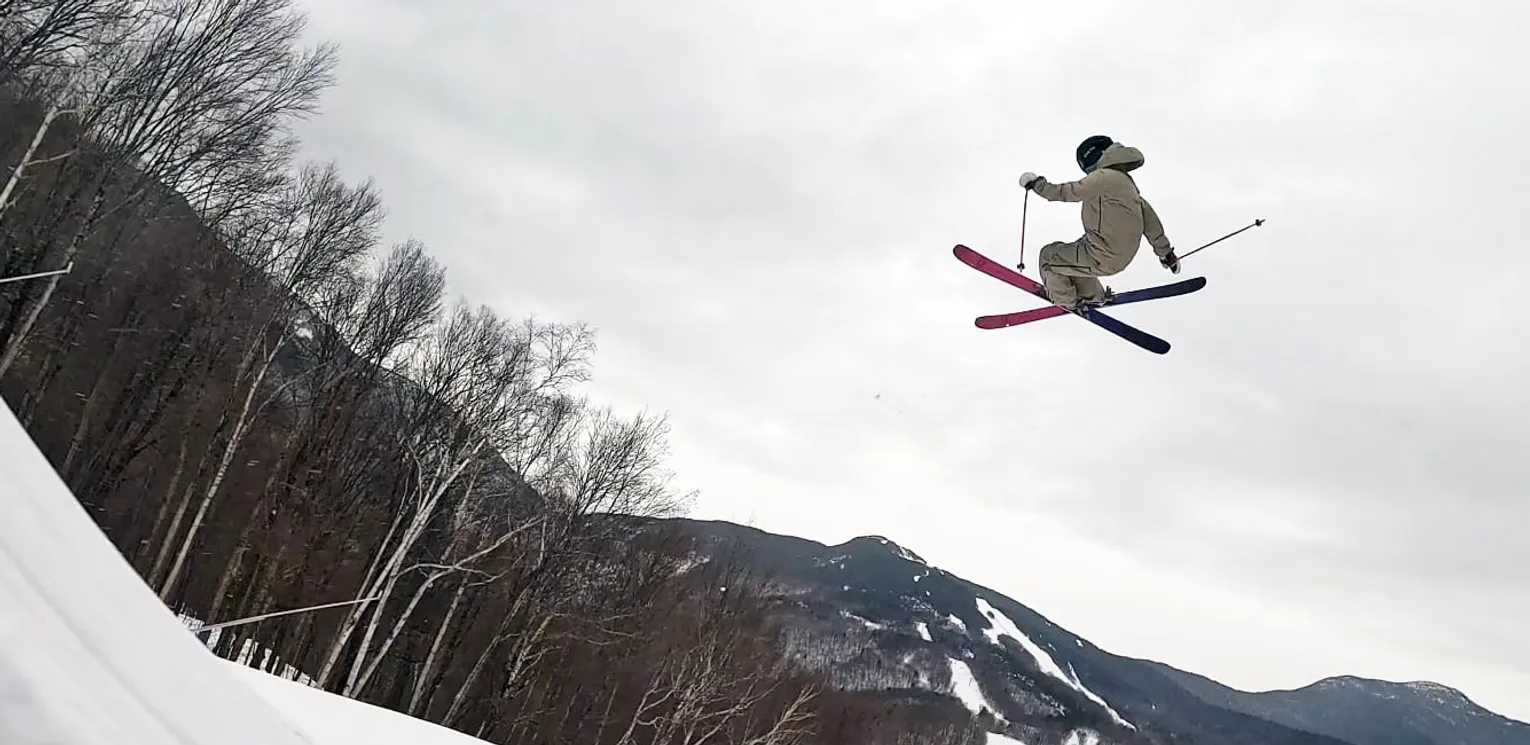
For that reason, it’s hard for me to think of a ski off the top of my head that I would rather own than the Sender Free 100. That is, specifically, if I were to only own one pair of skis. As we’ve alluded to, there are basically skis that outperform the Sender Free 100 in any single application. Stronger carving skis, more agile tree skis, better park skis, all those things exist. It’s the sum of all the part in the Sender Free 100 that make it feel special to me. It’s one of those skis that can just do it all. You can carve up a groomer, you can wiggle through trees, you can ski some relatively deep powder, and you can venture into the park. It doesn’t feel out of place doing any of those things, which I think is a notable achievement of both the ski itself and of Rossignol’s design team.
Buy Now: