

Top Five Fridays: August 17, 2026
Our 2027 Ski Test is officially live! If you’re too excited to read the ski news this week, we don’t blame you. You can check out the test here.
Hello, and welcome to Top Five Fridays, the August 17, 2026 edition! You may be wondering, “why is top Five Fridays being posted on a Monday?”. Well, the answer is simple: we really, really wanted to include a Ski Test preview in our highlight reel, and seeing as today is launch day, we decided to postpone the news until today, August 17th! Keeping that in mind, we’ll get into some of the high level details regarding the Test in highlight #1, before moving onto 720 spin caps in The Snow League, road closures causing big issues at Ski Portillo, results from the first year of the U.S. Ski Team’s new development program, and a number of great ski edits. If this is the kind of thing that gets your blood pumping, keep reading!
#1: Our Tenth Annual Ski Test is NOW LIVE!:
Check out our 2027 Ski Test, right here.
At the top of our list this week is an announcement that we’re extremely excited to share with you: our 10th annual Ski Test is officially live! For those of you already familiar with our Ski Test, which we suspect is most of you, you already know what to expect: literally thousands of score cards from over 150 ski testers, covering over 350 skis from 19 brands. With an incredible amount of data gleaned from 3 full days of ski testing at Stowe back in March, this truly is one of, if not the largest accumulations of ski information for 2027 skis.
For those of you who may not have checked out our Ski Test in past years, allow us to speak on the premise of it a little bit as our approach is unique in the world of skiing. Ten years ago when we held our first ever Ski Test, our goal was to shift the mindset away from, “which ski is the best,” towards, “which ski is the best for me?”. At that time, there was a bit of “pay to play” in the industry, where ski test results would take into consideration a particular brand's relationship with the publisher. Purely as an example, consider a scenario in which Brand X was a regular advertiser with the publisher. In that case chances were good that Brand X would receive a high score in the test and possibly an award as well.
Here at SkiEssentials, we’re lucky enough to be located right in Stowe, which gives us the opportunity to regularly test a wide range of skis. In doing so for many years, we came to realize that “bad” skis are truly few and far between, while “good” skis aren’t necessarily good for everyone. To us, the idea of grading a ski and giving out prizes didn’t make much sense. Too often the “best” ski would either be completely inappropriate for a certain type of skier, or simply not the “best” option for their style. As such, we take the perspective that it’s more valuable to help skiers understand the nuances differences between skis in an effort to help them decide which ski is best for them. Afterall, not every 98mm underfoot All Mountain ski is created the same.
Leaning into that concept, our Ski Test is built heavily upon the thoughts and feelings of the testers themselves. In it, you’ll find a full list of our ski testers, complete not only with stats like height, weight, and age, but also information about their “ski personality.” That is, how they like to ski. For some, that might mean making high speed GS turns. For others, it might mean freeride terrain or terrain parks. For others still, that might mean making slow, easy turns down blue squares. The reality is, there’s a whole world of skier types out there, and for that reason there is no “best ski,” although we do believe that there’s a best ski for you. The goal of our ski test is to help you find that ski.
With that in mind, we encourage you to go check out the Ski Test in full! While you can absolutely browse by brand or category, we also encourage you to utilize our ski tester information to help determine whether a ski would be a good fit for you. One of the best ways to do this is to start with a ski you’re curious about, and then review the testers who skied it. When you find a tester who resonates with you, read their comments on the ski. If you think they’re relatable, click through to their profile where you can learn more about them and also access a full list of skis they tested. From there, you can get their specific thoughts on each ski!
Of course as always, we also hope you’ll interact with us, either by leaving a comment / question at the bottom of a particular ski, or by commenting on the YouTube video created for (almost) every ski. Our content team will be keeping an eye on these comment sections, so if you find yourself with a question, this is a great place to ask it.
With all of that said, we highly recommend diving right into the Ski Test and spending the afternoon exploring all of your options for next year! When you’re done, feel free to come back for the news - it’ll be here when you’re ready!
#2: Shaun White’s Snow League Set to Test a 720 Cap in Semi Finals, Combating a Purely Spin-to-Win Approach:
Done checking out the Ski Test? Great! Welcome back. Now let’s get into some ski news.
Moving onto our next story this week, we bring you an update from Shaun White’s Snow League, which has just made a couple of announcements ahead of its second season. Before we dive into the new news, a quick recap of what The Snow League is: initially debuting with a single event in the 2024–2025 season before featuring its first full inaugural season last year, The Snow League is a global halfpipe competition for freeskiing and snowboarding. Operating outside the constraints of any international organizations or national governing bodies, The Snow League is free to experiment with formats as it sees fit, allowing it to be one of the more experimental competition series in either sport. That’s important to keep in mind as we get into this week’s updates.
First things first, while it was announced back in June, it’s worth noting that the first stop of this year’s Snow League tour will be slightly different than the others. Scheduled to occur from September 18-20th in Cardrona, New Zealand, the first event of the season is being dubbed a “world challenge” event. While most Snow League events feature a tournament style, head to head competition between individual athletes, the New Zealand event will feature a total of 16 athletes split across four teams: Team North America, Team Europe, Team Asia-Pacific, and Team Challengers. Within these teams, there will be one male and one female athlete, representing ski and snowboard disciplines, for a total of 4 athletes per team. While the first three teams on the list are obviously based on location, the 4th team is set to be comprised of rising talent from across the world. Ultimately, at the conclusion of the event, a team will be crowned the winner based on the cumulative score of their athletes. While that’s all certainly very cool and exciting, the real news this week came from an innovative twist that’s being tested at this event.
In the semifinal round of this event, athletes will be limited to spinning no more than 720 degrees at a time. It’s a pretty simple, but fascinating concept as both skiing and snowboarding have been hurtling towards a spin-to-win direction, with more flips and rotations generally being considered the harder and more impressive tricks. While there’s certainly truth to that, those in the freestyle world have long lamented the trajectory towards spin-to-win, longing for the days when a perfectly executed rodeo 900 meant something. Finally, with this rule adjustment, fans of style and creativity will get their wish as the 720 cap will force athletes to find ways to impress judges through style, creativity, and technical grabs in an effort to make their low-rotation run stand out.
At the moment, the 720 cap has only been announced for the semi-finals round for this particular standalone style event. Because of that, we suspect that this is a test run of the concept. Should it go well, and we hope that it does, it’s very feasible to see how it might be rolled out to other Snow League events this season, and possibly even carried into other competition series like the X Games. To see how this experiment goes, be sure to tune into the Snow League stop in Cardona, NZ from September 18-20th. To learn more, click here.
#3: In Chile, the Road to Ski Portillo Remains Closed, Causing Significant Issues for the Business Which Expects to Close in Six Weeks:
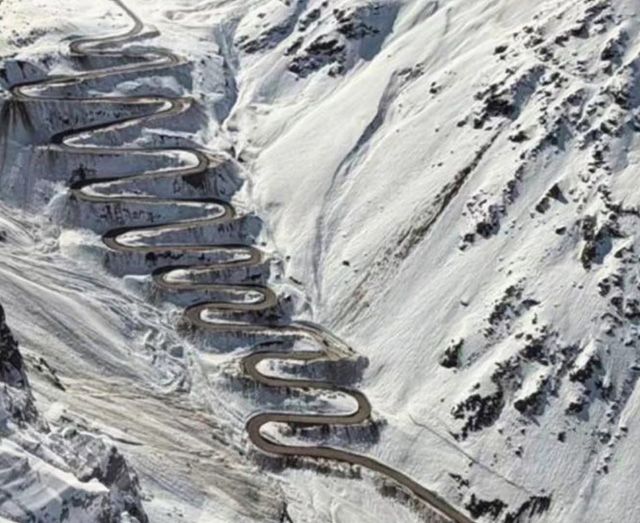
In an image posted by Ski Portillo, you can clearly see why the road to Portillo is known to close from time to time. This year’s 4 week closure, though, is exceptional. Image: Ski Portillo on Instagram
Next up this week is yet another update from Ski Portillo, where a historic storm has resulted in a historically bad winter for the business as the Chilean government has continued to keep the access road to the resort closed. Now, before we dive into this story, we need to paint the picture of Portillo’s season so far. Prior to the storm arriving in the middle of July, the region was suffering from historically low snowfall. In our coverage from July 17th, we reported that the most recent update had the ski area at just 28% of their average base depth, with only 3 out of 35 trails operating. To say it was a slow start to the season would be an understatement.
And then the storm came, delivering over 200” of snow over the course of a two week period, and with snow totals over the past four weeks totalling roughly 264”. It was a storm of historic proportions, and one that predictably resulted in the road accessing the ski resort being closed.
But here’s the thing: as of Tuesday of this week, we were still reading reports that the road remained closed, making it 4 straight weeks where the area was inaccessible. Combining that four week closure with the slow start of the season, Snow-Forecast.com reports that Portillo was only able to fully operate for 2 of the first planned 8 weeks of a 14 week season. In other words, at best, the resort hopes to be fully operational for at most 8 weeks this year. As you might imagine, that’s incredibly challenging for the business.
While the resort is used to dealing with road closures, this particular instance has gotten to the point where many are questioning the Chilean government’s understanding of the situation. In a post made to Instagram last Friday, Ski Portillo wrote, “today, the road to Portillo has been clear for more than a week, with both lanes open and safe for travel. Keeping this access restricted comes at a high cost to the country and to the more than 550 workers in Portillo and their families, as well as to suppliers, entrepreneurs, and the entire tourism value chain… Reopening this route is not just a decision about Portillo; it is a decision that supports tourism, protects jobs, and reinforces Chile’s reputation as a world-class international destination.”
Ultimately, that quote does an excellent job of summing up the importance of this issue, as well as the problems that the road closure is causing. If the road to Portillo truly has been clear for travel for over a week, then a lack of action by the government is resulting in a severe mishandling of what has potential to become a large source of tourism for the area. In recent years, ski travel to South America has risen in popularity as awareness of the terrain and snow conditions has grown internationally. Over the past month, this massive snowstorm has excited many of us in the Northern Hemisphere, and could easily be the inspiration needed to book a trip South next summer. With questions around accessing the resorts though, that inspiration could quickly fade to inaction.
Before rounding this highlight out, we do want to mention that it’s sounding like things are slowly starting to reopen finally. While the resort itself hasn’t posted any new updates, we did catch an article from PlanetSki.eu that says they’ve caught word that guests with hotel reservations are being allowed to use the access road. While that’s progress and certainly helps international travelers, it also suggests that the resort isn’t open for those looking to make it a day trip activity. Still, we’re hopeful that the road will reopen in full shortly. To learn more about this story, check out the report from Snow-Forecast.com, or head to Ski Portillo’s Instagram page. You may find it helpful to read the comments on recent posts to get an idea of the local perspective.
#4: One Year in, the U.S. Ski Team’s New Development Funnel Showing Signs of Success:
The cover of the U.S. Ski Team document outlining their new Regional Development Program. You can read it in full, right here.
Finally, rounding things out this week we have a story that covers yet another aspect of the U.S. Ski and Snowboard Team’s development pipeline. Here on Top Five Fridays, we tend to talk about the development pipeline quite a bit in the offseason as it gives us an idea of not only who the future stars of the team might be, but stories about often prove to be intellectually stimulating as they discuss the strategies being used to build the most globally competitive team possible. Over the course of our pipeline coverage, we’ve discussed a range of topics and issues, such as affordability and accessibility, almost all of which share a common goal: determining how the U.S. Ski Team can effectively cast a wide enough net in youth sports so that they engage, discover, and promote the most talented athletes possible. This week, we learned more about the USSS’s new Regional Development Program, which, as it turns out, aims to not be a pipeline at all. Instead, it would prefer to be a funnel. Allow us to explain.
Prior to the 2025-2026 season, the U.S. Alpine Ski Team had four tiers: the A Team, B Team, C Team, and D Team. While the A-C Teams operated in the same way that they currently do, the D Team stood for the “development” team, and athletes on it remained part of their local clubs, with the benefit of having access to additional opportunities. Looking back at the final year of that program, there were a total of 10 athletes named to the D Team.
In February 2025, a document outlining an overhaul of the development tier of the U.S. Alpine Team was released. In it, one of the primary issues identified was that, “Current developmental reach is too narrow to be impactful at scale.” As a result, the primary solution was determined to be a widening of the development pipeline. Or, more specifically, the creation of a “funnel” rather than a “pipeline”, meaning a new program that would give Development Team opportunities to more than 10 athletes.
The result of this effort was the dissolution of the D Team this year, and the creation of the Regional Development Program (RDP), which hosts a new Regional Development Team (RDT). While that RDT is functionally similar to the D Team and is slightly larger with a total of 17 athletes, the real upside to this new program is the structure of the RDP itself. Previously, the Development Team used to be one centralized team with just a men’s and women’s coach. Now, the new RDP is broken into Eastern, Rockies/Central, and West regions, with each region having their own men’s and women’s coaches.
The real leverage here though isn’t the fact that the RDT is larger or that there are more coaches, it’s in the fact that the program itself, the RDP, is now able to host camps regionally in which athletes who aren’t officially named members of the RDT can receive an invite to attend. To illustrate this concept, consider a recent example: this month, the RDP organized a trip to Ushuaia, Argentina for training. On that trip there were 5 RDT athletes, but 7 athletes who aren’t officially on the team and were invited to attend. In other words, a majority of the athletes attending the RDP trip aren’t on the actual team. That’s not an isolated scenario either: it’s a concept that was used at several camps in each region this past season. The result, as you can see, is that the U.S. Ski Team has moved from a system in which only 10 athletes benefit from a D-Team, to one in which 17 athletes are officially on the team while dozens of others have been invited to camps. If the goal was to expand the pipeline into a funnel, calling this a success feels safe.
As it turns out, the program has some even more impressive immediate returns that it can point to as signs of success. This year, 5 athletes from the RDT met criteria for nomination to the U.S. Ski Team while an additional 3 athletes who attended RDP programs met criteria. While the program is just one year old at this point, the early returns are promising as it’s proven to not only be effective in widening the funnel, but also in identifying and developing athletes who will some day earn their way to the U.S. Ski Team. All in all, it’s a pretty interesting story if you’re someone who likes to stay in the know with such things. If you are, we recommend giving the article posted by SkiRacing.com a read.