

Top Five Fridays: July 17, 2026
While scenes such as this one have been hard to come by in South America so far this season, a historic storm is underway that’s said to change that. More in highlight four! Image: Ski Portillo on Facebook
Hello, and welcome to Top Five Fridays, the July 17, 2026 edition! This week, we’ve got yet another excellent 4 pack of news, led by soap-opera tier drama from the town of Telluride. We’ll do our best to give you all the details there, before moving on to talk about new ski laws in North Carolina, yet another backcountry safety device that’s just hit the market, and news of incredible snowfall coming to South America. Before we share those stories though, a quick reminder:
#.5: This Weekend is Our Fourth Annual SkiEssentials Warehouse Sale! Get Here if You Can:

We shared this news a couple of weeks back, but it bears repeating in case you missed it: this weekend, starting tomorrow at 9 AM, we will be holding the Fourth Annual SkiEssentials Warehouse Sale. In case you’ve somehow missed the memo, our now annual warehouse sale has quickly become one of the best winter gear sales in New England, regardless of time of year. This time around, we’re repeating the same formula as always and offering deep discounts on literally thousands of products. How deep exactly? Well, for starters, we’re offering up to 80% off nearly any kind of alpine, xc, or snowboard hardgood you can imagine. Plus, we’ll have ridiculous deals on blemished skis, demo skis, sample skis, etc. Accessories for over 50% off. Apparel for over 50% off. It goes on - the savings are truly about as endless as it gets. If you plan to ski or snowboard this season, and you’re within a stone's throw of our warehouse in Stowe, VT, we highly recommend stopping by - you won’t regret it. For more information, check out our event page on Facebook.
#1: Remember the Two Mayors in Telluride Who Resigned After the Ski Patrol Strike? Turns Out That Story is Even Crazier Than We Thought:
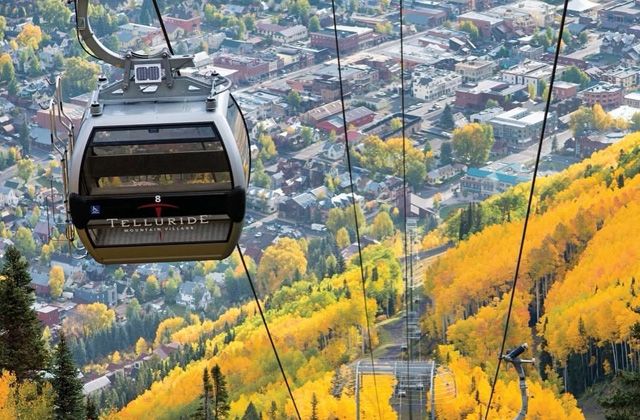
A Telluride gondola is backdropped by the town, symbolizing the delicate balance that exists between the two. Image: Telluride Ski Resort on Facebook
Moving right into the thick of our ski news, you’re going to want to buckle up for this first story as it’s a bit of a rollercoast. If you like complex dramas, then at the very least you should find yourself highly entertained by the wild story that continues to emerge as a result of the Telluride ski patrol strike back in December. While the story started with a classic strike to increase wages and benefits, it quickly escalated into one that included several twists, turns, controversies, resignations, secret recordings, claims of entrapment, and much more. We’ll do our best to provide the spark notes version of this saga here, but to be completely honest, you’re going to want to check in with the Colorado Sun for the in depth version as well. Stage set, let’s begin.
In order to fully grasp this story, let’s start by getting our bearings straight. Last December, the Telluride Ski Patrol Union went on strike two days after Christmas. While that strike may have been justified, the resort’s owner Chuck Horning dug his heels in and refused to budge. The result was not just a ski area that was shut down for what’s typically one of the busiest times of the year, but an entire town that suffered the consequences as business slowed dramatically. Ultimately the dynamic evolved in a way in which the ski patrol’s strike wasn’t negatively impacting the resort so much as it was the entire town. As a result, public pressure grew on the union to end the strike, which they eventually did.
Shortly after the strike concluded, another story broke: the mayors of the two towns in which the mountain and its village are located had resigned from their positions and were under investigation for a plot in which they allegedly leveraged their positions in an effort to purchase a majority stake in Telluride. While well intentioned, the pair were alleged to have made promises regarding public services and contracts to Chuck Horning as part of their purchase proposal.
This week, the headline is this: “Telluride, Mountain Village investigations find no evidence of government conspiracy in offer to buy ski area.” In other words, after two roughly 6 month long investigations by third party reviewers hired by each town, it was found that no additional government employees were involved in the purchase scheme. As such, legal proceedings have concluded and the resignation of the two mayors is the only real penalty being levied.
Now, that’s the surface level version of the story, but we promised you twists, turns, controversy, and more, and that’s a promise we intend to deliver. In addition to the high level facts of this story, the full report that was produced by these investigations tells a story where it’s entirely possible (although certainly not definitive) that the forced resignation of the mayors was part of an intricate plot by a man whose long held a grudge against them: Chuck Horning himself.
This version of the story starts back in March of 2025, when Chuck’s son Chad was fired from his role as CEO after the two got into what’s described as a “brawl” at one of the resort’s restaurants. Fast forward to early December 2026, as efforts to prevent a strike were well underway, and Chad had an idea: he suggested to the two mayors that it might be possible for a group of investors to purchase the resort from his Dad. To make it possible though, they would have to acknowledge that the business was struggling because the town was in a remote location without enough lodging, and the only way for it to succeed was to sell the resort to a group with a close alignment with local government. Thinking this seemed like a smart way to shift ownership of the resort from a contentious owner to a group that had a more friendly relationship with the local community - and at a time when pressure was mounting to quickly solve the impending ski patrol strike - the two mayors agreed.
What started as an initial plan to purchase the resort outright evolved into a plan in which the two mayors as well as additional investors would purchase 51% of the resort, and included grey-area promises like help negotiating the prevention of the strike and ending plans to raise water prices for the resort’s snowmaking. Ultimately these unapproved promises are what got the mayors into trouble.
Now, here’s where it gets really interesting: over the course of these conversations where Chuck Horning had gotten these two mayors to agree to a number of questionable concessions, Horning had secretly recorded the discussions. Transcripts from those conversations were then circulated and used as evidence that the mayors had verbally agreed to these questionable concessions. These recordings were what ultimatel led to both mayors deciding to resign.
In other words, taken in full, there’s a version of this story where the entire concept of selling the resort to the investors was never a legitimate outcome, and the idea was purely a move to catch the two well intentioned mayors in a scheme that would force their resignation. Now, just to be clear - we don’t know that that’s the case. What do we know for sure is that despite these independent investigations, there’s still a slew of ongoing lawsuits between these parties which we suspect will continue to uncover the truth. Like we said, it’s a wild story so far, and one that you can learn even more about via coverage from the Colorado Sun.
#2: North Carolina Updates its Winter Sports Safety Act. Misuse of Passes and Hit and Runs Are Now Misdemeanors:
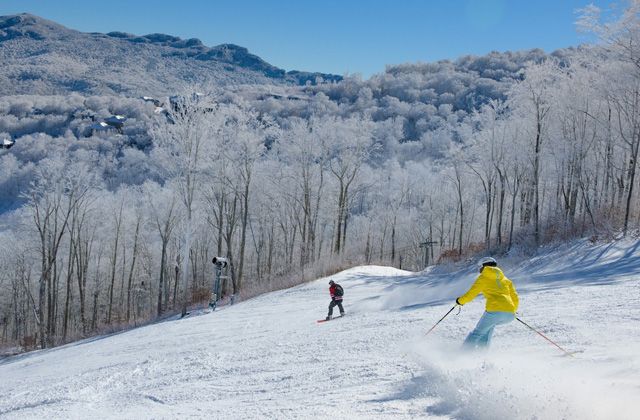
Skiers share the slopes at Sugar Mountain North Carolina, where the resort’s vice president helped update the state’s Winter Sports Safety Act. Image: Sugar Mountain on Instagram
Moving on to other legal ski news, we caught an interesting article coming out of North Carolina that provides the perfect opportunity to have a wider conversation about skier responsibility laws across the United States. Before embarking on that though, let’s examine this week’s story.
This week, we learned that North Carolina has just approved updates to the state’s Winter Sports Safety Act for the first time since 2009. While a handful of language updates were made, such as applying the skier responsibility code to lift tickets bought online, there were two substantial additions made to the law. First, the misuse or non-use of a pass is now a class 1 misdemeanor and ski areas can elect to take action against the violator. Under the new law, the ski area is, ”entitled to recover an amount equal to the regular cost of a full season pass to the ski area.” In addition to the severity of the financial penalty, it’s also interesting to note what actions could fall under “misuse.” As it’s written, misuse applies not only to a person who borrows someone else's pass, but also to the lender of the pass. Additionally, skiing on a closed trail also constitutes the misuse of a pass. In other words, in North Carolina, if you get caught skiing a closed trail, you could owe the ski area the equivalent price of a season’s pass.
The other major addition to the Winter Sports Safety Act is an official law against leaving the scene of a collision. Under the new law, if you’re involved in a collision, you must exchange contact information with either the other person involved in the accident, or another authorized person. The only exceptions to this rule would be if the person who leaves the scene is injured themselves and needs to seek medical attention immediately, or if remaining at the scene of the accident would be dangerous. Otherwise, leaving the scene without sharing contact information would be illegal.
Now, it’s this second part of the new law that got us thinking more about legalities in other states. While there’s a fair amount of common sense at play in situations like this, it occurred to us that specific laws surrounding this thing probably aren’t particularly well known, especially when considered on a state by state basis. For example, being Vermonters, we couldn’t tell you the specific law regarding an on-hill collision in say, California, or if the state even has a law equivalent to North Carolina’s Winter Sports Safety act. As it turns out, California does not. Situations such as a collision are handled by the state’s common and liability laws.
Being the middle of summer, we figured it would be a good time to brush up on this kind of thing, whether that means getting a read on your own state’s laws, or checking on the laws of a state where you might vacation next winter. Chances are you won’t discover anything too shocking here, but still - if you were in a ski collision in North Carolina, would you know that it’s legally required to share contact information? Maybe not. With that in mind, we’ll point you over to SkiLaw.com’s index of ski laws by state. And just to be crystal clear: we have no affiliation with the website, and this is absolutely not meant to be an advertisement for their legal services. Rather, we’re simply sharing a resource for you to learn more if you care to.
#3: The FAA Has Just Approved a New Avalanche Mitigation Drone, Potentially Changing the Game:
Over the course of the last few weeks here, we’ve unintentionally come across a bit of a theme: new devices to improve the safety of backcountry skiing. Back at the end of June, we shared news of a new beacon that uses a self-contained GPS system to make avalanche recoveries more efficient. Then, a week later, we brought you coverage of a new device being developed by students at Oregon State University - Cascades that’s meant to send out an alert should a user get trapped upside down in a treewell. This week, we share with you a new device that could prove to be revolutionary in the way avalanches are mitigated: Drone Amplified’s Montis.
As you can probably guess by the name alone, the Drone Amplified Montis is just that: a drone. What makes it unique however, is that it’s purpose built for avalanche mitigation. That is, the drone is equipped not only with an IR camera and a laser range finder, but also explosive payloads that can be dropped remotely at the touch of a button. Without diving too deeply into how all of this works, the takeaway is this: this trio of tools allows drone operators to get a read on avalanche conditions from a safe distance, and to trigger avalanches remotely as a means of mitigation. As we’ve come to see all too often, avalanche mitigation is one of the most dangerous jobs for patrollers, so the introduction of a tool like this could prove to be massively beneficial.
Now, there’s a chance that word of this new Montis device isn’t new to you - the company first announced the device back in 2024, and was recently in the news again back in March. What is new this week, is the announcement that the device has just received FAA approval, clearing the way for its use not only at ski resorts, but also by transportation agencies that currently undertake avalanche mitigation efforts in order to keep roadways safe. With this announcement being so new, it’s hard to know for sure how quickly or widely this technology will be put into use. That said, anything that makes avalanche mitigation safer is an appealing proposition, so we would be shocked if this concept doesn’t gain traction. For more on this, check out the coverage from DroneDJ.com, as well as Drone Amplified’s website.
#4: After a Slow Start, a Storm of Historic Proportions is Heading to South America:
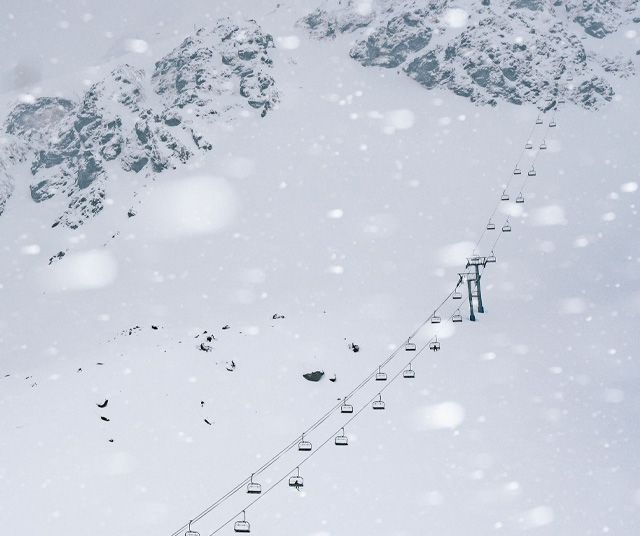
Transformative snowfall had just begun at Ski Portillo in this photo shared on Instagram on Wednesday. Image: Ski Portillo on Instagram
Finally, let’s round things out this week with some honest to god, boots in snow ski news: after a dry start to the season, it’s about to absolutely dump in South America. Before we get into the details though, a bit of scene setting is in order.
Up until now, it’s been a bit of brutal start in Chile and Argentina. While most resorts have managed to open for the season, they’ve done so in limited fashion. Taking a quick look at stats from OnTheSnow.com, which were last updated on Wednesday for reasons we’ll get to in a moment, base depths across the entire region are ranging from 3” - 28”. In most cases, base depths are in the mid teens. Ski Portillo, one of the more popular destinations, is currently sitting at a base depth of 10”-18” of hardpack snow, with just 3 out of 35 trails open. For context, their base is at just 28% of their average this time of year. There’s good news though: all of that is in the midst of being flipped on its head.
Starting on Wednesday of this week, massive storms rolled into the Andes, delivering massive amounts of snow to a number of resorts. Due to the remoteness of most resorts, as well as the considerable amount of ongoing snowfall, we don’t yet have a good read on current accumulation. What we do know though is that Valle Nevado, Ski Portillo, and La Parva in Chile all forecasted 3 day totals of 80” or more, and as of this time yesterday, Portillo was reporting snowfall at a rate of about 2” an hour. But here’s the real kicker: the storm is just getting started.
Going back to a post made on Instagram by Ski Portillo on Wednesday, it was announced that the resort will be closed until further notice. The reason for the closure is a concept that those who ski at Alta, Utah are familiar with: with the incredible amount of snowfall, the local department of transportation has closed the road to the resort until further notice. As for what “further notice” means, well, that’s where things get crazy. According to the post, the resort says forecasts suggest that the storm could last through the end of the month, delivering accumulations of over 4 meters. For us users of the Imperial system, that comes out to roughly 156” of snow. So, like we said, despite the dry start to the season, things are about to change in a hurry down south. If this kind of thing interests you, we recommend following social accounts from ski resorts like Ski Portillo, or keeping your eye on snow totals on OnTheSnow.com. If you want to get in on this powder, we recommend booking a flight for the beginning of August. If you do, please send us your photos - we’re dying to see what 156” of untouched Andean snow looks like.