
TOP FIVE FRIDAYS: AUGUST 21, 2020
#1: FIS World Cup Tour to Remain in Europe for the 2020-2021 Season:

Looking up at the 2019 Xfinity Birds of Prey FIS Course, hosted by Beaver Creek. Unfortunately, this is a scene that won't play out again this upcoming season. Image: Official Birds of Prey World Cup Tour Facebook Page
This week, we jump right into things with some much awaited news from the FIS World Cup, although it’s certainly not the update that many of us had been hoping for. If you’ve been keeping up to date with the latest from the FIS this summer, then you’re likely aware that there’s been unprecedented uncertainty in regards to how to best handle an international competition circuit amidst a global pandemic. To be sure, it’s not an easy question to answer. In the early days of consideration, the idea of eliminating all venues and athletes from beyond Europe was floated, although thankfully that idea wasn’t seriously pursued. Then, just about a month ago, we caught word that the FIS was considering cancelling the Killington stop of the World Tour in an effort to eliminate the need of technical skiers to travel to North America. This week, we learned that not only has the Killington event been officially called off, but so have the Lake Louise and Beaver Creek events, thereby eliminating all North American venues from the 2020-2021 FIS schedule.
To be sure, it’s disappointing news for both North American ski racing fans, as well as competitors on the circuit who’ve come to love the three venues. But, it’s also a decision that’s been unanimously accepted as necessary. In the press release from the U.S. Ski and Snowboard team that shared the news, the need to prioritize the health and safety of all those involved in the tour, from athletes, to coaches and fans, was cited as the leading cause for the decision. While the tour will certainly be missed in North America this season, it’s already been made clear that if the variables allow, it will return for the 2021-2022 schedule.
As for the rest of the schedule, necessary adjustments are already being made to fit the previously scheduled North American events into the European calendar in a way that consolidates athlete’s need to travel. The GS races planned for Val d’Isere in December for example, are being moved up one weekend to 12/5-12/6, allowing for Downhill and Super G races to take place at the same location on the following weekend. Beyond rescheduling the North American events, the FIS has also stated that decisions regarding the rest of the schedule are being made on a case-by-case basis, with each event’s unique situation being considered. While it sounds like the schedule is finally coming into focus, we’ll have to wait for the FIS Technical Meetings scheduled for September 30th - October 2nd for the final schedule to be approved. Shortly after that, it’s expected we’ll hear an official announcement revealing the entire FIS schedule on October 3rd. For more on this, check out the report from the U.S. Ski Team.
#2: Aspen Ski Co. Working on New System to Keep Skiers Updated on Current Traffic and Congestion in and Around the Resort:
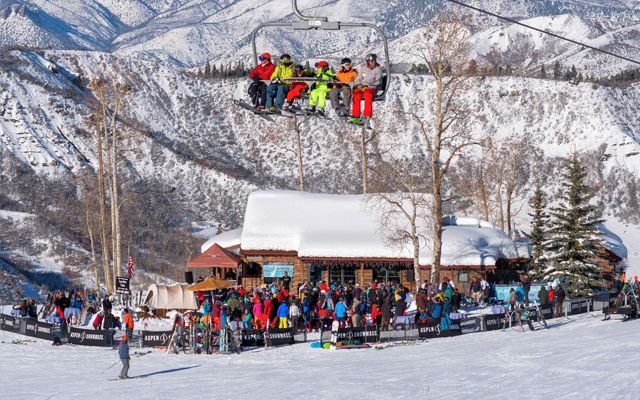
While camaraderie and closeness are two hallmarks of the resort skiing experience, this upcoming season we’ll be forced to behave decidedly differently. To aid that effort, Aspen is working on plans to roll out an alert system to advise guests of areas of congestion in real time. Image: Aspen Snowmass on Facebook
Next up this week is yet another update previewing the season ahead. For those who’ve grown tired of hearing about it, we’re sorry. For the rest of you who remain curious to learn as much as you can about what the upcoming season might look like, you’ll likely welcome this update from Aspen Skiing Co. According to an article from the Aspen Times, officials at Aspen are currently working on putting together an alert system to provide guests with real time updates regarding areas of congestions across their resorts. Functioning in the same way that public alert systems that automatically send text message updates to the phones of those who’ve subscribed, Aspen officials are looking to create a system that would allow them to provide real time alerts to guests and visitors regarding everything from parking lots that are at maximum capacity, to which chairlifts and lodges are experiencing congestion. The overall goal of the program of course, is to help reduce and alleviate what ski resort officials across the industry are referring to as “pinch points,” or areas such as lots, lifts, and lodges where crowds tend to form.
At times like this, finding silver linings can go a long way. Fortunately with this story, the silver lining is incredibly easy to see: out of the necessity of controlling crowds during a pandemic, ski resorts are beginning to consider new practices that will reduce crowding at their resorts. In recent years, this has become a bit of a hot topic as one of the consequences of the emergence of multi-passes has been the consolidation of skiers into fewer resorts. While there’s a whole other topic of discussion revolving around the impact that has on resorts not on a multi-pass, it’s also led to problematic levels of crowding at popular resorts. While we never would’ve asked for a pandemic to help solve the issue, the silver lining is that it has indeed forced it upon ski resorts to come up with creative ways to manage crowds. If Aspen’s efforts prove effective this winter, we can only imagine that similar systems will be rolled out at additional resorts and kept in use well after things return to normal. For more on this, check in with the Aspen Times.
#3: Liftopia Update: Judge Throws Out Case Attempting to Force Company into Bankruptcy:

In other Aspen Times news this week, the publication also brought us an update on a story we first reported back in the middle of June. At that time, Aspen Skiing Co. was leading an effort (which was joined by Alterra, Cypress Bowl Recreations, and Dundee Resort Development) to force popular online discount lift ticket service, Liftopia, into involuntary bankruptcy. Their claim was that Liftopia owed resorts a collective total of approximately $3 million, an amount that Aspen Skiing Co. didn’t have faith that Liftopia could repay. As a result, they decided to take their best remaining option: filing a petition to force Liftopia into bankruptcy. Shortly after we shared that news, Liftopia filed a countersuit claiming that the petition had to be thrown out due to Aspen Skiing Co. miscalculating the total value owed to them. Specifically, Liftopia claims that Aspen neglected to account for, “cancellations, chargebacks, advance purchase, no-show and loyalty program participation policies, and partial and full credits,” amongst other things.
This week, we learned that U.S. Bankruptcy Judge Hannah Blumstiel threw the case out after coming to the conclusion that a “bona fide dispute” existed between the two companies regarding the actual value owed. According to the law governing this particular effort, any involuntary bankruptcy petition must be thrown out if there’s a dispute between creditors and debtors over the exact amount that’s owed. While we don’t know with certainty whether or not Liftopia’s counterclaim of erroneous calculations were in fact truthful, we do know that lawyers representing Aspen Skiing Co. asked to be able to reduce their claim by $86,000 in order to match Liftopia’s calculations. Considering the fact that the original claim was $3 million, it’s easy to see why Aspen Skiing Co.’s lawyers offered to reduce their claim by just $86,000. Unfortunately, doing so was a death blow to the effort as Judge Blumstiel then had no choice but to throw out the motion entirely, stating, “If you are now conceding there is a bona fide dispute, why on Earth would I permit amending an involuntary petition?” So, with that statement, this particular legal effort comes to a close. There is, however, one significant lingering question: without the support of Aspen Skiing Co., the Mountain Collective, and potentially co-petitioners such as Alterra moving forward, will Liftopia be able to right their ship and continue operating profitably? At this point, only time will tell. For more on this, check out the report from the Aspen Times.
#4: Jay Peak and Burke Mountain Look to Decrease Assessed Value, Highlighting the Complicated Relationships Between Ski Resorts and Their Communities:
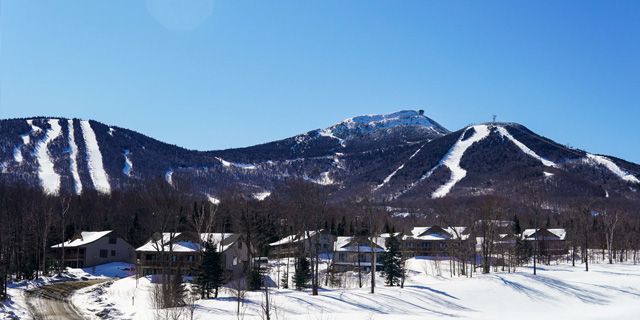
A look at Jay Peak Resort, where the value of purchase offers have come in far below the resort’s assessed value, leading officials to dispute it’s assessed value. Image: Jay Peak Resort on Facebook
Finally, to round things out this week, we have a pair of stories from Vermont’s Northeast Kingdom, where representatives of Jay Peak and Burke Mountain Resort have filed motions to drastically reduce the assessed value of the properties. Now, before we dive into the details of this particular story, a quick recap of the recent history of these resorts is in order as the last four years have been nothing short of tumultuous. Back in 2016, Ariel Quiros and Bill Stenger, co-owners of both resorts, were arrested and charged with fraud relating to the misuse of investment funds provided through the EB-5 program. (Editor’s note: this story in and of itself is quite fascinating, and we encourage you to review some of our previous Top 5 Friday reports covering the topic). Since then, Michael Goldberg, a federally appointed receiver, has put the two resorts back on track and is currently in the process of finding a buyer for the resorts. While that sales process began in early 2019, Goldberg has yet to find a buyer willing to meet the asking price he’s set in place in order to recoup the funds required to repay the investors who became victims of fraud.
Thus, the stage is set for this week’s news. In two separate filings, Roger Prescott, a lawyer representing both resorts individually, has submitted a motion asking for the assessed values of the resorts to be reduced, with the end goal of reducing each resort’s property taxes. For Jay Peak, Prescott argues that the assessed value of $121 million is significantly overblown, and has asked for that number to be reduced by $62.5 million, resulting in a reassessed value of $58.5 million. To back that number up, Prescott cited efforts to sell the resort, disclosing the fact that the highest bid they had for the resort was $70 million. For the sake of comparison, it’s worth noting that Vail purchased Stowe in 2017 for $41 million, roughly one third of Jay Peak’s currently assessed value. What makes this matter complicated, and why it’s sure to be highly contested in courts, is that a reduction in the assessed value of the resort from $121 million to $58.5 million would result in the resort’s tax bill going from approximately $2 million to less than $1 million. At the current tax bill of $2 million, Jay Peak contributes nearly two-thirds of the town’s tax revenue. That difference in income would ultimately mean that area residents would have to pick up the difference if no changes are made to the town’s budget.
At Burke Mountain, the story and arguments are largely the same, although the numbers are of a significantly lower magnitude. Currently, that property is assessed at $18,722,700, and Prescott is looking to have the number reduced to $11,210,000, a roughly $7.5 million difference. Again, the resort’s interest is in tax savings, where a reassessment at the desired value would reduce their tax bill from just over $300,000 to roughly $180,000. While we aren’t privy to as many details regarding purchase offers on the resort or what percentage of the town’s tax bill Burke is currently responsible for, the bottom line for town residents is the same: if the reassessments are approved, it’ll be on them to make up the difference. While there are certainly arguments to be made from both sides of this issue, we clearly don’t have the capacity to properly delve into the discussion here. Instead, we recommend checking out VTdigger’s excellent coverage of the Jay Peak story here, as well as the Burke Mountain story here.
#4.5: Don't Forget, Our 2021 Ski Test is Now Live!