TOP FIVE FRIDAYS: AUGUST 28, 2020
#1: Vail Releases 2020-2021 Covid-19 Policies: Reservations, Facial Coverings, and More:
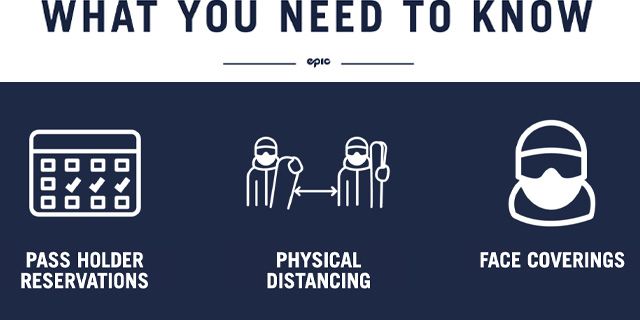
A quick overview of Vail's new Covid-19 protocols. Image: Epic Pass Website
Despite having just been announced yesterday (August 27th), it’s quite likely that you’ve already heard all about our top news item this week: Vail’s released their official policies regarding how they’ll operate their resorts during the 2020-2021 season, while the world continues to endure a global pandemic. To be sure, there’s likely to be endless reactions and opinions surrounding these policies, so we’ll do our absolute best to not add our voice to the cacophony and instead focus on just sharing the facts.
First, the biggest, and most expected, part of the new policy: there will be a reservation system in place at all Vail resorts for the upcoming season, until further notice. While the concept is simple, the policy itself is actually quite nuanced, clearly reflecting a lot of deliberation in regards to how to best enact such an unnatural policy to a ski resort. Because the policy isn’t equivalent to simply making a reservation at a restaurant, let’s start by breaking it down into pieces. First and foremost, reservations will typically be made week-of, meaning pass holders will be able to book a reservation for up to 7-days out. In addition to these rolling weekly reservations, pass holders will also have a second way to book: using their 7 priority reservation days. These are reservations that can be used to book any day of the season. For example, if it’s 12/1 and you know you’re taking the week of 3/1-3/7 off from work, you could use your priority days to claim access to the resort for that week. In the meantime, you’ll be able to use your “week of” reservations to ski throughout the season. One important note to make regarding these priority reservations is that they reset once they’ve been used or the dates have passed. So, for example, if it’s 12/1 and you want to block off 12/15 - 12/17, the three priority days used to book those days would return to your “inventory” on 12/18. In addition to the reservation system, Vail resorts will also be capping lift ticket sales, further limiting the capacity of the resort. At this time, actual capacity caps are unknown, however it’s expected that it will vary by resort.
In addition to the reservation system, there’s a slew of additional policy changes that should be expected at this point. For instance, Vail will only be allowing related parties to ride lifts and gondolas together (defined as “guests skiing or riding together”). For those riding solo, Vail will allow two single riders to share a four person chair, or two doubles to share a six person chair, provided the groups sit as far apart as possible. Likewise, on a gondola, Vail will allow two unrelated singles at a time, although only in their larger cabins. While most of these policies are expected, confirmation that gondolas will be able to operate this season is welcome news.
Finally, we should also quickly mention that a number of other policy changes are being enacted at Vail resorts: facial coverings will be required, resort cafeterias will switch to a “grab and go” style of operation, and all full service bars will be closed. Interestingly, Vail has decided that on-hill restaurants will continue operating, albeit with limited capacity. Of course, stringent testing will also be in place for employees and sanitization will be an absolute priority. It’s likely that we’ll be revisiting this story in the weeks ahead, particularly after we learn details of Alterra’s plans, so for now we’ll simply turn you over to Vail’s open letter to their pass holders, and their reservation details for more info.
#2: Squaw Valley Announces Decision to Change Name, Dropping Derogatory Term:
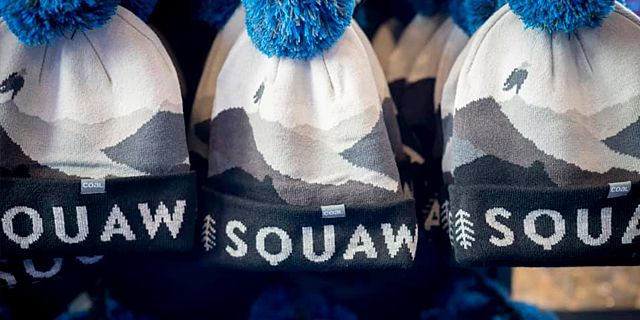
Honest question: now that we’re well aware of the derogatory origins of the word “Squaw,” and the resort has decided to change its name, what will become of the remaining Squaw merchandise? Image: Squaw Valley on Facebook
In other significant ski news this week, we have an update for you from a story we first shared back on June 26, when officials at Squaw Valley first announced that they were going to begin looking into changing the name of the resort. At that time, the change seemed all but inevitable considering the derogatory associations tied to the word “squaw.” To quickly bring you up to speed on that end, the word, which was derived from an Algonquin word meaning “woman”, was believed to have been used by the Caucasian settlers who first happened upon the area. As the story goes, when they arrived, their first encounter was with Native American women working in a meadow while the men were out hunting. Due to that first impression, the settlers designated the location “Squaw Valley.” In the years since, the term has taken on further derogatory meaning, ultimately casting a dark shadow over the name of one of skiing’s most iconic resorts.
That is, until this week anyways. Just about two months after the initial announcement was made, Squaw Valley representatives have made it official: they’ll be changing the name of the resort. At present, little else is known about the effort other than the fact that a new name is expected to be revealed sometime next year. Between then and now, officials will be exploring new naming options, likely involving lengthy conversations with local area businesses who also utilize the iconic name for brand recognition. While it’s purely speculative, the commonly held belief is that the resort will simply become “Olympic Valley,” in homage to the 1960 Winter Olympics that were hosted there. In addition to the obvious choice, there’s also hope that the ski resort will further right the harms done by their use of the term “squaw” by electing to use a different, more righteous Native American term. At the moment though, all we can do is wait to learn more. For more on this week’s announcement, check out this writeup from the Mercury News.
#3: With Work Visa Bans in Full Effect, Ski Resorts Suddenly Inundated with Applications from College Students:
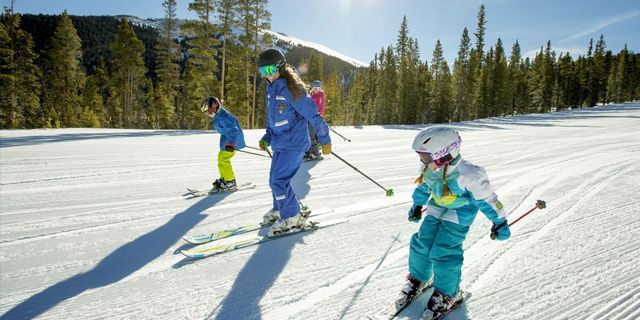
Faced with uncertainties regarding the collegiate experience this year, many college age skiers and snowboarders are filling the employment void left by the suspension of the J1 and H2-B visa programs. Image: Keystone Resort on Facebook
Moving right along, we have yet another update this week regarding a story we’ve recently shared. As luck would have it, the same week news broke regarding Squaw Valley’s initial announcement surrounding their potential name change, we also shared the news that the Trump administration has suspended the H2-B and J1 visa programs. As a quick reminder, these two programs allow international workers temporary permission to work in the U.S.. For ski resorts, these programs have been historically critical in providing adequate staffing as filling seasonal positions, often in rural areas, with domestic workers can be exceptionally challenging.
This week however, we caught an article from the Colorado Sun that reminds us that Newton’s Third Law of Motion (which states that every action has an equal and opposite reaction) isn’t always confined to physics. In seemingly unrelated news, the current health crisis has also thrown the world of higher education into disarray, with some colleges offering exclusively online learning, while others are welcoming students back as part of a year long experiment to find out whether or not it’s possible to operate colleges and universities during a pandemic. As it turns out, this side story is actually proving unexpectedly fortuitous for ski resorts. As the writeup from the Colorado Sun explains, the uncertainty surrounding the collegiate lifestyle in the year ahead has led to many college age skiers and snowboarders to take either a gap year, study online, or study closer to home. As a result, there’s been an influx in college age applicants eager to fill positions typically filled by seasonal international workers. While the circumstances surrounding the availability of these workers was unexpected, those in charge of hiring at resorts have noticed the opportunity and taken advantage of it, utilizing advertisements on social media platforms as a way to suggest the ski bum lifestyle to college aged enthusiasts. Of course, this uptick in applications from domestic workers doesn’t mean the ski industry is in the clear yet, and many groups such as the National Ski Areas Association (NSAA) are lobbying to have the ban uplifted in 2021. Still, it does indicate that the issue should be at least slightly less catastrophic than initially believed. As is the case with all stories embedded with this much complexity, we’re unable to do the details justice here. Instead, we’ll turn you over to the Colorado Sun for more.
#4: Breckenridge Restaurants Looking to Utilize Yurts to Enable Outdoor Eating This Winter:
Finally, after a triple header of pretty heavy news, we feel compelled to round things out with something that feels a bit lighter. Don’t get us wrong, it’s still covid-related, but we think you’ll like this next bit of news. That’s because in Breckenridge, restaurants are beginning to look into using heated yurts as a way of offering a hybrid indoor/outdoor dining experience this winter. While there will still be some restrictions in place that will make it difficult for all area restaurants to utilize this concept, such as the need for private property with enough space to host the yurts, as well as the financial costs associated with renting or buying them, the fact that the wheel’s in motion gives us hope that this is a solution that might be utilized by restaurants in ski towns everywhere. Similarly, as we know, ski resorts are also going to have difficulties with the lodging and eating experiences. While Vail’s official Covid-19 policies that we shared in highlight #1 suggest that other solutions have been identified, we still wouldn’t be surprised to see some form of heated outdoor tents being utilized as a way of offering a comfortable eating experience at the resort. After all, with capacity caps in place, it’s likely that there will be some extra room in resort parking lots this time around. For more on this, check out the report from Denver’s Local CBS Station.
#4.5: Don't Forget, Our 2021 Ski Test is Now Live!