

Top Five Fridays: August 29, 2025
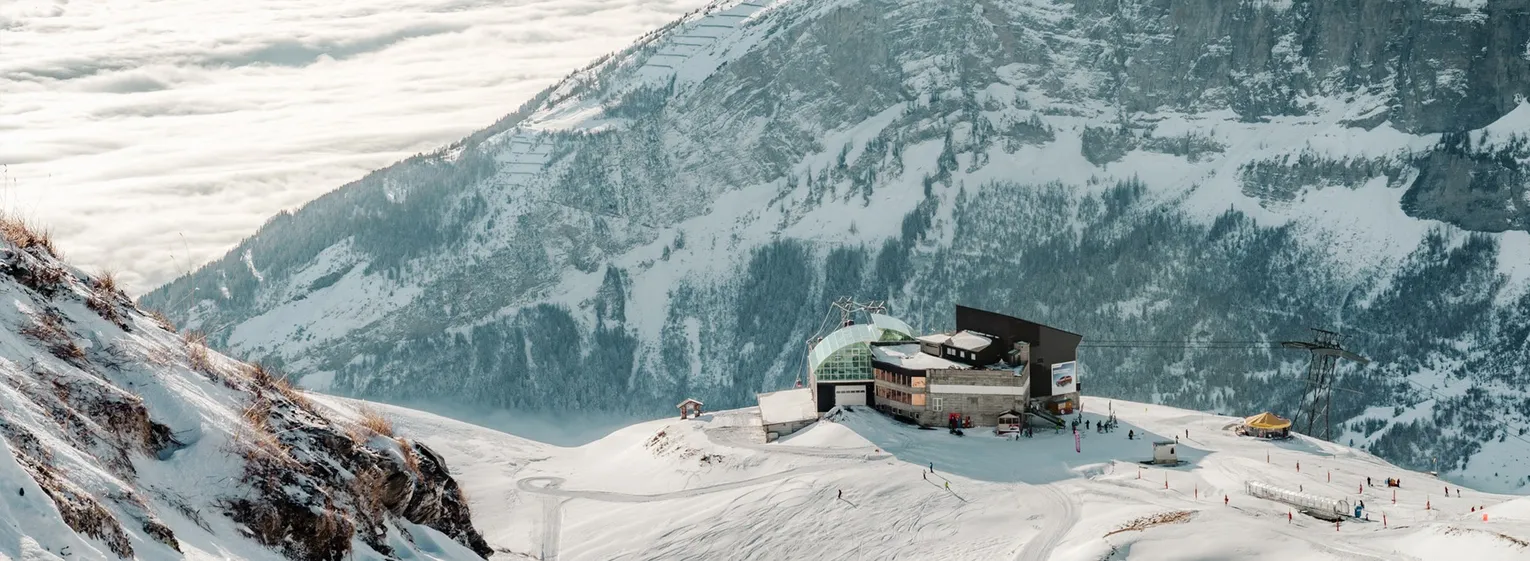
This week, the Indy Pass bolstered its roster with 43 new partner resorts. One of the more exotic additions is Leukerbad, a mid-sized ski area tucked away in the mountains of Switzerland. Image: Indy Pass on Facebook
#1: Indy Pass Announces 43 New Partner Resorts, as Well As a New “Learn to Turn” Pass Product:
While the addition of 43 new partner resorts to the Indy Pass got most of the attention this week, it’s really their new Learn to Turn pass that could prove to be the game changer. Learn more about it right here.
Hello, and welcome to Top Five Fridays, the August 29, 2025 edition! Here in Vermont, the weather seems to be consistently cooling off, and whether or not it’s just in our heads, the leaves seem to be slowly starting to lose their color. While technically still in the summer month of August, we’ve certainly been feeling a vibe shift as we transition out of the dog days and into our annual preseason psychosis. Fortunately for us though, these early signs of autumn don’t just exist in our heads and the air around us - they’re in the news too. Typically just before preseason throttles into full gear, mountains and multipasses alike make a late summer sales push, which is exactly what we’re seeing this week. We’ll share two stories on that topic this week, followed by back to back stories coming to us out of Park City. Let’s dive in.
Up first this week is an update from the Indy Pass, who made two major announcements this week. The more attention grabbing of the two is the news that the pass has once again added a significant number of ski areas to its roster, with 43 new mountains joining this week. With these latest additions, the pass now features over 270 participating ski areas worldwide. Across these 43 new locations, nearly every region in the world is represented, with the U.S. adding 15 resorts spanning from New Hampshire to Alaska, Canada picking up another 11, Europe adding 14, Japan adding 2, and South America adding 1. Between these regions, Quebec, Canada benefits the most, as 7 of the 11 new areas are located in the province, while 3 of the 4 remaining are in neighboring Ontario or Newfoundland and Labrador.
This observation brings up an interesting point about the Indy Pass: its offering is reaching a density that makes it even more attractive. As a quick reminder, the Indy Pass works on a “limited access to a significant number of resorts” model. That is, pass holders can ski for free for 2 days at every ski area on the pass, while getting a discount on a third day. In the early days of the pass, it made the most sense for skiers who love the sport, but didn’t have a mountain to call home. In other words, it was a bit niche, only being the best option for certain skiers in certain regions. Now though? The pass is becoming so prevalent that it’s a viable option not only for those skiing a dozen times a year, but also for those skiing in excess of 30 or more days. Take for instance our region. Between just Vermont and New Hampshire, there are now 19 ski areas on the pass, meaning a holder could log 38 free days across the two states. Factor in Massachusetts, Maine, Northern New York, and Quebec, and there are more ski areas within driving distance than most people could even visit in a season. It’s an interesting development for a pass that started out by targeting occasional skiers, but is quickly becoming a force to be reckoned with.
In addition to the 43 new ski areas joining the pass this week, the Indy Pass also announced another interesting program: the Learn to Turn pass. Mirroring a quickly rising trend, this new pass aims to make the sport more financially viable for first timers. Two weeks ago we shared news of Vail’s Epic Friend Ticket program which hopes to attract new skiers to the sport through half price lift tickets, and last week we shared news of the new Snow Triple Play pass, which provides three days of skiing between 15 East Coast resorts. Between those two options, the Learn to Turn pass offering more closely aligns with the Snow Triple Play pass as it provides three days of skiing across 30+ Indy Pass resorts for $189. This part of the offer is very similar to the Snow Triple Play pass. The biggest difference though is this: the Indy Learn to Turn pass also includes beginner lessons and equipment rentals. In other words, the product offers an opportunity for first timers to get on snow, get a lesson, and rental equipment for just $63/day. At a time when daily lift tickets are surging well above $300/day, this is an incredible deal for new skiers and exactly what the ski industry needs right now.
To learn more about the Indy Pass’s latest offerings, or to buy yours while it’s still on sale, head over to the Indy Pass website.
#2: Ikon Adds 5 New Italian Destinations, Bringing European Total to 23:
In other multipass news, we’ve got a quick update from the Ikon Pass who just announced the addition of 5 new European partner resorts. Specifically, the pass product has added partnerships with Courmayeur Mont Blanc, Cervino Ski Paradise, La Thuile Espace San Bernardo, Monterosa Ski, and Pila - all ski resorts in the Valle d'Aosta region of Italy. Across these 5 ski areas, full Ikon Pass holders will receive 7 days of access, while Base Pass holders will receive 5 days of access. While that’s a pretty good setup, it’s worth noting that much like the Indy Pass, the Ikon Pass is also using density to its advantage. Quite literally right next door to Cervino Ski Paradise is Zermatt Matterhorn, meaning it would be easy for an Ikon Pass holder to tack on an additional 5-7 days of skiing at no additional lift ticket cost. From there, skiers could travel to one of the 12 other Italian ski resorts covered by the Ikon Pass, or continue exploring Europe by checking out partner resorts in Andorra, France, Austria, or Switzerland.
It’s an interesting update to be sure, and not just for the simple fact that Ikon Pass is expanding in Europe. Our summertime readers might recall our coverage from June 13th, when we shared an article from the Vail Daily that spoke to Vail’s Rob Katz regarding his interest in growing the Epic Pass’s presence in Europe. As it stands, the Ikon Pass now has partnerships with 23 European ski areas, the Indy Pass has partnerships with 20, and the Epic Pass has 10. Now, it’s important to recognize that Vail/Epic are taking a different strategy to their expansion, preferring to purchase resorts rather than partner with them while both Indy and Ikon are happy to partner, making fast expansion easier. But still, when you combine Vail’s stated goal of expanding into Europe, this concept of ski area access density, and the fact that both Indy and Ikon are providing double the access that Vail is, it’s hard not to think that Epic, for once, is a bit behind the 8-Ball. Keeping all of that in mind, we wouldn’t be surprised at all to hear an announcement from Vail regarding new European destinations before winter starts. Of course that’s just speculation for now.
To learn more about this week’s updates from the Ikon Pass, check out their press release.
#3: Park City’s Matthew Prince Doesn’t Just Want to Buy Park City - He Has a Plan to Force the Issue:
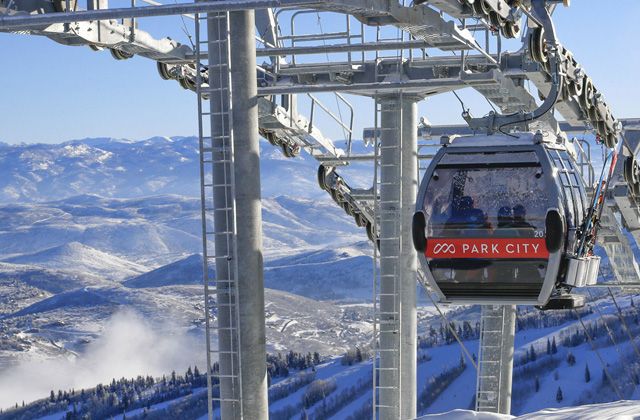
Park City Mountain Resort - currently owned by Vail, but if Matthew Prince has his way, there may come a day when they have no choice but to sell it to him. Image: Park City Mountain Resort on Facebook
Speaking of speculation surrounding Vail Resorts, we caught another pretty interesting story this week that continues to build upon some of the concepts we’ve just discussed regarding Vail’s business model. That story starts like this: Park City’s Matthew Prince is continuing to put pressure on Vail Resorts to sell Park City Mountain Resorts to him. Now, if that sounds a little crazy, we don’t blame you, but some additional context should help clear things up. First and foremost, Matthew Prince isn’t just some local Park City resident. While he did grow up there and calls the city home, Prince is also the CEO and co-founder of Cloudflare, and thus a multibillionaire. If this is starting to sound a bit familiar, then it’s likely because you caught our May 23rd coverage, which shared the news that Prince had purchased the city’s Town Lift Plaza, giving him control over one of the resort’s base areas. When that news broke, Prince also made it known that his master plan includes upgrading the Town Lift itself to provide better access to the resort, followed by purchasing the mountain, and ultimately concluding with the connection of Park City and Alta resorts. This last phase would mark the start of his next plan: creating an interconnected network of ski resorts across the Wasatch Mountains, à la Europe.
Of course it’s worth noting that as of August 29, 2025, Vail remains adamant that they have no plans to sell Park City.
Despite that stated position, we learned that Prince is actively working to undermine Vail’s ability to have a say in the matter. His attempt to do so stems from the basic fact that Vail is a publicly traded company, as well as some shrewd business observations. Specifically, Prince has identified what he believes is a weakness in Vail’s business: the value of their combined assets is worth more than the business’s current market cap. In other words, Vail owns a ton of stuff. While we don’t know the exact value of their assets, Prince hints at a figure around $20 billion. Meanwhile, the business itself has a market cap of just over $6 billion. Without diving too deeply into economics, this basically means that Vail’s assets are worth more than the stock market thinks the business itself is worth.
To help illustrate this point, Prince shares an example: if you had a company worth $5 billion that owned a safe full of $20 billion in gold bars, the smart business move wouldn’t be to operate the $5 billion company. Instead, it would be to sell the $20 billion in gold bars.
Keeping that valuation discrepancy in mind, as well as Vail’s vulnerability as a publicly traded company, Prince thinks he sees an opportunity that he can exploit. In short, Prince wants to find what’s called an activist investor who’s willing to take on a significant stake in Vail’s stock. In doing so, that investor will either have the power to force an action themself, or gain support to force an action. In this case, that action would be for Vail to liquidate assets until the business’s market cap and its properties become equal in value again. One of those liquidated assets could be Park City Mountain Resort, as Prince would make his interest in purchasing the resort known.
While that may not be a strategic play for Vail in the long run, it would absolutely make sense for an activist investor to buy into this plan. For them, purchasing a significant stake, pressing for a liquidation of assets to increase the company’s revenue, and then selling their shares would be a surefire way to make a quick return on investment. For them, the long game doesn’t matter. This is a quick money making opportunity.
Should this all come to fruition of course, it would be hard to ignore the karmic value of the story. Afterall, Vail was on the controlling end of an equally audacious takeover back in 2012, when they bought Park City from Powdr Corp after Powdr failed to renew a land lease for the upper portion of the mountain. Rather than send them a friendly reminder, Vail signed the lease themselves, making it impossible for Powdr to operate the full mountain. Ultimately, Powdr had little choice but to sell the mountain to Vail.
A forced sale of Park City is a wild scenario to contemplate, and one that shows the cut throat business that Vail has subjected itself to. To learn more about this week’s story regarding Matthew Prince’s continued efforts, check out the report from the Park Record.
#4: Utah’s Governor Making a Push for the X Games to Relocate to Park City in 2027:

After hosting the X Games in Aspen for 25 years, the Games are expected to relocate for 2027. One potential destination? Park City, Utah. Image: X Games on Facebook
Finally, rounding out this week’s news is part two of our Park City double header. Over the course of the last several months, there’s been a slowly developing story regarding the potential relocation of the Winter X Games from its longtime home in Aspen, CO to Park City, UT. Now, since we haven’t really checked in on this storyline, there’s a lot of factors to cover from both sides of the aisle. From the X Games side of life, it’s been known that the league is considering moving on from Aspen in 2027 when its contract expires. While it’s entirely possible that they choose to resign a new contract, it’s seeming more likely that they’ll choose to freshen things up with a new venue. Strengthening Utah’s case for hosting the Winter X Games is the fact that Salt Lake City just hosted an incredibly successful summer iteration. Over the course of 3 days in June, roughly 40,000 fans showed up to watch the X Games in person, while broadcast viewership was up 12%. In other words, the region proved itself.
From Utah’s side of life, there are plenty of reasons why the state, and specifically Park City, are hoping to win the bid. Topping that list is the departure of the Sundance Film Festival, a longtime staple of Park City. This coming winter will be the last time that Sundance is in Park City. In 2027, the event will relocate to Boulder, CO, leaving an economic void in Utah. That vacancy could be perfectly filled by the relocation of the X Games, which is also held in January.
Additionally, receiving X Games hosting duties would help the city prepare for the 2034 Winter Olympics, as Deer Valley, Park City, Olympic Park, and Solider Hollow Nordic Center are all expected to be venues for the global games. By hosting the X Games every year starting in 2027, the city will be able to iron out any logistical issues that may arise from hosting an influx of athletes and spectators at the Olympics.
While that all sounds quite promising, we caught wind of an update this week that could potentially tip the scales heavily in Park City’s favor. In an article from Teton Gravity, we’ve learned that Utah’s Governor, Spencer Cox, is currently in negotiations with X Games organizers, with the goal of making the state the “headquarters of winter sports.” That interest appears to be mutual as a recent article from the Park Record quoting X Games CEO Jeremy Bloom as saying, “absolutely,” when asked if the X Games would consider coming back for a winter iteration. Expanding on his one word sentence, Bloom went on to say, “We’re already exploring possibilities to return for a winter edition, and we’re in active conversations with regional partners about what it could look like.” In other words, while the announcement has yet to be made, it’s starting to feel like it’s only a matter of time. For more on this, check out this week’s report from Teton Gravity, as well as the Park Record’s coverage from July.