


Top Five Fridays: January 2, 2026
It was a HUGE week for the U.S. Cross Country ski team, leaving a lot on the line this weekend. Find out more in highlight number 2! Image: U.S. Ski and Snowboard Team on Facebook
Hello, and welcome to Top Five Fridays, the January 2, 2026 edition - our first episode of the new year! While you might catch a lot of people this week saying things like, “new year, new me,” you won’t find that sentiment here. Digging back in the archives, we’ve been writing these articles since at least May 15, 2015, giving us nearly a decade of experience in bringing you the latest news from each week in skiing. At this point, we like to think we have things pretty dialed from a reporting standpoint. With that in mind don’t expect much to change around here in ‘26. Instead, you can plan on looking forward to another 52 or so editions of Top Five Fridays this year, with each and every one filled by a variety of intriguing topics from the world of skiing.
Case in point: this week, where we have controversy on the FIS World Cup Alpine Circuit, historic achievements from the U.S. XC ski team, continued fallout from a ski patrol strike, and sale of one of the largest collections of vintage ski gear in the United States. We’ve got a lot to talk about this week, so let’s dive in!
#1: FIS Results - Shiffrin Causes Controversy on Way to Her Sixth Straight Slalom Win:
First up in this week’s ski news, as always, is the latest from the FIS World Cup Alpine circuit. If you read along with us last week, then you already know that the schedule was a bit lighter this time around as the tour gave athletes a chance to rest and celebrate the holidays. That said, we do still have two women’s races to cover as well as one on the men’s side, as well as a bit of controversy caused by Mikaela Shiffrin. While it was a slow week, this should be a fun one.
Last week, the women’s circuit was in Semmering, Austria for a Giant Slalom race on Saturday, followed by a Slalom race on Sunday. Between the two races, conditions were tough on the course as snowfall left both the GS and Slalom courses feeling choppy and uneven. We’ll get into that a bit more in our Slalom race coverage, but you can see how challenging the GS course was just based on the number of DNF’s, as well as the fact that only 27 athletes managed to both qualify for finals and complete both runs. Typically, you would see 30 athletes earning points if all went to plan. Still, despite the challenging surface, we do have some U.S. athletes to celebrate in this race. Leading the charge for Team U.S.A. was Mikaela Shiffrin with a 6th place finish, while AJ Hurt took home 21st.
A day later though, in the Slalom race, is when the conditions issue really came to a head. In the first run of the event, conditions deteriorated rapidly, resulting in a barely skiable course by the time the final first runs were occurring. Evidence of this can be seen in not only the sheer number of first run DNFs, but also by the fact that there was a ~6 second gap between the first and last qualified athlete. In a Slalom race, that’s a huge amount of time. When all was said and done, Shiffrin sat in 4th place after run 1, needing to make up a full .54 seconds to win. A challenging scenario on a challenging course.
And then came the pre-second run inspection. During that inspection, Shiffrin identified a portion of the course that she considered unsafe and notified race officials. After conferring, they decided to alter the course to make it safer - emphasizing that no gates were moved as a result. That would’ve been all well and good, except for one detail: by the time Shiffrin alerted officials, the only two athletes left inspecting the course were Shiffrin and Latvia’s Dzenifera Germane, each of whom were given an additional 15 minutes to inspect the course after the adjustment. This greatly upset other athletes and coaches who were unable to inspect the course after the adjustment was made. Immediately, accusations began to fly, suggesting the Shiffrin was being given preferential treatment and/or that she raised the concern to gain a competitive advantage. The backlash was so bad that the Swiss team considered filing a protest against Shiffrin, although ultimately they withheld, suspecting that they wouldn’t win the argument. Of course, amidst all of this backlash, Shiffrin voiced her own reasons for the course adjustment: it wasn’t about gaining a competitive advantage, it was about ensuring course safety. In a lengthy and well written post on Instagram after the event, Shiffrin defended herself, calling the course unsafe and pointing out the fact that the DNF rate in the race was nearly 50% - the highest in a race since 1999. In her mind, the situation should’ve been addressed well before inspection and it should’ve never been her responsibility to call attention to the issue with the course. In her mind, addressing the issue was necessary for the safety of all of the athletes.
Keeping all of that in mind, what was the outcome of the race? Well, as you can probably guess, Shiffrin went ahead and did what Shiffrin does: she made up the .54 second deficit and ended up winning the event by .09 seconds. With that win, it became her 6th straight slalom win, making her a perfect 5-0 on the season. Controversial or not, the win continues her streak as she continues her quest for a legendary season. You can read more about the controversy surrounding the slalom race here.
On the men’s side of things, there was significantly less drama as the Giant Slalom being held in Livigno, Italy went off without a hitch. In that race, the U.S. Team maintained its “consistently good” reputation, as both Ryan Cochran-Siegle and River Radamus finished in the top 15, with RCS earning a 13th place spot and River Radmus taking 14th. Joining them in the points was Kyle Negomir with a 24th place finish.
Looking ahead, it’s another somewhat light week as the women have a Giant Slalom and a Slalom race in Kranjska Gora, Slovenia this weekend, while the men have just one Slalom race in Madonna Di Campiglio, Italy next Wednesday.
#2: FIS XC Updates - Jessie Diggins & Gus Schumacher Have Made History for the U.S. Team:
Next up this week is coverage from an FIS sport that we cover far too rarely: XC racing. As you know, we have somewhat limited space here on Top Five Fridays, and some might argue that we’re already writing too much about the stories that do make the cut here. As such, we unfortunately don’t spend nearly enough time talking about Cross Country ski racing, which is tough, because the U.S. Team currently has two of the best athletes in the world in Jessie Diggins and Gus Schumacher. While that may sound like we’re just blowing smoke, we tend to think this week’s results speak for themselves.
Over the course of the last week, the XC World Cup circuit has been in the midst of the annual Tour de Ski event. Unique to this discipline, the Tour de Ski is a six stage event, covering all disciplines of the sport, with points from each stage counting towards each athlete’s overall ranking. As it stands, athletes have spent the last week competing in Toblach, Italy for the first four stages of the Tour de Ski, with the final two stages occurring this weekend in Val Di Fiemme, Italy.
While we won’t have a chance to cover each and every race from the week in Toblach, the two things you need to know are this: both Diggins and Schumacher enter the Val Di Feimme races with a chance to win it all, and the tandem made U.S. Ski Team history on New Years Eve at the 5k Mass Start races in Toblach. There, for the first time ever, a U.S. Man and a U.S. Woman won a World Cup gold medal in a cross country ski event on the same day. Historically, this discipline has been dominated by European countries. More recently though, the U.S. Team has been coming on strong with Diggins being the name to beat in recent years, Schumacher growing in presence, and an entire team producing consistent results behind both of them.
In addition to the first place victory in the 5k Mass Start, Diggins also has a 4th place finish in the Sprint, a 3rd place finish in the Interval Start, and another 1st place finish in the 20km Pursuit. As a result, she enters this weekend’s final two races in first place position and has already secured a podium. For Schumacher, a 11th place finish in the Sprint, 17th in the Interval Start, and a 6th place finish in the 20km Pursuit to go along with his 1st place finish in the 5k Mass Start, has him sitting in 3rd place heading into the final weekend. If you’ve never had a chance to check out Cross Country ski racing, now would be a great time as this weekend’s action promises to be thrilling on both sides of the sport. You can click here to preview this weekend’s schedule.
#3: The Telluride Ski Patrol Strike Continues With No End in Sight; Local Governments Unable to Step in With Subsidy:
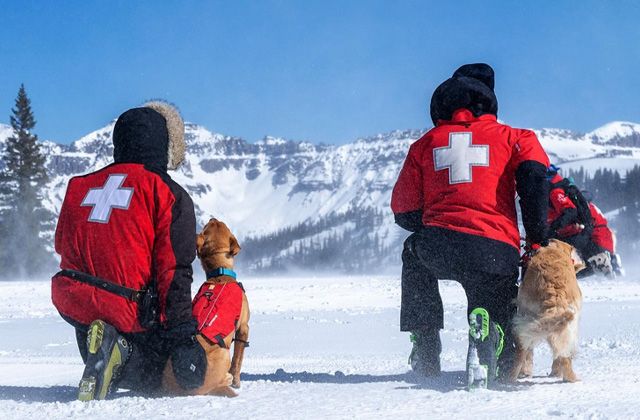
Just about a week into the ski patrol protest in Telluride, little progress has been made and there’s currently no end in sight. Meanwhile, the town’s businesses are caught in the crossfire. Image: Telluride Ski Resort on Facebook
Moving right along, our next highlight this week is continued coverage of the Telluride Ski Patrol protest. When we left off last week, the protests themselves had been announced, and as a result, the owner of the resort announced the closure of the mountain. Since then, tensions have only continued to intensify as the standoff has created economic uncertainty for the entire town. Now, six days after the protest itself started, while we don’t have progress to report, we do have some updates.
The first update, unfortunately, is that there truly is no end in sight regarding this standoff. In a report from the Colorado Sun, it’s stated that Telluride Ski and Golf hasn’t reached out to the patrol union in an effort to resume negotiations. Meanwhile, the resort is continuing to make snow, has posted job listings for temporary ski patrollers, and has promised, “a safe re-opening as soon as possible.” In other words, it appears as though the strategy coming from the resort is to hold strong to their initial offer and force the patrol unit to cave. Working in their favor, they hope, is the town’s overall reliance on the resort for its economic well being. With the town suffering due to the resort’s closure, it’s the hope of the management team that the pressure will build to a point where the patrol unit eventually caves.
On the patrol side of the story, things are much more complex. As we know, the center point of the standoff is in regards to wages. For patrollers, the argument comes down to this: the cost of living in Telluride is simply untenable on a patroller’s wage. As a result, the unit is unable to retain the type of veteran patrollers that they need in order to keep deep knowledge of the mountain and its terrain within the unit - both necessary for keeping the mountain safe. With wages being what they are, veteran leaders are leaving for higher paying jobs elsewhere, while new patrollers tend to only stick around for 5 or so years - significantly less than previous generations of patrollers.
The elephant in the negotiations however, and what makes this dilemma even more challenging, is what a wage increase for the patrol unit would mean for other workforces at the mountain. According to the piece from the Colorado Sun, representatives from the resort have mentioned that this wage increase isn’t just about ski patrol. In their minds, if they give patrollers a raise, then it would lead to other divisions at the mountain also seeking a raise. In that case, the mountain wouldn’t just be spending an additional $115,000 on wages over three years, but significantly more should the other workers request similar pay bumps. Here’s the catch though: the patrol union is well aware of this, and fully supports it. In their minds, while earning livable wages for their union members is the priority, they fully support all workers at the mountain being paid enough to afford to live in the area. As such, the standoff appears to be at a complete standstill.
In the meantime, local businesses are very much suffering without any reprieve in sight. According to the Telluride Tourism Board, occupancy rates in the town were down 54% in the last week of December as compared to the same week last year. On the flip side, nearby Crested Butte and Monarch Mountain are both seeing huge upticks in business as skiers are rerouting their ski plans to check out those mountains instead. In other words, the fear of losing business isn’t just a hypothetical, it’s actually happening. Taking note of this, locals have been asking if local governments can help step in and help clean up the mess. Unfortunately however, the town of Telluride, Mountain Village, and San Miguel County released a statement on Monday saying that, after consulting with labor attorneys, they’re unable to subsidize the mountain to help pay the patrollers as doing so would be a violation of labor laws. With government intervention ruled out, there are only a few paths forward: the ski patrol union can cave, the mountain can cave, the mountain can hire temporary patrollers, or, in what’s looking to be the least likely scenario, the patrol union and the mountain can come to a compromise. At this point in time, it’s impossible to know what will happen next. For now, all we can do is keep tabs on the situation as it unfolds. You can do so by heading over to the Colorado Sun for the latest.
#4: In Carbondale, Colorado, One of North America’s Largest Collections of Vintage Ski Gear is Up for Sale:
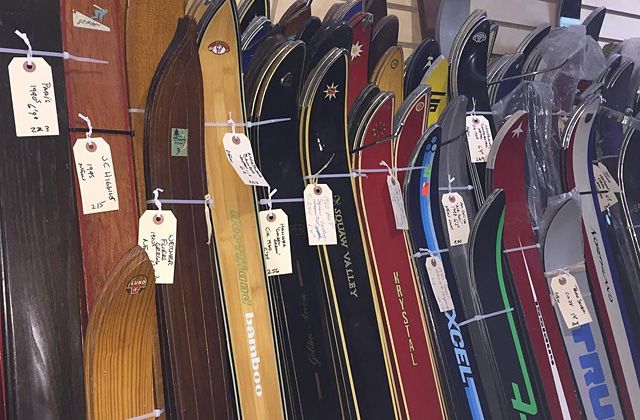
Just a tiny fraction of the type of inventory currently available online or in person at Vintage Ski World. Image: Vintage Ski World on Facebook
For our last highlight this week, we wanted to share what we think is a pretty interesting story coming to us out of Carbondale, CO, a city that sits about 30 miles northwest of Aspen, CO. There, a man named Richard Allen has been amassing a collection of vintage ski gear since 1956. The story of Allen’s lifelong passion-turned-business began when he first stumbled across his parents and grandparents’ vintage ski gear in the basement of their Aspen home back in the mid 50’s. That discovery ignited something inside of Allen, and he began casually collecting vintage gear upon returning to his home in Minnesota. Then, one day, Allen received a tip about a ski shop in Portland, Oregon that had a ton of brand new, vintage gear stored away in its basement. Having managed to win the owners over, Allen was invited to explore the basement, where he ultimately made his first purchases of what’s known as “deadstock” products (brand new, unused, vintage goods). From there, Allen’s passion turned serious.
For a number of years, Allen continued collecting as a hobbyist. Then, in 2002, Allen’s collection grew to a point where he decided to open a business called Vintage Ski World. Part museum, part retail shop, Vintage Ski World has operated out of a discreet warehouse space that would be easy to overlook. Once inside though, it’s the stuff that ski nerds dream of, with nearly every inch of the space covered in some form of vintage product. From unmounted skis from the 1940’s, to vintage posters, patches, outerwear, and everything in between, it’s the type of place where time ceases to exist as your senses are inundated with stimulus from decades upon decades of ski history.
And now, the entire collection itself is for sale.
This week, we caught word that the 73 year old Richard Allen and his business partner have decided to sell the business. After operating it for 23 years, Allen has finally managed to inventory his entire collection, getting it ready for full appraisal. While at the moment you can shop some of his collection on VintageSkiWorld.com, Allen notes that the online shop reflects only a percentage of his inventory. Additionally, you can shop directly from the retail location, but even then you’d be missing out on an entire storage locker of additional goods, not to mention buying on a per-piece basis. With this week’s news, Allen hopes to be able to put a price on his entire collection, ultimately selling it all to just one buyer in hopes of keeping it all together. At the moment, our understanding is that the appraisal portion of this process is still in progress, so there isn’t a total price available yet. Still, should you be interested in buying either the entire collection, or something as simple as a vintage patch, we recommend heading over to VintageSkiWorld.com to learn more.
#4.5: An Incredible Tragedy Occurred in Crans Montana, Switzerland on New Years Eve:
Finally, rounding things out this week, we want to share news of a terrible tragedy that occurred on New Year’s Eve at Switzerland’s Crans-Montana resort. There, a horrific fire broke out in a crowded bar, leaving dozens of people dead and hundreds injured. Here on Top Five Fridays, we never, ever want to use tragedy as a form of marketing, which is why we chose not to include this as one of our top stories. That said, it’s a major story coming out of the ski industry, and one that we feel we should at least make you aware of. If you’d like to learn more, we’d suggest checking out the coverage from NPR.
#5: And Now, Your Edits of the Week:Kye Peterson Has Just Released, “Ulterior,” a Nearly 40 Minute Big Mountain Film Highlighting the Mountains of British Columbia:
Markus Eder Celebrates His 35th Year With 35 Tricks:
*** Warning: Some Cursing ***