

Top Five Fridays: July 4, 2025
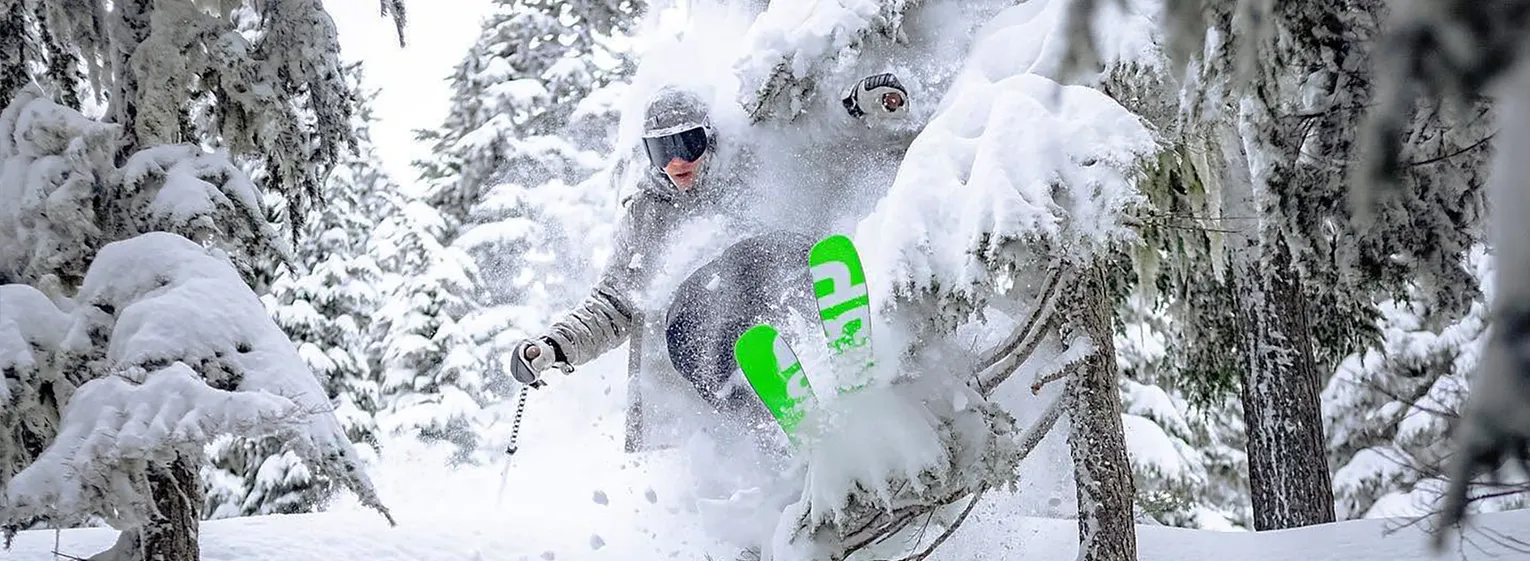
Oregon, one of the most powder-filled states in America, is at risk of losing its ability to operate a ski area. More on that in highlight #1. Image: Timberline Lodge on Facebook
#1: With the Failure to Pass Senate Bill 1196, Oregon’s Ski Areas Are at Extreme Risk of Closing:
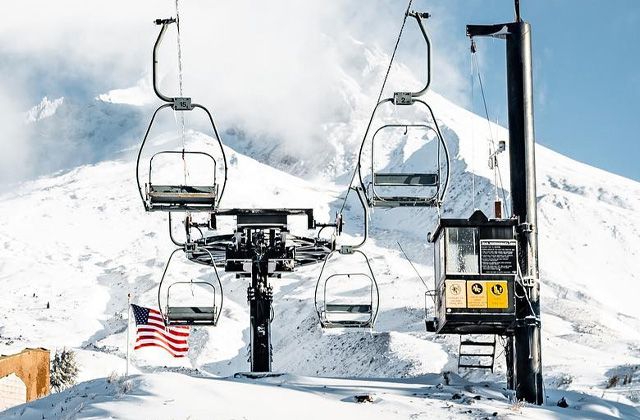
It’s hard to imagine Oregon without skiing, but that’s exactly what could happen if the state’s last insurance company pulls out due to an inability to enforce liability waivers. Image: Timberline Lodge on Facebook
Hello, and welcome to Top Five Fridays, the July 4, 2025 edition! On this special holiday edition of TFF, we’ve got some pretty important news to kick things off with, followed by a triple header of competitive news. With lots to talk about and holiday weekend ahead of us, let’s jump right in!
First things first, and we hate to do this, but we have a disappointing update from Oregon, where things are looking quite perilous for the ski industry. As you’ll remember, just a few weeks ago we shared with you the news that the second to last insurance company willing to cover Oregon’s ski areas had pulled out of the state. The reason was simple: Oregon’s liability laws give very little legal protection to ski areas while giving a tremendous amount of power to skiers and snowboarders. Put simply, the liability waivers that we’re used to signing in most states are essentially unenforceable in Oregon. In the words of a risk claim manager working for the company that pulled out of the state, Oregon is an, “an extreme outlier”, accounting for, “for 20% of its nationwide losses up to $1 million and 50% of its losses between $1 million and $10 million.” In other words, the current laws in Oregon make it a risky, potentially even a downright bad business decision for insurance companies to operate there.
Alongside our coverage of that story was also the news that a bill was making its way through the state Senate that would solve the problem. Known as Senate Bill 1196, the purpose of this bill was to validate liability waivers, making them enforceable again. With what was perceived to be sufficient support for the bill, it was generally thought that it would be voted on and approved prior to the end of this year’s legislative session, thus putting this saga to rest and alleviating the stress being felt by the state’s ski areas. Unfortunately, that didn’t happen.
This week, we learned that time simply expired on Senate Bill 1196. Without ever being put to a vote, this important piece of legislation is now dead. Now, the next chance for this issue to be addressed will be in the 2026 session. The potential problem there however, is that next year’s session is a “short session,” meaning it’ll last just 35 days and a limited number of bills will be introduced.
This, of course, leaves the state of Oregon in a perilous situation as there’s only one insurance company left that’s willing to cover ski areas in the state. Should that insurance company come to the same conclusion as its peers and decide to pull out, it would mean that ski resorts would have zero insurance options. If that were the case, it’s highly likely that most, if not all, wouldn’t operate next season. In the words of John Burton, a spokesperson for Timberline Lodge, “To be candid, the outlook for Timberline has become very challenging. It’s difficult to forecast exact impacts without knowing what, if any, insurance options might be available — but we are preparing for the possibility of hard choices.” Potentially the most frightening aspects of this news are the facts that the risk of closure is very real, and that there’s not a lot of recourse available. Until the Oregon legislature can pass a law empowering liability waivers, ski areas, and every other business requiring a liability waiver, will be at the whim of insurance companies. For more on this, check out the report from Oregon’s Statesman Journal.
#2: X Games CEO Jeremy Bloom Announces “Owl AI”, a Company Aiming to Integrate AI With Sports Judging:
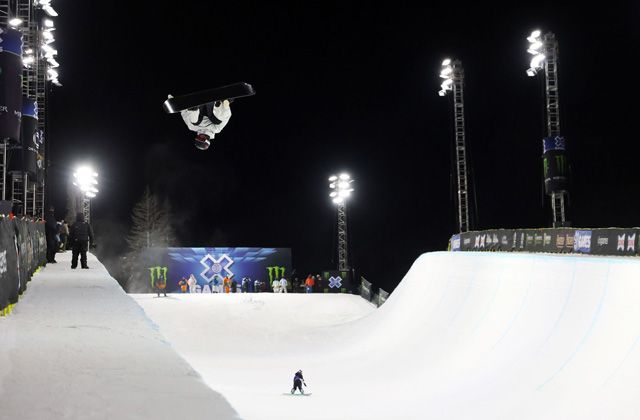
After debuting at last year’s Snowboard Superpipe event, Jeremy Bloom’s AI judging software received serious attention across the sports world. Now, he’s announcing a new company to support it: Owl AI. Image: X Games on Facebook
Next up in ski news this week is a pretty significant update from Jeremy Bloom, the Olympic freestyle skier turned NFL player, turned tech CEO, turned X Games CEO. This week though, we’re only tangentially talking about any of that as the real news is Bloom’s latest tech endeavor: Owl AI. As you’ll recall, at last winter’s X Games, it was announced that AI judging was going to be tested for the first time ever at an event. More specifically, it was to be used as an aide for human judges at the snowboard superpipe event. At the time, it was met with the expected amount of pushback and skepticism, but seeing as it was just an aide and just for one event, it came and went pretty quietly. Or so we thought anyway.
This week, we learned that some big things are happening at Jeremy Bloom’s tech company, Owl AI. After making its debut at the X Games last winter, Bloom began fielding calls from interested parties extending well beyond winter sports. Athletes, judges, refs, sports leagues, sportsbooks - on and on the list goes of potential stakeholders who saw value in Bloom’s nuanced AI system. As a result, Owl AI has ramped up in a big way, having secured $11 million in seed funding since its debut while also hiring the former head of Google’s A.I. Solutions Architecture to be the company’s CEO. Now, armed with plenty of interest, the presumably right person leading the company, and a bunch of money, Owl AI is setting its sights on transforming the way decisions are made in sports.
As for what that might actually look like? Well, the first thing to note is that Bloom cites Owl AI’s ability to interpret intangibles as a significant difference between its system and the type of AI assistance that’s already out there. For example, in tennis, a form of AI judging is currently used that determines whether a ball is in or out. As Bloom explains it, that’s a binary decision. What Owl AI does is consider nuance. Take for example the men's snowboard superpipe. Using Owl AI, things like how early and securely a grab was grabbed can be analyzed. The amount of body motion while in the air can be analyzed and considered in terms of style. Or, to put it back into human terms, ““The easiest way to think about it is the tech allows us to put a Ph.D.-level analyst in the game, and create structured analysis behind it,” according to Bloom.
In theory, there’s some merit to Bloom’s ideas of reducing human judgment when trying to quantify categories that are objectively impossible to quantify. But, of course, there’s also a healthy amount of skepticism surrounding whether or not this is beneficial or detrimental to the judging of subjective sports. Over on Newschoolers, author Adam Spensley shares his take as to why this is ultimately bad for skiing, and he raises some fair points. Take for example the idea that AI is only “intelligent” because of the information we give it. In other words, if operators tell the system that one particular version of a grab is “good” while a different version is “bad”, then that’s what the system will know. But what if the operators get it wrong? What if the operator thinks the sports world loves Birk Rudd’s version of slopestyle but hates Henrik Harlaut’s? In this scenario, you’re starting to objectify style in a way that identifies one as “good” and the other as “bad”. In reality though, it’s more of a preference in the same way that two people might have different tastes in music or fashion. Neither is good or bad, they’re just different. Ultimately, that is the crux of the challenge that lies ahead for Owl AI as it tries to win over fans of nuanced sports. Time will tell how that plays out, but for now, we recommend checking in with either Forbes or Freeskier for their takes on this latest update.
#3: The FIS’s Centralized Media Rights Are Paying Dividends, as the Organization Announces Increased Payouts to All Members Nations & More Prize Money:
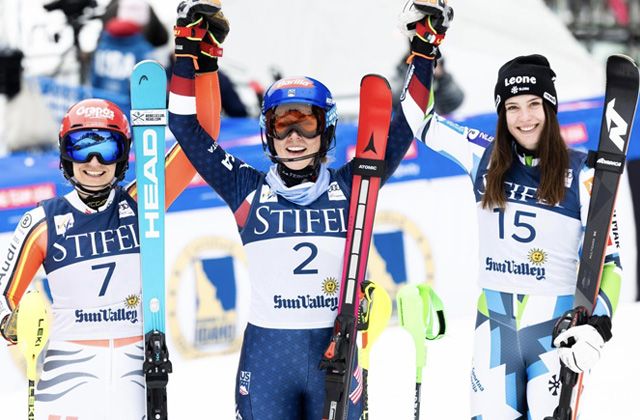
Smiles all around, as the FIS has just increased the availability of funds for both athletes and national teams. Image: Mikaela Shiffrin on Facebook
In other competitive ski news this week, we’ve got some pretty exciting updates from the FIS, who continues to set its sights on becoming a more mainstream global sports league. Part of making that happen, in the eyes of FIS President Johan Eliasch, is strengthening teams from all over the world. Part of making that happen is providing financial support to both National Governing Bodies (NGB’s) like the U.S. Ski Team, and incentive for athletes. This week, we learned that the FIS has increased funding for both.
Starting on the NGB side of this week’s news, the FIS has announced several new initiatives that will provide significant revenue to all of its members. Potentially the most impactful is a newly announced share distribution system resulting from broadcast revenue. As a result of the somewhat recent renegotiations with Infront Media, Eliasch announced that the FIS will be splitting €10 million each year for the next three years amongst all of its NGB members. After running the numbers, that comes out to a total of €400,000 per team. For a team like the U.S. Team, that’s significant but not game changing. Who it potentially is game changing for though, are teams like New Zealand and Greece who traditionally haven’t received much, if any, financial support from the FIS as they don’t tend to host events. Prior to this arrangement, financial support was provided based on the number and size of events hosted by each country.
Speaking of which, the FIS also announced an annual €5 million fund that’s to be split between countries who host events. Unlike the NGB payouts, this pool will be divided up based on the size of each event. For countries that host events, this means they can expect an annual €400,000 payment, plus their portion of the €5 million “hosting” fund.
Finally, the last bit of news surrounding funding increases is in regards to prize money. Back at the start of June, the FIS announced that it would be increasing prize money by 10% with hopes that event organizers would match the increase. While we still don’t know exactly how that prize money breaks down across specific disciplines and events, we did learn this week that the total value of the prize money is €7 million next season. According to Eliasch, that represents a 40% increase since he took over as President 5 years ago. As for why that matters? It’s simple: the most talented athletes in the world begin making career choices at an early age. If there’s no money in FIS sports, potential future superstars will simply elect to pursue their talents in a different sport where there is a lucrative opportunity.
There is also one additional tidbit in this SkiRacing.com article that could be encouraging news for U.S. fans of FIS sports who continue to be frustrated by their ability to watch events. According to Johan Eliasch, the U.S. will join the FIS’s centralized media rights system with Infront in the 2026-2027 season. Reading between the lines, our hope is that this will mean that we can finally access full replays and coverage from events taking place at venues anywhere in the world, and not just here in America. While we’ll have to wait a couple of years to see if that’s the case, it’s hopeful to know that there’s at least a chance. To learn more about this recent round of announcements, check out the report from SkiRacing.com.
#4: After Missing Out on the Stifel U.S. Ski Team Awards, Lindsey Vonn’s Comeback Story is Now Nominated for an ESPY:
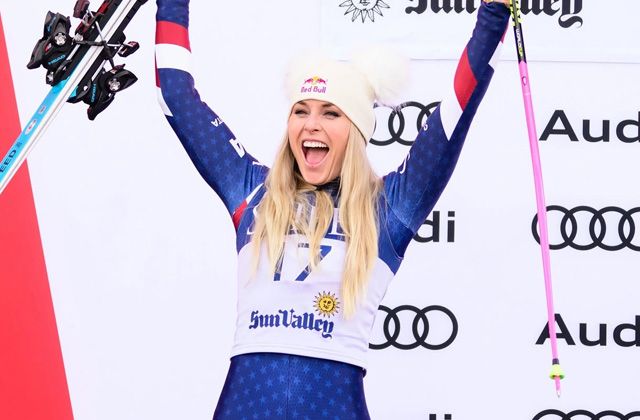
Don’t call it a comeback, call it a… actually, do call it a comeback. Maybe even consider calling Lindsey Vonn the “Best Comeback Athlete” at this year’s ESPY awards. Image: Lindsey Vonn on Facebook
Finally, rounding out our week of highlights is a story of redemption. If you joined us on June 13th of this year, then you might recall our coverage of the Stifel U.S. Ski Team awards. Those awards, which included categories like “Athlete of the Year”, “Most Improved”, and “Rookie of the Year”, were decided by members of each team voting on a winner amongst their peers. In addition to these categories, there was also one that felt custom made for Lindsey Vonn: the “Best Comeback” award.
As you’ll recall, Vonn came out of retirement last season after 6 years away from racing. While Vonn is considered one of the best alpine racers of all time, there was still quite a bit of skepticism regarding her ability to compete at the highest levels still. Afterall, not only had she spent over half a decade away from the sport, but she’d also recently undergone knee surgery and would be all of 40 years old. If she were to win at that age, she would become the oldest woman to ever podium an FIS event. By the time last season wrapped up, she had done exactly that. In her final race of the season, Lindsey Vonn took home second place in the Super G at the finals in Sun Valley. Unfortunately, that accomplishment didn’t impress her peers quite enough to give her the “Best Comeback” award, which ultimately went to Breezy Johnson (who, we should say, also had a very strong argument for winning the award).
This week though, there’s at least some redemption for Lindsey Vonn, as ESPN has just announced that she’s nominated for an ESPY in the category of “Best Comeback Athlete”. In this instance, while it would be amazing for Vonn to win, even being nominated for the award should feel like a victory as Vonn’s story is being paired up with three likewise incredible comeback stories. For instance, also nominated for the award is professional soccer player Mallory Swanson, who returned to the field after having one surgery to treat an injury, two additional surgeries to treat infections stemming from the initial surgery, and having given birth. Or take NHL player Gabriel Landeskog, who spent nearly three years off the ice after a brutal knee injury forced him into a series of surgeries and rehabilitations. When he returned, he’d been away from the game for 1,032 days. Finally, the last athlete that Vonn is up against is U.S. gymnast and multiple Olympic medalist Suni Lee, who was diagnosed with two incurable kidney diseases back in 2023. This diagnosis resulted in her retirement from college gymnastics as well as gaining 40 pounds - a significant amount for a gymnast. Recently, Lee returned to competition, with her sights set on making it to the 2028 Olympics.
While some would argue that Vonn was snubbed for the Stifel U.S. Ski Team Best Comeback award, being nominated in the same category for an ESPY, amongst a slate of incredible comebacks, is at the very least a dash of redemption. While we’ll have to wait until July 16th to see if Vonn is able to pull off the victory, the nomination alone is an incredible acknowledgement. To learn more about Vonn’s nomination, check out this writeup from the U.S. Ski and Snowboard Team. To preview the ESPY’s follow along on the ESPN website.
#5: And Now, Your Edits of the Week: “Is it Better Down Under?” Hard Tellin’, But at Least There’s Skiing!
*** Warning: Edit Contains Adult Content***