

Top Five Fridays: June 12, 2026
This week, we have plenty of 2030 Winter Olympic news to cover. Don't worry, slopestyle skiing isn't going anywhere, and neither is ski mountaineering apparently. More on that in highlight #2! U.S. Ski and Snowboard Team on Facebook
Hello, and welcome to Top Five Fridays, where our hot streak continues this week with yet another highly entertaining round of summertime ski news. Regular readers (or watchers of our show on YouTube) will recognize that the ski gods have blessed us with an absolute heater of a newscycle in recent weeks, with shockingly engaging stories coming out over the past two weeks. This week, we’re pleased to say that we’re going for the hat-trick, as we’ve got a juicy storyline coming from the FIS, where a new president has been elected by a margin of just 1 vote, as well as from Vail, where yet another underwhelming earnings report has a Park City billionaire chomping at the bit to buy his home mountain. In addition to that, we also have some early updates from the International Olympic Committee, where preparations for the 2030 games are already underway as committees and congresses begin deciding which new sports will (or won’t) make the cut, and an article sharing the North American debut of a new product that should at the very least capture every skier’s attention: electric skis for dryland usage. Like we said, we’ve got a good one here, so let’s jump in.
#1: FIS’s Johan Eliasch Ousted by a Margin of One Vote as Tumultuous Behind the Scenes Story Emerges:
Relive the drama of the 57th FIS Congress, with this full replay.
First and foremost, the biggest news this week has to be the shocking outcome of this year’s FIS presidential election. As you know, things have been a bit contentious leading up to this election as Johan Eliasch’s push to centralize media rights threatened the status quo, ultimately upsetting the legacy powerhouse nations (aka most of Europe plus the United States) who stood to lose money from new agreements, while simultaneously exciting the smaller nations who would gain visibility and likely benefit financially from it.
With that as the basis, things began to get pretty messy for Eliasch in recent months, as neither his birth country of Sweden nor his current home of Britain backed his presidential nomination. Instead, he had to lean on the smaller nation of Georgia to support his bid. From there, his trajectory worsened, with leaders of federations (nations) questioning Eliasch’s leadership and money management skills, as well as major athletes questioning his commitment to his promises.
To be completely honest, there has been a ton happening behind the scenes these last few weeks that we’ve only just become privy to, courtesy of a report from The Athletic that does an incredible job of detailing the rising tensions between prominent FIS nations and Eliash. We recommend giving it a full read, but for our coverage, we’re going to simply share a quote from Mikaela Shiffrin that’s included in the article and emphasizes how initial feelings of hope with Eliasch have faded, leaving many wanting a change. In the piece, Shiffrin is quoted as having said, “Certain promises have been made without follow-through… we haven’t seen any significant changes based on much of what was promised, including intentions around prize money. In fact, in the coming years, it seems that FIS’s contribution to prize money will actually decrease.” Put a bookmark on that last sentence - the decrease in prize money. We’ll be getting into that more next week when we take a closer look into what the newly elected president’s vision for the FIS is. For now, let’s stick to the story of the election.
As the clock ticked ever closer to the moment of the election, pressure continued to ratchet up. Last week, the CEO of the FIS, Urs Lehmann, resigned. Then on Monday of this week, Austrian newspaper Salzburger Nachrichten shared a story with Alexandra Meissnitzer, who was working for Johan Eliasch at the time. Meissnitzer went on record questioning the current leadership of the FIS. Shortly after, she was disinvited from attending this week’s congress. With all of that as a backdrop, tensions were immediately high at yesterday’s vote. According to reporting from SnowBrains, the very first vote that was held at this year’s congress, was a vote on whether or not to hold the presidential election immediately - a shift from the normal itinerary. 88% voted in favor of holding the election as the first order of business. From there, a second vote was held, in which 60% of voters voted in favor of using paper ballots to ensure that there could be no form of defrauding the vote. To say tensions were high would be an understatement.
Then, the vote happened. In a system in which large nations are given 3 votes, medium sized nations get 2 votes, and small nations get 1 vote, it was ultimately the voting power of the large nations that carried the day, as Johan Eliasch lost the election by just one vote, having earned just 64 total. His opponent in the election? Liechtenstein's Alexander Ospelt, who achieved 65 votes.
So who exactly is Alexander Ospelt? As you might guess, there’s a lot to cover here, and because this is Top 5 Fridays and not Top 1 Fridays, we don’t want to get too far into the details. Instead, we’ll dedicate a whole highlight to Ospelt’s background and ambitions next week. For now, just know that Ospelt and Eliasch ran on shockingly similar platforms, making this election more of a judgement of Eliasch as a leader, and less about his stated goals. We’ll get into it more next week, but for now, we recommend giving this article from SkiRacing.com the compares the two candidates a read.
#2: With the 2026 Winter Olympics Done and Dusted, Planning For the 2030 Winter Olympics is Well Underway. The Latest Update: Ski Mountaineering is Potentially Back in While Crossover Sports Are Definitely Out:
One part perplexing, two parts sheer entertainment, Ski Mountaineering proved it had an engaging recipe in last winter’s Olympics. Now, it’s inclusion in the 2030 games is up for a final vote.
In similarly high level, bureaucratic sports agency news, we caught a pair of stories coming out of the world of the Olympics, where committees and executive boards are working tirelessly to put together the full list of events for the 2030 Winter Olympics. While that progress remains ongoing, with a finalization of sports expected at the conclusion of the 146th IOC Session, scheduled from June 24–25th, we did learn this week that Ski Mountaineering has once again earned a recommendation, while summer crossover sports will not be considered for inclusion in the 2030 games.
Before fully jumping into this story, we want to quickly share with you a sentence from the subheading of the official Olympic coverage of this, just to illustrate how complicated these stories can be to follow, and also to give us some context for how the decisions in this week’s stories are being made.
The subhead reads, “This proposal, which will be put to the 146th International Olympic Committee (IOC) Session (Extraordinary) later this month in Lausanne, Switzerland, was made today by the IOC Executive Board (EB) following a proposal by the Organising Committee (OCOG), which had been reviewed by the IOC’s Olympic Programme Working Group (OPWG).”
In other words, the news we’re getting this week was first discussed amongst a small group focused on building the roster of events, who then passed it along to the event’s organizing committee, which then approved it for review by the Olympic’s Executive Board, who then - if they were in agreement - would put the sport up for final voting in the upcoming Committee Session. To say that it’s quite the journey for a sport to be included in the Olympics is an understatement.
That being said, we’re excited to share that Ski Mountaineering has cleared the first three hurdles of that process, with the IOC’s Executive Board officially backing the sport’s inclusion in the 2030 French Alp games. With that support, the final vote will be held at the Committee Session at the end of this month, although it’s likely that that will prove to be a formality.
As you’ll recall, Skimo made its debut in this past winter’s Olympics, and was equally confounding for spectators familiar with the sport who expected to see athletes ascending big mountain, as well as those who aren’t familiar with ski culture and had their minds blown watching skiers rapidly ascend a hill on skis. Between the two perplexed parties, viewership and media coverage were both quite strong for the sport, proving its ability to provide an engaging fan experience. In fact, not only was the sport well enough received that it’s looking like it’ll be included in a second Olympics, but its footprint could also expand. In this year’s games, there were three Skimo events: Men’s Sprint, Women’s Sprint, and a Mixed Team Relay. In the current proposal, that number would grow to 5, with the addition of a Men’s Team Relay and a Women’s Team Relay. While we won’t know for sure if all 5 events will be included until the end of this month, things are looking pretty promising for the skimo community.
Along with this update, we also caught a second headline regarding the inclusion of new sports in the 2030 Games: crossover sports are definitively out. While it’s not a topic we’ve discussed here on Top 5, you may have heard murmurs that the IOC has been considering adding some summer sports to the Winter Games in an effort to increase viewership as well as to involve nations that don’t have access to snowy or icy climates. Specifically, the sports being considered were cyclo-cross, gravel racing, cross country running, and trail running. A solid group of outdoor, and even mountain sports to be sure, but not exactly winter events. Regardless, we learned this week that the same IOC Executive Board that recommended including Ski Mountaineering again, has decided not to recommend these crossover sports for the 2030 French Alps edition.. As such, they will not be voted on and will definitely not be included in the 2030 Winter Olympics. That said, not only is this story not over, but it creates additional intrigue for the 2034 Games, hosted in Salt Lake City.
In coverage from InsideTheGames.biz, this decision is framed not as the end of the journey for these sports, but as a move to punt the decision to the 2034 games, putting the pressure on Salt Lake to potentially be the city that takes this bold step. Interestingly enough, the concept has at least some support amongst decision makers here in the U.S., with the chief executive of the U.S. Olympic and Paralympic committee, Sarah Hirshland, on record as saying, “it's logical and it’s the right thing to do.” Still, support isn’t unanimous, with others urging patience and reminding us that it’s a big decision and would mark an immense shift in the games. We suspect this conversation won’t come to a head for at least another four years, so we’ll make a note to circle back then. For now, consider this your heads up. To learn more, check out the report from InsideTheGames.biz.
#3: Katz Urges Investors to Hold the Line Amidst More Disappointing Sales Figures, While Park City Billionaire Continues to Apply Pressure, Hoping to Purchase the Resort:
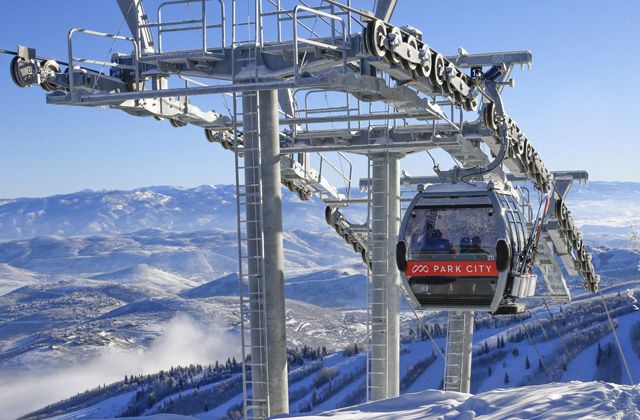
After another disappointing earnings report from Vail, Park City billionaire Matthew Prince continues to pressure the company into selling him the resort. Image: Park City Mountain on Facebook
Moving on to our third topic this week, we have yet another big story to tell as Matthew Prince is putting serious pressure on Vail to sell him Park City Resort. If you’re out of the loop on this story and want all of the context you can get, feel free to give our coverage from back in August a read. If you’re not feeling that, no worries, we’ll bring you up to speed here within the context of Vail’s latest earning’s report. On that note, let’s start there.
Earlier this week, Rob Katz spoke with investors to report earnings and projections at the conclusion of the company’s third quarter. To put it bluntly: things are bad. Reading the first five paragraphs of this article from Ski Area Management is like speedrunning the collapse of a corporation. Every metric imaginable seems to be down - from a 19% decrease in net income compared to last year, to a 15.5% decrease in visitation compared to last year, and a 10% decrease in pass sales for next year thus far, things past, present, and future looking great.
Taking the perspective of dollar amounts and financial projections, former Vail CEO Kirsten Lynch once projected net earnings of up to $316 million for the 2025 Fiscal Year. Now, after this week’s earning’s report, the latest projection for this year is a top end of $162 million, with a low end of $128 million. Taking the most dramatic approach, that means earnings this year could potentially come in at just 40% of early, optimistic projections, or $188 million off target.
To say things aren’t trending in the right direction would be an understatement. Of course, knowing what we know about how historically bad this season was for many regions in the U.S., CEO Rob Katz is being reasonable when he cites the weather as a main driver for the downturn. Still, as the Vail Daily points out, reliance on snow has become a recurring theme for the company, and as right or wrong as that may be, Vail is a publicly traded company with an obligation to increase share values for its stockholders. At the moment, that’s not the case, with stocks currently going for $136.34 a share - roughly the same price they sold for on June 24, 2016. While there were times when the stock was significantly higher, having hit over $350 a share in the fall of 2021, the fact remains for long-term investors: they haven’t made any money over the course of the last decade. Re-enter Matthew Prince.
The last time we talked about Matthew Prince was back in August, when we shined some light on his underlying strategy to buy Park City from Vail. Now, if you missed that coverage, the most important things to know are that Matthew Prince is a Park City local who also happens to have an estimated net worth of $4.2 billion - $6.8 billion, and he also owns Town Lift Plaza, which connects guests from downtown Park City to the resort via chairlift. In other words, Prince is serious about buying the mountain, is already buying inroads, and he has plenty of money to work with.
This week, in the wake of the earnings call, the Colorado Sun published an article sharing Prince’s perspective and more about how exactly he plans to force Vail to sell him the resort. In short, it all comes back to the shareholders. As we just pointed out, stock values haven’t moved for long-term investors, and have actually produced a loss for current stockholders who bought less than a decade ago. As a publicly traded company, Vail has an obligation to earn their stockholders money or else they face the very real possibility of a selloff that could be catastrophic for their business. This is where Prince hopes to apply his leverage.
Noting that Vail is struggling with earnings, but is sitting on a massive portfolio of assets, Prince used his opportunity with the Colorado Sun to once again push the idea that Vail should begin selling off its resorts and adjust their business model. Rather than continuing to own and operate every resort on the Epic Pass, Prince suggests selling the assets to raise money for stock holders, followed by continuing to partner with these ski resorts under a franchise model. In other words, for Prince, this would mean Vail sells him Park City, but the resort remains a part of the Epic Pass, providing the consumer with the same multipass benefits they know and love. Now, if this sounds pretty familiar to you, congratulations, we’re proud of you, as it means you’ve been paying attention to the news we’ve been sharing! As it turns out, this is more or less Ikon’s exact business model, with a majority of their resorts being pass partners and not actually owned by Alterra. It’s also the model being used by several other multipass offerings, including Indy, Mountain Collective, and Snow Triple Play. In other words, Vail is the odd man out here, and interestingly enough, seems to be the business struggling the most financially.
The interesting thing here is that Vail seems pretty adamant about staying the course. Katz is already looking ahead to next year, and reminding investors that once regular winter weather returns, so too will guests and pass sales. From a business model perspective, Katz also doubled down on the ownership model in comments made to the Colorado Sun, saying, “I don’t think resorts individually going it alone is the best approach,” and pointing out the benefits of having economic stability through a geographically balanced portfolio of resorts.
At the moment, this story is just that: a story. It’s still being written by two entities very much entrenched in their own line of thinking. That said, it’s hard to ignore the trend that Vail has been on, and if Katz can’t correct the ship, it’s hard to imagine a world in which Vail doesn’t have to accept significant change. Afterall, if the idea behind a big portfolio is stability, that theory will need to be proven eventually. In some ways, it feels like the winter of 2025-2026 was the perfect opportunity for that.
To learn more about the latest on this, check out the report from the Colorado Sun.
#4: Meet the Skwheel: The Cure For Your Summertime Ski Withdrawal:
Alright, that’s plenty of controversy for one week. Let’s wrap things up with coverage of a product that is sure to be universally loved and not controversial in the slightest: the Skwheel.
Over the past week and change, Vail, Colorado has hosted the annual GoPro Mountain Games. Essentially, this event boils down to a celebration of summertime mountain culture, centered around numerous competitions in sports such as biking, kayaking, climbing, running, etc - all available for anyone from kids to pros. In addition to the competitions themselves, the event also hosts plenty of art, nightly concerts, and of course, vendor tents. This time around, there was a product making its North American debut: the Skwheel.
Developed by a team of Frenchmen, the goal of the Skwheel is plain and simple: to bring us the feeling of skiing year round. Operated by a handheld throttle, the Skwheel is pretty basic in concept. The user stands on two platforms (one per foot, just like skis) that’s sunk between two large rubber wheels. Straps across the toebox, ankle, and calf are used to hold the person to the device. While the broad strokes are basic, the details are where this product allegedly shines. With 5 patents across the system and thousands of rounds of iteration, features like the pivoting front wheel (dubbed the “carve one system”), the composite chassis, and calf support lock system have all been dialed in in an effort to best replicate the feeling of skis on any dry land, from pavement to dirt.
Now to be fair, we don’t exactly know what to make of this product. They look big, clunky, and possibly heavy. They also cost either $1,260 for the urban friendly version, or $1,840 for the offroad version - and that’s before shipping prices from Europe. But, the promise of replicating the feeling of skiing in the summer is pretty hard to ignore, and the product itself has been getting excellent reviews, including a gold medal at this year’s 125th Lépine Competition - an invention competition in France where over 200 specialized products competed.
So, are we all in on the Skwheel? Not yet. Are we highly intrigued though? Yes. Are we hoping Skwheel sends us a set to review on the bike path here in Stowe? Also yes. Is that the main reason we’re giving them the full highlight treatment? Maybe.
To learn more about this eyebrow raising product, head over to their website. To improve our chances of reviewing a set of these, go ahead and comment below, letting Skwheel know how badly you want to see Jeff and Bob rip these on the Stowe bike path.
#5: And Now, Your Edits of the Week: Just a Classic Mammoth Summer Shred Session From Jack Benziger:
It’s Summertime, Which Means There’s Plenty of Time For Debate. Case in Point, Rise & Alpine’s Assessment of Skiing:
Finally, Because it’s Summer and Edits Are Tough to Come By, We’re Heading Back to the Freeski Museum. This Time, We’re Sharing the 1969 Classic, “The Moebius Flip,” Arguably the Most Surreal Ski Film Ever Made:
Once again, big shout out to FreeskiingMuseum.com!