

Top Five Fridays: June 14, 2024
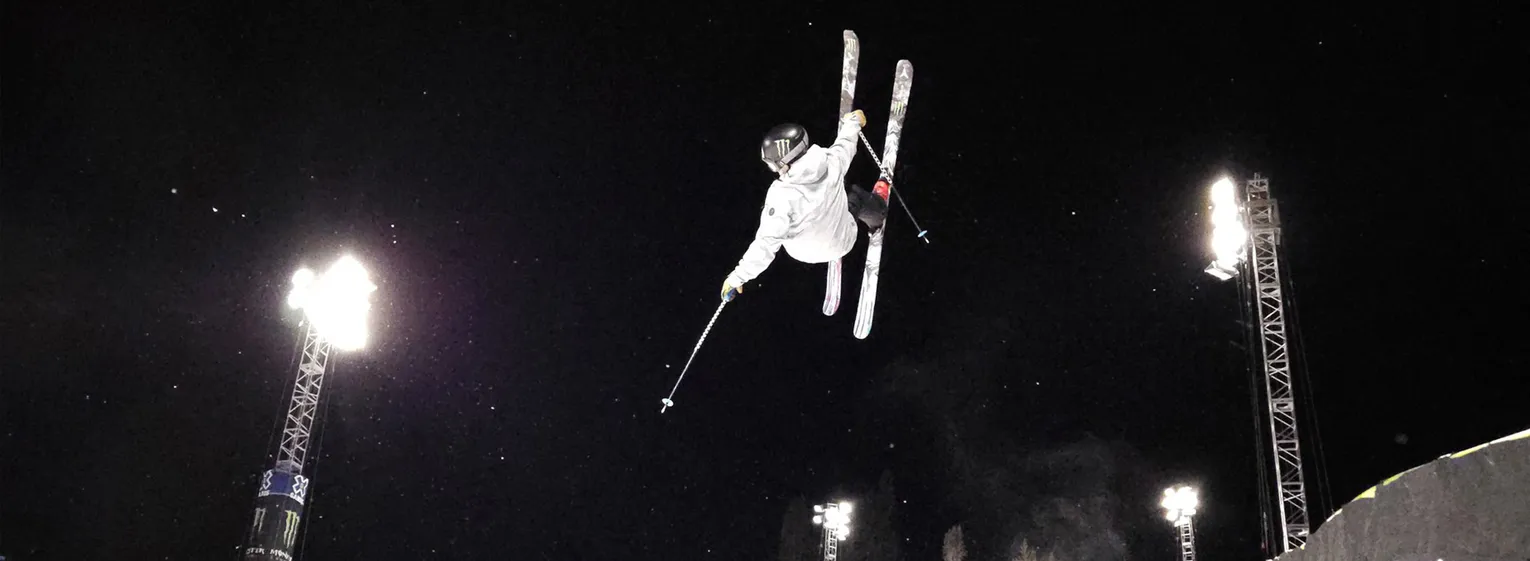
Lead Image: After being a staple of action sports for nearly three decades, the X Games have just announced the next step in their evolution: an entire league. Image: X Games on Facebook
#1: With Teton Pass Closed Indefinitely, Jackson Hole Faces a Number of Logistical Challenges:
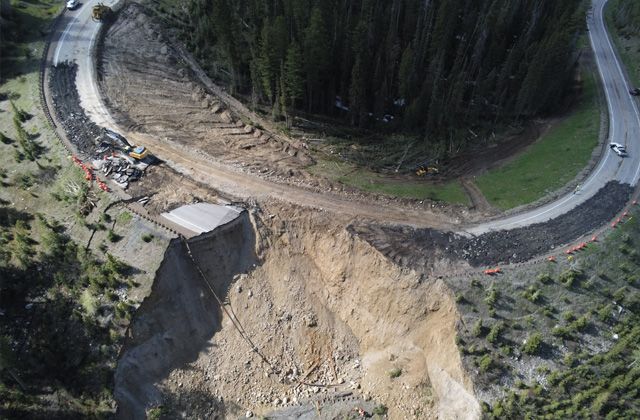
A look at the landslide that knocked out a section of the road through Teton Pass. Noting how the road failed, the public and engineers alike have questions about the best long term solution. Image: Wyoming Department of Transportation on X
Hello, and welcome to Top Five Fridays, the June 14, 2024 edition! Generally speaking, we’ve got a pretty fun lineup of ski news to share this week, although our first highlight is anything but. As you’ve likely heard by now, Teton Pass, the main highway that connects Jackson Hole, Wyoming to Victor, Idaho has been closed indefinitely due to a catastrophic landslide that completely destroyed a section of the road leaving it impassable. While this may seem like bad, but not devastating news upon first read, the fact of the matter is that the loss of this highway has immediate and severe consequences.
This week, we caught an article from Wyofile.com that does a great job of sharing the multitude of issues resulting from the road closure, as well as some of the solutions being put in place, and the plan moving forward. First, let’s talk issues. To begin to fully grasp how problematic this road closure is, it helps to understand the difference in route lengths between taking the preferred Teton Pass route to Jackson Hole from Victor, and the alternate route which has now become the only way of making the journey. For the significant number of people who live in Victor and commute to Jackson Hole for work, the journey should be about 24 miles long, and take 32 minutes. Currently, the best way to get to Jackson from Victor should take about 1 hour and 38 minutes, and be about 86 miles long. In other words, for workers, the round trip commute would be an unreasonable 3 hours 16 minutes, and 172 miles. Making matters even worse, this road was never intended to support the volume of traffic that it’s currently being asked to host, resulting in further delays. The fact that traveling from Victor to Jackson Hole is no longer a quick, easy drive is ultimately the factor from which the rest of the community’s issues stem from.
With a 3.5 - 4 hour commute from Victor to Jackson, countless workers suddenly find themselves in a very stressful situation. While there are any number of workers in service, retail, mountain ops, and other outdoor industries, the commute issue is clearly illustrated in the Wyofile article by honing in on one group of essential workers: employees of St. John’s Health. According to the hospital’s spokesperson, Karen Connelly, approximately 20% of the hospital’s employees commute from Idaho, and about 115 of them need to be “on-site”. While we don’t know exactly what that means, our guess is that it means they need to be able to get to the hospital in a half hour or less. In other words, it’s quite literally not possible for these employees to make the commute from Idaho - they have to be located in Jackson.
As a result of the massive issues being caused by unreasonable commute times, the Jackson Hole community is looking to temporarily ease restrictions on temporary housing and occupancy limits. The resort itself is hoping to be given approval to use its employee and workforce housing to give commuters a place to stay on the Jackson side of the pass in order to ease commuter issues. Additionally, the town is considering giving temporary occupancy permits to property owners, as well as allowing RV and tent camping in more areas. The common thread across all of these plans of course, is to enable Victor commuters to stay in Jackson multiple nights in a row.
As for the long term plan here? At the moment, it’s not entirely clear what the solution will be. With such a devastating and unexpected incident suddenly bringing the road to a close, transportation engineers find themselves in a position of being required to re-consider the road’s design. Currently, it’s not crystal clear what the long term repair to the road will look like - whether it’s rebuilt exactly where it was, or if it will be rerouted to avoid future catastrophes. In the meantime, WYDOT is working on constructing a two-lane bypass that will route drivers around the damaged section of highway, allowing the pass to open quicker. For more details on this significant and unexpected story, check out the full report from Wyofile.
#2: The X Games Announced a Serious Transformation This Week. Introducing: the X Games League:

Behold, the working logo for the new X Games League, a potential game changer for action sports athletes. Image: X Games Website
Alright, now that we’ve shared this week’s heavy news, let’s have some fun. Just yesterday, on June 13th, the X Games made a huge announcement: a transformation of the organization from one off events, into an entire league. Now, if this news seems random, or confusing, or maybe even a little bit crazy - we get it. The “ESPN” X-Games has consisted of one summer contest and one winter contest for as long as we can remember (or at least since 1995). Making matters even more confusing, the announcement came with news that the league would feature cross-disciplinary teams, constructed via a draft pick format. For us simple minded folk, the task of blending the concept of a singular competition with the format of the NBA, NFL, or the X Games’s preferred example of Formula 1, simply didn’t work. Our brains short circuited and our eyes crossed. But, through persistence and the commitment of needing to share this news with our readers, we read and reread the announcement until it all became clear. Once it did, it also became exciting. Here’s the long and short of it:
Starting in 2026, the X Games will become the X Games League, or XGL. This league will be made up of teams that draft athletes who’ve nominated themselves to be eligible. Importantly though, these teams will be interdisciplinary and not confined to just one sport. In other words, a winter team would have both ski and snowboard athletes. Alex Hall could be on a team with Zeb Powell, for instance. The concept of course, is that in addition to each individual athlete competing for podiums, the teams would also be competing against each other. While the press release references Formula 1 as inspiration for the format, another quick comparison could be made with the Olympics, where each nation is a team competing in the overall medals race, while individual athletes compete for medals in a range of sports. One thing to make note of here, is that when the XGL talks about teams, it’s assumed that the teams won’t be linked to equipment brands. In other words, while sponsored athletes find themselves on “teams” such as the K2 team, Blizzard team, Volkl team, etc., the thought here is that the teams will be their own entities, allowing the draft system to work freely, and without brand restrictions. As for who owns the teams or what their branding will be like, only time will tell. Our guess is that they’ll still be tied to companies, like Red Bull, but even that brings up questions regarding brand alliances.
Beyond the intriguing concept of an entire league being developed around the X Games though, there’s an additional subplot to this story that we find particularly interesting: the concept of compensating action sports athletes more fairly. As part of their plan, the XGL hopes to be able to generate far more revenue by increasing the number of competitions held, and therefore viewership of the games. Whereas there is currently just one winter game and one summer game being held (although those numbers have been slightly higher in the past), the plan for the XGL is to start with four winter and four summer events. While the math likely isn’t this straightforward, common sense would dictate that this should increase revenue approximately 400%. With the X Games stating that they awarded $2.43 million to athletes in prize money this past year, the expectation is that that figure will increase. In addition to prize money, our guess is that athletes will also sign contracts with guaranteed salaries upon joining teams.
At the moment, the announcement is very fresh and tons of details have yet to be shared. Still, it’s generally an exciting development, and one which we look forward to watching unfold. For now, you can learn as much as possible by visiting the announcement on the X Games website, or the report from ESPN.
#3: Bucking Industry Trends, Bridger Bowl Ends Pass Reciprocation Agreements, Becoming Even More Independent:
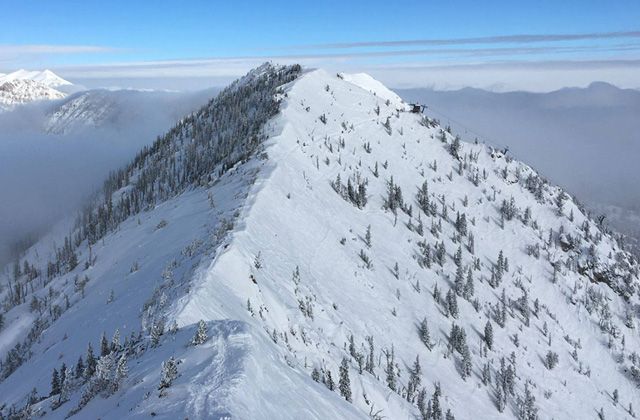
Looking down the ridge at Bridger Bowl - home of some of the best hike-to terrain in the U.S. Image: Bridger Bowl Ski Area on Facebook
Next up this week is a story from Bridger Bowl that we’re filing under the “pulse of the ski resort industry” category. For those unfamiliar with Bridger Bowl, the quick run down is this: in the Bozeman, MT region, there are three places to ski - the Yellowstone Club, Big Sky, and Bridger Bowl. Of those, one is an ultra private ski resort that you either need to be very rich or very well connected to ski at, one is part of the Ikon Pass and the definition of a mega resort, and the third one is a fiercely independent ski resort known for its incredible in-bounds and hike-to terrain. Any guesses as to which one Bridger is? Yep, it’s the third one.
This week, Powder Magazine shared an article that dives a little deeper into Bridger’s recent decisions to buck the trend of multipasses, opting to become even more independent. Specifically, it addresses Bridger’s announcement that they’ve decided to end pass reciprocation partnerships with other resorts. Last year, for example, season pass holders at Bridger Bowl also received free or discounted lift tickets to Alta, Bogus Basin, Grand Targhee, and Soldier Mountain. As a part of the program, season pass holders at those resorts also received free or discounted lift tickets to Bridger. While not technically a multipass, these reciprocation programs acted similarly, allowing pass holders at these resorts more affordable access to the others.
At the end of May though, Bridger announced that they’d pulled out of the programs ahead of next season. In the report from Powder, we learned that the decision came about as a result of the resort having its second busiest year on record, despite a challenging season in which many areas saw a decrease in visitation. In the words of the resort’s Marketing and Communications Director, Erin O’Connor, "There is more demand than supply, particularly with the growth in our area… The value of less crowded slopes, lift lines, and parking lots outweighs the ability to go to another ski area or have visiting pass holders come to Bridger.” Translated into non-PR speak, what O’Connor is saying is simply that as Bridger becomes more popular, they’re looking to protect it from overcrowding by reducing free or cheap access to non-pass holders. While that argument is easy to follow and makes perfect sense, the decision didn’t come without backlash. For some pass holders, the move boils down to an increase in season pass prices, with less benefits attached. Again, another argument that’s easy to follow and makes perfect sense. In the end, we’re not going to pick a side in this one as both perspectives are valid. Instead, we’ll simply say, “love it or hate it, that’s the news!” To learn more, check out the recap from Powder.
#4: Pure-Green Colorado and Steamboat Springs Resort Exploring Geothermal Energy Opportunities:
Seeking clarification about what exactly geothermal energy is? Give this explainer video with a cool and funky soundtrack a watch!
Finally, we’re rounding this week’s coverage out with another update from the world of renewable resources. As you’ll recall, we shared some pretty big news about a month ago, when a massive solar farm had been activated outside of Salt Lake City, providing a significant amount of power to Park City and Deer Valley. This week, we caught another story about a ski resort and its community turning to its natural resources to create green energy.
In Steamboat Springs, Colorado, a company called Pure-Green Colorado has just received a $298,000 grant to explore the potential for a geothermal power plant in the community. While the process itself is multi-stepped and somewhat complicated, the short version of it is that geothermal energy works by drilling 15,000’ - 20,000’ deep wells into the earth, where intense heat rises to the surface in order to power a turbine. That turbine, in turn, creates energy. While this type of renewable energy is one of the least explored options, it also promises to be one of the most promising as it’s both low impact and highly reliable due to its ability to be implemented anywhere, and functions regardless of weather conditions.
As a result of winning this grant, Pure-Green can move forward with its initial efforts to explore the implementation of a geothermal power plant in the town of Steamboat Springs. While this grant is to fund preliminary research, Pure-Green has experience creating these systems and all expectations are that their research will prove that they’ll be able to install one in Steamboat Springs. When it does, the power plant will be able to not only contribute power to the area’s grid, but also green hydrogen to the resort itself, as well as a proposed Gondola Transit Center. In other words, what this story amounts to is yet another way in which ski resorts are leading the charge towards renewable energy as they look to exemplify what it means to be an eco-friendly industry. To learn more about this story, check out the report from FuelCellsWorks.com, or check out Pure-Green’s official website.