

Top Five Fridays: May 17, 2024
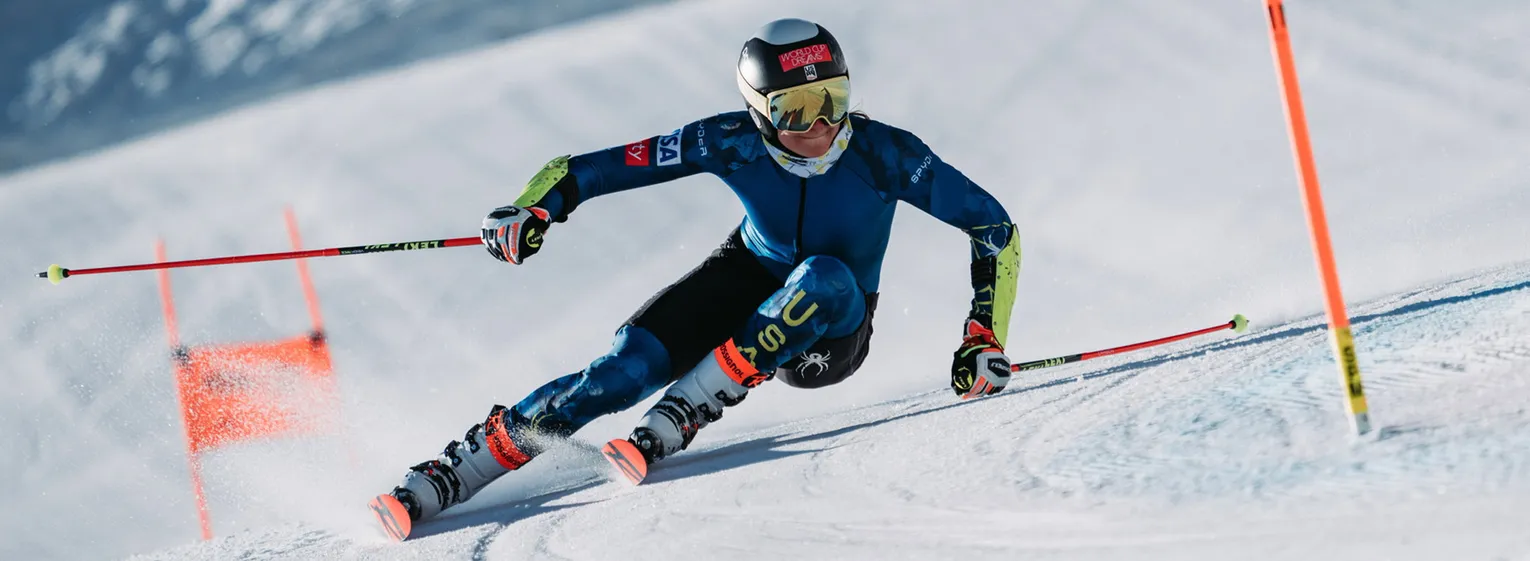
Lead Image: After a tumultuous career, filled with plenty of highlights and lowlights, Alice Merryweather has announced the difficult decision to retire. More on that below. Image: U.S. Ski and Snowboard Team
#1: A Couple of Disappointing Updates from U.S. Women’s Ski Team Athletes:
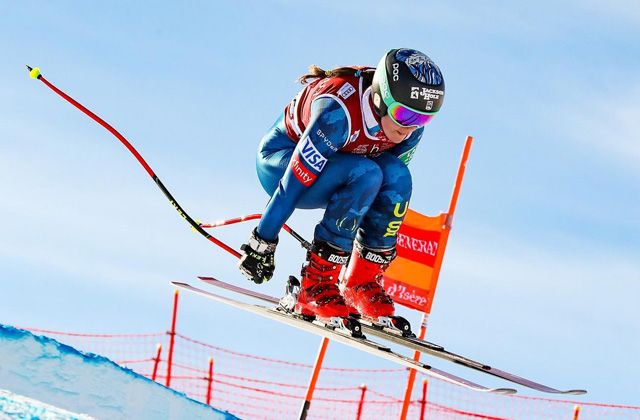
This week, we learned the official fate of Breezy Johnson, who opted out of competition last season due to a pending USADA violation. The good news? She’ll be back in December. Image: Breezy Johnson on Facebok
Hello, and welcome to Top Five Fridays, the May 17, 2024 edition! You know that classic question, “do you want the good news or the bad news first?” Well, unfortunately Top Five Fridays is a one way conversation, so we can’t exactly give you that option this week, despite having a double dose of bad news to share. The good news though, is we’ll get that out of the way first, before diving into a triple header of positive highlights. Sound good? Great, then let’s get started!
First things first, we’ve got a couple of disappointing updates from the U.S. Women’s Alpine Ski Team to share this week. Topping that list is the news that Alice Merryweather has decided to retire from ski racing. It’s a bit of an unceremonious end for an athlete whose promising career was derailed multiple times as a result of injury, personal issues, and a global pandemic. At risk of sounding harsh, Merryweather’s career peaked during the 2018 & 2019 seasons, when she represented the United States at the 2018 Olympics, and notched her best World Cup results during the 2019 season. The following year, Merryweather’s World Cup efforts started off on track, before the pandemic ultimately ended the season prematurely. From there, an eating disorder led to her (wisely) electing to take the following season off. Then, in her return season, she suffered a gnarly crash, breaking her leg in such a way that she would require four surgeries over the course of 11 months. Finally, last season, Merryweather was able to make her return to World Cup racing. Unfortunately, she was never able to crack the top 30, which is what likely led to the U.S. Ski Team dropping their support for her ahead of the upcoming season. As a result, Merryweather announced this week that she’s officially retiring from ski racing. At the end of her career, it’s hard not to feel a bit gutted for her as a slew of bad circumstances robbed her of being able to fulfill her potential - a reminder of just how cruel the world of sports can be. Still, noting how resilient Merryweather has shown herself to be, we remain optimistic that she’ll pursue whatever endeavor comes her way next with the tenacity required for success. Alice, if you’re reading this, we wish you nothing but the best in your next ventures. To learn more about her decision, check out her post on Instagram.
In other U.S. Women’s ski team news, we have a bit of a transitional update that starts as bad news but ends up being decent news. As you might recall, Breezy Johnson found herself in a bit of tepid water last season as she became involved in a whereabouts case. Specifically, at issue is the fact that Johnson missed three drug tests over the course of a 12 month period. Even more specifically, the missed tests stem from Johnson not providing her specific location on three given days, making it impossible to administer a drug test within an hour, as required by the US Anti-Doping Agency (USADA). Just to be clear, this violation does not mean that Johnson was using any banned substances, just that she was not available to be tested on short notice. Regardless, when the news came to light last December, Breezy elected to pull herself out of competition until the matter was resolved. This week, we learned about the resolution of the matter as it’s been announced that Johnson will receive a 14 month ban for her violations. In announcing the decision, the USADA made note of Breezy’s cooperation and how light her infraction was, ultimately leading to the decision to make the ban effective retroactively, from the time of her last missed test. The bad news for Breezy is that the ban will most certainly be a stain on her record, and the results she managed to log in the early part of last season have been nullified. The good news though? With the ban being applied retroactively, it means she’ll be back just in time to compete in the speed events at Beaver Creek this December. In the end, what the experience amounts to is a missed season for Johnson, a learning opportunity, and perhaps most importantly, a revisiting of the strict protocols in place that make it surprisingly difficult for athletes to comply with the USADA’s whereabouts rules. That’s all for this story for now, although we wouldn’t be surprised if that rule gets updated, requiring further coverage in Top Five Fridays. For now, you can learn more about the official terms of the suspension from SkiRacing.com, or directly from Johnson’s Instagram.
#2: Massive Solar Farm Opens Just Outside of Salt Lake City, Utah, Providing Substantial Power for Park City and Deer Valley:

While we couldn’t find an image of the Elektron Solar farm, we were able to find an image from another solar field being built by D. E. Shaw Renewable Investments. Elektron probably looks pretty similar, right? Image:D. E. Shaw Renewable Investments
In more positive news this week, we’ve got a cool story coming out of Utah, where two ski resorts will start being powered either entirely, or almost entirely, by solar power. On Wednesday of this week, D. E. Shaw Renewable Investments, the company behind the Elektron Solar field, announced that the 80 MWac solar facility has officially come online. Now, to be perfectly honest, we don’t exactly know how big 80 MWac is, but we get the idea that it represents quite a bit of energy. Initially approved for funding via a piece of legislation called Schedule 34 back in 2016, construction on the facility officially began in 2021. In planning the facility, Elektron Solar secured 20-25 year purchase agreements with Salt Lake City, Park City (the municipality), Summit County, Utah Valley University, Park City (the ski resort), and Deer Valley. In other words, what we’re getting at is, this isn’t just a random little solar field, it’s a huge deal.
For our part as skiers, the most notable benefit of the new solar field is the contribution it’ll make to Park City and Deer Valley’s energy needs. At Park City, the resort will now be buying 100% of its power through the grid from Elektron, making the resort 100% solar powered. When you consider the amount of energy required to operate a ski resort the size of Park City, it’s a pretty impressive feat. Likewise, neighboring resort Deer Valley will now be buying approximately 80% of its power through the grid from Elektron. Again, noting how large Deer Valley is - as well as their massive expansion plans - this is also an impressive amount of power. While both of these resorts have previously been working towards carbon neutrality, the most significant aspect of this news for us is how concise the new solar farm makes these efforts. Whereas these resorts were (likely) buying carbon credits to offset their footprints, the fact of the matter now, is that the sun beams down on a patch of land just west of Salt Lake City, it’s power is converted to electricity, and it’s sent about 90 miles east to Park City and Deer Valley. There’s no carbon credits or trees being planted in a far away land in this story - it’s just sun, power, and chairlifts. That’s the cool part. To learn more about this, check out the press release that was posted on the Park City government website, or the recap from Powder.com.
#3: Summit County Based “Oso Outdoors” Program Teaches Immigrant Population Not Only How to Ski, But the Joys of Ski Culture as Well:
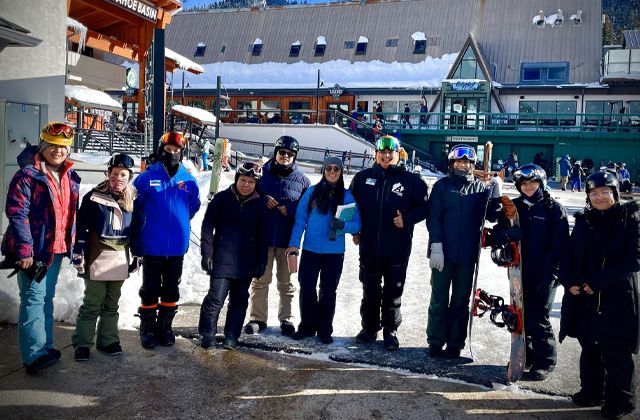
A group of skiers and snowboarders participating in the Oso Outdoors program gather at the base area of Arapahoe Basin. In addition to learning how to ski or snowboard, participants also learn all of the intangible joys of the sports as well. Image: Oso Outdoors
Next up this week is the story of a Summit County Colorado program called Oso Outdoors that exists to introduce Spanish speaking immigrants to the sport of skiing. To understand what makes this program so impressive, we have to start by quickly describing the traditional dynamic between immigrant workers in mountain towns, and the mountain lifestyle itself. As you could probably guess, many Western mountain towns are home to immigrant populations who primarily work to support mountain culture. That is, this population mostly finds employment in service industries, on the mountain, or in construction. But, it’s not often that these people, who live and work in the mountains, are a part of the mountains. In other words, while they live and work in the community, rarely do they participate in sports like skiing, snowboarding, or mountain biking - the sports that are responsible for the community’s very existence. To put this dynamic in perspective, consider this quote from Marta Reyes, one of the participants in the Oso Outdoors program, “I was working two, three jobs and honestly I never thought this kind of sport [skiing] was for us… it’s too expensive. It’s for rich people, and I come from a low-income family. I’m always thinking I have to send money to my family, so I never had the opportunity to do it.”
That’s a mentality that Javier Pineda took issue with last winter, when he decided to start Oso Outdoors. This initiative, which has financial support from the state of Colorado as well as Arapahoe Basin, exists for the sole purpose of connecting this population of immigrants with the mountain culture they’re surrounded by. The basis of the program is education, of course, with participants receiving four free lessons, free lift tickets, and gear rentals. But the truth of the matter is, the program goes a lot deeper than that. In addition to learning the physical acts of skiing and snowboarding, the program introduces this group to mountain culture as a whole. The proper equipment to use, how to read a trail map, how to ride chairlifts - all of this is covered in one way or another over the course of the four week lessons.
Perhaps most importantly though, and most intangibly, is the fact that participants in the program also create the sense of community that underscores everything we do on the hill. Through Oso Outdoors, participants experience four days on the hill in which they’re a part of a large group of skiers with similar identities: Spanish speaking immigrants living in a mountain town. While that may seem like a subtlety to us outsiders, it’s a huge part of the experience as participants find themselves using the opportunity to deepen their sense of community. Chairlift chats about what’s going on in their lives mixed with the excitement of exploring the mountains creates the type of bond that we all know and love as skiers ourselves.
Ultimately, that’s the cool part of this story to us. Not only is Oso Outdoors teaching people how to ski who otherwise may have never given it a chance, but it’s doing so in a way that really makes them feel like they’re a part of the sport rather than outsiders. We all know the lasting value that an amazing day on the hill can bring us, and it’s truly heartwarming to know that there’s a program in Colorado extending that joy to a group of people who may never have experienced it otherwise, despite living in such close proximity. To read this story in full, check out the writeup from SkiMag.com.
#4: Did You Know, Walt Disney Nearly Developed What Would’ve Been One of the Most Popular Ski Resorts in North America, Even to This Day?
Finally, we round things out this week with a super interesting story coming to us by way of PeakRankings.com that discusses Disney’s failed efforts to build a ski resort, as well as what the lasting legacy of those resorts would have been if they were created. If you’ll recall, Unofficial Networks made an April Fool’s joke this year saying that Disney had purchased Vail resorts. We laughed at the time because of how realistic it felt, not fully realizing Disney’s history with attempted ski resorts. Keeping that in mind, it was interesting to learn about the massive company’s efforts back in the 1960’s & 70’s, and why their attempts failed.
In the article from Peak Rankings, we’re treated to a thorough and fascinating retelling of Disney’s two attempts to open a ski area, as well as Walt Disney’s personal interest in the world of skiing. Unbeknownst to us, it turns out the guy was actually a huge fan of the sport. Way back in the 1930’s, he helped fund Sugar Bowl ski resort. In 1941, he released the classic cartoon “The Art of Skiing.” In 1960, he helped orchestrate the opening and closing ceremonies at the Squaw Valley Olympics. And then, throughout the 1960’s, Walt pursued a plan to build a ski resort called Mineral King, just outside the borders of Sequoia National Park.
Ultimately, as we all know, that resort never came to be. Noting that this was about a decade after Disneyland opened, and during the time in which Disneyworld was being developed, it would seem as though Walt had all the resources he needed to pull off the creation of a ski resort, so what happened? Well, as it turns out, Walt ran into the same challenges that face ski resort developers today: a world of regulations, environmental concerns, and public backlash. At Mineral King, it was one hurdle after another. First, the access road wasn’t suitable for year round use, which meant it would need to be upgraded. The problem there was that the road traveled through Sequoia National Park, which meant a number of environmental concerns had to be addressed. From there the environmental issues and approvals simply spiraled out of control. Locals protested the size of the resort. Questions were raised regarding why Mineral King’s property wasn’t a part of Sequoia National Park to begin with, given the fact that it was surrounded by the park on three sides. New legislation was passed requiring reassessments of previously approved permits. The list of red tape went on and on until Walt eventually threw in the towel on the project in 1978.
In addition to his efforts to create a ski area in Mineral King, Walt also shortly pursued a plan to build a ski resort outside of Lake Tahoe called Independence Lake Resort. Once again, that project was plagued by environmental regulations, this time stemming from the partial use of public lands. Having already learned how challenging the process could be from his experience at Mineral King, Walt quickly pulled the plug on this project as well and never made an effort to develop another ski resort.
Beyond the historical retelling of Walt Disney’s attempts to build a ski resort, the Peak Rankings article also shares some really fascinating information about how Mineral King stack up today, had it been built. To put it succinctly, Mineral King likely would’ve become a world class resort. Geographically speaking, the location was a skier’s dream, with top elevations of about 11,600 feet, potential vertical drops of 3,700 feet, and roughly 13,000 acres of ski area, the planned ski resort would’ve been massive in size. The master plans for the resort also called for 27 lifts, 8 high alpine bowls, approximately 10 restaurants, and of course, a base village. Perhaps most interestingly though, Mineral King would’ve featured a uniquely European feel, as the entire base area would have been only accessible via a cog railway. In other words, there would be no vehicles at all in the village itself. While we completely understand the environmental reasons that prevented this ski area from happening, we’d be lying if we said we weren’t feeling a bit wistful about what could’ve been. For plenty more details about this, we recommend either giving the article a read, or simply watching the accompanying video as it’s the same content, word for word.