

Top Five Fridays: June 9, 2023
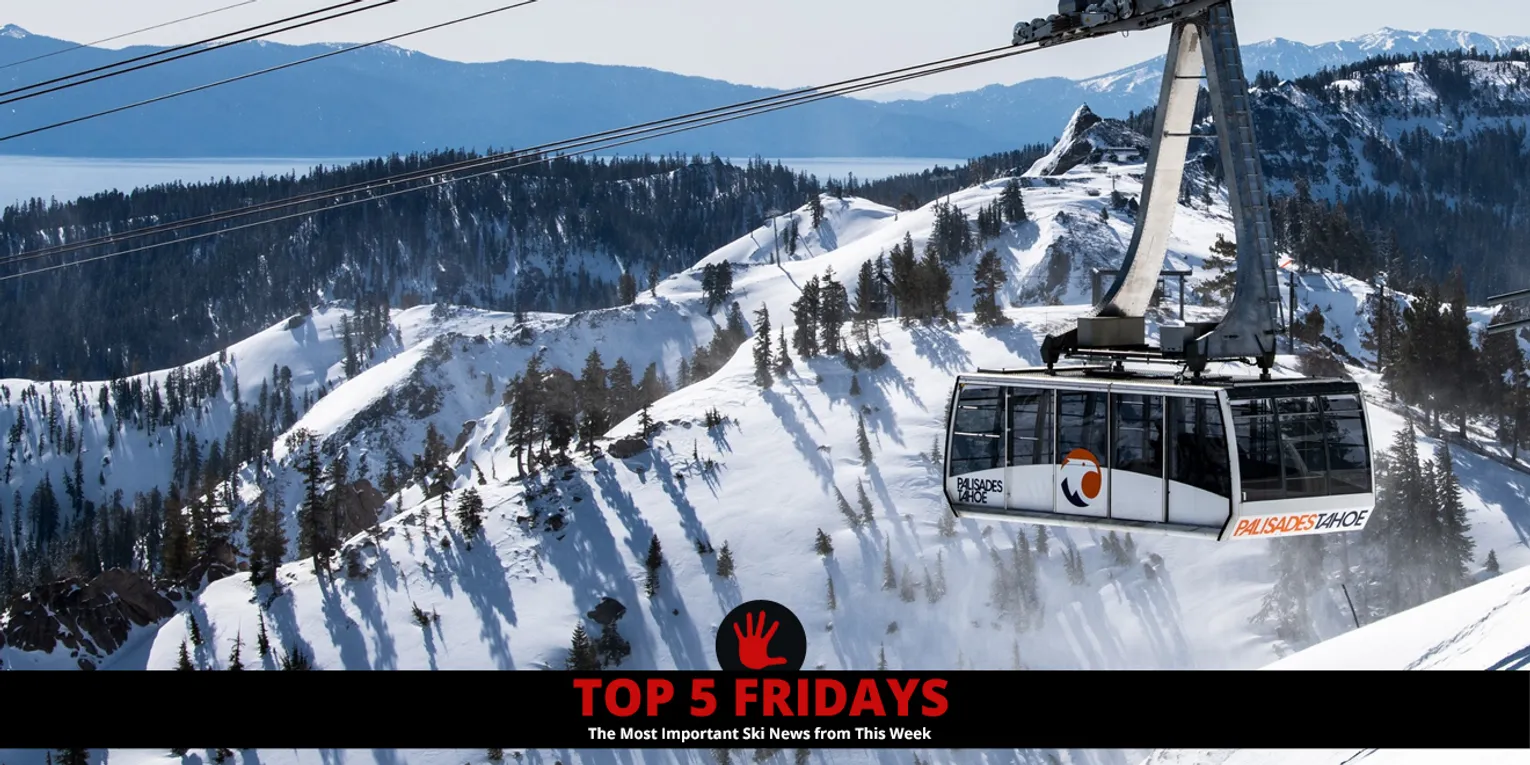
Lead Image: After a season that saw historic snowfall, Palisades Tahoe also saw incredible crowds and congestion, leading to the announcement of a new paid parking plan for next season. More on that below! Image: Palisades Tahoe on Facebook
#1: Palisades Tahoe Announces Paid Reserve-in-Advance Parking Plan for Weekends and Holidays:
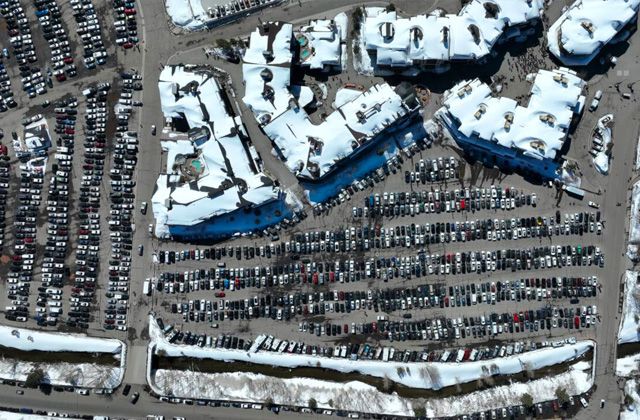
Looking down at a classically congested scene in the Palisades Tahoe parking lot. Image: Official Palisades Tahoe Announcement
Hello, and welcome to Top Five Fridays, the June 9, 2023 edition! We’ve got an interesting grab bag of news this week as we share a highlight of Mikaela Shiffrin’s mother and longtime personal coach, Eileen, a story about how mountain towns can survive being over-loved, and a highlight of the growing sport of adaptive skiing. Before we get into any of that though, we have to start with the biggest news of the week: Palisades Tahoe has decided to join the list of resorts that enforce a paid parking program on weekends and holidays.
This week, Palisades Tahoe announced that there will be a paid reservation based parking system implemented at both Palisades and Alpine Meadows this winter. As is the case at just about any resort where paid parking has been implemented, the move is being credited to unmanageable traffic congestion in recent years. At present, pricing information hasn’t been released to the public yet, although we do know that paid parking will only be in effect on weekends and holidays. Additionally, the resort is looking to both offer expanded public transportation as well as incentives for carpooling, again, details of which are yet to be announced. As locals of Stowe Mountain, who announced a paid parking plan starting this past season, this all sounds about par for the course. One area where the Palisades announcement differs though, and one which piques our curiosity, is that the plan is being billed as “paid reserve-in-advance parking”. This move seems to blend both the paid parking and reservation concepts in a way that we haven’t seen a resort try before. Again, details are sparse at the moment, but we’ll be interested to see how Palisades goes about rolling this out, and whether or not it makes an impact on the guest experience next season.
As for public reactions? Well, it’s about what you’d expect. Locals don’t seem particularly pleased, and are calling attention to the fact that the resort isn’t just enacting a reservation policy, but are charging for parking on top of that. As was the case here in Stowe, many are calling it a cash grab by the resort. In addition to these complaints, a number of commenters are particularly irked by the resort’s decision to make the announcement after the latest round of Ikon Pass price increases. Many are asking if refunds will be available as the requirement to pay for parking may change their decision to continue skiing the resort. By and large, this announcement is right in line with the trend of crowded resorts moving to paid parking programs, with the addition of a reservation model woven in. It’s that final aspect that we’re most interested in learning more about and seeing the results of. For now, head over to the Palisades Tahoe website to learn more, or check out their announcement on Facebook to read the communities’ thoughts and reactions.
#2: Mountain Towns Are Being Loved to Death, But Don’t Worry, There Are Way to Solve the Challenges:
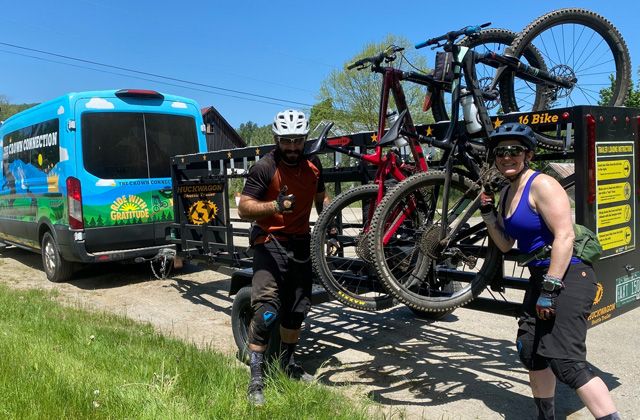
Let’s face it: the allure of the mountains brings crowds that can easily overwhelm local resources. Fortunately, lessons can be learned from countless destination communities across America, like East Burke, where mountain bikers fill the town in summer months. There, one way local governments are helping ease congestion is by subsidizing bike shuttles to reduce the strain on roadways and parking lots. Image: Kingdom Trails on Facebook
In other crowded ski resort news, we caught an article from the Colorado Sun that expands on the topic by further exploring the concept of mountain towns drawing unsustainable crowds. Fortunately, this article isn’t a doom and gloom piece- it’s quite the opposite in fact. This week, Bozeman, MT based research group, Headwaters Economics, released a report called, “The Amenity Trap: How high-amenity communities can avoid being loved to death”. As you might imagine, the focus of the piece is an examination of mountain towns, the problems they’re facing due to their popularity, and some of the solutions being implemented in destination communities across the United States. The end goal of the report is to provide a resource that towns facing specific population pressures can reference to identify possible solutions, as well as a list of communities that have put the solutions to work.
In the report, four key issues are identified as being common in mountain towns that draw a crowd: housing, infrastructure and public services, fiscal, and natural disasters. Chances are, none of these themes are surprising as they’re recurring themes here on Top Five Fridays. Since you’re likely already aware of the issues themselves, or can at least imagine what they might be, let’s jump right into talking about some of the possible solutions presented in this report. On the housing side of things, solutions more or less boil down to two categories: imposing stronger restrictions or taxes on those owning second homes or short term rentals that take away from the long term housing market, and working with local and state governments to allow for the development of new residential spaces.
In regards to infrastructure issues, the challenges facing these communities are more diverse, but one particular challenge / solution scenario shared in the report is the issue of, “Unaddressed infrastructure challenges create tension between locals and visitors.” In other words, we interpret this to mean traffic congestion. One of the solutions? “Invest in infrastructure that benefits locals.” Of the three case studies presented to support the solution is from an area just to our north here in Vermont, the Northeast Kingdom. There, a small town has built an incredible network of mountain biking trails in recent years, leading to a large influx of visitors during the summer months. A few years ago, this led to frustrated landowners closing off access to some of the trails that run through their property, which happen to be some of the most popular ones. As a result of this tension, the area is actively working on solutions to meet the needs of locals: more parking areas, expanding the trail network to spread out visitors, and more pedestrian infrastructure. As frequent visitors of this region, we can confirm: these efforts do seem to be working.
In addition to these two challenge categories, which are arguably the most prevalent, the report also discusses an array of challenges and solutions regarding both fiscal policies and natural disasters. We won’t dive too deeply into either of these categories, other than to say that the solutions generally boil down to being proactive about issues that are growing in concern but haven’t been solved yet. All in all, it’s an excellent report, and its easy to follow “Challenge, Solution, Case Study,” format make it an excellent resource for any mountain town that’s facing growing pains. To read the report itself, click here. To check out the Colorado Sun’s coverage of it, click here.
#3: Adaptive Skiing is on the Rise, and We’re Fully Here For it:
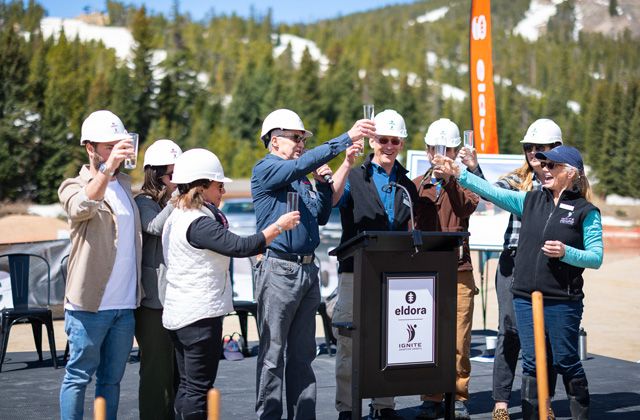
Celebrations were bountiful as Eldora Mountain and Ignite Adaptive broke ground on the new building at the end of May. Image: Ignite Adaptive Sports on Facebook
Next up this week is a second story that comes to us by way of the Colorado Sun. In a piece published this week, we learn of a partnership underway between Colorado’s Eldora Mountain and their longtime adaptive ski program, Ignite Adaptive Sports. The story goes like this: way back in 1975, just 5 years after Eldora opened, the Eldora Handicapped Recreation Program launched out of the back of the van. Now, after almost 50 years, a significant fire, and many years spent in cramped quarters, the resort has partnered with Ignite Adaptive Sports to help fund a new building which will give the program approximately 6,000 sqft of space, ideally opening for the 2024-2025 season. With this new space, Ignite will be in position to provide lessons and equipment to any of the over 1 million adults in Colorado living with a disability.
While news of the new facility being constructed at Eldora is the highlight of this week’s news article, as is always the case, the Colorado Sun piece dives in much deeper, ultimately telling a wider story of both the prevalence and importance of adaptive ski programs in Colorado and beyond. In addition to Ignite at Eldora, there are 14 other ski resorts in Colorado that offer adaptive ski programs, focusing on any number of disabilities. At Winter Park, athletes who are looking to compete at high levels of racing can join programs from the National Sports Center for the Disabled. In Telluride, Telluride Adaptive Sports has a program in place where adaptive skiers can go heliskiing with Helitrax and an adaptive instructor. In Beaver Creek and Vail, Foresight Adventure Guides for the Blind provides guided skiing for visually impaired skiers. In Crested Butte, Crested Butte Adaptive Sports has just completed a 25,000 sqft facility, complete with a live-in facility. The list goes on. The point here is, support systems for adaptive skiing are growing at a considerable rate, particularly in Colorado. For athletes who are able to experience adaptive skiing, the mental health benefits are immense, as the article itself describes.
What stands out to us the most about this entire story though, is how it adds to the bigger picture of what adaptive sports are becoming. In skiing, we’ve recently seen Trevor Kennison grow from a talented sit-ski athlete, to a jaw-dropping sit-ski athlete, capable of skiing some of the rowdiest terrain on the East, as well as double backflipping backcountry jumps. In other adaptive sports news, just about 25 minutes southeast of us, in Bolton, VT, a new mountain bike trail network known as “The Driving Range” is set to open later this month. When it does, it will be the first trail network in Vermont that’s built to be fully adaptive accessible. Not only that, but the network itself looks insane, with drops, berms, and jumps all there for the taking.
Ultimately, the point we’re making here is this: in 2023, it feels like technology and accessibility are finally merging in a way in which the adaptive sports scene is about to take off in a big way. As it does, it’s providing a wealth of inspiration and positivity for athletes of all abilities. It’s truly an incredible development to witness. To learn more about the story coming out of Eldora, check out the writeup from the Colorado Sun.
#4: Get to Know Eileen Shiffrin - Mikaela’s Mom, Coach, and Biggest Supporter:
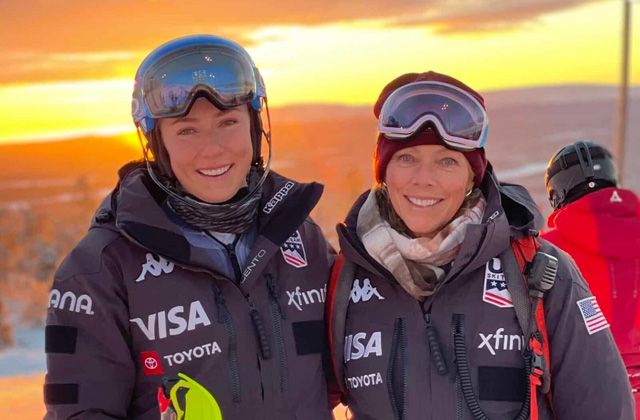
Although she tends to stay behind the scenes, nobody can deny Eileen Shiffrin’s importance to Mikaela and her career. Image: SkiRacing.com
As you might recall, we ended last week’s highlight reel by shining a light on Mikaela Shiffrin’s new head coach, Karin Harjo. This week, we’re rounding things out in similar fashion, with another highlight of someone near and dear to Mikaela: Eileen Shiffrin, her mom and longtime personal coach. In the first of a two part series from SkiRacing.com, acclaimed writer Peter Lange shares the story of Eileen Shiffrin’s upbringing. Born in Western Massachusetts, Eileen learned to ski from a young age and competed casually throughout her youth. When she was ready to head to college, she decided to attend the University of New Hampshire to obtain a nursing degree. Unfortunately, the college wouldn’t let her compete on the ski team while attending school to become a nurse, so skiing took a backseat in her life for several years. Then, on one fateful day, while working at a St. Elizabeth Hospital in Boston, she met Dr. Jeffery Shiffrin, an avid skier. After their first ski date, Jeff was so impressed by Eileen’s abilities on skis that he convinced him to join in skiing competitively on the masters circuit. Taking him up on the offer, their love for eachother and ski racing flourished in tandem. This, as you can imagine, set the stage for the eventual arrival of Mikaela. Early in their relationship, Eileen and Jeff developed a deep passion for ski racing and technique, which would create an ingrained skill set that was perfect to pass on to Mikaela when she began showing signs of promise in her youth. But, that’s a story for another day.
All told, this is just a fun highlight to share this time of year, as we’re treated to a rare behind the scenes look at one of most important people to the most successful skier of all time. If all goes to plan, we’ll be back next week to share part two of this story, which will focus on how Eileen and Jeff Shiffin introduced Mikaela to racing and her early years. Until then, click here to give the article from SkiRacing.com a read!