


Top Five Fridays: March 28, 2025
It may not be the most elusive medal of her career, but the Sun Valley silver is likely one of the most meaningful for Lindsey Vonn. More on that below! Image: U.S. Ski and Snowboard Team on Facebook
#1:FIS Alpine World Cup Recap: Vonn and Shiffrin Shine as the Sun Valley Finals Come to a Close:
Hello, and welcome to Top Five Fridays, the March 28, 2025 edition! This week, we’ve got a ton to cover, as we have season ending results from both the worlds of FIS World Cup Alpine racing, as well as the Freeride World Tour. From there, we tap into the international ski scene with in-depth coverage of what’s happening in both the UK and Japan as ski culture continues to evolve globally. We’ll get to those in due time, but first, let’s talk World Cup finals.
For our final results coverage of the season, we’re going to stick with tradition and discuss the ladies first. Afterall, they’ve given us plenty to talk about all season long, and even in the final races of the season, two of the top names produced headline worthy results. Because we can’t decide which athlete impressed us the most this week, we’re going to take this chronologically, starting with the Super G (as the Downhill race was unfortunately cancelled due to snow).
In that race, something happened that we admittedly did not expect: Lindsey Vonn took home the silver medal. That’s not to say we didn’t think she wasn’t capable of it of course, she’s certainly shown her potential throughout the season, including a 4th place finish in a Super G in St. Anton. But still. To win a silver medal? At the World Cup Finals? When so many other athletes desperately needed the points to improve their overall standings? And let’s not forget that Lindsey Vonn isn’t just 40 years old, but is also a 40 year old who returned from retirement this season and underwent surgery for a partial knee replacement just about a year ago. Our shock isn’t meant to throw shade at Vonn, but when you list the factors against her, betting on Vonn to earn the silver medal surely would’ve had pretty long odds. And yet, she did it. At 40 years old, Lindsey Vonn won a World Cup silver medal, becoming the oldest woman to earn a World Cup medal in alpine skiing. Now, with that win, discussions surrounding her ability to compete at the 2026 Olympics aren’t just a hypothetical exercise - they’re very real. All in all, her result in Sun Valley was a massive accomplishment for Vonn, and one that it’s tough not to be in awe of. To learn more about what this means for her, check out this writeup from the Deseret News.
Continuing on in chronological fashion, the next women’s race of the week was the Giant Slalom. In that race, three of the five qualified athletes earned points, with AJ Hurt earning 8th, Nina O’Brien securing 12th, and Lauren Macuga earning 15th. While we hate to gloss over the results from this race, we’re feeling a bit antsy to get to the next set of results: the women’s slalom.
In that race, we’re excited to say that Mikaela Shiffrin put on a performance for the ages, beating all competitors by 1.13 seconds or more, earning the gold medal. In doing so, she extended her World Cup win count to 101. More importantly though, Shiffrin’s Sun Valley performance proved to both herself and the world that she’s back back. Of course she’s already won since her return, but to do so in such dominating fashion at such an important race is an excellent sign that she’s fully recovered from her injury, both mentally and physically. In ending the season on such a high note, we fully expect Shiffrin to be back to full form well ahead of the Olympics next season.
On the men’s side of things, we’ll follow the same chronological order. As such, we’ll start with the Super G race, where Ryan Cochran-Siegle was the only U.S. athlete to earn points, finishing in 13th. A day later, it was time for the Giant Slalom, where River Radamus earned 15th. Finally, on day three of race action, in the Slalom event, the U.S. men earned their best result of the finals, with Ben Ritchie earning a career best 7th place finish. As we’ve touched on multiple times this year, the men’s Slalom field has been absolutely stacked with talent, so for Ritchie to have made the progress that he made throughout this season is equal parts impressive and promising.
And with that, the 2024-2025 FIS World Cup Alpine season is a wrap! We’ll surely have follow up reports in the coming week to cover, as well as various off season articles. Besides that, this is it for our coverage of FIS World Cup Alpine results for the year! To check out results from Sun Valley, click here. To see the final standings, click here.
#2: Freeride World Tour Finals Recap: With the Xtreme Verbier Stop Complete, it’s Time for Challengers:
In other competitive ski news this week, we want to share the final outcome from this year’s Freeride World Tour, as well as some updates in regards to the Challenger series which is set to begin this weekend in Kirkwood. If you watched our video coverage last week, you might recall Jeff wondering why we didn’t include FWT results in last week’s edition. The answer is simple: I hadn’t watched the Xtreme Verbier event yet and didn’t want to share half-baked notes from it. The good news though, is that because we postponed our coverage to this week, we have an opportunity to provide a bit more information as to what happens between now and next season in terms of athlete qualification. We’ll explain more in just a minute, but first let’s talk Verbier.
First things first, it’s tough to admit, but this year’s Xtreme Verbier stop was a bit of a let down. Due to a lack of snow, the venue was limited to just the lower half of the face. As such, drop in points were limited, as were line selections. That, coupled with a firmer snow pack than most athletes would have liked, led to numerous lines that followed similar paths, typically ending in control issues or full on crashes. That’s not to say the effort wasn’t there - several of the men tried double back flips or cork 720’s. Unfortunately though, the snowpack led to countless crashes. In fact, it was really only the top two athletes who had completely clean runs. At the end of the day, it was Canada’s Weitien Ho who took home his first FWT gold medal, having not only skied a clean technical run that featured more hits than any other athlete, but also mixed in a massive backflip and 360 for good measure. For Weitien fans, it was the type of performance we’ve been waiting to see as he’s shown incredible potential at multiple stops across the past two seasons, but had yet to put together a podium worthy run. Still, despite the first place finish for Weitien, the 4th place result that Marcus Goguen earned at Verbier helped him maintain the top spot on the season, giving him his first ever FWT Overall victory. Huge congrats go out to Goguen, who has clearly identified himself as the one to beat for the foreseeable future.
On the women’s side, the story was more or less the same, with only the top 2 athletes in the field putting together successful runs. In fact, besides Justine Dufour-Lapointe who took second, and Jenna Keller who placed first, no other athlete finished a clean run. As a result, Justine Dufour-Lapointe capped off an incredible season with her second FWT Overall gold medal. Just like Goguen, who also represents Canada, Dufour-Lapointe has also solidified herself as the name to beat moving forward.
Now that the FWT has come to a close, you might be of the mentality that the freeride season has come to an end. That take isn’t exactly accurate however, as the season now moves into the Challengers phase. For those unfamiliar with the qualification process of the Freeride World Tour, but familiar with the concept of relegation in European Futbol, well, it’s a lot like that.
In the FWT, if an athlete doesn’t make the cut for finals, they’re “relegated” to the Challenger series, where they have to compete their way back onto the Tour. In region 1, which includes Europe, Asia, and New Zealand, this process has just concluded, with Switzerland’s Victor Hale-Woods and Paul de Pourtalès being promoted to the Men’s division, as well as France’s Ugo Troubat and New Zealand’s Flynn Powell. On the women’s side, French riders Zoé Delzoppo and Lou Barin received invites to next season’s tour.
Here in region 2 though, which includes North and South America, the Challenger series is just getting started. Typically, the Challenger series is a three stop event, made up of FWT athletes who didn’t qualify for finals, athletes who qualified for the Challenger series via results from the Qualifiers circuit, as well as a few wildcard athletes for good measure. This year though, while the qualification process is the same, avalanche conditions at the Whitefish, B.C. stop led to the cancellation of the first event earlier this week. As a result there are only two opportunities for athletes in this series to compete for a spot on next year’s Freeride World Tour. The first of those events is scheduled for tomorrow in Kirkwood, CA, with an estimated start time of 10:15 AM, or 1:15 PM here on the East Coast. From there, athletes will head to Arapahoe Basin for the second stop from April 16-18th. With 30 ski men and 18 ski women ready to compete - consisting of both FWT athletes and fresh faces, it’s sure to be an excellent two part series. For those interested in the Tour, it’s well worth watching. If you’d like us to share coverage of these events in future weeks, let us know in the comments either here or on YouTube!
#3: In the UK, Ski Culture is at Risk as Ski Holidays Become Unaffordable:
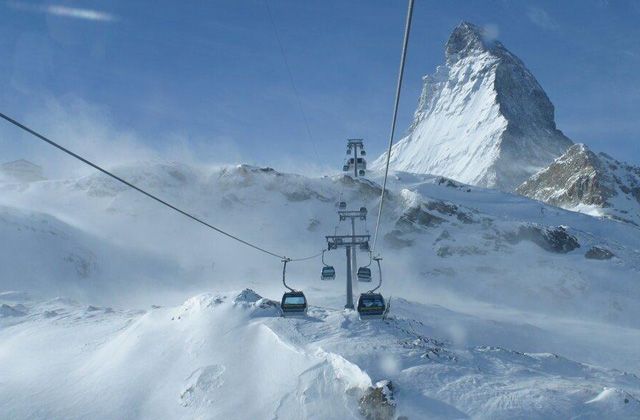
Despite the higher costs, some UK skiers are spending extra to travel to high elevation resorts like Zermatt in order to ensure quality snow conditions. Image: Zermatt Matterhorn on Facebook
Moving on from competitive ski news (potentially for the last time this season), we find ourselves zooming out quite a bit this week as we take a look at two stories that give us insights into the ski industry in other parts of the world. The first of those two areas is Europe. While the article focuses on the current cost of skiing for those living in the UK, it also brings to attention a number of interesting points regarding the ski experience across Europe as well as in the United States. Before we get ahead of ourselves though, let’s take it from the top.
The long and short of this story, as we just mentioned, is the fact that the cost of skiing has risen considerably in the past ten years in Europe. As a result, the UK’s skiing population is beginning to lose interest. In a survey shared by the Mountain Trade Network, nearly 47% of the UK’s 1.8 million skiers didn’t expect to ski this winter. That number is up from 40% the year before. The reason for that? Approximately 70% of those surveyed by the news organization Telegraph said that they believed ski holidays are becoming unaffordable. To be honest though, the reason behind that is where this story really gets interesting.
According to the author of this piece, Abigail Butcher, all-inclusive weeklong ski packages for popular French resorts could be found for approximately £500 per person a decade ago. Now, the cheapest option they could find was in Bulgaria, and came to £563.14 for the on-snow and dining portions of the trip, but not including flights or accommodations. Once those are factored in, the cost of the European ski vacation has nearly doubled in the previous 10 years, according to Butcher’s estimations.
The reasons behind this jump in costs, as you might expect, are quite complicated and can be attributed to a number of causes. For example, as we’ve discussed here on Top Five Fridays in the past, lower altitude resorts in Europe have been struggling with inconsistent snowpack in recent years, resulting in the need to rely on snowmaking equipment. That reliance hasn’t been cheap though as not only has the snowmaking equipment itself steadily climbed in price alongside nearly everything else in the economy, so too has the cost of electricity. As a result, the cost of lift tickets have been directly impacted. And then there are also the larger economic factors. The strength of the pound has decreased, and while it’s still worth 1.2 euros, it used to be worth approximately 2. In other words, a UK pound doesn’t go as far in Europe as it used to. Or, take an entirely different economic factor: a dramatic increase in the cost of rent for the land that many European ski areas operate on. In other words, in totality, there aren’t just one or two factors leading to a surge in the cost of skiing in Europe. Rather, there are several.
So, what’s a Britt to do? Well, not come to America, that’s for sure. As the article points out, while a weekly pass for a European resort is an average of €400, here in America, a single day ticket can cost up to $300 here. While it’s true that the Epic and Ikon Passes lower those prices, it’s worth noting that they’re only useful at a selection of European resorts and likely wouldn’t make economic sense for budget focused skiers. One option that’s become more popular is booking trips later in the season, risking bad weather but guaranteeing a more affordable trip. Another popular option? Booking a trip to Japan, where the price of skiing is still just £50 a day. That option, as it turns out, is the focus of our next highlight.
#4: International Skiers Provide Massive Boost to Japan’s Economy. Some Locals Aren’t so Sure it’s For the Best:
In Japanese ski news, we caught an article this week that highlights the other half of the story we just told: record surges of international ski tourism. This week’s statistics based update also gives us a chance to share a story regarding the ongoing development of Myoko, the “Whistler of Japan”. We’ll get to that in just a moment, but let’s start with some stats.
Hot off the presses this week is a report from PR Newswire in which Visa has shared a number of interesting statistics related to Japan' s Ski Tourism economy. To be honest, the premise of the article is a little weird to us, as it’s revealed that Visa knows quite a bit about the spending habits of different demographics, but now’s not the time or place for that discussion. What it is the time and place for though, is a review of the data that Visa has shared which points overwhelmingly towards a significant increase in ski tourism to the nation. Take for instance, these two figures: international visitors have been growing at a 50% rate year over year, and they currently account for 80% of total visits. As a result of making up that percentage of skier visits, international guests are also responsible for 90% of the spending at ski resorts. As for where these guests are coming from? It’s all over. As we know Americans have discovered and love traveling to Japan for the allure of powder, but we don’t make up a majority of the international ski population. Instead, Australia owns that title, making up roughly 30% of international ski visits, while America claims 20%, and Southeast Asia collectively claims another 12%. The remaining portion is a mix of European, Chinese, and New Zealand travelers.
Potentially the most interesting stat that came out of this report though is only skiing adjacent. While these international guests are traveling to Japan to ski, Visa revealed that roughly 90% of these international guests extend their trips beyond the ski resorts, opting to spend an average of 9 extra days traveling around cities like Tokyo, Osaka, and Chiba. There, they continue to spend, “driving around 35% more post-ski spending per day.”
In other words, the ski industry in Japan is booming, and the economic impact is being felt well beyond the resorts.
But, in what’s a very familiar story to us here in the United States, with the benefits of ski tourism also comes development, headaches, and the nullification of local cultures. Pairing with the Visa report this week, is an article shared by Reuters last week that taps into the discussion surrounding the massive development planned for Myoko. If you missed our coverage of this story in December 2023, the long and short of it is this: Japanese investment firm, Patience Capital Group (PCG), is looking to dump $1.4 billion into developing a Whistler Blackcomb level ski resort and village in Myoko, a ski area that’s a quick 2.5 hour train ride from Tokyo. As you can imagine though, the planned development for this area promises to come with some good, some bad, and plenty of local concern.
Without diving too deeply into this story, the sparknotes are about what you would expect. While the development firm behind the project touts the 1,000 jobs they expect to create as well as the resort’s economic impact, locals fear that the luxury focus will keep locals priced out of skiing or staying at the resort. Also of concern for local business owners is the extreme seasonality that will result from the project. One estimation that drives this point home comes from an inn owner in the area, who guesses that roughly just 10 of the area’s 80 inns operate year round. In other words, much like we see here in North America, there’s serious concern that the seasonality of the area’s economy won’t be able to sustain a local population. In the interest of time, we don’t want to dive too much further into this one, but we do think the article from Reuters is worth a read.