

Top Five Fridays: March 6, 2026
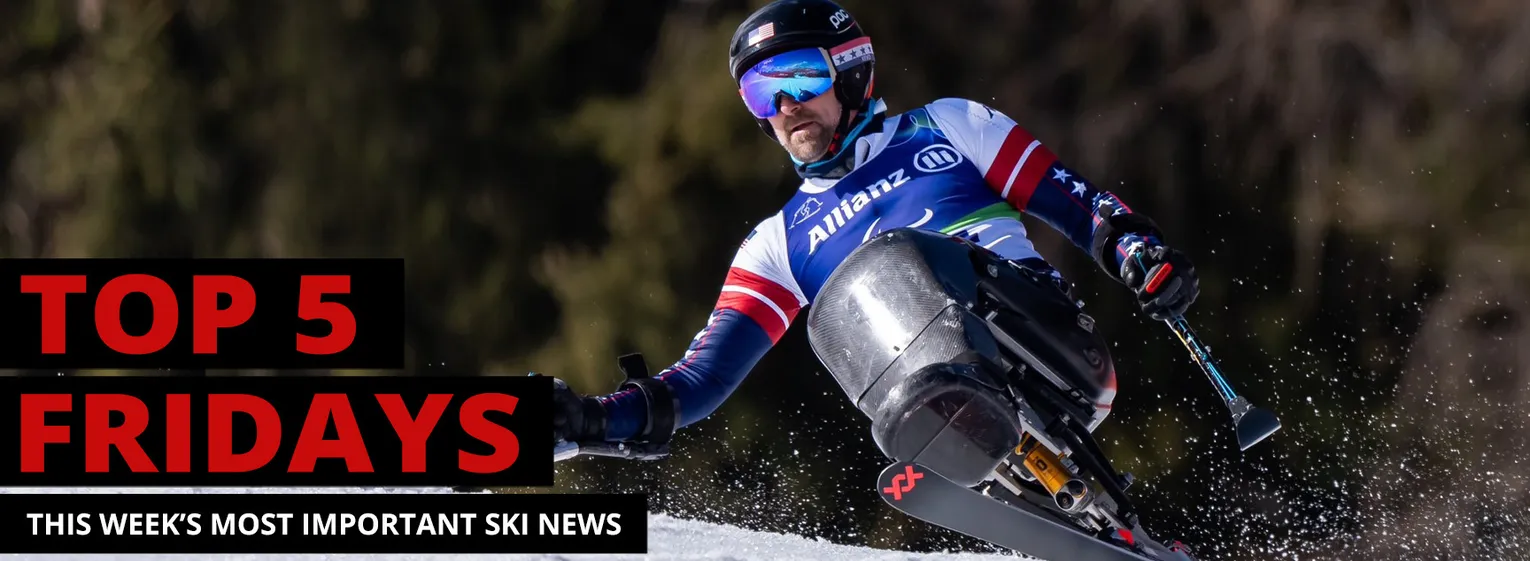
Still not over the Olympics? Great news: you don’t have to be! The Paralympics are happening now through next weekend, and if inspirational stories are your thing, well, the Paralympics has them in droves. Find out more in highlight #4.5! Image: U.S. Ski and Snowboard Team on Facebook
Hello, and welcome to Top Five Fridays, the March 6, 2026 edition! This week, we’re back to our regularly scheduled programming, with the Winter Olympics fully concluded and FIS Alpine Racing back in action. We’ll bring you up to date with the latest action there, before moving onto updates from the world of multipasses, as Ikon, Epic, and Indy have all shared new news regarding next year’s passes. Next, with the “current events” portion of our coverage concluded, we’ll share good news from Colorado that bucks this year’s avalanche danger trend, followed by a cool human interest story regarding the life of a groomer in Alaska. While Olympic action may be over, the world of ski news is still going strong! Let’s dive in.
#1: FIS Recap: Both Teams Return to Speed Races & Show That Olympic Performances Weren’t a Fluke:
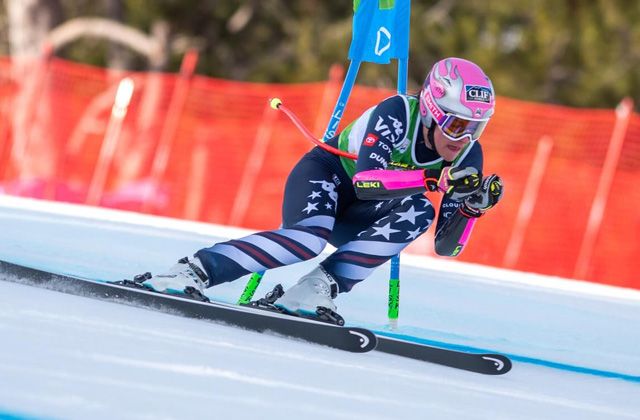
Keely Cashman, en route to back to back 12th place finishes last weekend. Image: U.S. Ski and Snowboard Team on Facebook
Kicking off our coverage this week, for the first time in about a month, is FIS World Cup Alpine Ski Racing results! While we’ve been sharing plenty of competitive coverage in recent weeks, none of it has pertained directly to the World Cup circuit, and we’re excited to resume regular events as we enter the homestretch of the calendar.
On the women’s side, a return to regular racing meant meeting in Soldeu, Andorra for a trio of speed races. Last Friday, the circuit competed in a Downhill race. With Lindsey Vonn out for the rest of the season, the top of the field opened up ever so slightly. While that didn’t result in a podium finish for Team America, it did lead to two top 10 finishers, as Breezy Johnson took home 5th and Jacqueline Wiles finished in 8th. Joining them in the points that race were Allison Mollin in 21st, and Keely Cashman in 22nd. From there, a series of two Super G races were held over the course of the next two days. In the Saturday race, Keely Cashman led the way for the team with a 12th place finish, followed by Mary Bocock in 17th, Tricia Mangan in 22nd, Breezy Johnson in 25th, and Haley Cutler in 28th. A day later, similar success was had, with Mary Bocock finishing in 11th, Keely Cashman in 12th, Isabella Wright in 26th, Tricia Mangan in 28th, and Allison Mollin and Breezy Johnson tied for 30th. Despite no top 10 finishes being earned in these two Super G races, the results were still momentous for the team - not only due to the sheer number of athletes in the points - but also because Mary Bocock earned her second-best career finish (at the time) and best career finish on back to back days. As one of the younger athletes on the team, it assures us that the future continues to be bright for what’s currently the best women’s alpine ski racing team on the planet. Looking ahead, the women’s circuit is set to compete in two more Downhills and a Super G this weekend. While early returns are looking promising for the team, we’ll hold our full coverage until next week. You can preview those events here.
On the men’s side, things were quite a bit slower, with only one race on the schedule for last week: a Downhill in Garmisch, Germany. Despite the slower pace in terms of schedule, the Downhill race offered plenty of speed, and the American team was eager to prove that Olympic results were no fluke. While no podiums were had, Ryan Cochran-Siegle followed up his Olympic Super G silver with an impressive performance in the Garmisch Downhill, finishing in 7th. While he’s shown occasional greatness in the event, this marks just the second time in his career that he’s gone back to back with Downhill top 10 finishes in World Cup races (with the last race having taken place prior to the Olympics, in Crans Montana). Hopefully this signals a breakthrough moment for RCS. Also joining him in the points in this race were Erik Arvidsson with an impressive 11th place finish, followed by Wiley Maple in 25th. All told, a successful re-entry into World Cup racing. From here, the men’s schedule takes them to Kranjska Gora, Slovenia for a Giant Slalom and Slalom race over the course of the weekend. You can preview those events here.
#1.5: Freeride World Tour Updates: Multiple Event Cancellations Force an Early Cut Line:
Before completely moving on from competitive news this week, we want to share a couple of updates from the Freeride World Tour, as things haven’t exactly been going to plan recently. When we last shared a Tour update, the Georgia event had just been cancelled and event organizers were hoping to squeeze in a makeup event ahead of Fieberbrunn. We were doubtful, but ultimately organizers did announce an event in Austria on February 27th. Then… it was cancelled due to an unstable snowpack.
From there, the next event was set to be Fieberbrunn Pro, scheduled to happen between March 5th - 10th. And then, it was announced earlier today that that event is also cancelled, due to snowpack issues. As a result, the Tour has made the difficult decision to make the cut for finals using the two scores earned in the first two stops of the year - no throwaway scores this time around. For athletes on the Tour, it’s a pretty tough break. That said, it’s a tough sport, and a vast amount of flexibility and fortitude are required to compete in it. From here, the next event is scheduled for Haines, Alaska, between March 15th - 22nd.
#2: Multi Pass Update: Epic, Ikon, & Indy Passes Have Announced Next Year’s Pricing & Options. Here’s What You Need to Know:

Moving on from competitive action, our second highlight this week is something of a triple header, as the three biggest multipass products in skiing have just announced a handful of adjustments prior to the launch of sales for next season. Here’s how it all breaks down:
Epic Pass:
Starting with the Epic Pass, the big news this season is the introduction of a new “Gen Z” pass that’s aimed at making things more affordable for those who are out of high school, but may not have hit their professional stride quite yet. This pass, available for those 18-30 years of age, offers a roughly 20% discount on the Epic Pass and Epic Local Pass, making them $869 and $649 respectively. For adults, those same passes will cost $1,089 and $809 - a 3.6% and 3.3% increase over last year’s prices. Beyond that, not much has changed. Epic Pass holders still get 10 Epic Buddy tickets for 50% off and the overall roster of resorts remains unchanged for now. Still, the Gen Z pass is sure to prove to be a good deal for many this coming season. To learn more, check out the press release from Vail Resorts, or coverage from the Tahoe Daily Tribune.
Ikon Pass:
Coming in hot on the heels of the Epic Passes’s announcement, was Ikon’s own pass announcements - a pattern which has become something of an annual tradition. This time around, much like the Epic Pass, the Ikon has slightly increased pricing for adult passes, with the Ikon Pass jumping $70 to $1,399, and the Ikon Base jumping $40 to $949. Unlike the Epic Pass though, which returns largely unchanged, Ikon has been busy reworking their offering to provide more access and more benefits. On the access front, the biggest highlight is the addition of unlimited days at Arapahoe Basin for Base Pass holders. Additionally, Base Pass holders will now have 5 days of access to Aspen Snowmass - a change from past years when all Aspen ski areas were restricted to full Ikon Passes. In addition to these headliners, several midwestern resorts have also increased access at their ski areas.
Perhaps most uniquely though, the Ikon Pass has also grown its benefits program. While in past years Ikon Pass holders have enjoyed discounts on brands like The North Face, Smartwool, and Icebreaker, next year pass holders will enjoy even more discounts. Joining the roster of brand partnerships are ski accessories like Carv digital coaching and Away Luggage, as well as ski adjacent brands like Kiehl’s skincare and AG1 supplements. Additionally, they can receive 25% off of ShipSki services, which could result in major savings for ski travel. While we don’t have time to get into it here, Ikon’s move to work brand partnerships into their pass offering is an incredibly smart move, and one that we hope we’ll have a reason to explore more this summer. For now, learn more about the updates in this article from Ski Mag.
Indy Pass:
Finally, we’re excited to share with you some updates from the Indy Pass, skiing’s counterculture rebuttal to megaresorts. First and foremost, arguably the biggest news is that the Indy Pass is currently on sale. While that might not seem like a big deal, we admittedly tend to miss this update as the pass sells out quickly and it’s typically sold out before we ever get a chance to share that it's on sale. This year though, at the time of this writing, the pass is still available. Not only that, but unlike its counterparts, the price of an Indy Pass is actually cheaper than it was last season. At present, you can buy an Indy+ Pass for $399, down from $489 a year ago. Additionally, the pass product continues to grow its roster, recently adding 16 new ski areas to its list of 300+ partners, including multiple European resorts. And if their offering dips below 300 partner resorts before December 1st? Well, you’re entitled to a full refund. While the limited access to each resort might be a deal breaker for some, the wide range of access and affordable price might be just the ticket for others. To learn more, check out this writeup from Ski Mag.
#3: Despite Recent Avalanches & Increased Activity in the Backcountry, Colorado’s Experiencing a Historic Low of Deadly Incidents:
In Colorado, the CAIC is doing everything it can to collect and disseminate as much avalanche information as it can. The result is a decrease in avalanche incidents and deaths that buck current trends.
In other news this week, we wanted to share with you an article from the Colorado Sun that gives us a little bit of hope at a time when deadly avalanches seem to be dominating the headlines. As you’ll recall, it was just a couple of weeks ago that the deadliest avalanche in California’s history occurred, unfortunately coinciding with multiple additional deaths in Utah and Europe. Looking a bit closer at Europe’s season on the whole, it turns out that it’s been exceptionally deadly, with over 105 people losing their lives in the backcountry there - primarily in the Alps. All of this is undeniably tragic, to be sure.
That said, we caught a glimmer of hope this week coming out of Colorado, where despite similar weather and recreational trends, the impact of avalanches is declining. In a report from the Colorado Sun this week, we learned about how the state is bucking current trends, and actually seeing a reduction in recreationalists being caught in avalanches, as well as avalanche fatalities. According to a chart showing data from the Colorado Avalanche Information Center, the number of recreationalists caught in avalanches has decreased for each of the last 3 years, with fatalities seeing a similar downward trend. The peak of avalanche danger more or less occurred in the 2022-2023 season, when 122 people were caught in the state, and 11 died. In the two subsequent years, there were 117 people caught with 2 deaths, followed by 108 caught last year with 3 deaths. As for this year? So far the numbers are dramatically lower: only 35 people have been caught in avalanches alongside 0 deaths.
Now, your reaction to this year’s data might be something like, “sure, but it’s been a bad year. Of course there are less people getting hit by avalanches.” While we don’t have backcountry traffic data to counter that, what we do know is that it doesn’t take a season of consistent snowfall to cause avalanches. In fact, it’s something of the opposite, as oftentimes dry winters mixed with single instances of incredible snowfall lead to an overeagerness to hunt powder at a time when the snowpack isn’t stable. As such, decision making falls by the wayside and deadly avalanches occur. Additionally, the sports of backcountry skiing and snowboarding are continuing to grow at an exceptional rate, meaning that even in a bad snow year, it’s likely that far more people are exploring the backcountry than there were a handful of years ago.
And yet, despite all of these variables, Colorado is bucking the avalanche trend, begging the question, “how?” Ultimately the answer to that question is incredible news: education, information, and awareness.
At the center of this ongoing success story is the effort being undertaken by the Colorado Avalanche Information Center (CAIC). Operating as an arm of Colorado’s Department of Natural Resources and funded in part by the Colorado Department of Transportation, the CAIC has been able to grow its efforts in recent years to vastly expand the amount of information it’s able to provide regarding avalanche dangers. Part of that effort is an expansion of its forecasting skills, allowing it to prepare recreationalists with the weather information they need prior to heading out. Another massive part of that effort is putting more boots on the ground so to speak, with more staffers heading out into the backcountry themselves to collect snowpack reports.
Both of these efforts and more are further supported by a robust online presence, where users can review the weather forecasts for specific regions, analyze avalanche risks not only on a classic 1-5 scale, but also in regards to elevation, aspect, the type of slide, and the size of it. Perhaps most powerful though, is the ability for users to submit detailed field reports which are then easily searchable and reviewable by others. The result of this elaborate effort is an incredible amount of information that backcountry recreationalists can use when planning their adventures. That information in turn leads to better decision making and smarter risk taking.
Perhaps most powerful though, is the ability for users to submit detailed field reports which are then easily searchable and reviewable by others. The result of this elaborate effort is an incredible amount of information that backcountry recreationalists can use when planning their adventures. That information in turn leads to better decision making and smarter risk taking.
If you’ll recall our coverage a couple of weeks ago, you’ll remember the message that getting caught in an avalanche is 100% avoidable. It’s not as if heading into the backcountry is a coinflip every time. With the right education, information, and decision making, preventing disaster is entirely possible. The Colorado case study is proof of that, and hopefully the efforts being undertaken by the Colorado Avalanche Information Center will be used as a model in other states.
Speaking of which, before wrapping up this highlight, we do want to mention that most, if not all, avalanche prone regions of North America have their own avalanche centers that do similar work to CAIC. To find the one in your area, just Google your state or region, followed by “avalanche center.” Once you’re there, go ahead and bookmark it - you’ll want to refer back to this site before any backcountry expedition.
#4: An Ode to the Groomers, the Nocturnal Skiers That Make it All Possible:
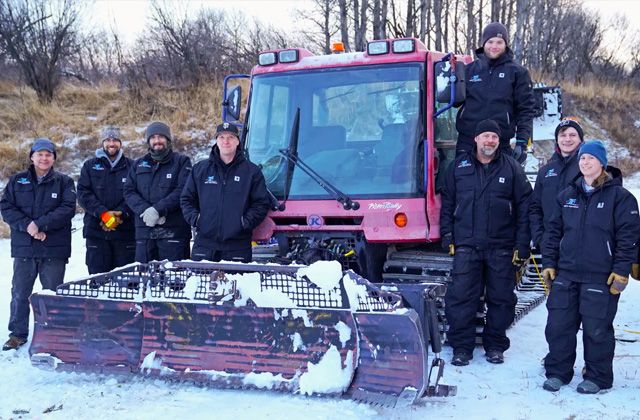
The dedicated team that works while you sleep, in order to create the best possible XC skiing surfaces across Anchorage’s 100+ mile network of trails. Image: Nordic Skiing Association of Anchorage on Facebook
Finally, we’re rounding things out this week with a story that we thoroughly enjoyed for the simple fact that it’s just a darn good story. Coming to us from the Anchorage Daily News, is a story that’s something of an ode to groomers. As a skier, you undoubtedly know what a groomer is, and you’ve most certainly had the joyful experience of skiing fresh corduroy. But, have you ever thought much about how the corduroy got there, or more importantly, when it got there?
In this story from Anchorage Daily News, we go behind the scenes of the grooming crew that maintains the 100+ mile trail network belonging to the Nordic Skiing Association of Anchorage (NSAA). While you likely have a basic understanding of what this crew does, there’s a number of intriguing details to behold regarding the lifestyle of the nocturnal workers. For instance, their shift typically doesn’t start until midnight, and often wraps up just as the first recreationalists of the day start showing up. While they could arguably start and finish earlier, operating during this time period allows for the freshest surface possible for the following day. As it turns out, the quality of the snow is an immense source of pride for these groomers.
Throughout the article, there are several mentions of tactics and techniques that groomers use to ensure they’re creating the best surface possible. Early in the season, for example, when there’s less snow, the grooming squad leans on snowmachines rather than snowcats as they’re lighter and don’t tear up the snow as much. On the other hand, during freeze/thaw cycles, the team finds itself using snowcats to grind the ice, making it fine enough that it almost feels like snow - at least for a day. When the snow is wet and heavy, the crew will give it a deeper till, allowing moisture to rise and escape the snowpack.
Most intriguing though, is how the NSAA grooming crew prepares for races. According to the article, different styles of grooming are required for different types of XC races, and the crew working the NSAA trails prides itself in creating the best possible surface for races, even if it “might take three to four passes depending on what trail conditions are."
As for whether or not this meticulous, overnight work is worth it? Well, consider this: Gus Schumacher, one half of the U.S. Team that won the silver in the Men’s Team Sprint, grew up skiing this very trail network. So, we’d argue yes: the work of the overnight groomer, as thankless and unseen as it might be, is one of the most important ones in skiing. To learn more about it, and get far more details about this lifestyle, check out the report from Anchorage Daily News.
#4.5: Not Over the Olympics? You Don’t Have to Be. The Paralympics Are Just Beginning and the Storylines are Even Better:
Finally, before we wrap things up this week, we want to very quickly give a shoutout to the 2026 Paralympics, which are currently happening in Milano Cortina and will be continuing all the way through next weekend. If you found yourself enamored with the Olympics over the course of the last few weeks, we highly recommend giving the Paralympics a watch as well. It’s like the non-disabled Olympics, only arguably more impressive as these athletes are competing in the same sports, but with some level of physical setback. If you thought the Olympics were inspirational, just wait until you see the Paralympics. To review the full schedule of events, click here.
#5: And Now, Your Edits of the Week: See Why “A Guide’s Book” Won TGR’s Award for Best Documentary::
Alternate Angle, Plus 3 Minutes of Additional Finger Runs