

Top Five Fridays: March 8, 2024
Lead Image: A shot from Arapahoe Basin, where it’s business as usual until the Alterra deal closes. The mountain just announced details regarding their 2024/2025 season pass - more details below! Image: Arapahoe Basin on Facebook
#1: FIS World Cup - Lauren Macuga Sets Back to Back Career Bests, While the Men’s Regular Season Wraps Up in Aspen:
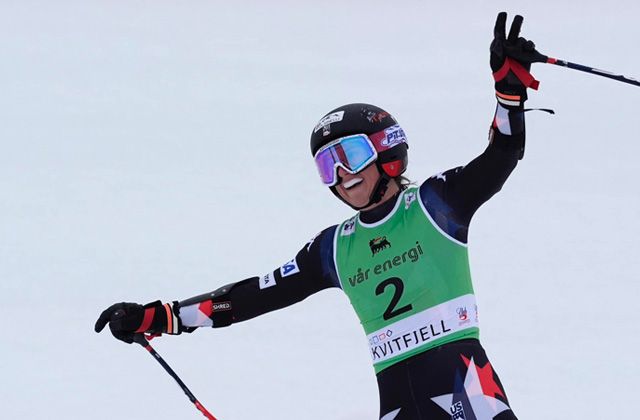
Lauren Macuga was all smiles this week, after earning a career best finish, twice. Image: U.S. Ski and Snowboard Team on Facebook
Hello, and welcome to Top Five Fridays! This week we’ve got more World Cup action to recap, as well as the results from a controversial competition in Saudi Arabia. From there we’ll share a duo of stories focusing on ski town housing that add more details to the ever evolving story, before wrapping things up with a trio of season pass highlights that we think you’ll care to know about. Before getting into some of those topics, let’s first take a look at the latest round of racing highlights.
This week, the women’s circuit was in Kvitfjell, Norway for a downhill race as well as two super g’s. Unfortunately the downhill race was called off, but the two super g’s were successfully held, making no American happier than Lauren Macuga. In the first of those two races, Macuga led the Americans with a 7th place finish, followed by Isabella Wright in 18th. At that time, the 7th place finish was the best of Macuga’s career. Then, a day later, she two-upped herself, finishing in 5th in the second super g. With those two races, Macuga set a personal best for a fourth, and then fifth time this season. In other words, it’s been an amazing season for the young star who, while has yet to land a podium, is setting herself up to be yet another American woman to watch next season. Also earning points in that second super g race was Tricia Mangan, who finished in 24th. Looking ahead, the women’s circuit is in Are, Sweden this weekend for a giant slalom and a slalom race. Once those wrap up, they’ll head to Saalbach, Austria for the final week of racing.
On the men’s side of things, the circuit spent their second weekend in the U.S., with Aspen playing host to two giant slaloms and a slalom race. Unfortunately it seems as though the men are running out of gas down the stretch as these races weren’t quite as fruitful as we’re used to, although they weren’t completely devoid of results. In the first giant slalom, River Radamus was the sole point earner for Team America, earning an impressive 11th place. A day later, in the second giant slalom, Tommy Ford took 16th and River Radamus took 22nd. Finally, in the third race at Aspen, Jett Seymour took 25th in the slalom race, followed by Benjamin Ritchie in 27th. From here, the men’s team will have their next 9 days off before they meet up with the women’s circuit for the finals in Saalbach. You can preview those tech races here, and the speed races here!
#2: Massive Cash Purse Entices Professional Skiers to Compete in Controversial Big Air in Saudi Arabia:
In other competitive news, we’ve got a bit of a controversial competition to share with you, and it’s not in the “the judges got it wrong,” type of way. No, this time we’re taking you to Saudi Arabia, where the nation just hosted its first ever big air event in Riyadh as part of their “SnowBlast KSA” festival. While the event itself was pretty standard for a big air competition, it’s the details surrounding the event that make it controversial. Specifically, the fact that only male athletes were invited, and that women were excluded, rubbed a lot of people the wrong way, and rightfully so. Coupled with the nation’s abhorrent human rights track record and specifically their repressive approach to women’s rights, many freeskiing fans hoped that the invited athletes wouldn’t participate in the event. Unfortunately though, that wasn’t the case.
Incentivized by a massive cash purse, a number of high profile athletes made the trip to Saudi Arabia to compete in the event. Ultimately, it was Henrik Harlaut who won the first place prize of $50,000, Ralph Welponer won the $30,000 second place prize, and Colby Stevenson took home $20,000 for third. Additionally, each athlete who showed up was automatically awarded $2,000. This, of course, puts these athletes under scrutiny, as it’s not a stretch to suggest that they sold out, opting to forgo their values for a chance to win what’s one of the largest prizes in skiing. On the other hand, it’s no secret that there isn’t a ton of money in freeskiing, so when the rare opportunity pops up to compete for $50,000, it’s easy to see how the temptation would be too much to say no to. Either way, we’re not here to provide too much political commentary, but if you want to dive into this story a bit further, we recommend reading this report from Powder.
#3: The Steamboat Springs Housing Crisis Continues as the City Government, Hospital Can’t Fill Openings:
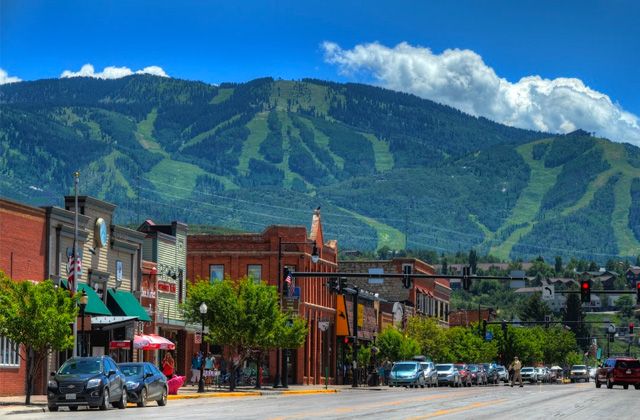
Downtown Steamboat Springs, backdropped by Steamboat Resort. Image: Visit Steamboat Springs on Facebook
Next up this week in hot topic ski news, is a revisit to a story we just recently covered: the cost of home prices in Colorado. We know, we know, it’s a story we’re all familiar with at this point: ski towns have housing shortages due to a spike in pandemic sales, as well as arguably underregulated short term rental policies. The result, of course, is that it’s tough for locals to find a place to either buy or rent at an affordable price. This week however, we caught another story coming out of Steamboat Springs, where it seems as though the problem is getting so bad that something has to happen. Allow us to explain.
This week, Business Insider published an article sharing the news that, despite offering a $167,000 salary, the city of Steamboat Springs is having trouble filling their job opening for a “head of human resources” position. Unfortunately, despite offering the role to two qualified candidates, both had to turn the offer down after they realized they simply couldn’t find an affordable place to live. The local hospital is also having the same problem, being unable to fill vacancies despite what would normally be considered substantial compensation.
For us, this story feels like it symbolizes something of a breaking point. We’ve talked ad nauseam about how the rising cost of housing is making it tough for locals to find a place to live, and how that makes it difficult for local small businesses to fill staffing needs. In the past, the focus has mostly been on service industries like restaurants, bars, and lodges. With this new update though, we’re not talking about a ski town that’s unable to staff “optional” businesses - we’re talking about a ski town where the problem has expanded into the essential workforce. In other words, yeah, it’s frustrating if a ski town can’t find employees to staff its restaurants, but it’s a whole other kind of problematic if the local government and hospital can’t fill its openings. That’s why, in our eyes, it seems like this issue has grown to a point in Steamboat Springs where something has to happen. What that something is, we don’t know, but there’s a chance South Lake Tahoe has a solution.
Before wrapping up this ski town housing highlight, we also want to briefly share some news coming out of South Lake Tahoe, where local residents are drumming up support for a proposed vacancy tax. While the concept is in its earliest stages, and 1,159 signatures are needed before the concept can make it to a ballot for voting, the idea could have drastic results on the availability of housing in the area. In short, the concept is this: if a residential home or unit is vacant for more than 182 days a year, the property owner will owe an additional $3,000 in taxes the first year, and $6,000 in additional years. The hope is, of course, that this will force homeowners to rent their properties, realizing that underutilizing it simply isn’t worth the cost of the tax. We’ll have to see how this all plays out, of course, but for now it’s a novel idea to a widespread issue in the ski industry. To learn more about the South Lake Tahoe vacancy tax, check in with the Tahoe Daily Tribune.
#4: 2024/2025 Epic, Ikon Passes Are Officially On Sale. Plus, Updates From Arapahoe Basin & Powder Mountain:
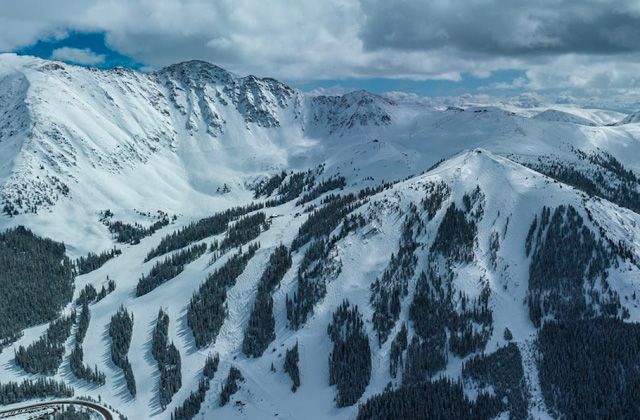
A look at Arapahoe Basin, where plenty of anxiety exists amongst locals as they await to see if the deal with Alterra closes, and if it does, what changes are coming. For now, it’s business as usual, as Arapahoe Basin’s season pass offering is largely unchanged for the 2024/2025 season. Image: Arapahoe Basin on Facebook
Finally, we round out this week with a quick trio of season pass stories, as it’s officially that time of year again. First things first, let’s talk Epic & Ikon. As it stands, the actual pass offerings haven't changed all that much (we’ll circle back to Ikon in a second), but what has changed is the pricing. This year, both the Epic and Ikon passes have announced a roughly 5-8% increase in early bird pricing across pass options. For Epic, the full pass has gone from $909 to $982, while the Epic Local pass has jumped from $676 to $731. For Ikon, the full pass has moved from $1,159 to $1,249, while the Ikon Base Pass will rise from $829 to $869. Generally speaking, this is par for the course, as both passes have seen similar adjustments in recent years. If you’re interested in taking advantage of early bird pricing, you can shop for Epic Passes here, and Ikon Passes here.
Speaking of Ikon Passes, we caught an update from Arapahoe Basin earlier this week, where locals have been waiting with bated breath to see how the upcoming sale to Alterra might affect their season pass plans. While we don’t have conclusive answers in regards to whether Ikon Pass holders will have more access to Arapahoe Basin, we do know that the resort will continue to offer its own season pass, independently of the Ikon Pass. Set to go on sale on March 21st, the pass is expected to be a similar price to this year’s pass, and will also include Monarch days. In other words, if you’re someone who’s hoping that Alterra’s acquisition of Arapahoe Basin won’t bring about significant change, well, this update should come as a bit of a relief. You can learn more about this announcement here.
Finally, on the subject of ski resorts changing with new ownership, we have to give some attention to Powder Mountain this week, where locals are less than thrilled about early moves made by new ownership. Hot on the heels of announcements regarding the resort’s move to a semi-private model, pass prices for next season have just been announced, and they mark a pretty sizable increase. Next year, a Powder Mountain pass will cost $1,499, up from $1,259. While that price increase isn’t great, it’s also not the issue that most locals are upset about. Instead, they’re upset about the subtle changes. For instance, until now, Powder Mountain has had a policy where seniors over the age of 75 skied free. Next year, their pass will cost $1,049. Additionally, the new pass price of $1,499 isn’t set in stone. Instead, that’s the current price, which is set to rise based on demand. While we’ll see what that looks like in practice, it’s certainly raising concern that the pricing could get out of hand by the start of next winter. Finally, the real icing on the cake with this story is the fact that not only is Powder shifting to an even more luxurious market, but they’re being somewhat dismissive of their customer base in doing so, leaving questionable responses on Instagram. To learn more about the latest controversy from Powder Mountain, head over to Powder Magazine.