

Top Five Fridays: May 1, 2026
Jesper Tjader’s annual Unrailistic railfest is happening now, and with antics like this being a regular occurrence, you won’t want to miss it. Image: © Red Bull Media House, sourced via the Red Bull Content Pool
Hello, and welcome to Top Five Fridays, the May 1, 2026 edition! This week’s episode takes on a certifiably summer feel as we find ourselves discussing some of the more niche, behind the scenes types of stories that emerge this time of year. Take for instance, the newly released criteria for how to make the U.S. Alpine Ski Team next year, or the story of the business that’s in charge of measuring each gate on every FIS course. Not into ski racing? That’s fine - this week’s news also covers a unique pass product available in California, as well as our weekly update from Vail’s legal room, where lawyers have yet another case to crack into. While we may not be in the thick of winter anymore, that doesn’t mean ski news has to stop! In fact we have plenty of it this week, so let’s jump in.
#1: Want to Know What it Takes to Make the U.S. Ski Team? Check Out Their Recently Released Criteria for the 2026/2027 Season:
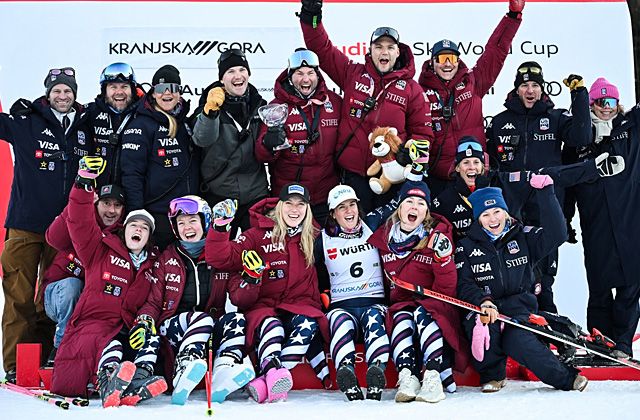
While it may not be easy, there are numerous pathways to earn your spot on the U.S. Ski Team. Learn more in the newly shared nomination criteria document. Image: U.S. Ski and Snowboard Team on Facebook
First up this week is coverage of the newly updated 2026-2027 U.S. Alpine Ski Team nomination criteria. Now if this topic seems pretty niche to you, you’re right, it is. That said, it’s an important piece to a bigger “development pipeline” puzzle that we touch on from time to time here on Chairlift Chat, and provides a bit more context to the ski team nomination announcement that we share each spring at the conclusion of the season. With those nominations coming in just a couple of weeks, it feels worthy of discussing the criteria required for athletes to receive those nominations. Let’s take it from the top.
Just to make sure we’re all on the same page, every U.S. Ski Team team, whether alpine, XC, freeski, or otherwise, is broken into an A, B, and C team. While we don’t know the specific distinction between each team (if you know more about this, please let us know in the comments!), it feels safe to assume that the higher level athletes receive more support from the team, and more World Cup starts. Keeping that in mind, let’s get into some of the criteria.
For athletes being nominated to the A team, it’s all about proving that they’re one of the top athletes in the world. Doing that is somewhat straightforward: they need to have either finished in the top 3 in an event at the Olympics last year, or be ranked in the top 25 on the World Cup start list in at least one discipline. Very straight forward, clean and easy.
The B team gets quite a bit trickier. To make this team, there are also two pathways: Europa Cup and/or World Cup results, or World Cup Start List rankings. Within these two pathways, there are also age categories that make it easier for younger athletes to qualify and slightly more challenging for older athletes. Without getting into each of the 6 specific criteria options, consider these qualifiers: for athletes born in 2000 or later, a World Cup ranking of 40th or better in any category, or three top 10 Europa Cup and/or World Cup top 30 results will do the trick. Comparatively, for those born in 1996 or 1997, those standards become a World Cup ranking of 30th or better, or three top 3 Europa Cup and/or World Cup top 20 results are required. In other words, as an athlete ages, they’re expected to continue performing at an ever increasing level. If they don’t, they’re demoted to make room for rising talent.
Still with us? Great, then let’s touch on the C team, where there are even more pathways to the team.
First things first, it’s worth noting that to make the C team, athletes have to be on the younger side, with 2002 being the oldest eligible birth year. Keeping that in mind, there are three entry points, each with their own set of multiple criteria. To keep things simple, we’ll just cover the broad strokes here.
The first avenue for C Team nomination is through results earned through competing in either or both of the Continental Cups - the Europa Cup and the NorAm circuit. Again, there are several qualifying criteria within this route, but the long and short of it is that an athlete needs roughly 3 solid results between the two circuits, or a top 2 ranking at the end of the season in a given discipline.
The second avenue for the C Team is a bit more straightforward in that it’s a simple calculation of FIS World Ranking. That said, it’s still a bit confusing, as specific qualifying rankings are broken down by both age and gender. Regardless of those details though, the pathway is essentially the same: an athlete needs to rank well in one discipline (anywhere from top 50 to 120 depending on age and gender), or rank slightly lower in two disciplines, as long as one is a technical discipline. For example, a woman born in 2002 would have to either rank in the top 50 of a specific discipline, or rank in the top 100 in two disciplines, with one being technical.
Finally, the third avenue here, and the one that’s both the most intriguing to us and the least developed, is the NCAA pipeline. We’ve talked about the unique importance of developing that pipeline here in the states, so it’s good to know that a route does exist. That said, it’s much less involved than the others, for better or worse. To qualify for the C Team via the NCAA pipeline, an athlete needs a top 3 finish at the National Championships, as well as two top 3 results in NorAm races. While in some ways this nomination pipeline feels like an afterthought, we’re happy to see that it exists at the very least.
Despite our best attempt, we’ve still barely scratched the surface of the nomination criteria. To learn more, check out the official document from the U.S. Ski and Snowboard Team.
#2: Vail’s Blended Sales Tax Model Being Challenged in New Hampshire, the “Live Free or Die” State:
Image: Epic Pass on Facebook
In other news, it’s another week and another legal issue for Vail resorts and their Epic Pass. This time, the news isn’t coming to us by way of disgruntled employees, or injured guests, or consumers who believe multipasses violate antitrust laws. No, this week the news comes to us from the great state of New Hampshire, where the motto “live free or die” is so deeply ingrained in the population that it even applies to their sales tax. That is, the state is just one of five that doesn’t have a tax on sales. As it turns out, that’s at the center of this week’s news.
In New Hampshire, the state’s Attorney General’s office announced on Monday that it’s launching an investigation into Vail’s tax collection practices, particularly as it pertains to their use of a new “blended sales tax” model. More specifically, the issue is this: even though New Hampshire doesn’t charge sales tax, Vail is charging customers based in New Hampshire the same 3.2% sales tax that they are charging customers in every state. Their argument is that while the pass buyer may be living in New Hampshire, the pass is valid at mountains in numerous states that do charge sales tax, and therefore they’re required to charge customers for it as well.
As you can imagine, the issue gets pretty complicated pretty quickly, and as it stands, there doesn’t seem to be an immediate answer. On New Hampshire’s side, state governor Kelly Ayotte is adamant that the tax is illegal, saying, “New Hampshire is proud to have no sales tax, and we’re not going to let an out-of-state company try to sneak one in.” Meanwhile, a representative for Vail’s Northeast division, Courtney DiFiore, has said that because the pass includes access to businesses beyond New Hampshire, Vail is, “legally required to charge for those resorts.” In other words, what we seem to have here is a good ol’ fashioned standoff, where both sides feel justified in their stance. From here, we suspect legal teams will dive a bit deeper into Vail’s business model, analyzing exactly how their blended tax rate is calculated, and looking to identify the exact moment when sales tax should be applied. While this particular story doesn’t feel like an egregious misstep by Vail, or one that’s likely to come with significant fallout, it’s yet another instance of bad PR in what’s becoming a deluge of negative press against the company. For more on this, check out the coverage from Business NH Magazine.
#3: What if You Could Split a Season Pass With Friends That Gave You Unlimited Skiing in California and Nevada Next Year? If You Act Fast Enough, You Can:
For our third topic this week, we’ve got a pretty fun story coming out of the FYI department, as it just so happens that this year’s Ski California Gold Pass goes on sale today. Now, we wouldn’t normally stop the presses to share news like this, but here’s the thing: the California Gold Pass is easily the best deal in skiing, and it’s extremely limited in availability, so time is of the essence if you want in on one.
“What exactly makes this pass so special?”, you might ask? Well, for starters, it offers unlimited access to a total of 36 resorts across both California and Nevada for just $4,250, with no blackout dates. While $4,250 might seem like a lot of money for a pass in an era when a full Ikon Pass offers access to over 70 resorts for $1,449.00, it’s worth keeping in mind that the Gold Pass offers access to every resort in California. In other words, while the Ikon Pass has 70+ resort partners, you would have to travel around the entire world to access them all. With the Ski California Gold Pass, all 36 ski areas are within driving distance.
Interestingly enough though, the number of ski areas and the price of the pass aren’t even the two most interesting things about it. Instead, that honor goes to the fact that the pass is fully transferable, meaning anyone can use it. This added benefit is meant to enable businesses to buy a pass that can be shared either internally or with clients and guests. For example, say you’re running a ski shop in California. If you bought one of these passes, it could be used by employees for free skiing as a perk of employment. Or, say you’re seeking funding for a movie you’re making (California is the home of Hollywood afterall). The Gold Pass would be a classy way to take a potential investor for a “free” day of skiing. Of course, there’s another scenario that our ski bum minds can’t help but think of: get a group of friends together, buy the pass, and unlock unlimited skiing for a fraction of the cost of a pass. The only caveat here is that you’d either need multiple Gold Passes, purchase additional day tickets, or ski alone.
While we don’t know how sensible that last scenario is, we do know that the Gold Pass goes on sale today, and if you want to get one, you’ll have to act fast in order to get one of the roughly 500 passes sold. To learn more, check out the Ski California website.
#4: Ever Wonder How FIS Alpine Racing Broadcasts Make the Graphic Showing an Athlete’s Comparative Speed, Time Differential, and Race Progress? MBCD is the Business Behind the Magic:
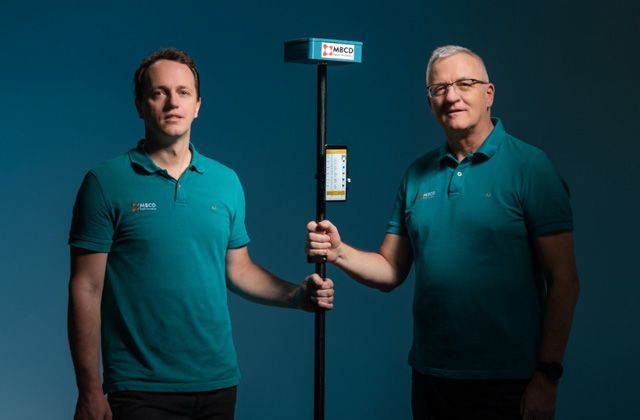
The team at MBCD showing off one of their measuring devices - a crucial piece of equipment for athletes, viewers, and the FIS alike. Image sourced from SkiRacing.com, originally provided by MBCD.
Finally, for our last highlight this week, we want to share a cool story that we came across, courtesy of SkiRacing.com. This time of year, the publication tends to do an excellent job of finding and sharing behind the scenes style stories that give us fascinating looks into aspects of the sport that we never thought about. Case in point: this week’s interview with Martin Benko, the CEO of Slovakian company MBCD, who is responsible for all of the precise course measurements taken at FIS World Cup Alpine events.
While it’s something that we as viewers of the sport have come to take for granted, MBCD’s role at every race is essential for FIS staff, athletes, and us - the viewers at home. Essentially, what the MBCD team does is this: once the course has been set, they quickly bring their measurement devices to each gate, where precise information regarding its spatial relation to the previous gate is sent to the cloud via satellite. In other words, these devices digitize data regarding things like vertical distance between gates, slope angle of the hill, and how far the gate is offset from the previous one. By taking all of these measurements, the team is able to digitally recreate each course, providing insight into which sections between gates are the steepest or which turns might be the tightest. From here, that data is consumed and utilized in three ways.
First, the athletes are able to look at the course in digital form and get a read on how they want to ski it. For example, if the data says the pitch coming into gate 10 is particularly steep and the turn is particularly tight, then athletes will have precise data driven information that they can use to better prepare for that. Second, for us, the viewers, the data can be used in broadcasts in a myriad of ways, including time comparisons between athletes, speed between sections, and speed comparisons of athletes. Essentially, if you’ve ever watched an FIS alpine race event, that bar on the right hand side that shows an athlete’s progress on the course alongside a red to green gradient indicating speed - that’s all made possible by MBCD. Finally, the third party that benefits from this course analysis is the FIS itself, who can use the data to ensure consistency and quality across all of its courses.
All in all, it’s a pretty interesting story, and certainly a concept that’s fun to be aware of as technology plays an ever bigger role in FIS sports. For more on this, check out the full interview over on SkiRacing.com.
#5: And Now, Your Edits of the Week: Happening Now: Jesper Tjader’s 2026 Unrailistic Competition:
It’s Hard to Believe That the First SuperUnknown Competition Was 23 Years Ago. This Year, Level 1 Invited 4 Unknown Filmers to Make Edits of the Session. Here’s the First Cut, From Chris Dejohn:
Up Next: Big Mountain ASMR From Nikolai Schirmer and GoPro:
Finally, Kimbo Sessions is Back:
*** Warning: Some Foul Language Occurs ***