

Top Five Fridays: May 10, 2024
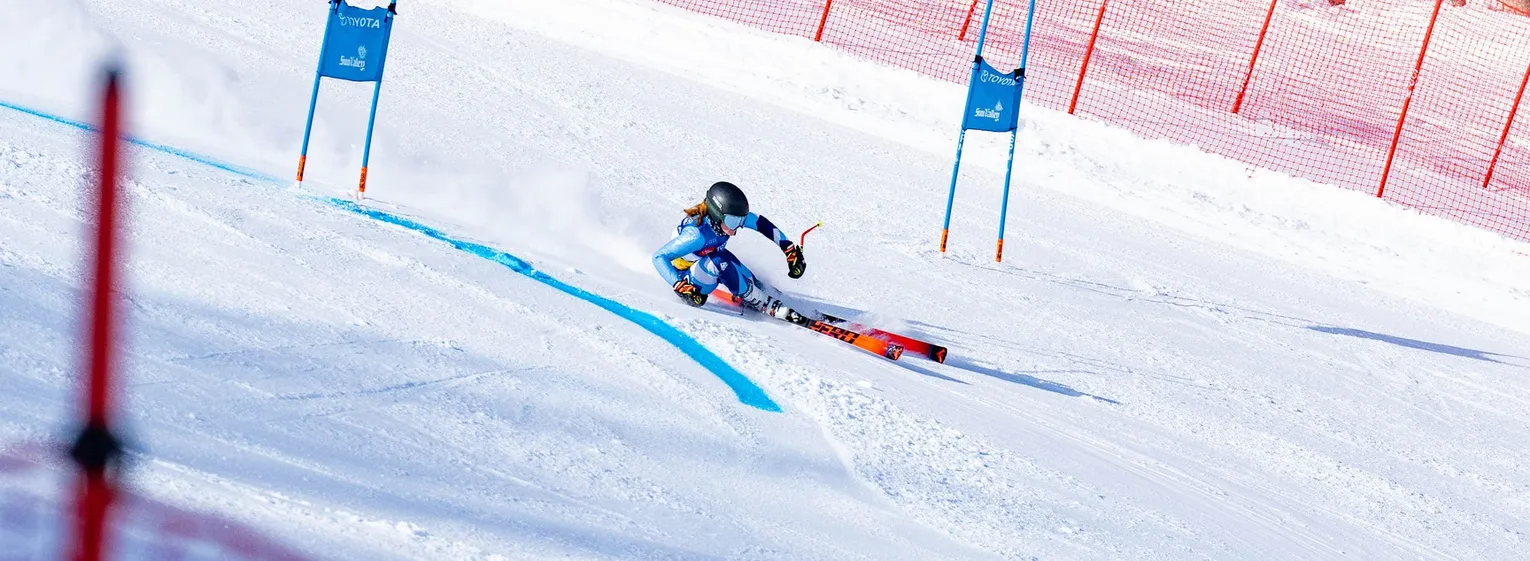
Lead Image: Possibly the biggest news this week comes out of Sun Valley, Idaho, where the resort’s just been included on the upcoming FIS schedule in a big way. We’ll tell you more about that, directly below! Image: Sun Valley Resort on Facebook
#1: Sun Valley, Idaho Looks Set to Host 2024/205 FIS Alpine Finals as Entire Preliminary Schedule is Released:
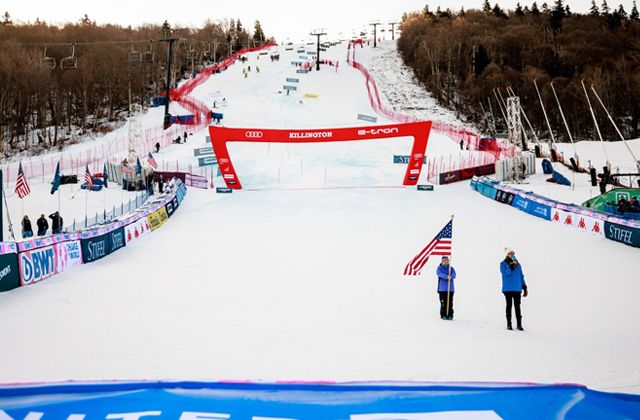
While the list of U.S. ski resorts hosting FIS World Cup alpine races is shorter this year than last, Killington remains firmly on the schedule, thanks in part to their ability to put on a world class event each and every November. Image: Killington Resort on Facebok
Hello, and welcome to Top Five Fridays, the May 10, 2024 edition! This week’s ski industry news takes us all over the map, quite literally, as we travel to Chile and Utah for our second through fourth highlights, while our first highlight takes us all over the Northern Hemisphere, courtesy of the preliminary FIS alpine race schedule being released at this week’s FIS Annual Spring Committee Meeting. While last year’s calendar announcement didn’t offer a whole lot of change, this year’s most certainly did, so without further ado, let’s get right into it!
As you’ll recall, last year was a big one for FIS World Cup ski racing here in North America, as our continent played host to a total of six world cup alpine racing weekends, with Killington, Tremblant, Lake Louise, Beaver Creek, Aspen, and Palisades Tahoe all being selected to host races. While we hoped that these venues would carry over this year, it looks like Aspen, Lake Louise, and Palisades Tahoe have all been left off the schedule this year. Still, the annual women’s races in Killington, which have become a tour highlight, remain on the calendar, as do the races the following weekend at Mont Tremblant, Canada. Additionally, Beaver Creek will once again host a series of men’s races, along with additional Downhill and Super G races for the women’s calendar.
Now, we can’t pretend to be the ultimate experts when it comes to FIS scheduling, but we did notice two things about this year’s calendar that might play into the reason for Aspen and Palisades Tahoe being left off the schedule. First, if you’ll recall our Top Five report from March 29th, you might remember the Norwegian Ski Federation calling for the FIS to schedule events in geographic “clusters” to reduce environmental impacts and fatigue related to travel. While we can’t say for sure whether this consideration had an impact on scheduling, it’s hard not to notice that the early part of the season is very much a “North American cluster”, as both the women’s circuit and men’s circuit travels to America just once, in late November and early December. From there, both circuits travel to the Alps for a considerable amount of time. So, while not conclusive, it does seem like the idea of clustering was at least considered in this iteration of scheduling, which may have made the inclusion of Aspen and Palisades Tahoe impossible.
Secondly, and this is really the biggest news of the week most likely, is the fact that the 2024/2025 FIS World Cup alpine finals is tentatively set to be hosted by Sun Valley, Idaho! While it’s still yet to be confirmed, if the schedule holds, it would ultimately mean that the biggest races of the entire season would be held here in the United States as the finals signify every athlete's last chance to earn points in each discipline. While we can’t say with 100% certainty that the finals will be held at Sun Valley, the mountain’s inclusion on the preliminary calendar is an excellent sign, and more than makes up for the fact that the Aspen and Palisades Tahoe mid-season races have been left off the schedule. In other words, while the United States may have lost two exciting venues in the year ahead, we more than make up for it by the fact that we’ll likely be hosting the FIS finals at the end of the season. To learn more about this year’s preliminary calendar, as well as other decisions made at this year’s Spring Meeting, head over to the official FIS website.
#2: North America’s Mountain Capital Partners Buy La Parva, Chile, Look to Connect it with Valle Nevado to Create Chile’s First Mega Resort:
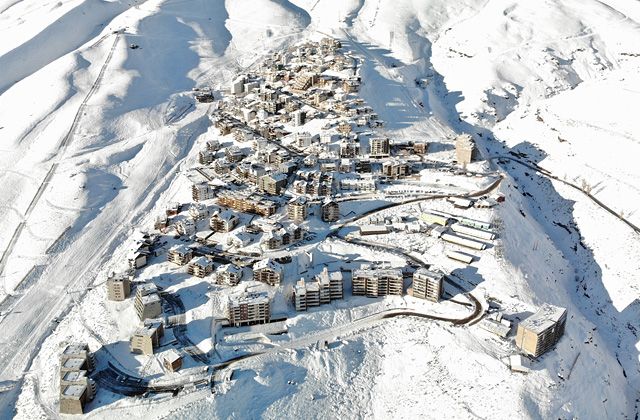
The village of La Parva sits perched on a mountainside outside of Santiago, Chile, in a region known as the “Three Valleys.” On the backside of La Parva, you’ll find MCP’s other ski resort, Valle Nevado. The company is eager to officially connect the two resorts. Image:Mountain Capital Partners
In other ski news this week, we caught wind of an exciting, albeit somewhat unexpected update coming to us by way of Mountain Capital Partners (MCP). While not exactly a household name in the world of skiing, MCP has quietly become the third largest ski resort conglomerate based out of North America, owning a total of 13 ski areas, as well as a bike park in Texas and two golf courses in Arizona. Despite having an impressive portfolio, MCP has largely avoided the limelight for one key reason: rather than acquiring mega resorts like Keystone, Whistler, etc, MCP has acquired mid-sized ski areas largely in the southwest, such as Pajarito in New Mexico, Purgatory in Colorado, and Brian’s Head in Utah. In addition to these modestly sized American mountains though, MCP does own one rather large ski area south of the border that you’ve likely heard of before: Valle Nevado. That ski area, as you might already know, is the largest ski area in the Southern Hemisphere, with 2,200 skiable acres ,plus an additional 20,000 acres of heli-skiing terrain. It’s also a key reason why this week’s news is so interesting.
This week, StormSkiing.com broke the news that MCP has just acquired its second ski area in Chile: La Parva. Not only is La Parva in Chile, but it also just so happens to be located directly next door to Valle Nevado. So close in fact, that the two ski areas are currently accessible to each other via lift. In other words, MCP’s managing partner, James Coleman, has just put together what could easily become the first “mega resort” in Chile, and one that could be the go-to destination for North American’s hunting down summer turns. Adding importance to that claim are two additional facts about the current landscape of skiing in the Southern Hemisphere: there aren’t that many ski areas in Chile or Argentina, and so far, Mountain Capital Partners is the only U.S. based company that has purchased any resorts in the area, let alone two. In other words, this amounts to a gamble on the behalf of MCP, in which they suspect that they can build a pipeline of year round skiers in both hemispheres that will travel to the opposite side of the equator to keep skiing during their off season.
As per usual when we share an article from StormSkiing, there is a ton more to the story, and a lot of information that we can’t fit into our Top Five recaps. To learn more about this acquisition, as well as plenty of insights into MCP’s North American portfolio, we recommend giving the full podcast episode a listen.
#3: Alta’s General Manager Pushes for Alternative Little Cottonwood Canyon Traffic Solutions:
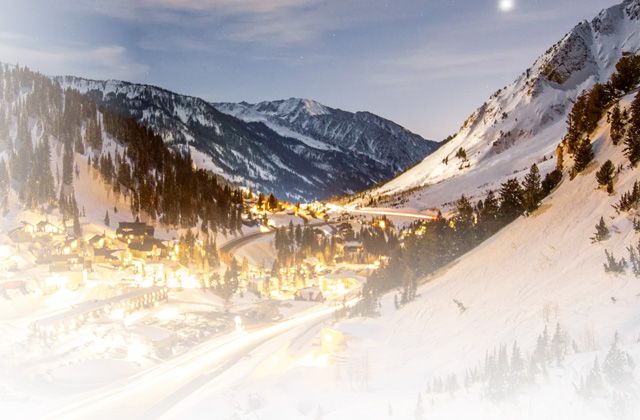
Looking down the canyon road from Alta’s perch at the top of it. This week, the resort’s GM argued that in lieu of waiting 20 years for a gondola, there are traffic relief measures that can be taken more immediately. Image: Alta
Next up, is a topic we just know you’re all dying to hear more about this off season: Utah’s traffic issues in Little Cottonwood Canyon. If you’ve somehow avoided hearing about this debacle in recent years, here’s the long and short of it: due in large part to the inclusion of its world class resorts on multipasses, traffic to and from iconic Utah destinations such as Alta and Snowbird has become unbearably problematic in recent years. Between weather issues, accidents, and packed parking lots, traveling to and from these resorts has become a logistical nightmare for visitors, locals, and employees alike. As such, the Utah Department of Transportation has been working since 2018 to attempt to solve the issue. To date, their array of implemented and suggested solutions have included increasing bus routes, adding tolls, widening of the roads, the creation of a railway, and of course the most controversial of them all, the installation of an 8 mile long gondola. This week, we came across two articles that highlight the ongoing struggle of solving the issue.
First up on that list is an update from the gondola side of the solution. As a quick recap, that plan was officially endorsed by the Utah Department of Transportation (UDOT) last July, and is, in theory, set to move forward with an expected completion date of 2043. While the solution has been met with a fair share of both support and backlash, it’s important to note for this week’s story that Alta has historically been seen as being “team gondola.” This week, however, that support may have taken a step back as Alta’s General Manager, Mike Maughan, published a letter he called the “Red Snake Letter.” In that open letter, which was co-signed by a number of Alta businesses, Maughan takes a step back and proposes a new idea that he believes would help alleviate the worst of the traffic being created at the very top of the canyon, where Alta is located. Rather than implementing more bus routes, or roadway tolls, or even a gondola, Maughan has a simple idea: add a stoplight. In his argument, Maughan points out that a bulk of the traffic his guests encounter comes at the very end of the day as they wait for Snowbird (and the rest of the canyon) to clear out. At issue is the simple fact that when it’s time to go home, Snowbird guests, who are located further down the canyon road, are able to merge freely with those descending from Alta. That, in combination with the way the roadway is set up, enables Snowbird guests to “pass” roughly 50 Alta cars as they exit the Snowbird lot on an average day. Even worse, on days when the main route is closed and only the bypass is open, roughly 500 vehicles from Snowbird will merge with every 2 from Alta. While these numbers seem insane, Maughan has one simple solution to ease the pain: the implementation of metering lights, such as those already found on busy interstate onramps. In short, these lights would help regulate the flow of traffic at the end of the day, ideally resulting in a much more reasonable ratio of three Snowbird cars for every two Alta cars. While this proposed solution doesn’t necessarily put an end to Alta’s support for the gondola concept, Maughan’s letter makes it very clear that as a business owner, he’s particularly interested in solutions that can be implemented immediately, not in another 20 years. For more on this, you can check out the letter itself here, or the recap from the Salt Lake Tribune.
In other Utah travel news this week, we also want to quickly highlight a story that underscores the issues plaguing ski traffic in Utah, as there really are no easy answers. Of the many solutions that UDOT has attempted to implement in recent years is an increased volume of buses running up and down both Big and Little Cottonwood Canyons, utilizing the Utah Transport Authority (UTA). That solution, as simple as it seems, would aim to reduce traffic by shuttling people into the resort. Unfortunately, it’s proven to be much more difficult in practice as UTA has actually had to reduce its ski bus operations in recent years due to being unable to find enough licensed drivers to run the routes. After two years in which the UTA downsized the volume of ski buses running, despite striving for the opposite, they announced last week that they will likely be working with third party transportation companies in the upcoming season to add more ski buses to the schedule. That was generally seen as a positive update for many who’ve long wanted more ski buses running the canyon, although the update wasn’t unanimously loved. Despite being unable to provide enough drivers for the UTA in recent years, the unionized bus drivers who work for UTA have begun protesting the announcement, citing contractual obligations between their union and the UTA. While their gripes are legitimate, the underlying theme here is constant frustration as progress towards improving Utah’s ski traffic issue continues to feel impossibly slow. For more on this, check out the initial announcement from the UTA here, as well as this week’s update regarding the upset workers.
#4: Utah’s Skiing Politician, Caroline Gleich, Receives Utah’s Democratic Nomination for Senator:
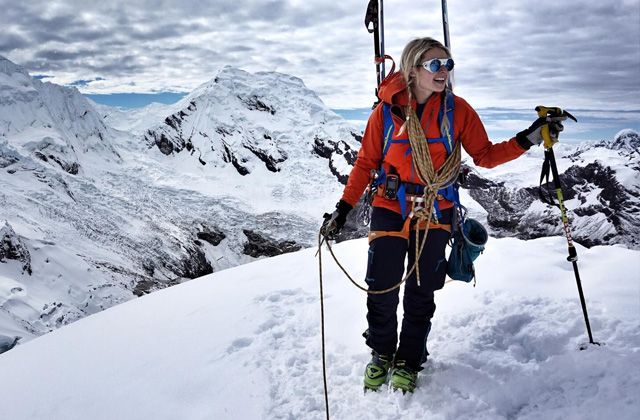
At just 38 years of age, Caroline Gleich might not look like your typical U.S. Senator. To her, that’s kind of the whole point: her candidacy represents a shift in politics. Image: Caroline Gleich on Facebook
Finally, we want to round out this week’s ski news with another piece of Utah ski news, although one that’s a little bit different from our normal coverage. To end this week, we very simply want to give a huge shout out to Utah based skier, mountaineer, and now politician, Caroline Gleich. If you read our January 12, 2024 recap, then you likely saw our coverage of Gleich declaring her candidacy for the senate seat opening up in Utah upon Mitt Romney’s departure. This week, we learned that Gleich officially earned the Democratic party’s nomination just over two weeks ago, having won the primary back on April 27th. Not only that, but Gleich won the election in landslide fashion, earning 92% of the party’s votes. While she has a massive challenge ahead of her, as the state hasn’t elected a Democratic senator since 1970, having such significant support within her own party bodes well for her efforts.
Now, we know what you’re probably thinking right now: “Since when did Top 5 Fridays become a political newsletter?” While we acknowledge the fact that this highlight is inherently political, that’s not our main reason for sharing the news. Rather than focus on political alignments, we really just want to highlight the fact that one of our own is making a push to make her voice heard on such a massive stage. While Gleich’s agenda is far reaching, one of her key points is an emphasis on environmental stewardship and legislative action to combat climate change. For us, that’s the real story here. We’ve talked countless times here on Top Five Fridays about how the ski industry is in a unique position to not only have a vested interest in combating climate change, but also has the potential to have our voice heard, thanks in no small part to the affluent nature of the sport. Heck, that topic came up just a few weeks ago when we shared comments from Alterra CEO Jared Smith, as he talked about how his strategic approach towards climate change all hinges on being able to have conversations at a legislative level. Gleich’s candidacy is an extension of that, as her ultimate goal is to be a representative of Utah’s skiers at the nation’s capital, where she’ll surely go to bat for environmental policies that support sustainable outdoor culture. For us, that’s the story here. While she has a long way to go and a tough battle ahead of her, at the end of the day, Caroline Gleich is one step closer to putting a skiing politician directly on Capitol Hill. For more on this, check out the report from Utah’s KSL.