

Top Five Fridays: May 16, 2025
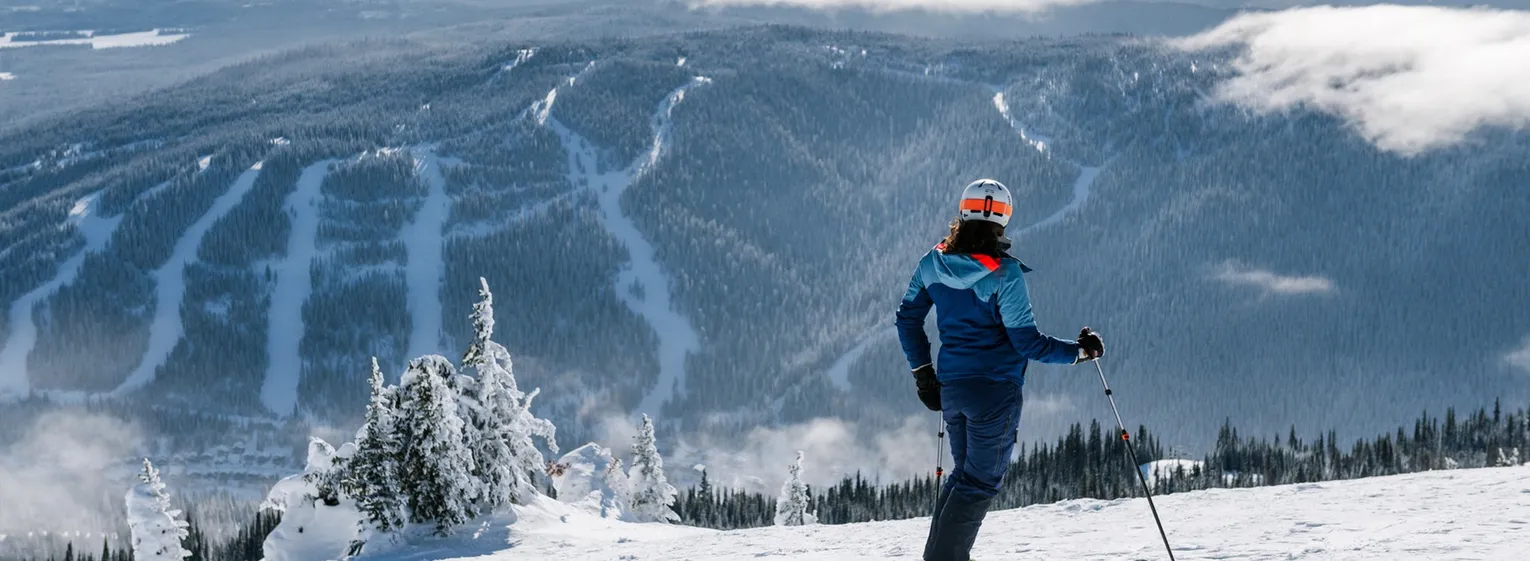
Looking out from Sun Peaks Resort in British Columbia. There, the resort has just invested a significant amount of money in snow farming equipment, and for good reason. More on that below! Image: Sun Peaks Resort on Facebook
#1: The Results Are In: This Season Was the Second Busiest on Record:
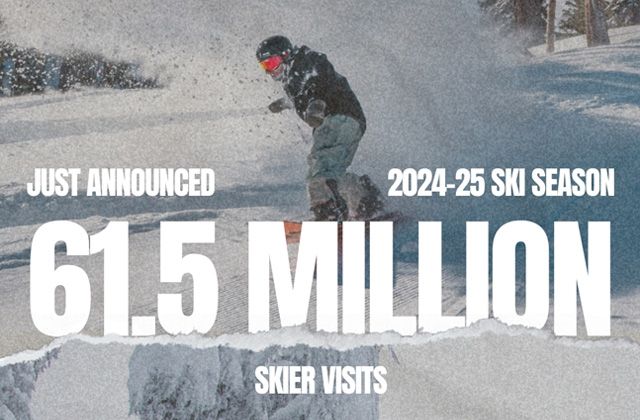
We did it you guys. Second best season ever! Image: NSAA Post on Instagramm
Hello, and welcome to Top Five Fridays, the May 16, 2025 edition! This week, we happen to have two of our annual updates to share with you: this season’s skier visitation numbers, and next year’s (provisional) World Cup Alpine schedule. We’ll tackle those topics in highlights one and two, before moving onto a couple of highlights that share a pair of intriguing stories from two small ski areas in North America. Stay tuned for more on that, but for now, let’s see how we did this season.
Before jumping straight into this season’s skier visit statistics, let’s take a quick moment to look back on recent history to set some context. If we turned back the hands of time, all the way back to the 2011/2012 season, we’d find ourselves at the start of a seven year slump. Over the course of the 2010’s, the ski industry saw a definitive downturn in interest, with that 2011/2012 season seeing just 50.9 million skier visits. During that seven year stretch, four seasons failed to crack the top 25 busiest seasons since the 1978/1979 season and only three broke the top 20. To say the sport was on the decline would’ve been a reasonable claim to make. Then, Covid hit. Since then, the ski industry has rebounded, with the 2021/2022 season marking the second most skier visits ever, bested only by the 2022/2023 season, which was the busiest on record. While last year took a slight step back, it still ranked 5th overall, with 60.48 million visits recorded. Keeping all of that in mind, how have we done so far this year?
Well, pretty darn good actually. This week, the National Ski Areas Association (NSAA) released their skier visitation statistics for the 2024/2025 season, and despite early warnings from Colorado that numbers might be down this year, the opposite was actually true. While there are still resorts operating in the U.S., and this number might trickle up a little further, the current report says that ski resorts have seen a total of 61.5 million skier visits this season. That number puts the 2024/2025 season at second place overall, trailing the 2022/2023 season by 3.9 million. Perhaps more importantly though, it also marks the fourth straight season of hitting the 60+ million mark, the first time that’s ever happened. As such, NSAA CEO Michael Reitzell has declared, “The 2024-25 season may come to represent a new baseline for the industry.” While that might seem a touch pre-emptive for skeptics who worry that current statistics are an unsustainable trend, it should be noted that Reitzall also stated that the industry has hit its goal of having “a three-year rolling average of 60 million skier visits,” with this year being the fourth consecutive to hit the mark.
While the total visitation number is always the highlight of this annual report, it also includes a handful of other intriguing insights. For example, in addition to national skier visits, the report also teases some regional numbers, although we’ll have to wait for the official results to be added to the historical data table to see more details. Beyond skier visitation numbers, the report also shares information regarding additional trends within the industry, such as an increase in visits to small and medium size resorts and an increase in the number of resorts operating, growing from 484 to 492 last season. For those of you with an insatiable appetite for data, the report also contains information regarding regional snowfall impacts, the percentage of multipass mountain visits, the expected value of total capital investments, and much more. If you’re the type who loves nerding out on this kind of stuff, today might just be one of the best days of the year. To learn more and see the report in full, click here.
#2: Racer’s Ready: The 2025/2026 FIS Provisional Schedule Just Dropped:
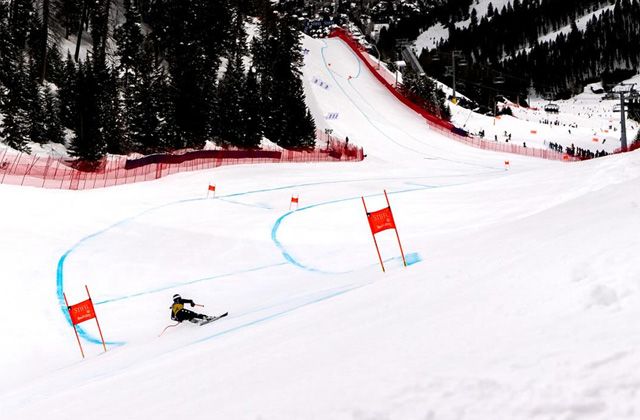
After what was an action packed year of FIS World Cup alpine races in North America, including the finals in Sun Valley, the region's presence on the tour is being reduced next season. Don’t worry though, it’s due in no small part to Killington taking a year off, and we’ll likely see more races again in the 2026/2027 season! Image: U.S. Ski and Snowboard Team on Facebook
In other “annual ski news” news this week, the FIS has just released their provisional World Cup schedule for next season. Now, before we jump into this one, we do want to emphasize the use of the word “provisional” here, as it’s worth noting that some dates and locations might change. That said, it’s not as if every date and every venue is going to change, so ultimately this gives us a pretty good idea of what to expect. With that disclaimer in mind, let’s jump in.
First things first, the big news for us here in Vermont is that Killington will not be hosting a World Cup race this year for the first time in eight years. Don’t worry though East Coast alpine race lovers - the absence of Killington on the calendar is planned, expected, and ideally, temporary. The reason for it? Killington is installing a new chairlift on Superstar and the trail isn’t expected to reopen until December of next year. Plus, there’s a silver lining here: with Killington giving up hosting duties for a year, Copper Mountain, Colorado is taking a turn, hosting a men’s Super G and Giant Slalom race on Thanksgiving and Black Friday, followed by a women’s Giant Slalom and Slalom race over the weekend. For the men in particular, this new venue is quite favorable as the following week they’ll only have to travel to Beaver Creek, CO, where the Birds of Prey Downhill, Super G, and Giant Slalom races will occur over the course of the first weekend in December. Unfortunately though, these will be the only U.S. based races this season, while Tremblant will once again hope to host a pair of Giant Slalom races on December 6th and 7th, marking the only other North American stops.
Beyond this North American news, there are three other notable events on the calendar. The first, although not an FIS event, is the 2026 Winter Olympics, occurring from February 6 - 22nd. In other words, almost the entire month of February. As such, the World Cup itself is expecting to take the month off, with the first post-Olympic races scheduled from February 28th - March 1st for both the men and women’s circuits. The second big event on the calendar is the World Cup finals. After hosting them for the first time ever in Sun Valley, Idaho last year, the finals are heading back to Europe, where Norway’s Lillehammer will play host for the season ending event. Finally, the third and arguably most exciting event on the calendar are the first races of the year: a men’s and women’s Giant Slalom at Sölden, Austria, scheduled for October 25th & 26th. While there’s a long time between then and now, you can be sure we’ll keep you up to date with all the latest off-season news as it comes to us. For now, take a look at the full calendars and more details from SkiRacing.com.
#3: Pottawattamie County, Iowa Exemplifies What Municipal Ski Area Ownership Should Look Like as it Expands Summer Offerings:
Believe it or not, the Stifel U.S. Ski Team isn’t the best in the world, despite having excellent participation and financial backing. Being the best is the goal however, and now there’s a plan to get there. Image: US Ski Team on Facebook
Alright, now that we’ve got our two annual updates all wrapped up, let’s move onto a couple of niche stories from small ski areas where novel efforts are under way. First up in this thematic doubleheader is news from Crescent Hill at Hitchcock, a small county owned ski area located just 20 minutes north of Omaha, Nebraska. There, Pottawattamie County has big plans for the ski area that it’s owned since 2021. Before we dive into those, let’s take a quick moment to wrap our heads around the background of this unique story.
As you probably know, the greater Omaha area isn’t exactly known for its skiing. Heck, it’s not even known for its geography - although maybe it should be. Located just east of the city, and more or less forming the Iowa/Nebraska border, is a unique geological formation that exists in only one other place on earth: Shaanix, China. Known as the “Loess Hills”, this 15 mile wide, 200 mile long formation is reminiscent in landscape to sand dunes, but instead of sand, is instead made up of fine, silt like soil called, you guessed it, “loess.” In addition to being globally significant and quite picturesque, this area is also home to most of Iowa’s remnant prairie, the Hitchcock Nature Center, and of course, Crescent Hill. At this point, the story of this area should be becoming clear: this unique bit of geography is an incredibly important outdoor recreation asset for the region. Now, Pottawattamie County is announcing plans to make it an even more integral part of the community.
Since purchasing the ski area in 2021, Pottawattamie County has done two things. First, it’s proven that it can successfully operate a ski area without burdening taxpayers. In fact, not only that, but operating the ski area actually costs taxpayers significantly less than its other public parks as Crescent Hill operates as a business and generates most of the money required to support it. The second thing the county has done with the property since purchasing it, is hire a consulting firm that specializes in recreation and resort planning to develop a master plan for the area. This week, we’re starting to learn more about the outcome of this process.
While the unveiling of the master plan isn’t scheduled until the end of this month, we learned this week that the county has plans to turn Crescent Hill into a year round outdoor recreation area. Keeping conservation at the center of the plan, the overall goal will be to create low-impact summer recreational activities such as hiking trails, improved facilities, and a bonfire pit. In addition to these ideas, we also know a handful of the other concepts being considered, courtesy of documents shared from a public open house session. Again, while we won’t know which of these ideas will make the cut, we do know that the public was asked for input on a variety of concepts, ranging from mountain coasters and mountain bike trails, to wedding venues and music festivals. In other words, Pottawattamie County is doing what it can to maximize the unique area’s potential, creating an amazing community resource, acting as stewards of the land, and without adding financial burden to taxpayers.
For us, that’s really the story here. The concept of community owned ski areas has slowly crept back onto our radar this season, with stories from Big Tupper and Eldora highlighting the concept. While community ownership didn’t come to fruition in Big Tupper, and Eldora’s efforts are yet to be realized, it’s reassuring to know that the model certainly can work, and that there’s an excellent example to follow currently happening in Pottawattamie County. For more on this, check out the report from 3 News Now, or read more about Crescent Hill’s master planning effort.
#4: Canadian Ski Resort Sun Peaks Invests in Snowfarming, Guaranteeing Ability to Host Early Season Alpine Training Camps:
Finally, rounding out our highlight reel this week is an update from Sun Peaks Resort in British Columbia, Canada. There, the resort has just made a significant investment in 18 Snow Secure mats which will be used for the preservation of snow over the course of the summer. Now, to be clear, this concept called “snowfarming” isn’t new to us here on Top Five Fridays - we’ve covered it several times over the years, most recently just this past November when Levi was able to host the first FIS slalom races of the season, thanks to their snowfarming efforts. What makes this week’s update notable though isn’t that we’re sharing something new, but rather we’re reporting on continued progression of the trend. Allow us to explain.
Sun Peaks resort has just become the first Canadian ski area to invest in Snow Secure, insulated mats, joining just a few U.S. resorts who have them as well. What makes this even more interesting though, is that the 18 mats came at a price tag of $170,000 - not an insignificant sum of money for a modest ski resort. There’s a reason for the investment though. With the use of the Snow Secure mats, Sun Peaks hopes to retain approximately 14,000 cubic meters of snow. If all goes to plan, the resort will then use it to open their OSV run in November, which acts as a training ground for alpine ski teams in the area. In other words, being able to guarantee snow to host early season training camps comes down to a business decision for the resort.
For us, that’s really the story here. While snowfarming has ramped up in usage in Europe, here in North America it’s been mostly relegated to a novelty. Jay Peak, for example, is currently farming a pile of snow for a rail jam in June. There, it’s a matter of simply piling up snow, covering it in hay, then a tarp, and then seeing how much is left on the summer solstice. The difference between that version of snow farming and what Sun Peaks is doing, isn’t just the $170,000 upfront cost, but also the purpose. At Jay Peak, it’s a marketing effort and a cool way to get people back on snow in June. It’s not a financial matter though. But at Sun Peaks, it very much is. There, the mountain has invested significant resources in an effort to ensure that they’ll be able to open and host camps in November. While they’ll certainly have snowmaking equipment at their disposal as well, we’ve all seen how inconsistent the weather can be in late fall. This gives Sun Peaks an economic guarantee. For us, that’s the story. Snowfarming is beginning to move from a novelty in North America, to a calculated financial decision. To learn more about this, check out the report from Castanet.net.
#5: And Now, Your Edits of the Week: SLVSH Just Held Their First Ever Game at the NINES, and Let’s Just Say, Things Got Wild:
This Jib League Bonus Edit, Courtesy of Jiberish, is Well Worth a Watch:
Finally, Head into Your Weekend in “Cruise Control”, a Buttery Smooth Park Skiing Edit Coming to Us By Way of Trysil and Geilo:
*** Warning: Soundtrack Contains Some Vulgarities ***