

Top Five Fridays: November 22, 2024
It's that time of year again! Our Black Friday Sale is BACK! Well, almost - you'll know when it's actually here. The details though, the details are here, and you can learn all about what to expect in a special bonus highlight brought to us by Jeff!
#.5: A Special Announcement from Jeff: It’s That Time Again! Black Friday is Upon Us, and Our Deals Are Better Than Ever:

Bonus Topic! Our Black Friday Sale has begun! Although we’re technically a week before actual Black Friday, our sale starts today! We have a whole slew of great deals for you from new 2025 gear to our heavily discounted outlet. To start, we’ve dropped prices on ALL ski & binding combos, snowboard & binding combos, and complete ski & snowboard packages. When we say ALL, we mean it! Every combo or package on our site has seen its price drop $50 overnight, including 2025 gear.
To sweeten the deal, we’ve brought back our Free Base Treatment offer for all 2025 skis and boards, including these combos. That means between the extra $50 discount and the Free Base Treatment, you’re getting $250 in value on your purchases. This is an extremely unique offer and unlike anything we’ve done in the past for Black Friday Sales.
In addition to these new ski and board deals, our Outlet has had prices slashed across the board. Of course we have some awesome prices on past year skis and boards, but you’ll also find lower prices on apparel, helmets, goggles, gloves, mittens, and so much more.
We love our SkiEssentials family and are so excited to bring you these holiday shopping deals. As always, don’t hesitate to reach out to our customer service team if you have any questions about what’s right for you!
#1: FIS World Cup Updates: Big Success for Shiffrin in Finland::
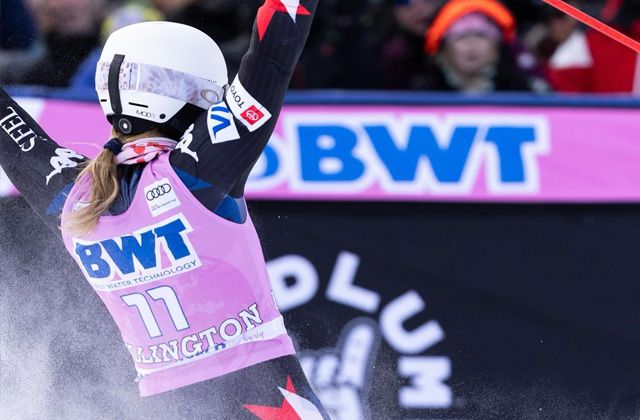
In addition to Mikaela’s results from Levi last weekend, this week’s snow control approval at Killington also greatly improves her odds of earning her 100th win in front of the home crowd. Image: U.S. Ski and Snowboard Team on Facebook
And now, back to our regularly scheduled programming:
Hello, and welcome to Top Five Fridays, the November 22, 2024 edition! First and foremost, congratulations to all of you with plans to ski this weekend - you’ve officially survived the off season! In our particular nook of Vermont, we’d hoped to be skiing this weekend, but this week brought warm temps and mild rain to the region instead. But, the good news is that our warm weather is expected to cool through the weekend, bringing potential for snow at higher elevations. So while we may not be skiing here in Northern Vermont quite yet, our hope is that it’s just a week away. Until then, there’s plenty of ski news to talk about, so let’s dive right in!
Starting, as always, with FIS World Cup action, we have particularly exciting news from the Mikaela Shiffrin camp. If you’re someone who watches the Top Five Friday recap videos that Jeff and Bob put together each week (which, if you don’t, you should - they’re equal parts hilarious and informative), you might recall Jeff covering the first highlight last week with a bit of skepticism. In that highlight, we shared coverage from the FIS that highlighted the fact that Mikaela Shiffrin has a very real chance of earning her 100th career win at home in Vermont next week. Noting that Shiffrin has a history of success in Levi where she raced last weekend, I, Matt, reported on this rare and unique history making opportunity. Jeff, noting the need for Shiffrin to win three out of four races, doubted the odds. And what did Mikaela Shiffrin do? Well, she went ahead and won the race of course.
Last Saturday night, under sometimes rainy, sometimes snowy skies, Shiffrin put together a slalom masterclass. After her first run, Shiffrin held a .6 second lead, which she grew to .79 after her second run. In doing so, Shiffrin’s roll of accolades became even longer as she notched her 98th career win, as well as her eighth Levi reindeer. Of course, as you should know, when it comes to the Women’s Alpine Team, it’s rarely just Shiffrin earning points at these events, and last weekend was no different with Paula Moltzan taking home an eighth place finish. While the season is certainly very young, it’s worth making note that Moltzan now has an 11th place and 8th place finish in her first two races of the year, suggesting that she too could be in for a remarkable season.
On the men’s side of things, you might also recall our discussion last week regarding the overall strength of men’s slalom skiing at the moment. In case you missed it, the long and short of that update is the fact that men’s slalom skiing is in a bit of a golden age right now, with the upper echelon of the sport being dominated by 4 to 5 ridiculously talented athletes. While that’s not an “excuse” for the U.S. team per se, it at least provides some additional context as to why they seem so much stronger in speed events than technical events. With all of that in mind, it’s with significant excitement that we share the news that U.S. athlete Ben Ritchie took home a solid 13th place finish in last weekend’s race in Levi. That result marks a career high for Ritchie in his first race of the season. Looking back over the last few years, there’s a pretty clear trendline for Ritchie, suggesting that while the discipline of slalom might be jam packed with talent, there might still be space for Ritchie if he can continue on this trajectory. To see a full list of results from the men’s slalom in Levi, click here.
As for what’s next? Well, this weekend both the men’s and women’s circuits are in Gurgl, Austria for another pair of slalom races. In a perfect world, Shiffrin would secure another win, earning her 99th career victory, putting her in position to win her 100th in Killington and drastically increasing my chances of proving Jeff’s skepticism wrong. Of course we all know it’s a far from perfect world, so we’ll have to wait and see how this weekend’s events play out. As always, we’ll be back next week to give you a full update.
#2: Nederland, CO Hopes to Become New Owners of Eldora Mountain Resort:
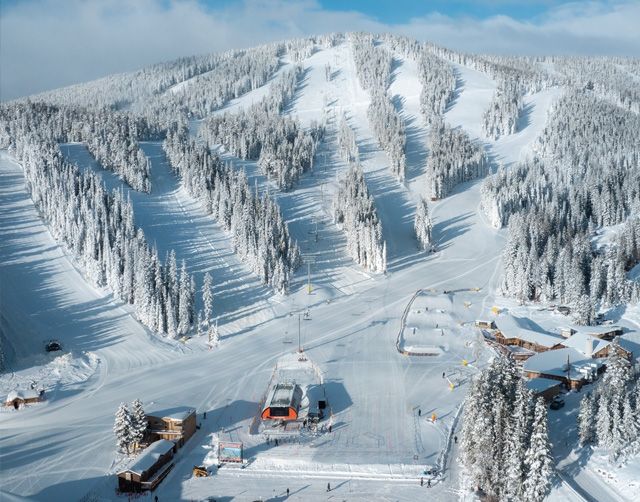
A look at Eldora Mountain Resort in Nederland, CO, where the local government is embarking on a “moonshot” mission to buy the mountain. Image: Eldora Mountain Resort on Facebook
Taking a quick break from FIS news, our next highlight this week comes to us by way of Nederland, Colorado, where the town has officially announced its intention to explore the possible purchase of Eldora Mountain Resort. Now, there’s a bit to unpack with this story, so let’s start at the start, with the whole reason why Eldora is available for purchase at all. This past August, news broke that POWDR Corp had sold Killington Resort to a group of local investors. Along with that announcement also came the news that they had plans to sell Oregon’s Mt. Bachelor, British Columbia’s SilverStar, and Colorado’s Eldora. In the wake of this initial round of news, there has been plenty of talk regarding a grassroots movement amongst locals interested in buying Mt. Bachelor and returning ownership to the local community. Now, it seems as though that train of thought has made its way to Colorado, where local officials are considering a similar move as they recently announced that they’re exploring a purchase on behalf of the municipality.
In a story published by Colorado’s The Mountain Ear, we learn quite a bit more about the scene in small town Nederland, Colorado, where approximately 1,500 people, as well as Eldora Mountain Resort, call home. In the Mountain Ear article, author Christopher Kelley writes, “Skiing is Nederland. Nederland is skiing.” Ultimately that tells us all there really is to know about the tight relationship between the town and the resort. While we talk at length about mountain towns here on TFF, and the complex interwoven relationship between the resorts and their villages, Eldora Mountain Resort appears to be an example in which the two are connected even more tightly than most. Historically, as is often the case, this means the town has been subjected to the business decisions of the resort’s owners, for better or worse. Now though, perhaps in part inspired by the movement by locals in the Mt. Bachelor area or the already successful transition of a POWDR mountain to local owners in Killington, Nederland town officials are exploring what their future could be like if the town itself owned the resort.
In the words of town administrator Jonathan Cain the purchase is admittedly, “a bit of a moonshot, but it’s a moonshot that would create resiliency within our community, so I think it’s worth exploring for that reason alone.” Should this moonshot land, the vision behind the ski area would be refreshingly simple, with Nederland Mayor Pro Tem Nichole Sterling referring to the vision as, “a locals-first sustainable mountain.” While you might be right to think to yourself that 2024 is a tough time for a town to decide to operate a ski area, there is something that Eldora shares with both Killington and Mt. Bachelor that could make it a successful venture: it has a unique competitive advantage. For Killington, that advantage is a proximity to both Boston and New York, as well as significant upgrades being planned at its base area. At Mt. Bachelor, the advantage is its unique 360° volcano-based trail map and long season. At Eldora? That unique advantage is that it’s the closest ski area to Denver, which makes its success all that much more likely. While local acquisition of the resort may in fact be a moonshot, we do hope it comes to fruition and love seeing this resurgence in locally-driven acquisition efforts regardless. For more on this, read the report from The Mountain Ear.
#3: Despite Decades of Local Opposition, the Development of Tahoe’s Olympic Valley is Back on Track:
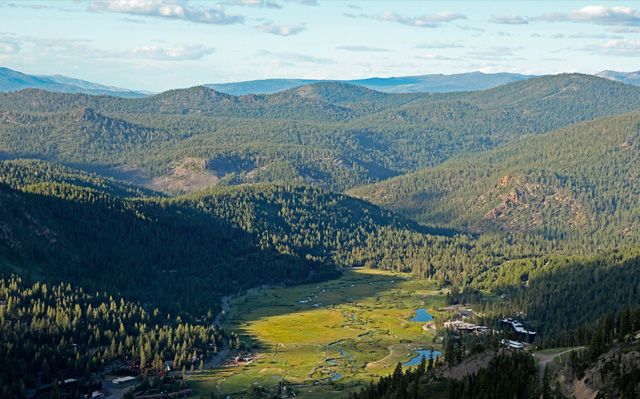
The view of Olympic Valley, where Alterra hopes to transform the land into a village at the base of Palisades Tahoe. Image: Palisades Tahoe on Facebook
For our third highlight (or lowlight, depending on who you are), we are once again revisiting the topic of development in Placer County, California’s Olympic Valley. Located at the base of Palisades Tahoe, the development of Olympic Valley has been a contentious battle that goes back over a decade. In what’s been the quintessential battle between economic development and environmental preservation, with the resort wanting to create a base village complete with hotels, retail, and a massive 90,000 square foot indoor waterpark and adventure center. Locals, on the other hand, have been fighting to stop the development for over 10 years, with legendary figures like Dr. Robb Gaffney (may he Rip in Peace) spearheading the resistance. Until recently, the fight to stop the development had taken the lead, with California’s Third District Court of Appeals ruling in 2021 that Palisades would have to revise its environmental impact statement, forcing Placer County to rescind its previous approval. Just 60 days later though, Alterra restarted the process by resubmitting its development master plan for public comments, of which 2,700 came back largely opposing the project. Fast forward nearly two years and Alterra finally re-resubmitted their plan to the Placer County Board back in August, after taking time to make sure it addresses each of the 2,700 comments. This week, the Placer County Board voted unanimously to approve the newly submitted master plan.
As you might guess, that decision has been met with serious disappointment and frustration as the county board seems dead-set on moving the project forward despite significant local opposition. In the meeting in which the decision was announced, it’s reported that a large majority of the crowd was opposed to the decision, with members of the community expressing frustration that despite the plan being rejected by a higher court three years ago, the same exact plan has just been reapproved.
In addition to the expected frustrations though, there was also a new emotion present in the building: resignment. After fighting the development for over a decade, the unanimous decision to approve it yet again was a bit of a gut punch to the local opposition who seemingly realized that their local government and Alterra could not be deterred from moving forward with the project. Rather than continue fighting it, some locals began to pivot, deciding instead to plea for the county to hold Alterra’s development team to strict timelines and environmental guidelines to prevent the project from taking longer than its already 25 year scope and vast environmental impact.
And that’s the latest news, as it stands this week. The development of Tahoe’s Olympic Valley - which was dead in the water three years ago - is now back on track. Of course there will likely continue to be opposition for years to come, but there’s also a growing feeling that, with the government and developers seemingly in lockstep, it ultimately cannot be stopped. We’ll stay tuned to see what happens next, but for now, learn what there is to know from SFGate.com.
#4: The FIS Limits the Use of Ski Jumping Suits, Educating Us on Their Intricacies in the Process:
This feels like a good time to revisit Ryōyū Kobayashi’s insane record setting ski jump from earlier this year.
Finally, we’re bookending our ski news coverage this week with a second FIS World Cup related topic, although one from a sport that we don’t tend to cover in depth. That sport is ski jumping, and this week we learned quite a bit about the technical details of ski jumping suits by way of an article from the FIS. First, let’s start with the headline: the FIS has mandated the use of microchips in all World Cup ski jumping suits. Why, might you ask? While your initial instinct might be to think along the lines of collecting motion tracking data, the answer is actually quite surprising. As it turns out, the implementation of microchips is meant to track each suit, and to ensure that athletes adhere to the new FIS rules regarding the maximum number of suits to be used within a season. To understand why this rule was made, and why its enforcement is so important, you need to dive into the wildly specific world of ski jumping suits.
When we first came across this article, we admittedly knew very little about these highly optimized outfits. To be totally honest, we kind of just assumed that they were pretty much the same as ski racing suits, but boy were we wrong. As it turns out, ski jumping suits are highly technical pieces of apparel that are just 4-6mm thick and highly optimized to improve flight. Due to the nature of the sport, it’s also incredibly important for these suits to fit as closely to the skin as possible as any excess fabric can create drag and reduce flight distances. As a result, the suits are constructed in 9 sections for men, and 11 sections for women, allowing them to create panels that better contour to an athlete’s figure. Additionally, these suits also contain tiny holes which affect their air permeability. These holes, as you might imagine, tend to increase in size the more often a suit is used. Between this and the fact that a suit itself can stretch over time, it is ideal for ski jumping athletes to use as many suits as possible each season in order to optimize their performance. And this, is where the FIS steps in.
In previous seasons, it would be totally reasonable for top athletes to cycle through 40 to 50 suits in a season. That methodology creates two major issues for the FIS though. First, it’s obviously very wasteful, and second, with suits costing between $750 - $875 a piece, that rate of usage is extremely expensive. Ultimately that creates a significant disadvantage for nations with smaller budgets who can’t afford to provide athletes with $30,000 worth of suits each season. As a result, the FIS has been working towards implementing a cap on suit usage, which they’ve just announced ahead of this season. Now, athletes will be limited to using one suit per competition and eight suits across the entire season, with an additional two suits available to be used at the World Championships. In order to enforce this new policy, the suits will be required to have multiple NFC microchips heat pressed into them in order to track their usage. The men’s suits will have chips pressed into the seven largest panels of the suit, while the women’s suits will have five. Once adhered, the chips will be unable to be removed, and will also be easily scannable by officials at the start and end of the course. All told, it’s a pretty interesting story, and one that makes for excellent conversation fodder at your next dinner party. To educate yourself on the intricacies of ski jumping suits, click here.