

Top Five Fridays: May 22, 2026
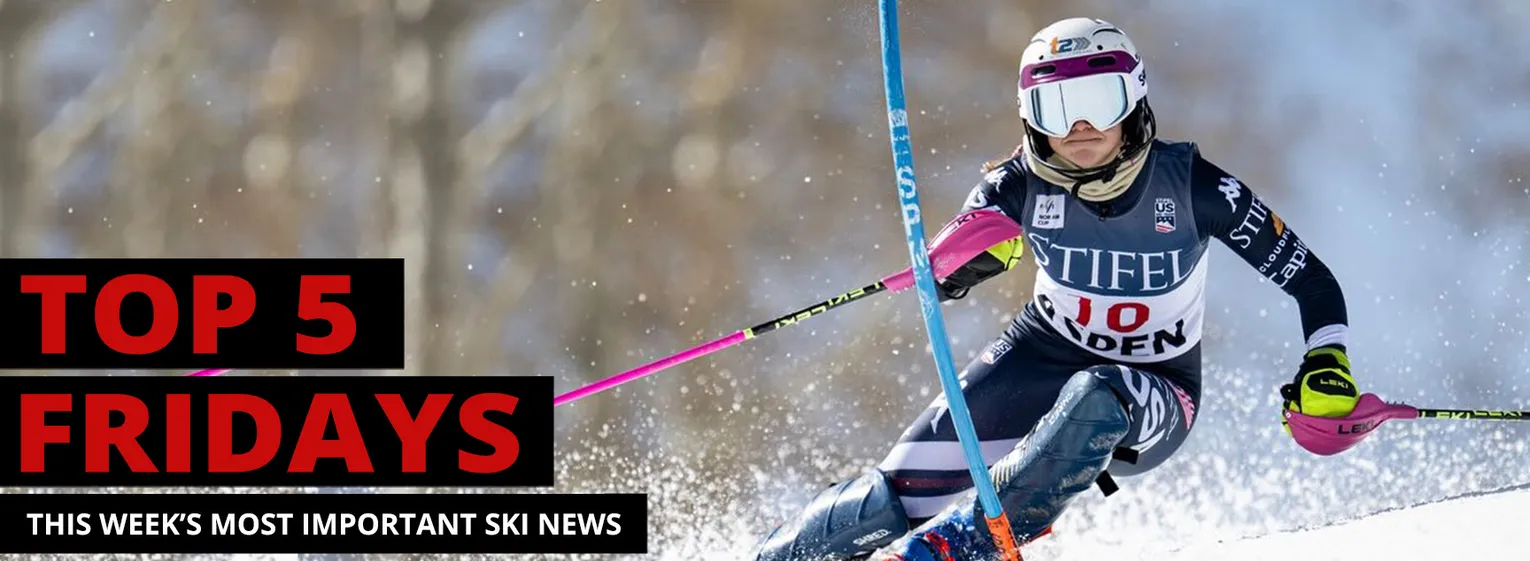
A shot of U.S. Ski Team nominee Beatrice May, who has unexpectedly found herself on the C Team as a result of her Downhill results this past season. Dive into her story in highlight #3! Image: Ski Racing Media on Facebook.
Hello, and welcome to Top Five Fridays, the May 22, 2026 edition! This week, our focus is primarily on several people within the ski world, with three of our highlights telling stories regarding unique individuals who represent very different aspects of our sport. From expeditions on Everest, to finding success in ski racing in unexpected ways, to turning beef with the president into something productive - we think this week’s edition of Top Five Fridays is full of particularly entertaining stories. Before we get into those however, we feel obligated to share with you a tense legal situation playing out here in New England, at Sugarloaf in Maine.
#1: Sugarloaf in Dispute with Franklin County Over $150,000 in Misappropriated Taxpayer Money:
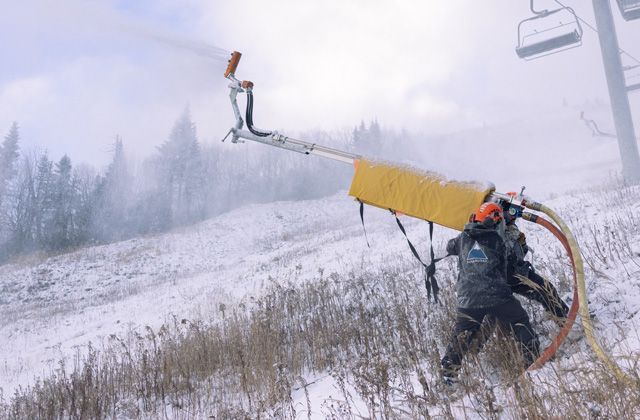
Image: Sugarloaf on Facebook
On Tuesday of this week, just as we were starting to monitor headlines for Top Five Fridays, one story popped up that immediately grabbed our attention: Sugarloaf Resort is currently at the center of a dispute regarding $150,000 in taxpayer money. The story goes like this: back in 2020, Franklin County, Maine, entered an agreement with Sugarloaf’s owners, Boyne Resorts, to provide $150,000 to help the resort build a dam on the south branch of the Carrabassett River, effectively turning Caribou Pond into a snowmaking reservoir. Noting the climate change troubles facing ski areas these days, as well as their inherent economic value to the surrounding area, government support in this situation seems reasonable.
All was well and good with this agreement until 2023, when Sugarloaf officials told County Administrator Amy Bernard that they were no longer pursuing the dam project. As it turns out, construction would have had to take place deep in the woods, down a dirt road that intersected with the Appalachian Trail. Whether for permitting reasons or other logistical challenges, the team at Sugarloaf cancelled the project. They did not, however, cancel their regularly scheduled invoices to the county.
As a result of the ongoing charges, Amy Bernard found herself taking a closer look at the situation. What she found was that not only was Sugarloaf continuing to charge the county for a project that was no longer happening, but they’d also charged them for expenses related to the project that pre-dated the agreement by two years. After catching onto what was happening, Bernard stopped paying the invoices immediately, and issued an invoice of her own: a $222,000 bill to cover repayment of the $150,000 subsidy agreement, as well as the additional expenses that were charged to the county that predated their agreement. That invoice went out at the end of 2024, and as of the time of this report, only $69,000 has been paid back.
Prior to this story becoming public, tensions had been bubbling between the two parties. After pursuing Boyne Resorts for repayment for over a year, Bernard had had enough, saying in March, “I’ve asked them too many times [for repayment] for me to feel comfortable saying, ‘we’re just going to sit on this.’” In the two months since, both sides have lawyered up in an effort to resolve the situation.
Looking ahead, it’s likely that this issue will be resolved, as realistically a disagreement over $153,000 isn’t that big of a deal for a company that’s valued at roughly $1.3 billion. Instead, the larger impact from this disagreement may be the county’s disinterest in working with Boyne on future projects. In the words of Bernard, “I wouldn’t recommend having a future project with Sugarloaf after this experience.”
To learn more about this story, check out the report from Bangor Daily News.
#2: Bartek Ziemski Has Just Skied Both Everest and Lhotse Without Oxygen in the Same Week:
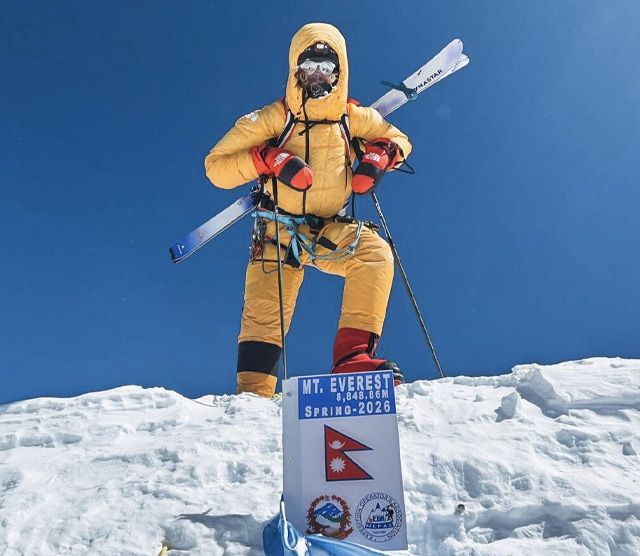
Bartek Ziemski on the summit of Mt. Everest, in a photo taken by an unknown sherpa who just happened to be there as well. Image: Explorers Web
Moving right along, our second highlight this week is arguably one of the craziest stories we’ve ever covered here on Top Five Fridays, and we don’t say that lightly.
This past Fall, ski mountaineer Andrzej Bargiel became the first person to ever summit and ski Mt. Everest without the help of oxygen. Doing so was a multiyear challenge for Bargiel as it took multiple efforts for the elements to align, allowing Bargiel to accomplish the feat. It was, and remains, one of the most impressive feats ever accomplished in skiing. That said, that story has been undoubtedly upstaged over the last couple of weeks by an understated man named Bartek Ziemski.
When it came time to write Top Five Fridays last week, the “first story out”, so to speak, was coverage of Ziemski’s successful unassisted ski descent down Lhotse, the neighboring peak of Everest and the fourth tallest in the world. While Bartek’s accomplishment was pretty impressive, we had plenty of other stories to cover already, and it wasn’t quite as impressive as Bargiel’s descent down Everest just a handful of months ago. As such, we passed on it.
This week however, Ziemski is back in the news and he’s accomplished something that we absolutely have to share with you: just 7 days after becoming the first to ski Lhotse, Bartek successfully summited and skied Mt. Everest as well, with neither Oxygen nor assistance. Or, to put it another way: this guy literally just walked to the top of Mt. Everest by himself, clicked into his skis, and skied down. We realize that sounds oversimplified, but in a sense, the story really is that simple.
After skiing Lhotse back on May 12th, Bartek returned to the basecamp that’s shared by both peaks. There, he gave an interview to Explorers’ Web, telling them that he also had a permit to summit Mt. Everest, and being Polish and without significant funding, he wanted to make an effort while he was there. Still, he was doubtful as there were two significant challenges: high winds in the forecast, and insane early season crowds. To put it in perspective, Explorers’ Web reported over 60 summits on the 18th, the day before Bartek’s effort. In other words, Everest is currently as crowded as it's ever been.
Despite these circumstances, Bartek found a way to the top. By acting alone, he was able to move quickly and respond with precision to weather forecasts. After intensely studying the predicted winds, he identified what he thought would be a calmer period at around 2 AM on Tuesday morning. By his read, that meant that if he timed it just right, he could hike through the night and summit in the early hours of Tuesday morning, during a window in which the wind was minimal. With that in mind, he left Base Camp on Sunday, arriving at Camp 3 later in the day. On Monday, he moved from Camp 3 to Camp 4, took a midday break, and then at 11 PM, he departed for the summit.
On his way up, Bartek was mostly alone - an incredibly rare occurrence on Everest at this time of year. He attributes the emptiness of the trail to the windy conditions, partial confirmation of which came by way of two downclimbers who he ran into on his ascent. These climbers informed him that they’d turned around due to high winds. Rather than turn around, Bartek trusted his reading of the forecast, slowed his pace, and kept climbing. His read paid off. By the time he reached the summit, the winds had almost completely stopped, dawn was breaking, and there were only three other people at the top: a sherpa and his two clients. Again, unheard of solitude on the mountain at this time of year.
From there, it was all downhill, and while the idea of skiing Everest sounds insane to nearly all of us, to Bartek it was pretty straightforward: “The first section from the summit was easy; it was just snow from the ropes to the edge. There was no cornice, so I skied down right on the top of the ridge.” While he admits that there were portions of the descent that weren’t as ideal, he tells the story with an underwhelming sense of ease that makes it seem like this was any other backcountry expedition for him. Except, it wasn’t. After successfully completing his 5.5 hour, 11,400 vertical foot descent back to Base Camp, Bartek had become the first person to ever climb Everest and descend it entirely on skis, not only without Oxygen, but completely solo and without the help of anyone else or even a climbing partner - a truly incredible accomplishment.
While it may be too soon to ask what’s next for Bartek, his answer to the question is somewhat amusing, telling Explorers’ Web, “Usually when I finish skiing a mountain, I already have some other peak in mind, but this time I can only think, ah, I don’t like the 8,000’ers thing anymore.”
To learn more about this insane accomplishment, check out the report here.
#3: There’s More Than One Way to Make the U.S. Ski Team. Case in Point: Beatrice May:
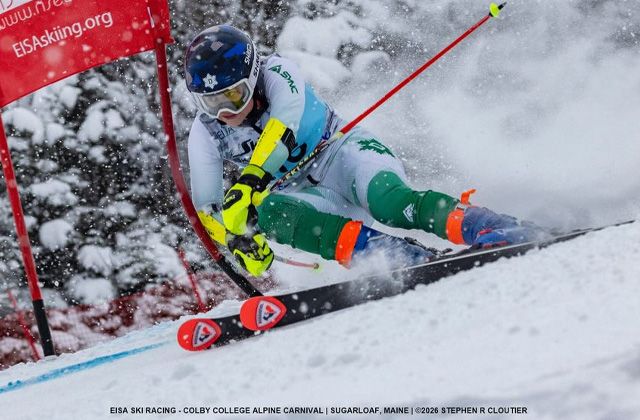
Beatrice racing at the Colby College Alpine Carnival. Photo taken by Stephen R. Cloutier. Image: Ski Racing Media on Facebook
If you’ve stuck with us here over the last few weeks, despite the ski season wrapping up for the summer, you’ve undoubtedly seen our coverage regarding the U.S. Ski Team nominations. Back on May 1st, we shared a document containing the U.S. Ski Team’s nomination criteria that highlights the different ways athletes can make it to each level of the team. While an A Team nomination is pretty straightforward, and the B Team is slightly more complex, it’s really the C Team where there are a myriad of routes an athlete can follow in order to earn a nomination. Case in point: Beatrice May, a college Freshman who started the year being largely unaware of the criteria, then found herself with multiple routes, and ultimately unexpectedly found herself on the team. Here’s how it all went down:
Back in September, Beatrice walked onto the campus at Dartmouth University for her first semester as a student. Having recently graduated from Burke Mountain Academy, May knew she would be joining Dartmouth’s ski racing team, and expected to spend the season furthering her development as a technical skier. Without putting too much thought into it though, May began racing in Downhill events at the NorAm level and found herself doing unexpectedly well. In fact, across all of her starts, May finished in the top 15 in all but one race in which she DNF’d, and earned 5 finishes in the top 10. All of this was so unexpected that May hadn’t even considered the U.S. Ski Team criteria, saying, “I hadn’t really looked at the criteria because I thought it didn’t apply to me.” When she finally did, she had just enough time to realize that she had a real shot of earning a nomination.
By the back half of the season, a few pathways began to emerge for May to earn a nomination. First, she was selected to represent the U.S. at the 2026 World Junior Alpine Ski Championship in Narvik, Norway, where she would compete in each event on the schedule. If she earned a top 10 finish there, as well as any combination of 2 top 30 Europa Cup finishes or NorAm top 3 finishes, she would earn a nomination. Unfortunately, the Downhill race was cancelled at that event, and Beatrice’s top result across the other races was 17th. As a result, by the conclusion of this event, this potential pathway had hit a dead end.
The second pathway that existed for Beatrice was through the NCAA, where two NorAm top 3 results, as well as a podium finish at the NCAA Championship races would get the job done. Unfortunately though, the NCAA Championships were happening at the same time as the World Junior Alpine Ski Championships. While May could have elected to compete at the NCAA level if she liked her odds of that pathway better, she opted for the international experience. As a result, this option was also dead to her by the end of her trip to Norway.
There was however, one more route remaining that provided a pathway to the U.S. Ski Team after the races in Norway. With one top 2 finish under her belt already, Beatrice needed two top 2 results across the final 6 races of the season in Aspen in order to earn the nomination. Things were certainly getting tight, but not impossible. Ultimately, Beatrice prevailed. In the second race of that 6 race event, May took home first place in the Downhill, meaning she needed just one more top 2 finish across the next four races. Two days later, in her very next race, she took home second in the Super-G, giving her her third top 2 result across the season and thus securing her nomination.
All in all, we found this to be a very interesting case study into what it’s like for up and coming alpine athletes. In Beatrice’s case, having just come out of high school, neither Downhill nor the U.S. Ski Team were much of a consideration at all back in September. Now, eight months later, her entire life has changed as a result of a discipline she didn’t even know she was good at. Next year, May plans to accept the invite and join the team. While she also plans to continue her studies with Dartmouth, she acknowledges that this season has brought unexpected changes that require adjustment. While she’s not sure what’s next for her studies, she does know she’s ready to join the team. For more on this, check out the full writeup from SkiRacing.com. To see Beatrice’s results from the season, click here.
#4: After Being Called a “Real Loser” by the President, Freeskier Hunter Hess Has Flipped the Phrase into a Fundraising Opportunity to Get More Youth Involved in Action Sports:

Image taken from TheRealLoserProject.com’s homepage.
Finally, rounding out this week is a story from one of the faces of freeskiing, Hunter Hess. Now, this story is inevitably a bit politically charged, and as you know we try our hardest to stay politically neutral here on Top Five Fridays - for no reason other than wanting to provide a reprieve from the political world that can feel inescapable at times. With that in mind, please note that we’re going to do our best to tell this story without taking a political stance, not because we don’t want to, but because there are times and places for that and we like to think that Top Five Fridays is neither of those. With that in mind, let’s dig in.
As you might remember, U.S. Olympian Hunter Hess made headlines back in February during the Olympics as the result of the answer he gave during a press conference. During that Q&A session, Hess was asked how he felt about representing the U.S. during such a politically charged time, to which he answered that it, “brings up mixed emotions,” and that, “just because I’m wearing the flag doesn’t mean I represent everything that’s going on in the U.S.”. While that answer seemed neutral enough to some, for many it showed a lack of patriotism. Ultimately that backlash peaked when President Trump himself called Hunter Hess a “real loser” in a post made on Truth Social.
Now, months later, Hunter Hess has taken that incident and flipped it into something that’s undeniably positive with his Real Loser Project. Rather than let those words haunt him, Hess has flipped the now infamous phrase into a fundraising effort to help more people get into skiing. This week, he launched TheRealLoserProject.com, where he’s selling hats and tee shirts with the phrase on them. Here’s where it gets good though: rather than capitalize on the phrase for his own profit, Hess is donating all proceeds from the merch to STOKED, an organization that introduces underserved youth to action sports like skateboarding, snowboarding, and surfing. That organization’s mission is to not only forge lifelong connections between youth and action sports that they may not have otherwise become involved in, but also to teach them life skills like weighing risk vs reward, perseverance, overcoming fears, and all of the other values that these sports instill in us.
Regardless of where you fall on the political spectrum, it feels safe to say that encouraging more people to get involved in action sports is something we can all get behind. If this is something you feel like you’d like to support, you can either purchase some Real Loser merch over at Hunter’s website, or head over to Stoked.org to learn more or make a donation directly.