

Top Five Fridays: May 31, 2024
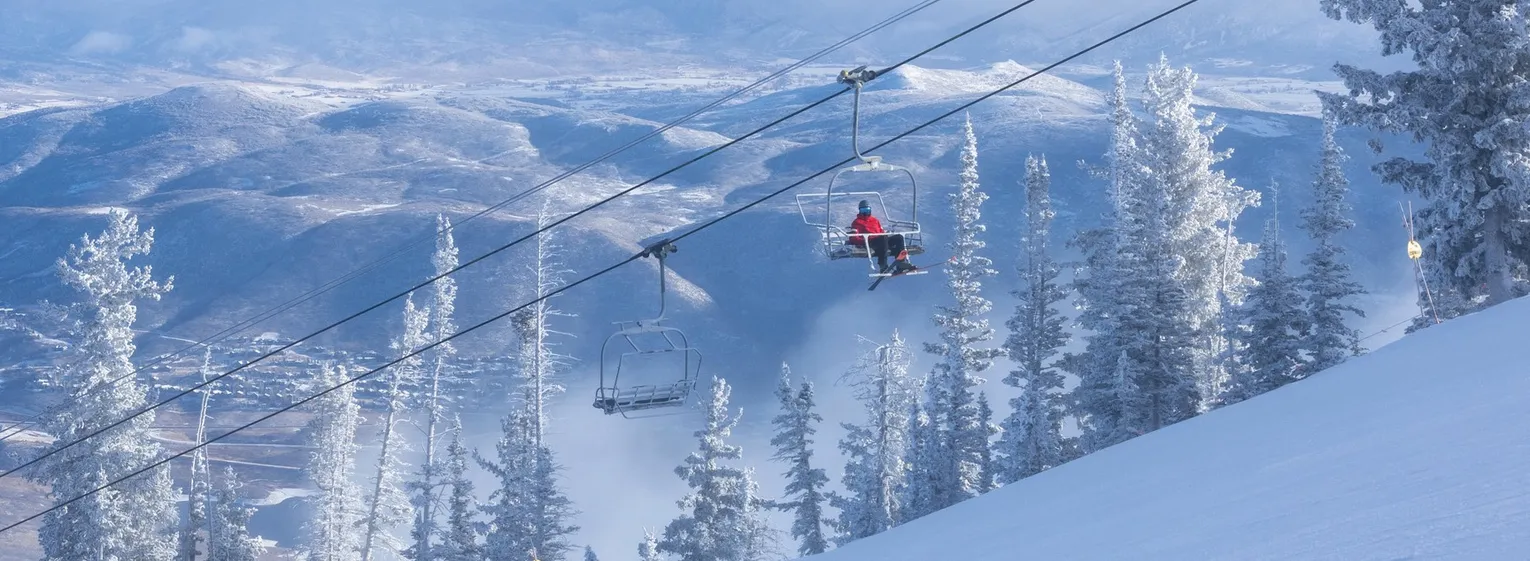
Lead Image: A skier rides the lift at Deer Valley, where the final piece of their expansion plan was just approved. Now the resort hopes to more than double in size by the start of the 2025-2026 season. More on the below! Image: Deer Valley on Facebook
#1: With Final Chairlift Approved, Deer Valley’s Mega Expansion Gets the Green Light:
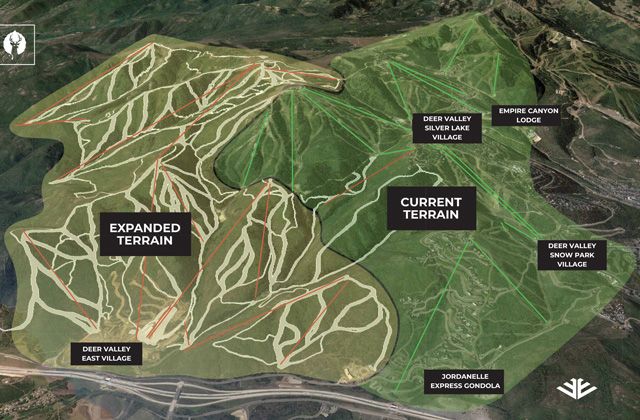
It’s impossible to understand the magnitude of Deer Valley’s expansion without graphics like this that highlight the resort’s existing footprint, as well as their footprint upon completion. Image: Deer Valley's "Expanded Excellence" Website
Hello, and welcome to Top Five Fridays, the May 31, 2024 edition! This week’s report is primarily sweet, with just a dash of spice in the fourth highlight. You’ll see what we mean in due time, but before we get too far ahead of ourselves, let’s start with the biggest news of the week: Deer Valley has officially received the approval needed to begin their proposed expansion.
As you might recall, it was just under a year ago when news broke that Deer Valley had acquired the rights to expand its ski resort into the terrain that was once destined to become “Mayflower Ski Resort.” When that announcement was made, it was huge news as it meant not only an end to the highly intriguing Mayflower Ski Resort project, but also a massive expansion to Deer Valley as the new terrain would take the resort from 2,025 acres to 5,726. Of course as we all know, ski resort development and expansion is never as straightforward as buying land and building lifts. Due to the crowds that ski resorts attract as well as their beautiful natural locations, there are a number of logistical and environmental boxes to check before projects like this can be fully approved. Ultimately, that’s what this week’s news is all about.
This week, the Park City Planning Commission granted approval for Lift 7, the final lift needing approval in Deer Valley’s expansion plan proposal. While Lift 7 in and of itself isn’t crucial for Deer Valley’s development plans, disapproval of it would have resulted in a reconfiguration of the Park Peak beginner zone at the very least. As such, Lift 7 carried the designation of being the final element needing approval before the development of Phase 1 of Deer Valley’s expansion could officially begin. Now, with that lift being approved, the entire first phase of the project has been greenlit and the project can get underway. With that, Deer Valley can begin adding their nine approved chairlifts, accessing four new peaks, and 3,700 acres of new skiable terrain. While you might expect a project of that size to take several years to complete, the resort is currently aiming to have construction completed ahead of the 2025-2026 season, at which point the land formerly known as Mayflower will finally be skiable for the first time. To learn more about this story, check out the full report from TownLift.com.
#2: Lawsuit Between Aspen Ski Co and Mountain Top Employee Regarding Compensation for Chairlift Commutes Coming to a Close:
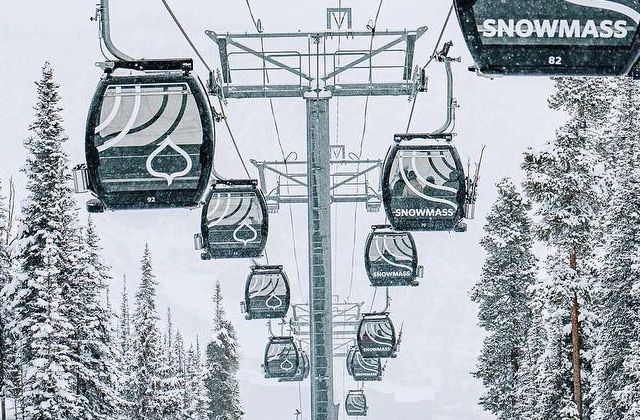
Should on-mountain workers be compensated for the time they spend commuting on gondolas and chairlifts? That question is at the center of a lawsuit hopefully being settled by Aspen Ski Co. by the end of the day. Image: Aspen Snowmass on Facebook
Next up in the news this week is the story of a somewhat niche lawsuit that could ultimately set a precedent impacting ski resorts across North America. In a report from Aspen Daily News this week, we learned that a lawsuit brought forth by one of the resort’s employees is nearing an out-of-court conclusion. In that lawsuit, a man named Craig Stout, who has worked at an on mountain restaurant at the resort since 2022, claims that Aspen Ski Co. owes him compensation for his time commuting to the restaurant via chairlift. In addition to his own situation, Stout and his lawyers have also made it a class action lawsuit, suggesting that any on-mountain Aspen Ski Co. worker who commutes to their job via chairlift, snowmobile, snow cat, or any other on-hill vehicle should also be compensated for their commute time. That aspect suddenly blows this issue up from one man debating non-payment for what likely equates to about 2.5 hours on his timesheet each week (assuming a half hour round trip, five days a week), to hundreds of employees arguing for an additional 2.5 hours of weekly wages. Even without running all of the numbers, you can see how this could become pretty costly for Aspen Ski Co. pretty quickly. While the case itself isn’t fully resolved yet, the Aspen Daily News article suggests that the parties have until the end of the day today (May 31, 2024) to either finalize a settlement, or provide the court with an update. In other words, an outcome is imminent.
Like we said in our opening sentence here, this is certainly a bit of a niche lawsuit, but it’s also one that gets our brains going. To us, it seems painfully obvious that an employee’s time should start as soon as they step foot on the mountain. Lift operators, for example, almost certainly get paid starting from the bottom of the mountain - not once they clock into the lift shack at the top of the lift. For patrollers stationed at the top of the mountain, it’s likely the same. In our minds, why would those working at restaurants, bars, and cafeterias at the top of resorts be treated any differently? All of that said, none of us involved with the production of Top Five Fridays have ever actually worked at the top of the mountain; all of our mountain jobs have been in the worlds of coaching and instructing, in which this isn’t a consideration at all. So on that note, we want to open up the conversation to you, our readers, by posing the question: Have you ever worked on top of a mountain? If so, were you paid for your chairlift commute time? We’re genuinely curious to know how widespread this issue is, and how far reaching the outcomes of this lawsuit could be. Let us know your thoughts in the comments below!
#3: Burke Mountain Academy Announces $30 Million Fundraising Campaign, with Goal of Eliminating Financial Barriers to its World Class Training Programs:
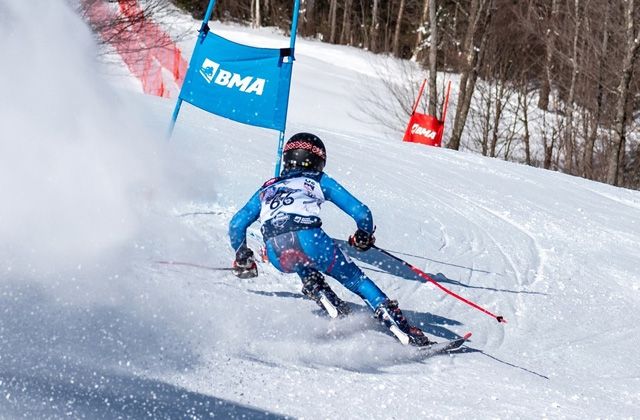
Recognizing both the importance of ski academies like their own, as well as the financial barriers to attending, Burke Mountain Academy has just announced a $30 million fundraising campaign. Image: Burke Mountain Academy on Facebook
For our third highlight this week, we want to share another piece of potentially niche news, but one that we think showcases the pulse of junior ski racing in America. This week, Burke Mountain Academy announced their “Chasing Greatness: Win from Within” campaign - a fundraising effort with the goal of generating $30 million in funds. Now before we dive into the story itself, allow us to provide a little bit of context. Burke Mountain Academy is located about an hour and a half to the east of us here in Stowe, at a mid-sized ski area called Burke Mountain. Functioning as a sports academy, in which high school aged athletes live, learn, and develop their skiing skills, Burke Mountain Academy has played a significant role in the development of some of the top talent in skiing. Amongst its alumni are names like Nina O’Brien, Shane McConkey, and Mikaela Shiffrin. Yes, you read that right: both Shane McConkey and Mikaela Shiffrin are graduates of a remote mountain academy in Vermont.
Keeping that background information in mind, let’s circle back to this week’s news: the academy has launched a massive, $30 million fundraising initiative. Now, within that headline there’s really two stories. First, the initiative already has $20 million secured, meaning their goal is actually $10 million which is still quite the figure, but significantly less than $30 million. The second story here is in how the academy hopes to use the funds. While a portion of that money is earmarked for improvements to the academy itself, a significant amount is also being used to increase accessibility to the academy and its programs. Specifically, funds raised will be used for “Significantly growing BMA’s endowment to provide financial aid,” as well as, “Lowering the cost of Junior Program participation.”
In the past, we’ve talked quite a bit about how competitive ski racing is cost prohibitive, which ultimately leads to a decrease in the sport’s talent pool. While there may be thousands of athletes with the talents to potentially make the World Cup someday, that figure is dramatically decreased when you take into account the number of athletes who can afford the costs associated with the sport. We’ve also talked a bit about how, unlike many sports, the track to becoming a professional ski racer often doesn’t involve competing at the collegiate level. Instead, it often starts with development at the high school level, which carries over to making the national team at a development level. While there’s certainly room for improvement on that front, the fact of the matter is that by attending an academy like Burke Mountain Academy, an athlete’s chances of success increase dramatically.
Ultimately, that’s what we like about this story, and why we wanted to share it. Yes, a $30 million fundraising campaign for a private ski academy does sound a little otherworldly to a lot of us. However, when you consider the current state of the U.S. Ski Team’s pipeline, the typically prohibitive costs to become a professional ski racer, and Burke’s efforts to reduce those financial barriers, this story becomes less about a $30 million fundraising campaign, and more about an initiative which aims to provide opportunities for athletes who may have otherwise been priced out. For more on this, check out the report from SkiRacing.com.
#4: Winter Olympics Double Header: Salt Lake City Shares Venue Plans for 2034 Bid, While 2026 Milan-Cortina Organizing Committee Offices Raided by Police:
In the venue plans shared by the Utah Committee for Games this week, it was revealed that the 2034 games could host nearly all of the events in existing infrastructure, despite a 40% increase in sports since the city last hosted back in 2002. Image: Salt Lake 2034 on Facebook.
Finally, we’re rounding things out this week with a double update from the world of the Winter Olympics, where we have both good news and bad news. First, let’s start with the bad news: this week, Italian police raided the office of the organizing committee for the 2026 Winter Games in Milan-Cortina. That move was the result of suspicions that the bids were illegally rewarded to technology providers and sponsors for the games. More specifically, the investigation is the result of communications that were discovered between two former top executives of the Milan-Cortina 2026 Foundation and an unidentified businessman. In other words, to put this story in plain English, two former top executives undermined a fair bidding process by conspiring with a singular business to award them the contracts. While we don’t know what the incentive was for the two Foundation executives, we do know that their efforts rigged the bidding process, taking away the opportunity to win the contract from any number of other businesses. That, as it turns out, is illegal. If there’s one silver lining to this story though, it’s the fact that, “No current manager or employee of the foundation is under investigation,” according to prosecutors in the case. Still, it’s the continuation of a troubling trend in which Olympic organizing committees are routinely accused of bid-rigging and corruption. In addition to this week’s news, it’s worth noting that the Paris 2024 offices were also raided about a year ago, the 2020 Tokyo Olympics resulted in both a bid-rigging case and vote-buying, while Rio de Janeiro was also involved in a vote-buying scheme back in 2016. In other words, since 2016, four of the six Olympic Games resulted in corruption. Not a great trend.
The thing about the Olympics though, is that as fans of sport, the entire world loves them, particularly when their home country plays host. That’s why, despiste the wild amount of controversy in recent years, we’re extremely excited to share the news that Salt Lake City’s bid to host the 2034 Winter Olympics has taken another big step forward this week, and is on the precipice of being awarded the bid. On Tuesday, the Utah Committee for the Games presented their venue plans to international federations representing seven different sports in hopes of winning their approval. While the meeting itself was closed to the public and specifics of the venue plan aren’t known, Utah’s KSL TV interviewed Utah’s Olympic Legacy Foundation president Colin Hilton, who reported that the plan was well received. Specifically, international representatives were impressed by two aspects of the plan. First, that all of the events would be held in roughly the same number of venues, with a majority of those being venues that were initially created for the 2002 Games. Second, organizers were also impressed by the fact that all events would take place within one hour of the city center. Not only does that mitigate environmental concerns related to travel, but it also means the events will be easily accessible and presumably well attended by fans. From here, only two steps remain before Salt Lake City is officially awarded the bid: a commission will pitch the plan to an executive board from the IOC from June 12-14th, and if that executive board likes what they hear, they’ll officially recommend SLC to the IOC at large. Finally, the last step would be for the IOC to announce Salt Lake City as the official venue, which is expected to happen on July 24th, just two days before the 2024 Summer Olympics get underway in Paris. To learn more about the status of the Salt Lake bid, check in with this report from KSL TV.