


Top Five Fridays: November 6, 2026
There’s plenty to be happy about this week at Nevada’s Mt. Rose Ski Resort, where opening day is today, November 6, 2026. More on that in our first highlight! Image: Mt. Rose on Facebook
Hello, and welcome to Top Five Fridays, the November 6, 2026 edition! This week, we’ve got plenty to talk about, from simple seasonal openings, to Succession tier plots plaguing Vail, and complex interagency rescue mission issues in Colorado. In fact, there’s so much going on this week that we even introduced a new concept to Top Five Fridays: the cut line. From here on out, if there’s more news and/or edits than we can possibly cover in our space here, we’ll include some quick links for further learning at the end of our weekly recap. To see those, just keep scrolling past our edits of the week - but not until you’ve learned all there is to know from this week’s ski news of course!
#1: The 2026-2027 Season Continues to Awaken as More Resorts Come Online and Weather Forecasts Begin to Look Promising:
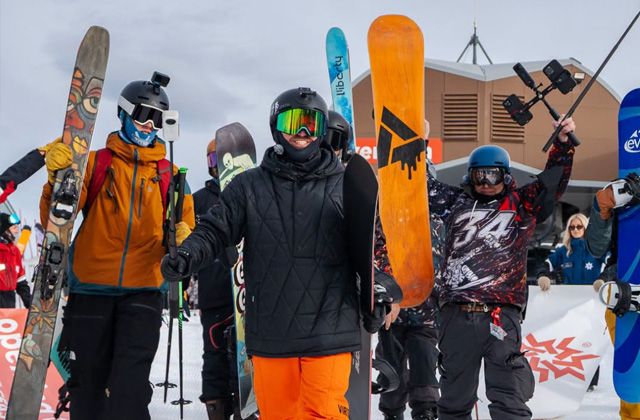
Keystone locals wasted no time either hitting the slopes or breaking out a dizzying array of cameras to capture every moment of opening day. Image: Keystone on Facebook
First up this week is a bit of an early winter heat check. As you know, last week’s coverage included the news that Arapahoe Basin became the first ski resort in North America to operate for the season, with a handful of others in the area looking to follow suit ASAP. This week, we continue to cover early winter conditions as ski season slowly begins to come online in North America.
First up on that topic, is an update regarding ski resorts that have opened in the past week. As it stands, if you’re in North America and looking to ride a chairlift, you have six options. Here in the United States, Arapahoe Basin remains open, while nearby Keystone is also operating. To the West, Mt. Rose, Nevada is open, as is Mammoth Mountain, California. Notably, Wolf Creek, CO also opened last weekend on Halloween, but unfortunately had to temporarily close due to extreme flooding in the San Juan River Basin, affecting access to the mountain. For those of you in Canada, two Banff based resorts, Ski Norquay and Lake Louise, also opened for operations this week. While ski access remains limited, we can’t help but feel excited by the continued opening of ski areas this week.
Looking ahead, there appears to be plenty of reasons to remain excited about what’s to come, even in areas that are threatened by this winter’s Super El Niño. As a brief reminder, historically speaking, El Niño winters favor southern resorts, such as those in Southern Colorado, New Mexico, and the Sierra Nevadas. El Niño is not supposed to favor areas like the Pacific Northwest and British Columbia. But, despite the undeniable weather pattern, ski areas in coastal BC and even the Pacific Northwest could see significant snow in the coming weeks thanks to back to back atmospheric rivers. According to one report, the high peaks of Whistler could potentially see as much as 120” of snow at the summit by November 13th. To the south, the PNW through Northern California are also expected to see strong weather in the coming weeks, thanks to the second of the two atmospheric rivers.
Of course, all of this is contingent on one variable swaying favorably, and it’s one that we suspect will be the dominant player all season long: the freezing line. Along with these two weather systems, and the second one in particular, the timing of the precipitation event alongside temperature changes will be crucial in determining whether these storms will manifest as significant rain, snow, or ice.
Keeping with that train of thought for just a moment longer, another story began spreading this week that also could have a significant impact on winter here in North America, and for those of us in the northeast in particular. As much as we’ve talked about El Niño and how it might affect different regions, here in New England it’s yet another year of, “well, it depends on how low the polar jet stream dips.” Should it dip low enough, precipitation will fall as snow. Should it remain to the north, the East is due for another year of mixed precipitation at best.
This week, news outlets started reporting on a historically early, significant disruption of the polar vortex. We’ll let science do the heavy lifting in this story, but the takeaway is essentially this: warm air is expected to disrupt the polar vortex, causing its winds to shift, likely sending cold air to the south much earlier than usual. While that doesn’t mean we should expect to see snowfall in the coming days, it does suggest that cold air will make its way to the continental U.S. in November through December. While there’s much to debate here in regards to conversations about climate change, what it means for us in the immediate future as skiers is that, at the moment, it looks as though those early season storms that typically have equal chances of falling as rain, ice, or snow, are currently leaning more towards the snowy side of the spectrum. In other words, with El Niño expected to bring precipitation to the Northeast this winter, and the early disruption of the polar vortex, we just might be setting up for a very promising early season. Of course, there are few things in this world less predictable than weather, so it’s far too soon to take this knowledge to the prediction markets. That said, an unexpected vortex disruption is certainly something worth knowing about if weather is your thing. For more details, check out the report from Newsweek.
#2: With Seven World Cup Races Just One Month Away, Beaver Creek Automates its On-Venue Snowmaking Fleet to Take Advantage of Every Possible Weather Window:
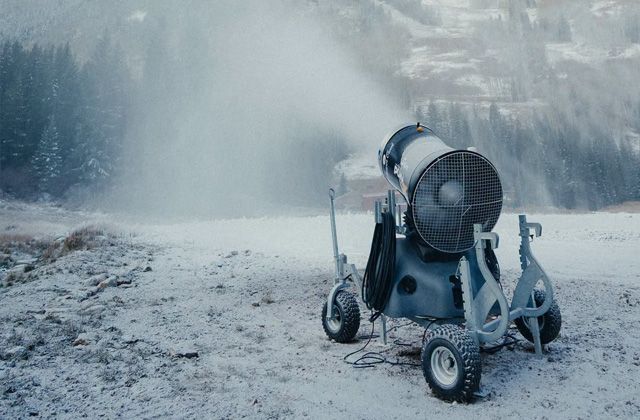
While it may not look like it, this particular snowgun is connected to one of the smartest snowmaking systems in all of North America. Image: Beaver Creek on Facebook
Speaking of snowy conditions, our next highlight this week is a pretty cool story coming out of Beaver Creek, CO, where the resort is gearing up to host an ambitious seven World Cup races over the course of back to back weekends in December. From December 3rd - 6th, the resort will host two men’s Downhill races, a Super G, and a Giant Slalom. Then, just 5 days later, the ski area will begin hosting a series of women’s races, with Downhills on the 11th and 12th, and a Super G on the 13th. As you might imagine, maintaining course conditions for that many races in the first half of December has the potential to be quite challenging. This week, we learned more about new technology being used by the resort in order to greatly improve their odds of success.
In what is both a shockingly obvious and impressive solution, Beaver Creek has recently announced substantial upgrades to the snowmaking infrastructure on the venue for these upcoming races. While you might immediately interpret that as “more efficient snow guns,” you’d only be partially right. In addition to adding 10 state of the art SMI Grizzly stick guns and 6 SMI Super Puma fan guns, the team at Beaver Creek is adding another weapon to its snowmaking arsenal: automation.
Paired alongside these 16 new snowmakers, is a new weather station, as well as roughly 4,500’ of buried communication lines. These two elements elevate the new snowmaking setup from your run of the mill snowblowers, to a setup where the Beaver Creek team can monitor weather conditions at the site of each specific gun and activate/deactivate the system remotely. In other words, should the dew point and temperature drop just low enough to provide ideal snowmaking conditions, even for just an hour, the team could remotely activate specific snowguns in response.
Pretty cool, right? Well, it gets even cooler. In addition to being able to monitor and activate the system, the system can also activate itself. That is, the team could tell a specific tower which weather conditions should activate / deactivate the guns, letting the weather station take over from there. Once conditions hit those parameters, the snow guns will automatically turn on or off. That setup could conceivably mean that Beaver Creek is taking advantage of tiny weather windows, measuring just minutes long.
In a world in which winter sports are both dependent on favorable weather, and in which efforts to mitigate the challenges of unfavorable weather often only accelerate progress towards a less predictable climate - we found this story to be an excellent example of how technology can help us align with the weather we’re given, taking advantage of weather windows and being more efficient with the usage of resources. To learn more about this, check out the writeup from Vail Daily.
#3: Vail’s Proxy Battle Continues as Oasis Management Launches “Lifting the Vail” Campaign to Elect Two of its Preferred Candidates to Vail’s Board of Directors:

A screengrab of the landing page from the newly launched Lifting the Vail website.
Topic number three this week is one that we suspect roughly 50% of you will thoroughly enjoy, and the other 50% of you will eagerly scroll past, as it’s a topic that’s become thoroughly redundant over the course of the last year or so. That said, the battle for control at Vail Resorts remains one of the largest stories in skiing, and one that we feel compelled to continue providing coverage of.
This week, the proxy battle for control of Vail Resorts ramped up even further, as Oasis Management launched a new campaign called “Lifting the Vail”, the end goal of which is to land two Oasis nominated candidates on Vail’s nine person board of directors.
Now, before diving into this week’s progress report, bear with us while we do a really quick recap on this story to ensure that everyone has the proper context for this week’s news. The origins of this topic date back to May 2025, when Cloudflare CEO, billionaire, and Park City local, Matthew Prince, bought Park City’s Town Lift Plaza and announced intentions to one day buy Park City from Vail Resorts. Since making that move, Prince has very vocally denounced Vail’s leadership, arguing that their current ownership model of Epic Pass resorts is flawed, and that the best way for them to return value to their shareholders is by selling off some of its assets. In the roughly 1.5 years since, that ideology has slowly spread to other Vail shareholders.
Fast forward to this past September, when Oasis Management, a global investment management firm and owner of 10% of Vail’s shares, heeded Prince’s call, effectively becoming an activist investor. In other words, Oasis not only has significant say in Vail’s operations by way of their voting power and influence on other shareholders, but the management company has found itself agreeing with Prince’s argument: they too want change and they intend to force it.
This week, that hot pot of water has grown to a strong simmer as tensions between Vail and Oasis have continued to heat up, with Oasis launching its “Lifting the Vail” campaign. This new website acts as Oasis’s centralized argument against Vail’s current business strategies, as well as the promotion of its two nominees to Vail’s board: former CEO of The Walt Disney Company Robert Chapek, and experienced entrepreneur and asset manager, M. Ashton Hudson. In short, this website argues that Vail’s current business model is vastly underperforming. On the website, Oasis lists 6 specific action items they would take to course correct the business - actions which they would hope to enact by way of placing their two nominees on the Vail board.
As you might expect, Vail Resorts wasn’t particularly happy to see the launch of this new campaign. In response, Vail is asking its investors to be patient with them as they’re currently in the midst of turning things around. For evidence, they point to new initiatives to lower ticket prices, such as the Epic Buddy Pass program as well as deeper discounts for advanced ticket purchases. In addition to defending themselves, they also went on the attack in their response, accusing Oasis Management of acting on the behalf of Matthew Prince, who is not actually a Vail Resorts shareholder. From there, as you might guess, the story devolves into a world of finger pointing and accusations, emotionally loading the situation.
Interestingly enough, all of this is very likely to come to a head on December 14th, when Vail will hold a vote to elect its board of directors at their Annual Meeting of Stockholders. At that time, either Vail’s shareholders will opt to back Vail’s storyline, re-electing its nine current board members, or the emerging narrative being pushed by both Matthew Prince and Oasis Management will prevail, resulting in new board members who could potentially change the trajectory of Vail Resorts. Ideally we won’t need to share any followups between now and the election, but should any new news come to light, be sure to check back in. For now, we’ll turn you over to coverage from the Colorado Sun.
#4: Last March, Colorado Announced Massive Changes to its Search and Rescue Operations, Ending a 50 Year Relationship With the State’s Volunteer Group. Eight Months Later, the Plan Remains Unfinished, Resulting in a One Year Extension of Previous Agreements:
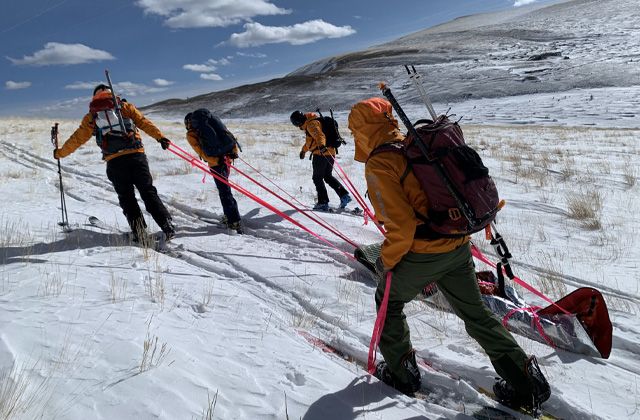
For over 50 years, the Colorado Search and Rescue Association was the organization behind coordinating and enacting backcountry rescues in the state. Last March, the Colorado Parks and Wildlife department ended their longstanding agreement, electing to lean on two other groups instead. There was only one problem: they never found a group to take on coordination responsibilities. Image: Colorado Search and Rescue
Rounding things out this week, we have another story coming to us from the Colorado Sun, this time centered around Colorado’s ongoing effort to reorganize the state’s search and rescue procedures. Now, before diving in here, we want to let you know that this story is incredibly complex, accurately reflecting the status of search and rescue coordination in the state. In an effort to untangle this web of information, let’s rewind back to last March, when Colorado Parks and Wildlife announced that it would be restructuring the agencies involved in the state’s search and rescue missions.
In that announcement, the Colorado Parks and Wildlife (CPW), alongside the Colorado Division of Homeland Security and Emergency Management (DHSEM) and the County Sheriffs of Colorado (CSOC) shared that emergency rescue missions would move away from being handled by the volunteer based Colorado Search and Rescue Association, and instead fall under the purview of country sheriffs departments. While Colorado Search and Rescue Association has done a commendable job over the last 50+ years, the CPW stated that growing search and rescue needs demand more organizational efficiency.
This perspective isn’t without merit. In 2026, the state saw a record number of hoist (helicopter) rescues, with over 50 missions officially recorded. Those missions were conducted by members of Colorado Search and Rescue, alongside the Colorado National Guard, despite having no official partnership agreement. While it’s indisputable that this is an essential service, there’s currently a debate as to whether a vast volunteer network unofficially partnering with the state’s National Guard is the best way to carry out the missions, or if a more official structure would better serve the community. This is just one example of why the CPW announced that their agreement with Colorado Search and Rescue was set to end on August 1st.
This week however, we learned that the pre-existing agreement has actually been extended by one year as a major wrinkle in the new plan has yet to be ironed out. In short, while the plan that was announced last spring aligned the Colorado Division of Homeland Security and Emergency Management and the County Sheriffs of Colorado as the two services that would carry out rescue missions, it hadn’t named a party for actually coordinating the missions. In other words, there was a plan for carrying out the rescue missions themselves, but not a plan for exactly what happens when someone calls for help, and how that call results in a coordinated response. In this week’s report from the Colorado Sun, it’s become clear that the CPW had hoped the Colorado Search and Rescue Association would assume the role of coordinator, but they never submitted a bid to do so. As such, when the August 1st transition deadline came to pass, the system wasn’t completed - there was no organization responsible for coordination. Now, in the interest of avoiding a lapse in an important service, the CPW has re-signed a 1 year agreement with Search and Rescue to continue carrying out their services as they have for the past 50+ years.
From here, all of the parties involved have another year to refocus on solving this issue. It appears clear that the Colorado Search and Rescue group isn’t interested in being diminished to becoming just a coordinator of resources. Simultaneously, the sheriffs argue that they can take on the coordination effort, again, citing pre-existing workflows used in fire responses.
Ultimately what makes this story interesting to us, is that whatever model Colorado lands on very well could result in changes in other states. While some areas like Utah, California, and Wyoming have similar high peak challenges, even here in Stowe we regularly see stories regarding our own search and rescue teams and their limited resources. Being such a complex, multiorganizational service, successful changes in Colorado’s operational model could very well be replicated in other regions. Of course this story is likely to continue for multiple years, so keep an eye out for more coverage as it continues. Until then, check out the report this week from the Colorado Sun.
#5: And Now, Your Edits of the Week: How Could We Not Make a Full Feature Film Our Top Edit of the Week? We Couldn’t Not. Enjoy, “We Can’t Not”:
Cinematography, Meets Psychology, Meets Skiology in This Beautiful Piece from Arcteryx:
The Freeride World Tour is About to Release a 5 Part Mini Series Taking You Behind the Scenes of the Tour. Here’s the Trailer for “No Second Run”:
Some Skis Are Just Built Different. Case in Point: Kastle:
Finally, If You Only Watch One Amateur Freeskiing Short This Month, Make it “The Distance We Shared”. This One Far Exceed Expectations:
Introducing: The Cut Line:
This week, there was one story we were hoping to share but didn’t quite have room for, as well as a couple of additional edits. This isn’t the first time it’s happened, but it is the first time we’ve decided to do something about it. Rather than leave this story and these edits unshared, we’re going to try out a new section for Top Five Fridays called, “The Cut Line”, where we’ll quickly drop whatever stories or edits didn’t quite make the cut for the full highlight treatment. We likely won’t have a cut line every week, but when there’s too much news to share, we will. With that, here’s this week’s cut line:
When Paula Moltzan took home the gold at the Soelden Super G, she became the first former NCAA athlete to take first place in a World Cup race in over 60 years. SkiRacing.com has more.
If gritty street skiing is your thing, be sure to check out the quick 5 minute cut “JUICE”, from Level 1.
On the other hand, if you prefer steep Alaskan spines, be sure to catch Parkin Costain’s segment from TGR’s “Pressure Drop.”