

Top Five Fridays: October 3, 2025
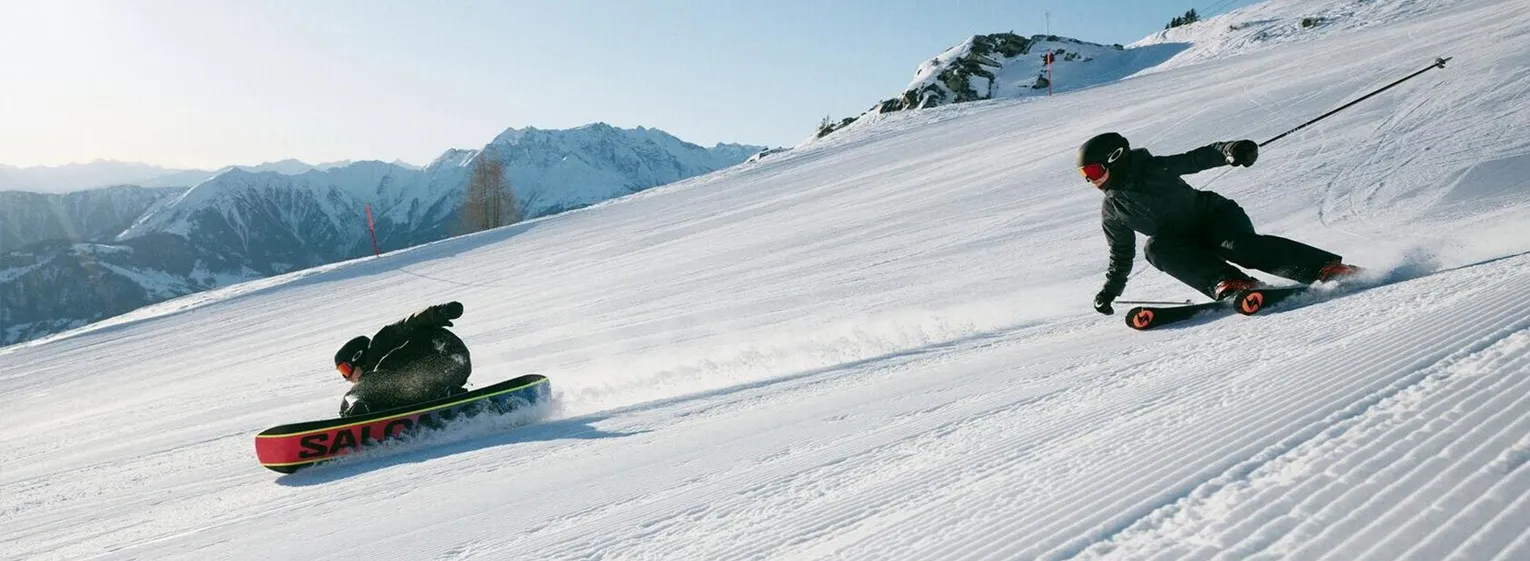
A skier and snowboard shred down the slopes in unison at LAAX, where the mountain’s longtime operator and local municipalities have worked together to create a unique sell and lease back agreement that secures local ownership of the ski area well into the future. Image: LAAX on Facebook
#1: LAAX Ski Area to Be Co-Purchased by Local Municipalities, Leased Back to Current Operator:
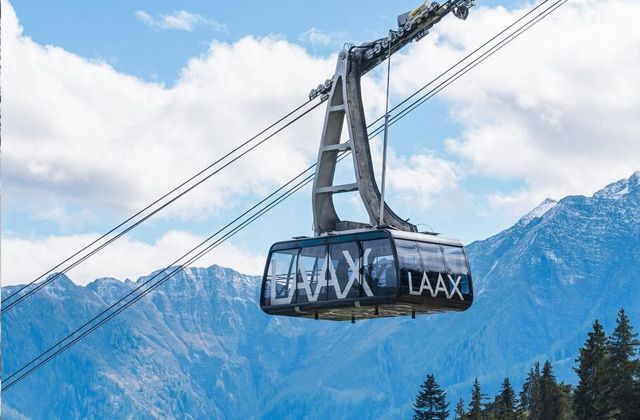
LAAX’s iconic cable car, which is soon to be locally owned and operated by an independent company. Image: LAAX on Facebook
Hello, and welcome to Top Five Fridays, the October 3, 2025 edition! This week, we’ve got a classic double-topic double-header, as our first two stories come to us from the Vail universe, while the second half of our coverage is dominated by Asian ski news. Despite working under just two themes this week, each of these four highlights bring completely unique storylines to the table - all of which you’ll want to know about when it comes time for cocktail hour this weekend. Keeping your conversational skills in mind, let’s jump in.
Arguably the biggest headline we caught this week comes to us from Switzerland, where the municipalities of Flims, Laax, and Falera have announced that they’ll be taking over operations at LAAX Ski Area. Before diving into the details of the purchase and new operating agreement, we want to take a moment to rewind the clock as the backstory here is very important.
If you read along with us just over a year ago, on August 30, 2024, you might recall a story we shared in which rumors were spreading regarding Vail’s interest in purchasing LAAX. While we had a feeling that Vail’s purchase of the resort was likely imminent, our real takeaways were that Vail had almost definitely made an offer, and that Vail’s business model seemed intent on purchasing European ski areas and operating them rather than simply partnering on pass agreements. Over the summer, we learned a bit more about that, while also noting that due to Vail’s dream of owning European resorts, the company is being severely outpaced by rivals like Ikon and Indy, whose partnership approach has enabled them to double the number of European destinations available on their respective passes. Keeping all of that in mind, we share the details of this week’s news.
Just over a week ago, on September 24, 2025, a joint press release was put out by the three municipalities involved in the acquisition of LAAX, and LAAX’s current owner: Weisse Arena Bergbahnen AG. In that press release, it was announced that the municipalities of Films, Laax, and Falera have agreed to purchase LAAX’s assets under a company that’s already co-owned and operated by the three of them: Finanz Infra AG. Up until this week, Finanz Infra AG has been a company that’s run the snowmaking operations on the mountain, presumably in the interest of ensuring quality ski conditions and driving tourism to the area. Now, Finanz Infra AG will expand its ownership of the resort, through the acquisition of all of its infrastructure, including chairlift, lodges, restaurants, buildings, and more. To keep things interesting in a way that only European ski areas can though, this isn’t a simple, straightforward acquisition.
For the price of $118.86 million, Weisse Arena Bergbahnen AG has agreed to sell its assets to Finanz Infra AG. But, Finanz Infra AG won’t actually operate the ski area. Instead, they’ll lease the use of their assets back to Weisse Arena Bergbahnen AG, allowing them to continue operating the ski area as usual. In other words, ownership has changed hands, the threat of a Vail acquisition has plummeted dramatically, and for all intents and purposes, it’ll be business as usual at LAAX for the foreseeable future.
Circling back to the multipass conversation, it’s hard not to see this as a warning sign to Vail that their acquisition approach may need some reexamining. Now that LAAX has rebuked its offer and instead found a way to secure the future of the mountain locally, there’s a very real possibility that the Ikon Pass swoops in and makes a partnership offer with the resort - especially because Ikon already has a significant presence in the region. Should that happen, it could be a moment of reconsideration for Vail, who at that point wouldn’t just be outpaced by their competition, but would actively have lost a desired destination to them. All told, while the acquisition itself is quite the story, so too is its impact on the business dealings of U.S. based megapasses - both of which make excellent fodder for conversations this weekend.
#2: For the Second Year in a Row, Pass Sales and Skier Visits Decrease at Vail Resorts:
A shot from Vail, but in black and white and with boosted contrast for dramatic effect. Image: Vail Resort on Facebook
While we hate to pile on, our next highlight this week is also bad news for Vail. On Monday of this week, Vail released its figures for Q4 of its fiscal year, as well as the entirety of its 2025 fiscal year, which ended on September 30th. This time around, the story being told by the numbers was the same as it’s come to be in recent years: skier visits and Epic Pass sales were both down.
In the post Q4 financial filing call with shareholders, Rob Katz simplified and addressed the issue head on. Last year, skier visits were down roughly 3%, as are sales to date for the upcoming season’s Epic Pass, which are also down 3%. Despite these decreases though, revenue from pass sales has increased 1% as a result of a 7% price increase. In other words, when you read between the lines, Vail is losing market share, and compensating for it by increasing pass prices. Being a publicly traded company, all of this information is made available, and it takes only a modestly shrewd investor to read between the lines: Vail is currently trending downward.
Now, that said, it’s important to keep in mind that Vail’s leadership changed at the conclusion of last season, meaning Rob Katz hasn’t had a chance to right the ship, so to speak. At present, the numbers we’re seeing were largely produced under Kirsten Lynch, whose tenure was muddled by a long list of negative PR incidents. Looking ahead, Katz is looking to buck the downward trend by making skiing more accessible through ventures like his Epic Friend Ticket program which aims to introduce people to skiing at Vail Resorts for a more affordable price.
Additionally, he cites antiquated marketing techniques as losing effectiveness, causing a decrease in interest amongst its target market. While Vail has traditionally relied on email marketing, Katz told investors that its effectiveness has been reduced as consumers have become less responsive to transactional marketing, and are instead more interested in emotion driven marketing through platforms like Tik Tok and Instagram. While he’s undoubtedly correct with this assertion, whether or not effective marketing is the crux of Vail’s issues has yet to be seen. For now, the company is anticipating fewer guests in the season ahead as it looks to turn things around for 2026. To learn more about this, check out this recap from Business Insider.
#3: In China, the Ski Industry Continues to Boom with Massive New Indoor Ski Areas and FIS Support:
A look inside China’s newest, and the world’s largest, indoor ski area: Qianhai Huafa Snow World.
Okay, let’s turn the page on Vail news and get into our next theme this week: skiing in Asia. First up on this topic are a couple of news items from China, where skiing continues to grow at a rapid pace. Over the course of the last few weeks, we’ve come across a handful of articles covering the growth of skiing in China. Most of these articles seem to pull their data from a very thorough report put together by a man named Wu Bin - or Benny Wu for us English folk - who is deeply involved in the Chinese ski industry in a number of ways (check out the last page of this pdf for his credentials). While Wu does a tremendous job of gathering highly specific demographic information regarding the growth of skiing in the country, the underlying takeaway is this: skiing in China is growing in nearly every metric. From the number of ski resorts in operation, to the total number of skier days, and even sales of ski products including hardgoods and softgoods - the ski industry is booming.
In addition to this raw data, we’ve also come across some more anecdotal stories that indicate the growth of skiing in the country. Take for example, the recent opening of Shanghai’s L*SNOW in September, which at the time was the world’s largest indoor ski area. Now, just a month later, Shenzen’s Qianhai Huafa Snow World has also opened, swooping in and taking the title. In other words, China has just opened the world’s two largest indoor ski resorts within a month of each other. That type of growth puts an emphasis on just how quickly the ski population is growing there.
With all of that in mind, we get to this week’s update: the FIS has just signed two Memorandum of Understandings with the Hong Kong and Shanghai Pudong Ski Associations. Before diving into the details of these agreements, we just want to clarify one thing: the newly opened L*SNOW indoor ski area operates within the Shanghai Pudong Ski Association’s region, while the Qianhai Huafa Snow World falls within the Hong Kong Ski Association’s umbrella. In other words, the rest of this news is directly related to these two ski areas, plus the country’s third largest indoor ski area, Guangzhou Sunac Snow World, which is also a part of the Hong Kong Ski Association. Now, back to the MoU’s.
In signing these two Memorandum of Understandings, the FIS has certified these three indoor ski facilities as meeting FIS standards. In doing so, they’ve effectively cleared the way for ski areas in some of China’s largest cities to open new development pipelines for FIS athletes. While we’re (probably) never going to see a World Cup event at these facilities for obvious reasons, the understanding allows them to host sanctioned FIS training, competitions, educational programs, and safety programs. While you may wonder, “what’s the big deal, people could’ve learned to ski race there without the FIS’s approval,” the simple fact of the matter is that this agreement brings China’s mainland into the FIS fold. Rather than operating tangentially, these ski areas can now operate within the FIS, offering its athletes a clear and direct path to the world stage.
For the FIS, that’s exactly what it hopes will happen. In certifying these ski areas as meeting international FIS standards, the hope is that it’ll help the organization grow interest in one of the most populated markets in the world. Longterm, that means we’ll likely see Chinese athletes competing in World Cup events, as well as at the Olympics and Paralympics - some of which may have developed their skills at one of these indoor facilities.
All in all, it’s good news out of China, where the ski industry is seeing incredible growth from all aspects. For fans of the sport, this is exciting to hear as it’s just like the saying goes, “a rising tide lifts all boats.” To learn more about this latest news from the FIS, click here.
#4: Home to Tremendous Terrain, Kazakhstan Looks to Develop One of the World’s Largest Interconnected Ski Areas:
If you can get past the cheesy AI voiceover, this video does a great job of showing and explaining the new Almaty SuperSki project.
Finally, for our last highlight this week, we want to share a story from another part of Asia, where the ski industry holds plenty of promise but has yet to take off: Kazakhstan. Despite being home to some of the snowiest, most dramatic mountain landscapes in the world, Kazakhstan’s ski industry remains quite modest and far from what most of us would consider a top option for a ski vacation. This week though, we caught a piece of news that might be the start of a process to change all of that.
Back at the end of August, plans were first shared for what’s being called “Almaty SuperSki”. Based on the European, interconnected ski area model, Almaty SuperSki is a massive development plan that would leverage both public and private investments to create a network of ski areas in the mountain range just south of the nation’s largest city. At the moment, there are three modestly sized ski areas in this region, with Shymbulak being the largest in the area. There, 9 lifts bring guests a total of 2,950’ into the mountains, where they can ski approximately 12.5 miles of trail. For comparison, Wyoming’s Antelope Butte and New York’s Bristol Mountain have comparable amounts of trail length, albeit at roughly one third of the vertical. In addition to its physical and infrastructure stats, Shymbulak is currently operating at capacity, welcoming roughly 6,000 guests a day. In other words, Shymbulak has serious development potential.
All of this ultimately became the impetus for this week’s news that the Kazakhstan government has approved the master plan for the development of Almaty SuperSki. This ambitious plan, which was developed in part by world renown ski resort planners PGI, will look to transform the region from a handful of small ski areas, to one of the biggest ski destinations in the world. At present, the Almaty region offers guests a total of 44 skiable kilometers across three isolated ski areas using 32 lifts. At completion, the new Almaty SuperSki would boost those numbers, offering access to an estimated 34,000 skiers per day, across 300km+ of trails across 8 ski areas. In doing so, the hope would be for Almaty SuperSki to be one of the largest interconnected ski areas in the world, and the premier destination for visitors from China and India. Of course, it is worth noting that the primary target for these ski areas are intermediate and beginner skiers, but when you look at the landscape of the region, it’s hard not to daydream about the untapped terrain that the mountains surrounding Almaty hold for more advanced skiers. Should this all come to fruition, Kazakhstan very well could be skiing’s next hotbed. To learn more about this, check out the latest report from the Astana Times, as well as this incredibly thorough report about the master plan itself, from iLoveSki.org.