

Top Five Fridays: September 1, 2023
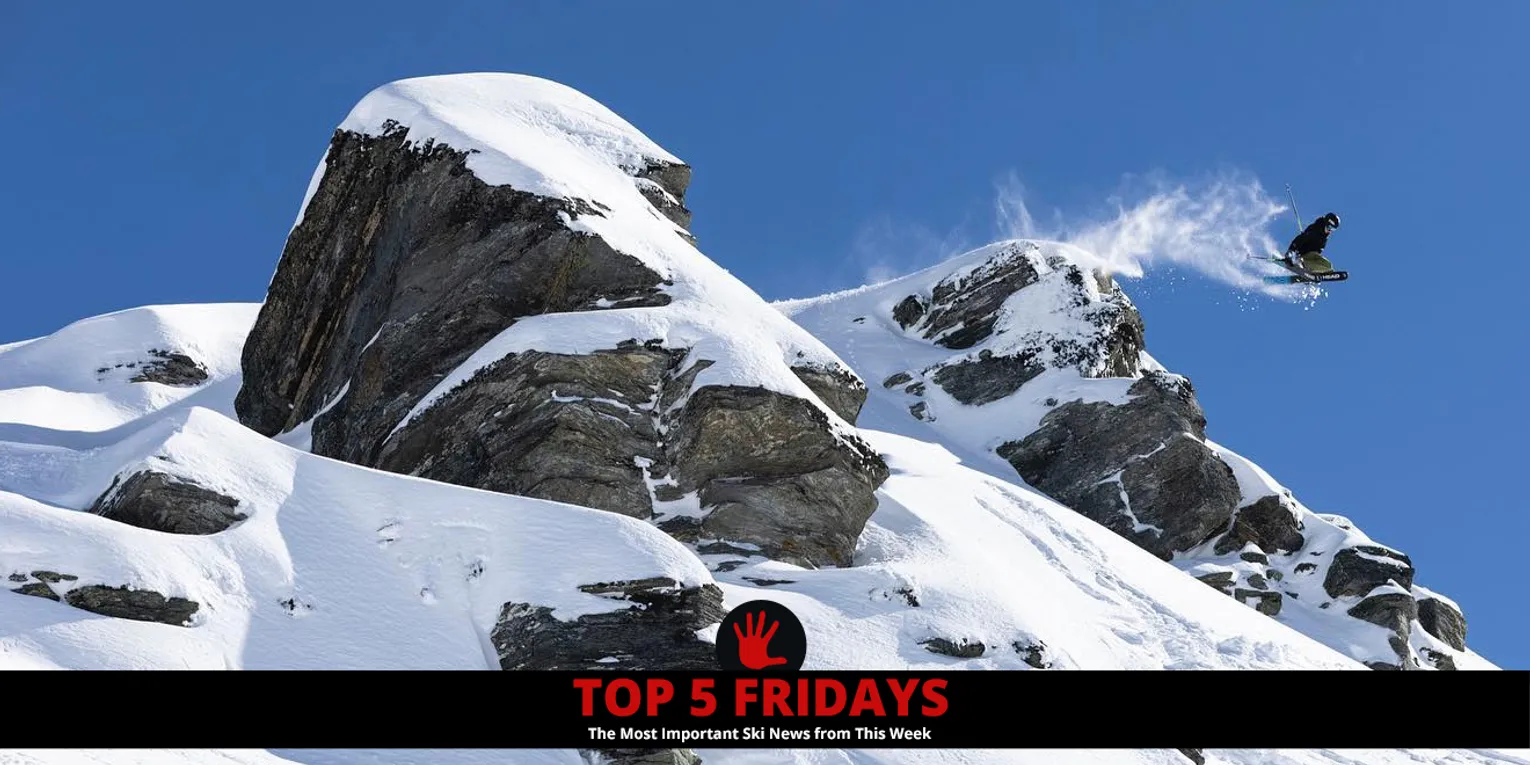
Lead Image: Freeride World Tour athlete Jess Hotter boosting off of one of Treble Cone Ski Area’s many natural features. Image shot by Troy Tanner, and discovered via Treble Cone Ski Area on Facebook
#1: Rising U.S. Alpine Athletes Dominating FIS Australian New Zealand Cup:
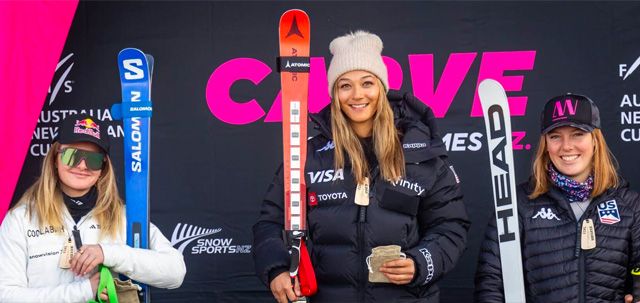
Rising star Ava Sunshine topped the podium for the second GS Race at the Australian New Zealand Cup this week, while AJ Hurt took home third. Image: SkiRacing.com
Hello, and welcome to Top Five Fridays, the September 1, 2023 edition! This week’s unofficial theme: international ski news, as we have updates coming from every part of the globe except North America. In fact, the closest we come is actually in our first highlight, as we share news of some serious success coming out of the U.S. Ski Team as they compete in the Australian New Zealand Cup.
First things first, let’s clarify what the Australian New Zealand Cup is. It’s a sanctioned FIS event being hosted at Coronet Peak, New Zealand. Being its own championship, athletes can earn points across events, but they aren’t earning points towards their overall World Cup season. As such, the competition ends up being something akin to a preseason warmup for FIS alpine athletes, where they’re able to get ready for the season ahead by racing against World Cup caliber athletes. It also means that the biggest names in the sport tend to opt out, giving athletes returning from injury as well as up and coming athletes a chance to get their legs under them ahead of the season. With that last point in mind, we’re excited to share the news that by and large, the U.S. Team has looked great at this event so far.
As a result of the Super G event being canceled, the first two races of the championship were both giant slalom races on back to back days. In the first of those two races, the U.S. team took three of the top four positions, with AJ Hurt claiming first, Nina O’Brien earning third, and rising star Ava Sunshine claiming fourth. Then, a day later, the same trio again claimed three of the top four spots, this time with the 21 year old Ava Sunshine taking home first place in arguably the biggest win of her career, followed by AJ Hurt in third, and Nina O’Brien in fourth. Riding the wave of success, both AJ Hurt and Ava Sunshine put up yet another podium performance just yesterday, placing first and second respectively in a slalom event. Rounding out the Australian New Zealand Cup is one more slalom race tomorrow, after which overall awards will be handed out based on results across the four events. With that in mind, we can expect to see at least one or two U.S. athletes on the overall podium, but exactly who and in which positions is yet to be determined.
Perhaps most importantly though, are the encouraging performances we’re seeing from the U.S. Team at this preseason event. Last year, the Women’s team won the slalom Nation’s Cup for the first time ever, behind solid performances from Mikaela Shiffrin and Paula Moltzan. With three additional athletes who are proving they can win amongst the best, as well as Breezy Johnson, it’s safe to say that the U.S. Women’s team will be a force to reckon with this season. To learn more about some of this weekend’s results, check out either this article, or this article - both from SkiRacing.com.
#2: New Zealand Ski Resorts Seeing a Rise in Black Market Ski Instruction:
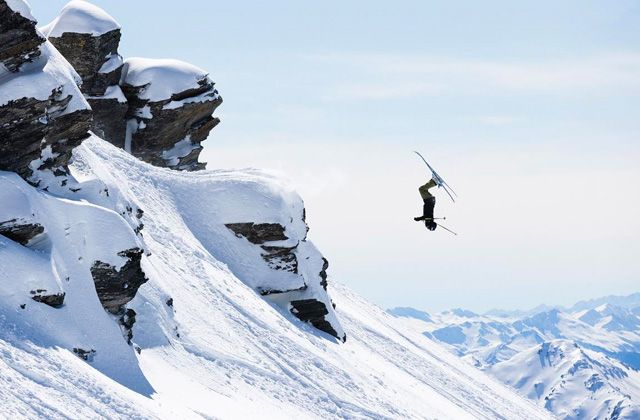
Jess Hotter once again showing us how it's done as she backflips a natural hit at Treble Cone in this image shot by Troy Tanner. Sourcer: Treble Cone Ski Area on Facebook
Next up this week is an interesting story coming out of New Zealand that puts a light on a practice that we suspect many skiers are aware of, but isn’t widely discussed. That practice is black market ski instructing. Earlier this week, the NZ Herald shared a story from Treble Cone ski area, where local skier James Sorrenson was recently giving a few of his friends ski instruction. As he was doing so, he was approached by a Treble Cone ski instructor and, from his perspective, was accused of running a commercial lesson. In the eyes of the Treble Cone instructor, Sorrenson’s demeanor with his friends came off as more “professional” than friendly, leading him to believe that Sorrenson had been paid for the lesson. Sorrenson, on the other hand, adamantly denied that fact, and was further angered when the resort employee took a photo of his ski pass and threatened to have it revoked. At the end of the day, there’s no way to prove whether or not Sorrenson was paid for his lessons, making it hard to know who is right or wrong in this story.
One thing we do know for sure though, is that it’s brought attention to a very real problem in New Zealand. In the article from the Herald, reporter Thomas Bywater dove a bit deeper into the issue, investigating whether or not a black market for ski instruction really exists. As it turns out, it didn’t take much effort at all as he found numerous posts on public Facebook groups from skiers either advertising or seeking private ski lessons. For ski resorts, this is a two-headed issue. First and foremost, there’s a liability factor, with unsanctioned instructors running a business at the resort without their own insurance. As such, their actions become a liability and safety issue for the resort. Secondly, by undercutting the cost of official ski instruction, one of the resort’s income streams is affected, which in theory could also lead to a reduction in the number of ski instructors they employ.
This of course brings us back to the root of the problem: the cost of ski lessons. At Cardrona, a ski resort that neighbors Treble Cone, the cost for a group lesson is $150 NZD per day, or about $90 USD. For a daylong private lesson, that rate shoots up to $799/day, or about $475.00 USD. In other words, the cost of a lesson, plus equipment, plus the lift ticket makes learning how to ski prohibitively expensive. As such, black market instructors have found a way to undercut the resorts by offering lessons for much more affordable rates. And thus, we have a problem. All told, it’s an interesting story to follow, and while we don’t hear much talk of similar issues in the U.S., it’s almost certainly a practice that’s occurring here as well. As such, it’ll be interesting to see how things play out in New Zealand and if resorts here in the U.S. take cues from them when it comes to tackling this issue. For now, you can learn more about this week’s story directly from the New Zealand Herald.
#3: Another Week, Another Dismal Climate Change Study as Researchers Predict Grim Future For European Ski Resorts:
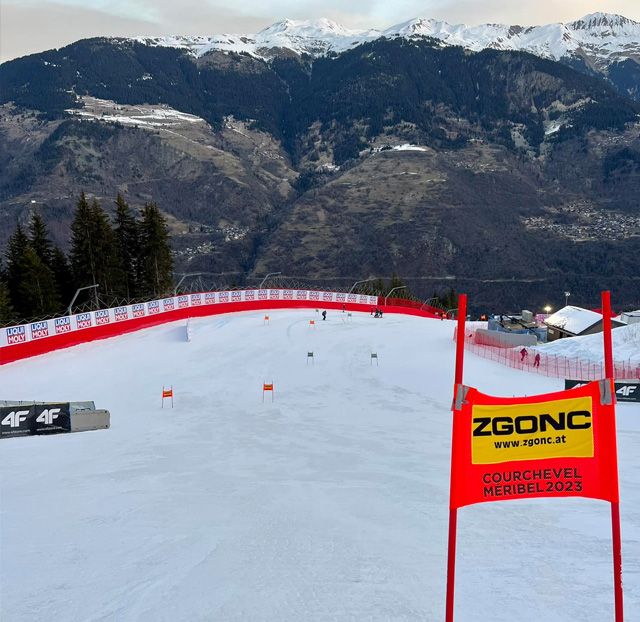
Europe’s battle with climate change was front and center at the start of last season, thanks to a number of canceled FIS races due to a lack of snow. Here, the contrast between the snowy race course and the barren background at Courchevel Meribel last February tells the story. Image: FIS Alpine World Cup on Facebook
For our third highlight this week, we have a story that, while we’d truthfully rather not share it as we feel like the topic’s already been discussed ad nauseam, it’s a case where the article dominated the headlines to the point that we couldn’t ignore it. Last week, we shared an article from the Associated Press that outlined a bleak future for ski resorts here in America. This week, a new study was released that outlines similar fates for resorts in Europe. In the study titled “Climate change exacerbates snow-water-energy challenges for European ski tourism”, researchers did a deep dive into the complex dynamic that exists between climate change, the high resource demand of operating a ski resort, and the impacts it has on tourism in Europe. Awareness of this relationship is nothing new, and is something we’ve discussed at length here on Top Five Fridays. So, rather than rehash old facts, let’s take a look at some of the new findings that came out of this study.
Perhaps the most eye opening statistic uncovered by this research is the fact that roughly 25% of all European ski resorts will have a “snow scarce” year, every other year, if the average global temperature rises 2° celsius. More specifically, that would mean that every other year, the ski resorts in question would have the equivalent or less than the average of the worst snow year of any five year stretch between 1961 and 1990. It’s a confusing measurement, but what it essentially means is that if you take every five year average from each resort during the period of 1961 - 1990, and you find the lowest average, that’s their measurement for “snow scarce.” In other words, it’s the lowest average snowfall during that 30 year period. According to this study, approximately 25% of European ski resorts should expect to see that small amount of snowfall every other year if the global temperature raises an additional 2° celsius. For us using the Imperial temperature measurement, that would mean that if the current global temperature rises from 62.9° fahrenheit to 66.5° fahrenheit, this would be the outcome.
Now, while we’re all aware that we’re facing similar issues here in America, there’s a second statistic that we learned this week that puts the global impact of this into perspective. According to coverage from The Guardian, Europe is home to 80% of the world’s ski resorts, and is a $30 billion industry. Noting how many ski brands call Europe home, it’s easy to see how a significant reduction in the ability to ski there could have a ripple effect across the global industry. With less access to snow, there would be less ski equipment being purchased, resulting in the shrinking of budgets for ski manufacturers, ultimately resulting in a global issue. While we don’t mean to be all doom and gloom here, this article does feel important to share as it made significant headlines in Europe this week. Taking it into consideration with last week’s news, we’d urge our readers to do what they can to help curb climate change while we can, whether that means making personal changes to your lifestyle, writing to your local congress people in support of actions against climate change, or even finding ways to contribute to organizations like Protect Our Winters. While it may feel like we’re individually too small to make a difference, we’ve already seen the outsized influence the ski industry can have on politics. To learn more about this week’s news, check out the report from The Guardian.
#4: Multiple Storms Bring Several Feet of Snow to Chilean and Argentinian Resorts:
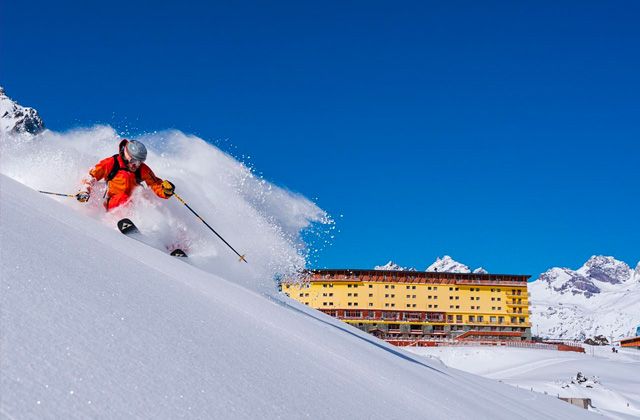
A skier making Portillo look like heaven on earth. Just think, this was before the resort received 8' of snow, with a similar amount yet to come. Ski Portillo on Facebook
Finally, we end this week with some news that brings some balance back after that last highlight. Currently, in South America, the end of their winter season is absolutely going off. Just about a week ago, the mountains in northern Argentina and Chile got pounded with several feet of snow, with Portillo Chile reportedly receiving 8.2’, and Las Leñas receiving between 11’-13’ total. Now, following that storm cycle, there appears to be two more storms in the works that promise to bring similar totals for the same region. Between today and next Thursday, weather experts in the region are predicting back to back storms that could deliver over 300 CM of snow to some locations- most likely Portillo and Las Leñas again. From there, the forecast could continue to look just as sweet, as early projections show that there could be another storm system on the horizon for next weekend. In other words, what we’re trying to tell you is that if you’re thirsty for powder, and that thirst can’t wait a few more months here in North America, now’s the time to book that flight and head to South America immediately. To learn more about the upcoming storms, check out this report from PowderChasers.com.