

Top Five Fridays: September 15, 2023
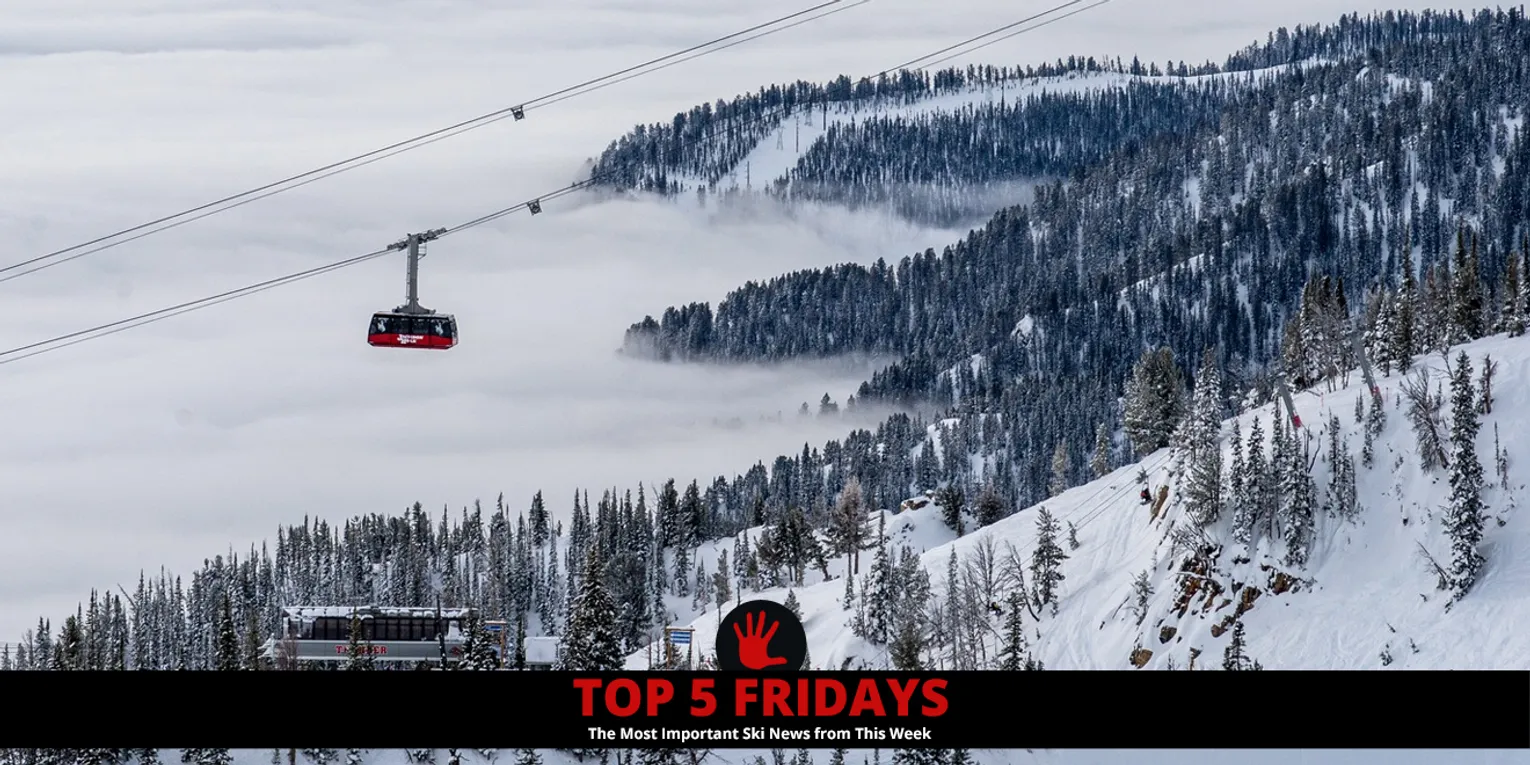
Lead Image: With new ownership on the way and a list of 35 updates submitted to the Bridger-Teton National Forest, change is underway at Jackson Hole. Of course, not everyone is particularly excited about it. More on that in highlight #1! Image: Jackson Hole Mountain Resort on Facebook
#1: Jackson Hole Announces Plans to Make Alta Chutes More Accessible. Locals Are NOT Happy:
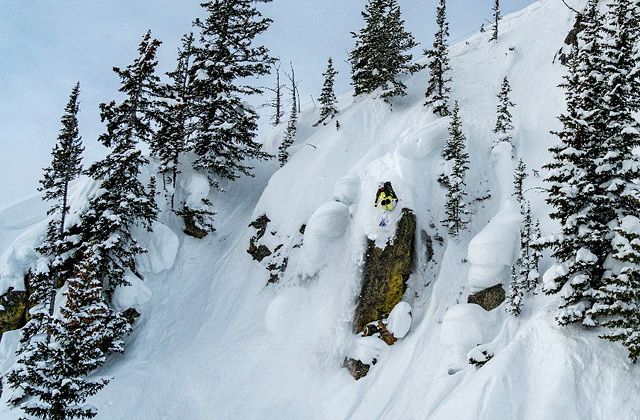
At Jackson Hole, a ski resort known for its challenging terrain, leadership wants to make adjustments to the Alta Chutes zone, presumably making it more approachable for less experienced skiers. Image: Jackson Hole Mountain Resort on Facebook
Hello, and welcome to Top Five Fridays, the September 15, 2023 edition! We’ve got a pretty interesting smattering of ski news this week that defies really any single theme, which means we’re inclined to think there’s something in this week’s news reel for everyone. Our efforts to please you begin with coverage of a story coming out of Jackson Hole Mountain Resort, where just about a month ago we learned that new ownership would be taking over by the end of the year. Keeping that in mind, we share with you an article in which Jackson Hole News & Guide shares the news of significant public opposition to the resort’s development plans.
While we’re just catching wind of it now, this story actually started earlier this year, when the resort submitted a 35 page proposal to the Bridger-Teton National Forest, containing a number of development plans around the resort. In early summer, the proposal was made available for public comments, a process that we’re finally seeing the results of. In brief: a lot of people are not happy about the resort’s plans.
Within the proposal are a total of 35 updates to the resort. Amongst them, 20 are either avalanche mitigation, upgrades to existing service buildings, or additional summer trail work. In general, the public is supportive of these 20 initiatives. It’s the other 15, which have to do with terrain adjustments and a new chairlift, in which people are having issues.
Topping the list of problematic proposals is the removal of trees and blasting of rocks in the Alta Chutes in an effort to “enhance” the terrain. In addition to this measure, the resort also wants to modify other areas of the mountain to make terrain more approachable for beginners. Another contentious example is the creation of a new groomed run through North Woods that would allow intermediate skiers to bail out of the challenging Hobacks run. In other words, from the vantage point of the expert level public, Alta is looking to cater to more beginner level guests by altering the expert terrain of the mountain. Interestingly enough, it’s not just expert skiers who take issue with this, but ski patrollers as well. In the words of Michael Werner, a veteran ski patroller of 26 years, “The Alta Chutes’ natural terrain is limiting for guests who might not venture into them due to their natural hazards… This keeps people who should not ski terrain like this out of harm’s way.” He goes on to suggest that his fear as a ski patroller, is that these adjustments to the Alta Chutes will lead skiers into a false sense of security, enticing them into a trail that’s beyond their ability. Additionally, there are concerns regarding how the removal of trees and rocks will increase the area’s avalanche risk. Anyone with even a small amount of avalanche knowledge knows that things like rocks and trees help anchor the snow and prevent slides, leading to the valid concern that removing these features might make the area more prone to sliding. As for the resort’s argument, these adjustments are all about creating a safer environment for all skiers. Regardless of the outcome of this story, we do know one thing for certain: it’s a bit of a bumpy start for the resort’s new owners. To learn more about this story, check out the full report from Jackson Hole New & Guide.
#2: Fast Company Highlights the Impossible Lifestyle of Ski Patrollers:
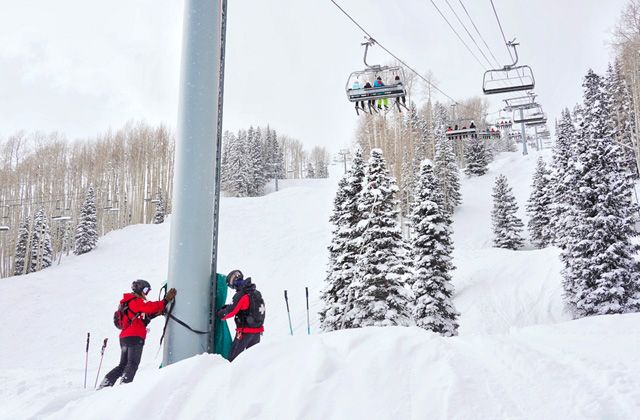
Ski patrollers adjusting padding on a lift tower at Purgatory Mountain resorts - just one of their countless responsibilities. Image: Purgatory Resort on Facebook
For our next highlight this week, we bring you an article from the mainstream publication Fast Company that shares a discussion they recently had with the head of Purgatory Ski Resort’s Ski Patrol Union, Emma Donharl. The focuses of this piece are two dynamics that we’ve discussed quite a bit here on Top Five Fridays over the past couple of years: the high cost of living in a mountain town, and the underpaid and undervalued work of ski patrollers. Still, despite having shared these themes a number of times, we wanted to share this article because: A). it’s a good reminder, and B.) because Donharl shares some specific numbers alongside her actual life experience that help contextualize the issue.
Let’s take this one from the top: when Donharl began working at Purgatory Ski Resort, she took a job as a ski school reservationist before working her way into a lift operator role, where she eventually began earning $13.85/hr. Feeling like she’d maxed out her income in that job, she switched over to ski patrol in 2020, where she began making $14.00/hr. Ironically, that same year, the resort gave lift operators a raise to $16.00/hr, meaning Donharl essentially took a pay cut to take on a much, much more involved role. It was with these frustrations in mind that the idea of unionizing came about, at roughly the same time Park City patrollers were protesting, while others around the West had already begun the process. Ultimately, Purgatory Patrollers decided to unionize in 2022. As a result, wages have since increased from $14/hr to $19.50/hr, and full time patrol now has an equipment stipend of $700 per year. Still, despite the progress, it’s easy to see how compensation remains far too low for a high-skill job in a mountain town.
Keeping in mind the aforementioned figures, this article also dives into the cost of living in the Purgatory area, as well as how it’s changed post-pandemic. According to Donharl, about 5 years ago, the cost of a room in a shared house was roughly $300-$500. While a wage of $14/hr or less didn’t necessarily mean life was comfortable, it was at least manageable, and the idea of being a ski bum on a shoestring budget was viable. Now, those same rooms cost between $750-$1,000 a month. With the cost of housing being just one of many rising costs, Donharl says that living in Durango on seasonal jobs just isn’t feasible anymore. Now, workers require multiple jobs to survive- all but eliminating the free time they initially moved to the mountains to enjoy. This, ultimately, is the crux of an issue that only continues to worsen in mountain towns: due to an influx of second home and short term rental owners, occupied by those desiring a vacation in the mountains, the locals who are employed to create the experiences that vacationers come to enjoy are being pushed away. The most extreme result of this dynamic is a scenario in which seasonal workers can no longer afford to live in mountain towns at all, leading to significant staffing issues. With no one available to staff the resorts, in theory, the whole thing could come crashing down. While that’s exceptionally unlikely to happen, the idea that it could happen should be enough to underscore the significance of this issue. To learn more about Donharl’s story and the case study of ski patrollers in Purgatory, check out the full report from Fast Company.
#3: Get to Know the HERoic Story of Paralympic Alpine Skier Danelle Umstead:
To consume part of this story another way, check out this video from the Paralympic Games on YouTube.
Moving right along, we want to share with you a much more upbeat story, coming to us by way of the U.S. Ski and Snowboard Team. Before we dive in, some quick background: over the course of the last several weeks, the USST has been highlighting female athletes who’ve proven to be trailblazers in their sport as part of their HERoic series. Previously, the series has highlighted legends such as Lindsey Vonn, Jen Hudak, Kelly Clark, and more. While we’ve been tempted to share some of these highlights over the course of the summer, we’ve held off until we either had a terribly slow week of ski news, or one was published that we simply couldn’t ignore. It turns out the latter scenario was the case this week, as the USST published the story of HERoic trailblazer Danelle Umstead, a Para alpine ski racer with over 50 World Cup podiums to her name.
Before we dig into this story, take a second to imagine something. Imagine you have no central vision (the ability to see what’s directly ahead of you), and have only a small amount of peripheral vision (the outside edges of what you can see). Now, imagine skiing. To do so, you also need to imagine that there is someone just ahead of you, communicating with you through a headset, letting you know what you need to be aware of, and what moves you need to make. Now, imagine that you’re not only skiing, but you’re actually competitively racing down a course, pushing your limits at the highest level. Got it? Good. You’ve just put yourself in the ski boots of Danelle Umstead. Well, for the first part of her story anyways. Now, let’s jump in.
At the age of 13, Umstead was diagnosed with both retinitis pigmentosa and early onset macular degeneration, the result of which was the slow degradation of her central vision and most of her peripheral vision. Interestingly enough, given what you already know about her, Umstead didn’t begin skiing until she was 29 years old. After immediately falling in love with the sport, Umstead continued pursuing it, ultimately meeting her lifelong guide and future husband, Rob. Thanks in no small part to their dynamic and his ability to guide her, Danelle quickly became exceptionally good at the sport, resulting in a desire to take her talents professional. In 2010, that decision paid off in a huge way as Ulmstead took home two bronze medals at the Paralympic Games: one in the downhill, and another in the alpine combined. It was a pinnacle moment in her career. Then, tragedy struck, again.
Shortly after the games, Umstead was diagnosed with multiple sclerosis, a debilitating disease that affects the brain’s ability to communicate with the body. While most would’ve considered this an end to her career, Umstead pushed through the challenge, getting back on skis in a shockingly short amount of time. Once back on the slopes, Umstead continued winning World Cup medals, and returned to the Paralympics three more times, winning another bronze in her return in 2014. Across her 14 year career, Umstead won three Paralympic bronze medals, four World Cup medals, two Crystal Globes, and was on over 50 World Cup podiums. This would be an incredible career for any athlete, but for someone to rack up this many accomplishments after not only being unable to see, but also having to fight through a debilitating neurological disease in MS, well, that makes her story truly HERoic. To learn more about Umstead’s amazing career, check out the full story from the U.S. Ski and Snowboard Team.
#4: Boutique Ski Brand “Heritage Ski Labs” Releases a Hellbent “Remake”:
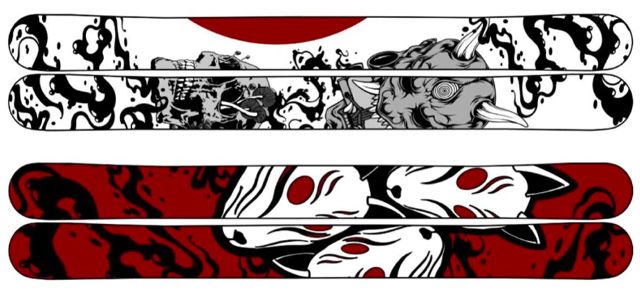
A look at Heritage Ski Labs' "HB122". The similarities to the K2 Hellbent are immediately obvious. Image: Heritage Ski Labs
Finally, we round out this week’s ski news with a story that we think might spark some interesting debate. As we scoured the internet for ski news last night, as we do every Thursday night, we came across a brief post on Newschoolers.com claiming that the Hellbent is back. Now, if the name “Hellbent” means nothing to you, here’s the gist: back in the mid 2000’s and early 2010’s twin tip skis underwent a trend in which there was seemingly no limit to how wide a powder ski could be, with waist widths blossoming well into the 140’s. Amongst these skis, one was king: the K2 Hellbent. Since then, we’ve since learned that by and large, a ski width in the mid-120’s is more than enough to handle deep powder, and so the industry’s thankfully reeled in the widths quite a bit. Now mega-skis like the K2 Hellbent are legendary reminders of a bygone era. That’s why, when we saw this post from Newschoolers, we responded by immediately clicking it.
Inside the article, we learned about a new ski being made available for pre-orders called the “HB122” from boutique ski brand Heritage Lab Skis. This ski which features Hellbent-esque artwork, gratuitous rocker, and a price tag of $666.00, is by all accounts something of a “tribute ski”. While the listing for the ski never directly mentions the K2 Hellbent, there are endless clues, right down to the fact that they were, “Developed with input from @Back2hellbent, these beasts are directly inspired by the OG to keep the stoke alive.” For those still unsure, @Back2hellbent is an Instagram account celebrating the K2 Hellbent. Interestingly, despite all of the similarities, the HB122 does not share the same specs as the original Hellbent. Instead, it features a slimmer waist, measuring in at 122mm rather than the 132mm waist of the 2013 Hellbent. This difference may or may not ultimately play an important role in the ski’s legality.
All of this leads us to the fun part: the speculation. Essentially what we have here is an instance of a new ski brand leveraging the marketing of a beloved ski in an effort to sell units. In this case, the new ski brand has created a product that features a likeness to a discontinued product, but is also not identical. What we’re interested to find out is whether or not K2 has the ability or interest to take any legal action to stop the production of this ski, or if Heritage Lab will be able to move forward with it. If Heritage is able to move forward with production, could this prove to be a viable niche market, with Heritage remaking skis from the past? If so, what skis would they make next? The K2 Extreme? What about the Rossignol Pow Air Grind? Would they be so bold as to make a Salomon 1080? Really the concept is quite interesting to think about: if this HB122 is successful, what’s next, and will the brand run into any legal issues?
To be clear, we’re not at all picking sides or suggesting that Heritage Lab Skis is wrong for this move. In fact, we’re pretty intrigued by the concept of a ski brand re-making some of skiing’s classic models with modern updates. Moreso, we’re simply wondering out loud how this will all play out, and we’d love to hear your thoughts on the matter as well. To learn more about the HB122, check out its product page here.