2026 Tecnica Mach1 130 LV Ski Boot Review
For quite a while now, the signature orange Tecnica Mach1 130 boots have been a staple of the advanced and expert ski world. With the advent of the 2026 Mach1 130 LV, we’re seeing more access, more precision, and a greater overall experience for more skiers. Like any boot review, please take this with a grain of salt, as each individual skier is going to have vastly different experiences based on fit. That said, I’m not normally an LV skier, and for me to be both comfortable and performance-satisfied in this new boot is nothing short of astonishing. While many of the nuts, bolts, and overall philosophy of these boots remain the same from 2025, we do get some amazing updates that bring this boot to the next level.
One of the first things I noticed when seeing these new boots was the lack of a BOA closure system. With many manufacturers going full-BOA, Tecnica is taking the other route, and going with the more classic 4-buckle format. While I don’t really have anything against BOA, I do still find a 4-buckle boot easier to get into. With a low-volume boot on hand, and the potential for difficult entry/exit, it’s refreshing to see more of a traditional format. Tecnica uses their CAS plastic in both the shell and the cuff, with thicker and stiffer plastic along the rear half of the cuff. They also use their Quick Instep softer plastic along the instep, allowing for easier entry and exit and a more comfortable fit over the top of the foot. Seeing as I have a high instep, I’m more than happy to see this multi-injection technique used here. The big story here, though, is the new T-Drive 2.0 connection. Basically, we’re getting two independent bars, one on the inside and one on the outside, that provide stiff and responsive feedback while allowing for proper flex. The rear of this boot is very stiff and strong, but when the plastic transitions from black to orange midway around the cuff, it becomes lighter and more flexible. The buckles are affixed to the stiffer plastic, though, so you’re pulling against that robust material rather than the more pliable orange.
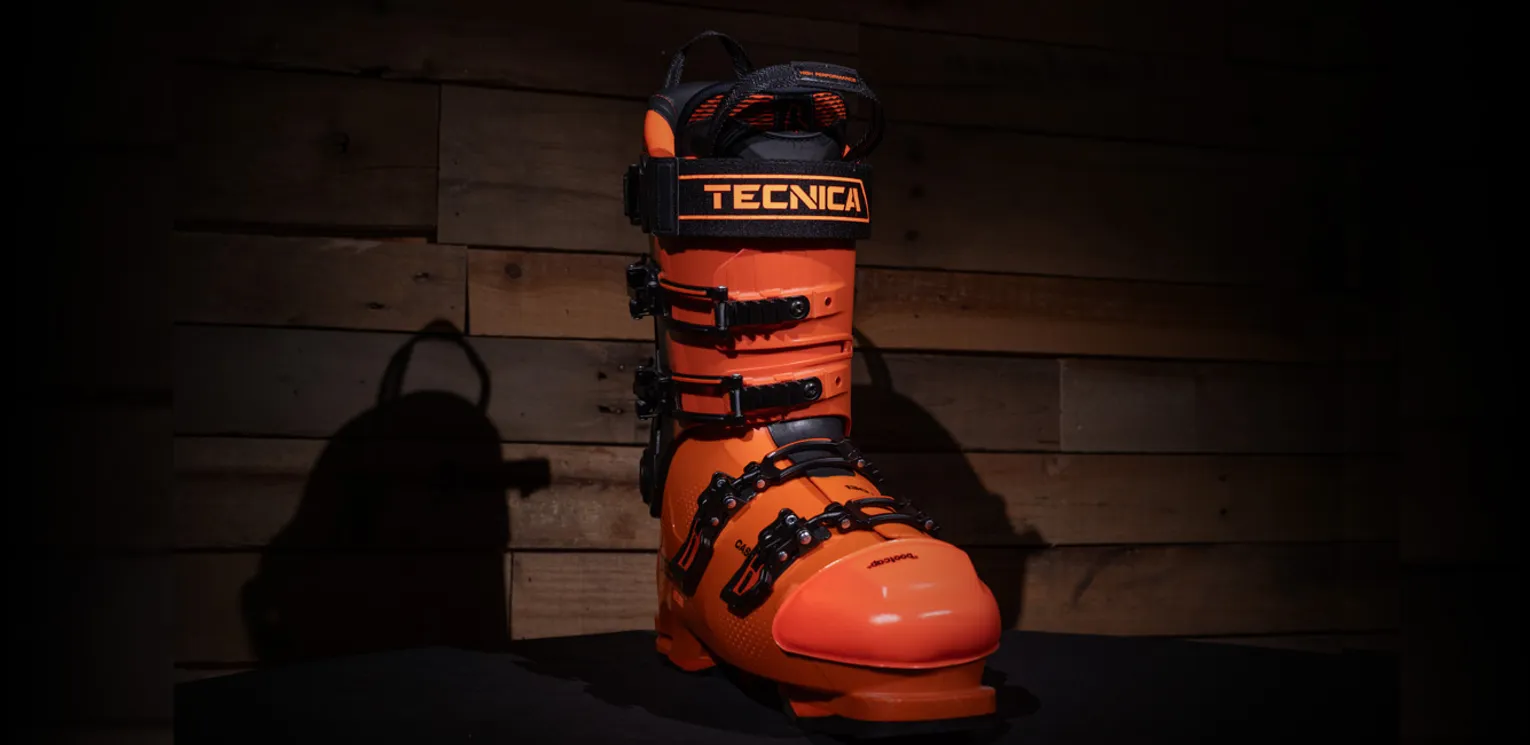
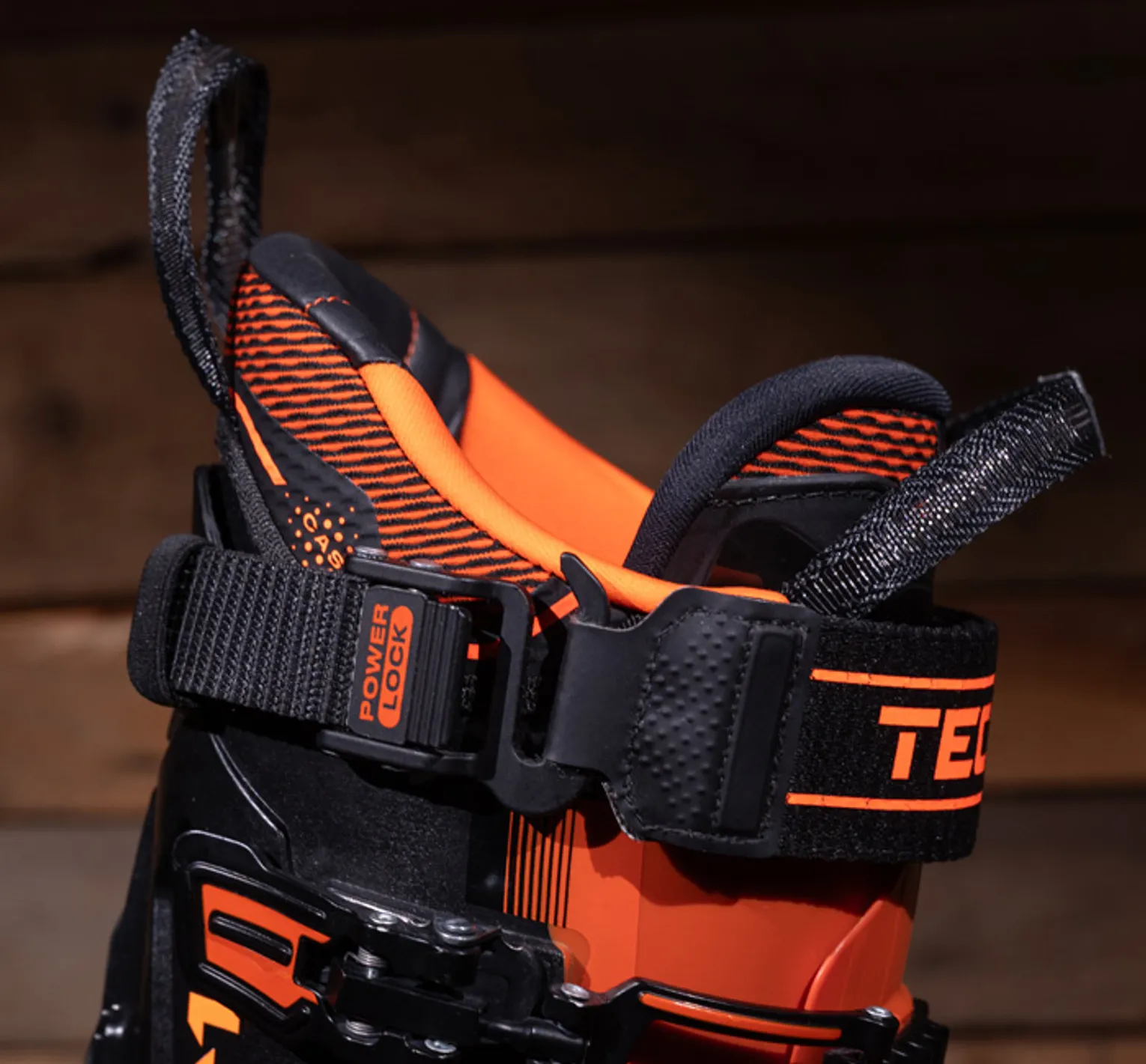
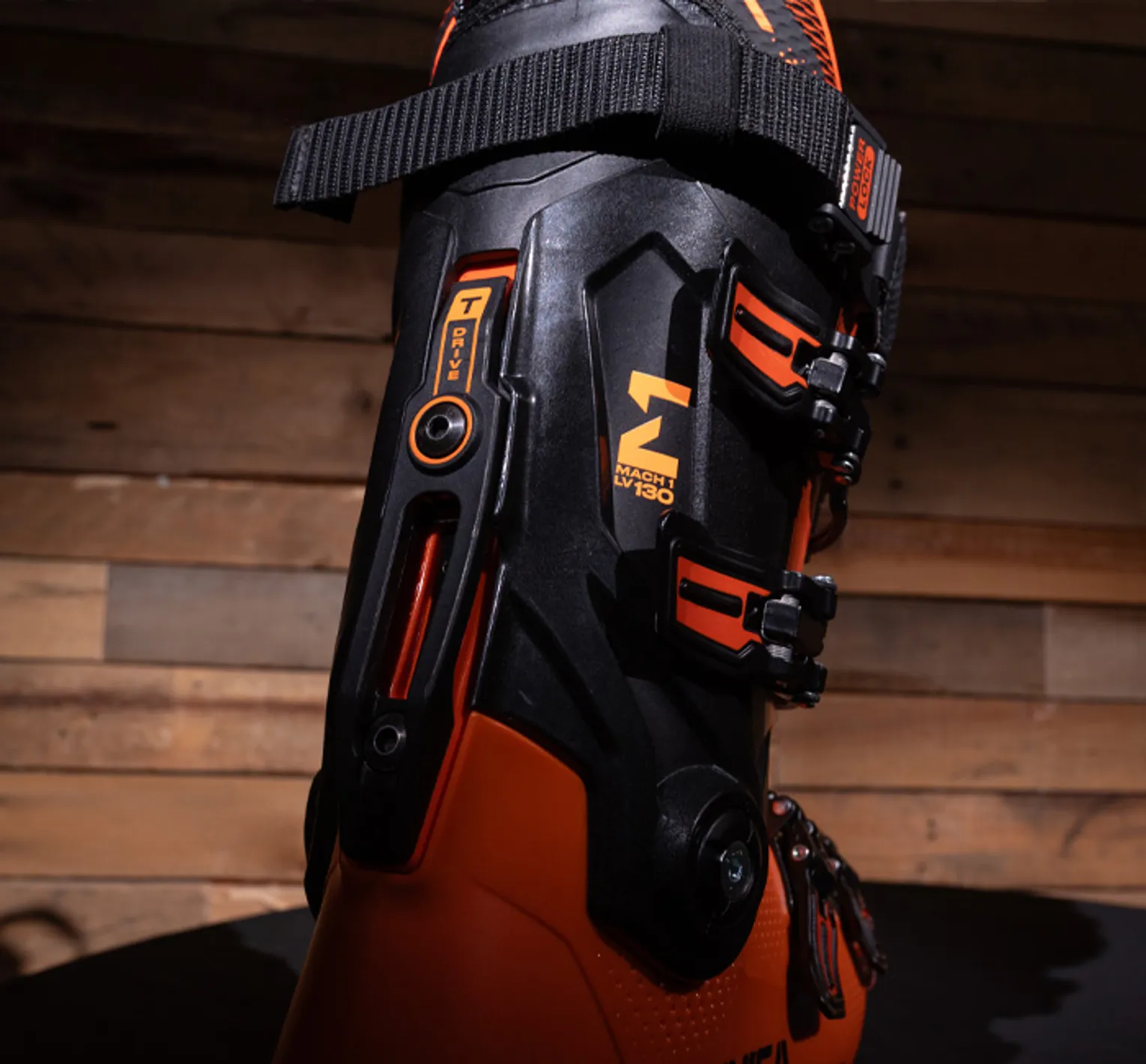
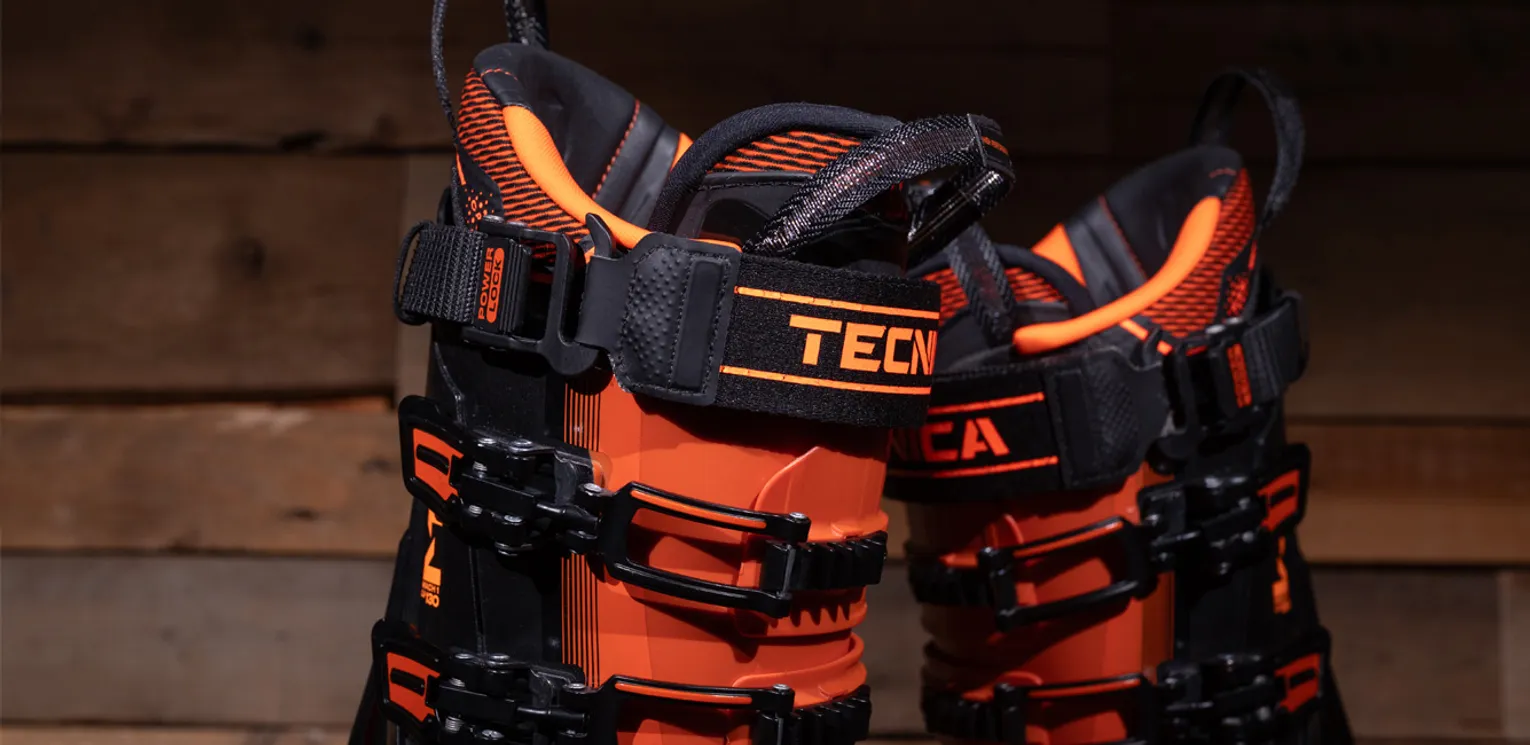
The CAS is a thermo-moldable plastic with pre-thinned points to ease the customization process for a boot fitter. Overall, the shell is on the thin side, so stretching rather than grinding is the preferred method of bootwork. In addition to the lightweight aluminum buckles we also get a minimally stretchy power strap that operates on a cam for snug shin contact. Gripwalk soles come standard on this boot. The liner is also made with a CAS material and is totally heat-moldable. From the tongue to the forefoot and through the ankle, this material can be thermoformed as well as ground to make more room. It’s a very nice liner with an asymmetric tongue and an appropriate blend of cushioning and rigidity.
From a fit perspective, this is listed as an LV, 98 mm forefoot width boot. With a bit of stretching in the bunion area, I fit perfectly in this thing. Even over the instep, there’s more room than many other LV boots on the market. I can only imagine this will irk the slender-footed crowd while those with mid-volume feet will rejoice as they’re getting the precision and performance of an LV with the comfort of an MV. I’ve been splitting time between the stock liner and a ZipFit aftermarket liner and I notice more tightness in the forefoot of the stock, but it’s not uncomfortable. The heel hold is very similar, but the Zip does add a bit of stiffness to the mix. Overall, I’d put this on the more comfortable end of the LV spectrum, and I’m not unhappy with that.
At a Glance:
2026 Tecnica Mach1 130 LV Ski Boots
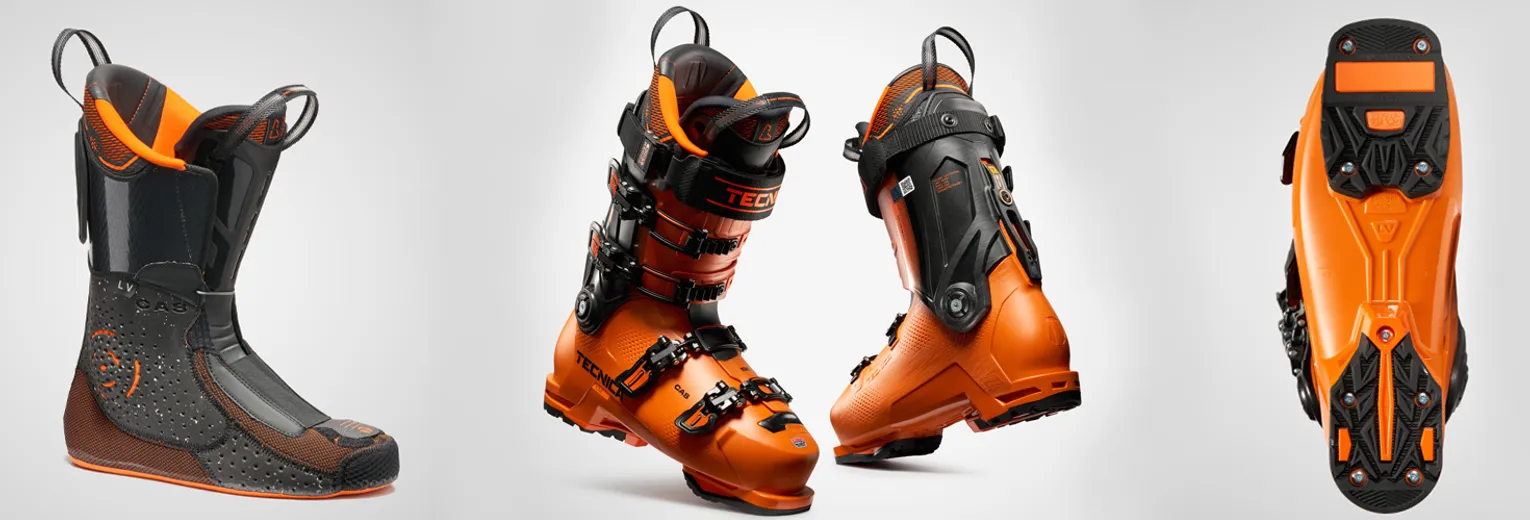
| FLEX INDEX | LAST WIDTH | KEY FEATURE | WEIGHT w/ LINER | PRICE |
|---|---|---|---|---|
| 130 | 98 mm | T-Drive 2.0 | 1,990 g @ 27.5 | $799.99 |
On snow, these things rip. I’d say it’s a stiffer 130 than some, but not the top. There’s a different type of performance going on here, as the mix of light and flexy plastic mixes well with the stiffer and more rigid spine. They feel more reactive and responsive versus more powerful and damp. There are heavier, more solid-feeling boots on the market, specifically the Kastle K130P and the new K2 Cortex 140, but for being on the lighter side of the spectrum, these feel very connected to the snow. I do think they pair well with skis that are not quite race-builds, so to keep it within the Blizzard/Tecnica umbrella, I feel that this boot’s flex and character pairs perfectly with the Rustler 9—that's one of the skis I’ve felt most comfortable on in this boot. Salomon QST 100 is another that comes to mind, blending an even flex pattern and a higher-performance ceiling without being too burly.
On groomers, the Mach1 130 handles high speeds with ease while providing exemplary rebound on the back side of the turn. You do have to be ready for this type of energy, as some boots just don’t have it—that's the feel of the T-Drive 2.0 in action. That said, there’s a lot going on here, and while they stick to some of the traditional values like four buckles and a multi-injection, they also use a bunch of moving parts in the spine. This contrasts with other brands who are blockier and less techy, simply riveting the upper cuff to the lower shell. Both work just fine, but it is interesting seeing how sophisticated Tecnica gets with this interface. When you get off-trail or in deeper snow, there are no issues whatsoever. They keep up just fine in bumps, trees, powder, or crud. I do notice a bit of a lack of overall power in the crud and chop compared to the Kastle and Cortex, but those are extreme examples of hefty and robust clogs while this one is more technological. For a heavier skier like me, I find it interesting that I can get satisfaction out of both.

I started skiing in this boot in mid-January and honestly haven’t looked back. It’s become my go-to boot in terms of blending fit and performance. Whether paired with the ZipFit liner or the stock one, this is one of the best-fitting and most responsive boots I’ve ever been in. Tecnica’s goal here was to improve the overall experience, from entry through skiing, and to exit, and I think they’ve done it 100%. This is a refined and high-quality product with excellent fit and finish. It’s polished and perfected to achieve the best possible outcome on the hill. Again, none of this means anything if it doesn’t fit your foot, but I’m more than happy to be one of the lucky ones.