

Top Five Fridays: December 22, 2023
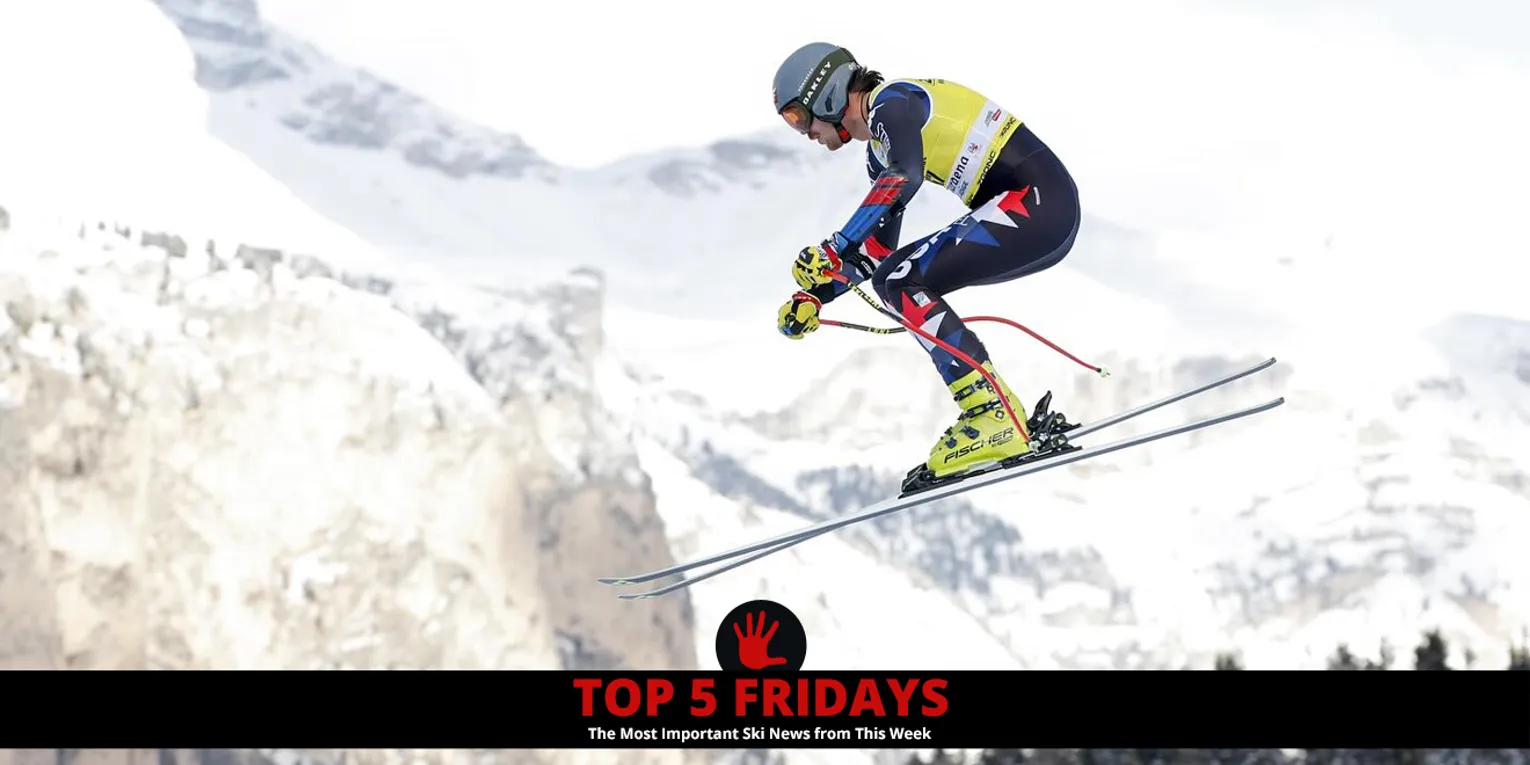
Lead Image: Bryce Bennett, looking cool, calm, and collected on course at Val Gardena / Groeden, where he managed 2 podiums in 3 days. Image: U.S. Ski and Snowboard Team on Facebook
#1: FIS Alpine Updates - Another Shiffrin Podiums, Another Bennett Podium, and a Slew of Other Positive Results:
Hello, and welcome to Top Five Fridays, the December 22, 2023 edition! This week we start out with back to back FIS highlights, followed by a couple of Grinchier topics. We’ll get to those shortly, but before we do, let’s talk FIS World Cup Alpine Skiing. This week was a busy one for both the men’s and women’s circuits as both genders traveled to two venues this week. As per usual, we’ll start by recapping the women’s action, as they began their week in Val d'Isere, France for a downhill and a super g race. While Shiffrin’s been on a bit of a high speed tear as of late, she opted out of the downhill at Val d’Isere, likely to rest after what’s been a torrid start to the season. As such, the downhill race was highlighted by U.S. team athletes Jacqueline Wiles who finished in 25th, Isabella Wright who came in 29th, and Keely Cashman who finished in 30th. A day later, it was an entirely different story as the super g course proved to be unusually challenging for U.S. athletes. In that race, Mikaela Shifrrin, Jacqueline Wiles, Isabella Wright, Keely Cashman, Tricia Mangan, and Alice Merryweather all DNF’d after going off course. Fortunately though, there was one athlete who kept it together that day: Lauren Macuga, who finished in 17th.
From there, the women’s circuit moved on to Courchevel for a nighttime slalom event, where Petra Vlhova snuck past Shiffrin for a first place finish. While another podium finish for Shiffrin is surely amazing, the real highlight of this race is potentially the fact that Paula Moltzan finished in 5th. We’ve been watching her earn strong results all year, and we keep claiming that one of these weeks she’s going to put it all together for a breakout finish. While that didn’t quite happen in this race, a 5th place result shows that she’s a dangerous competitor, and one that we remain convinced will find herself on at least one podium this winter. Also finishing in the points in that race was U.S. athlete AJ Hurt, who came in 25th. Looking ahead, the women’s circuit has almost a full week off before reconvening in Lienz, Austria, for a giant slalom and slalom race, starting on December 28th. You can preview those events right here!
On the men’s side of things, the action continued to get underway in Val Gardena / Groeden, Italy. As you’ll recall, we left off last week right after Bryce Bennett had just somewhat unexpectedly won the first downhill race at that venue, beating out favorite Aleksander Kilde. Following that race, the men competed in a super g in which Jared Goldberg finished in a three way tie for 10th, Bryce Bennett earned 14th, Kyle Negomir finished in 24th, and Sam Morse secured 30th. A day later, for the third and final race at Val Gardena / Groeden, Bryce Bennett earned a second podium, finishing in a remarkable 3rd place, while Jared Goldberg took 11th, Ryan Cochran-Seigle finished 13th, and Kyle Negomir took 30th once again. All in all, it was a highly successful weekend for the U.S. Team, who apparently has been eager to take the course after a painfully slow start to the season.
After departing Val Gardena / Groeden, the men’s team headed to Alta Badia for a pair of giant slalom races. In the first of the two events, U.S. athlete Tommy Ford took home an impressive 9th place, while River Radamus highlighted the second with a 14th place finish. Looking ahead, the men’s team is currently in Madonna di Campiglio, Italy for a nighttime slalom event scheduled for later today. From there, they’ll have a brief holiday break before heading to Bormio, Italy for a downhill and super g event on the 28th & 29th. You can preview those races right here.
#2: FIS Freestyle Updates - Gu Reigns Supreme, While Big Air Events Continue to Be Must See TV:
Next up in competitive news, we want to bring you some more updates from the world of freeskiing, as Copper Mountain, CO played host to both a Big Air and Halfpipe event last week. Seeing as we just recently discussed the Beijing Big Air event a couple of weeks ago, let’s start our discussion with that discipline as this week’s judging builds on the previous storyline. As you’ll recall, the highlight of the Beijing Big Air was a revelation in judging. This year, freeski judges have suddenly found themselves rewarding creative and highly technical tricks in the same way that they reward high rotations and flip counts. This week, that storyline continued, with the competitive dynamic between the two schools of thought ramping up even further. As per usual, Newschoolers has excellent coverage of the entire competition, so we’ll do our best to give you the bite size version. In that version, the storyline can be summed up by two athletes: Matej Svancer, and Mac Forehand. As you’ll recall, Matej earned the highest score of the day in Beijing with his unique Tokyo drift flat 180 Japan. This week, he again scored very well for another unique trick: a nollie double 1080, brought back to 900. For that, he scored a 93.50. On the other end of the spectrum was Mac Forehand, who ultimately won the event with his ridiculous rotation and grab combinations. His best score of the day came in his third run, with a switch triple 1800 mute grab, which scored a 94.00. In other words, there was just a .5 point difference for two tricks that are incredibly different. In recent years, some have felt concerned about the direction of Big Air. This year, those concerns are all but gone as the athletes and judges have teamed up in a way that’s keeping the discipline incredibly exciting and unpredictable. To read more, head over to Newschoolers.
In other FIS freeskiing news, we also want to share the results of last week’s halfpipe competition, also hosted in Copper. On the women’s side of that event, the storyline continues to be about Eileen Gu, who remains well ahead of her competitors, despite taking time away from competing while balancing courses at Stanford and a full-fledged modeling career. Say what you will about her decision to compete for China rather than the U.S. - if you’re not impressed by Eileen Gu, then you’re probably lying to yourself. Needless to say, she won the event. On the men’s side, competition is a bit more competitive amongst the top of the field. Ultimately, it was Nick Ferriera who won this time, followed by Hunter Hess in second and Birk Irving in third- all U.S. athletes. In fact, with the home court advantage, each of the top 5 competitors were Americans, as well as 7 of the top 10. Also worth noting in this contest, is that Nick Geopper, who recently came out of retirement and had never competed in halfpipe, finished in 4th place in his first FIS halfpipe final, immediately proving himself to be a force to reckon with. Again, for full coverage, we’ll defer you to Newschoolers.com for all the details.
#3: In Wake of a Total Meltdown, Several New England Ski Resorts Face Challenging Circumstances Ahead of Holiday Week:
In this video posted to the Sunday River Facebook page, it’s easy to see the scale of destruction resulting from the storm.
Unfortunately, our next topic is significantly less fun, as New England was hit with catastrophic weather to start the week. Two weeks back, on Sunday night into Monday, we got lucky as a forecasted rainstorm broke in our favor, with temperatures dropping quickly enough that the most significant precipitation was snow. A week later, on Sunday and Monday of this week, we weren’t so lucky. This time, not only did temperatures not cool off quickly enough to provide snow, but the amount of precipitation was higher. Here in Vermont, numerous areas received 2-3” of rain, in addition to significant mountain runoff as snow melted rapidly. The result is that a number of the same communities that flooded over the summer flooded once again. The good news is that the flooding appears to have been much less destructive in most areas.
The bad news, however, is that it wasn’t just Vermont that got hit, but all of New England. Not only that, but New Hampshire and Maine got the worst of it. In New Hampshire, the White Mountains in particular saw extreme flooding as temperatures in the 60’s, combined with heavy rain and winds caused rapid snow melt. Perhaps the hardest hit resort that we’re aware of though is Sunday River, Maine, where the resort itself saw catastrophic washouts after receiving roughly 5” of rain. There, access roads were completely washed out, leaving some guests stranded at their lodging at the resort. As a result of the washouts and damage, the resort has been closed all week, with plans to open on Saturday for anyone already in possession of a lift ticket. Those looking to purchase a ticket at the window will have to wait until further notice. Ultimately, as bad as this storm was, it does sound like most resorts and communities will make it through without severe consequences. Yes, there was significant flood damage, and road washouts, and power outages, but by and large, this storm’s mark will be short lived as hearty New Englanders have rapidly rallied to get their communities back on track. To learn more about the damage incurred in Vermont, New Hampshire, and Maine, click here, here, and here.
#4: Mainstream Publication “Slate” Shares a Whirlwind Take on the “Epic vs Ikon” Narrative, Sharing Insight into How the Ski Industry is Being Pitched to the Masses:
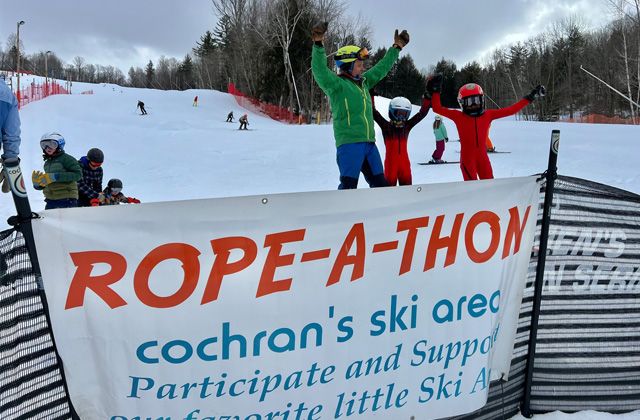
A scene from last year’s Rope-a-Thon at Cochran’s Ski Area - one of approximately 369 independently owned ski areas in the United States. Image: Cochran's Ski Area on Facebook
Finally, we round out this week with an article from Slate that retells the story of the rise of the Ikon and Epic passes, as well as the growing consequences. Now, to be clear, this isn’t a new story at all. In fact, it’s quite the opposite: we all know far too well the current landscape of multipasses, as well as the challenging consequences that have resulted from consolidation. Still, we found this article interesting because of its very pointed delivery, oversimplification of the issue, and the intended audience. Let’s dive in, starting with some facts.
One of the highlights of this article is the way it tells the complex story of consolidation pretty succinctly. Starting way back in the early 1990’s the article takes us through Apollo Capital Management’s purchase of Vail and Beaver Creek, which ultimately resulted in the formation of Vail Resorts as we know it, setting off Vail’s current business model of resort acquisition. Emphasizing the company’s meteoric growth, the article drops figures such as Vail’s current value of $8.6 billion, as well as the stat that their annual income has increased from $940 million in 2007 to $2.8 billion in 2023. In addition to the Vail side of the story, the article also does an excellent job reminding us of how Alterra came about. Seeing Vail’s growth, executives at KSL Capital Partners and Aspen teamed up to buy Intrawest - Vail’s primary competitor at the time. The outcome of this partnership became Alterra, owners of the Ikon Pass. While we’re already aware of these stories and incredible growth experienced by both companies, this article does an excellent job of driving home the story in one fell swoop. For us, that’s the highlight: it gives the general public an insight of how Ikon and Epic came to be, and what their overarching strategies are. Unfortunately though, the author of the piece has a very clear agenda, causing them to only tell part of the story, ultimately doing an injustice to both those of us in the ski industry, and those who may have considered winter sports before, but are instead immediately turned off by the author’s description of modern ski resorts. Allow us to explain.
As we read this article, we came across numerous passages that made us think, “ok, but that’s only part of the story,” or, “well, that’s not entirely true.” Take for instance this quote, “Gone are live bands, independent outfitters, free lift-side parking, and secret smoke shacks.” While we can’t speak to the existence of secret smoke shacks, and we’re truthfully not sure what “independent outfitters” means in this context, we can absolutely confirm the continued existence of free lift-side parking and live bands at ski resorts. In fact, we’d argue that most ski areas still have these two things. Even at an Ikon resort like Sugarbush, you can routinely find live music on the mountain, and parking is free 365 days a year.
The problem with this quote is really emblematic of the bigger issue with the entire article, which can be summed up in this passage, “Skiing looks different in much of North America today. That’s because it has been reduced to a binary choice: Epic or Ikon?” If you’re a regular reader of ours, then you’ll likely remember when we shared an article from Storm Skiing just about a month ago, that shared the actual figures behind ski resorts in America. As it turns out, “reduced to a binary choice” couldn’t be further from the truth. In that article, we learned that 369, or 73%, of ski resorts in America are singularly owned, or municipality owned. Of the 27% that aren’t owned by a singular owner, there are 24 multi-resort owners. Not two, not a binary choice. In fact, there are actually 393 total ski resort owners in North America. For us, that’s ultimately the issue with this article: it’s wildly misleading.
Our point here isn’t that we generally dislike this specific article. Rather, we bring it up because we find it interesting, if not problematic, that this is a narrative being shared to the wider public who might not have a true understanding of the ski industry, or what ski resorts are like nowadays. If you were to believe the author, there are only two choices when it comes to skiing, and neither one is fun. There’s no live music or sense of community at either, and both require paid parking. For us, that’s what the story is here. Articles like this one tell the grander public that skiing has become binary and soulless. They make participating in the entire sport seem downright awful, which simply couldn’t be further from the truth.
Unfortunately we’re not exactly sure what the takeaway is here, but perhaps this holiday season, if the topic of skiing comes up amongst relatives who aren’t quite as in the know - consider doing your part to ensure that they’re aware that independent ski areas are alive and well in North America. If you’d like to give this article a read yourself, which we encourage you to do, you can check it out right here.