

Top Five Fridays: January 3, 2025
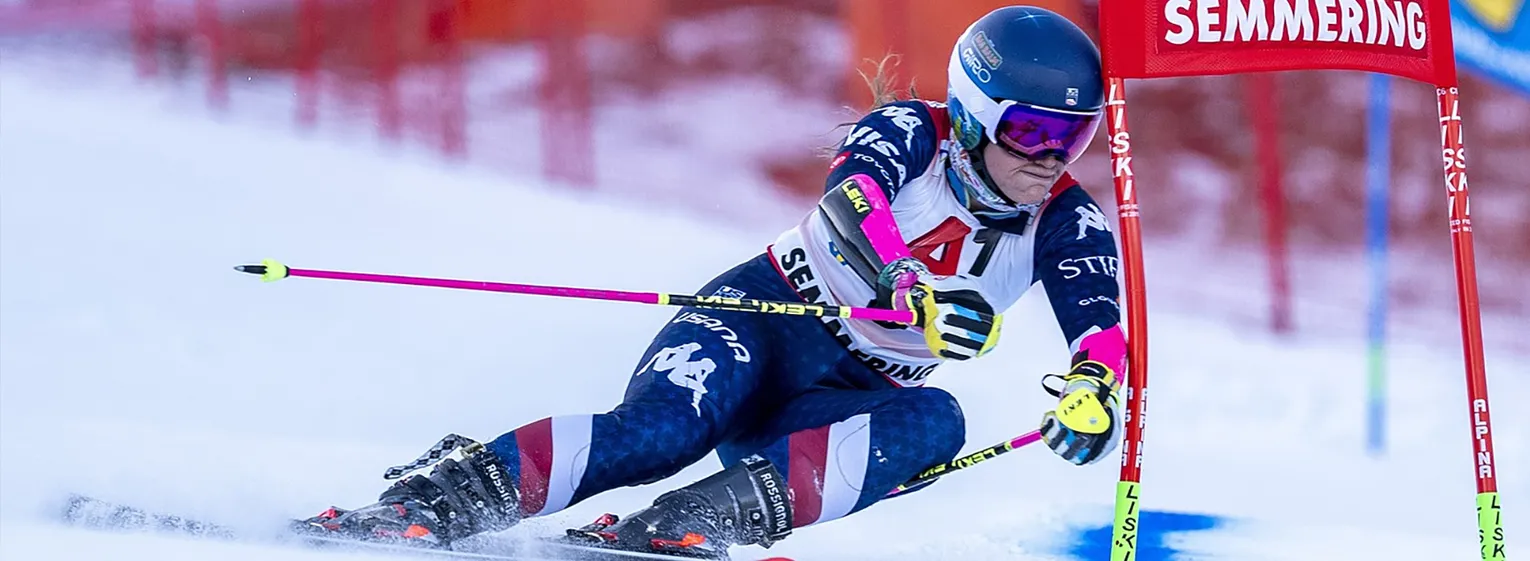
Paula Moltzan mean-mugging her way to a career best finish in Semmering, Austria this past weekend. More on that below! Image: US Ski and Snowboard Team on Facebook
#1: FIS World Cup Alpine Updates - Paula Moltzan Highlights the Weekend As She Ties Her Career Best Result:
Just because we didn’t see any American men on a downhill podium last weekend, it doesn’t mean the race wasn’t thrilling to watch!
Hello, and welcome to Top Five Fridays, the January 3, 2025 edition! As you likely know already, this week’s news has been absolutely dominated by the story coming out of Park City, which has since developed into a nationwide public relations nightmare for Vail. We’ll get to that in a moment, as well as a couple of local highlights to level out the mood, but before we do, let’s take a look at what went down in last week’s FIS Alpine races.
Starting with the ladies division as always, last weekend brought us a pair of races in Semmering, Austria: a giant slalom on Saturday, and a slalom on Sunday. Between the two races, it was the giant slalom that was undoubtedly the highlight of the weekend, as the results were headlined by Paula Moltzan earning a 5th place finish and matching her career best in the discipline. Making the win even more notable is the fact that Moltzan accomplished this feat while still mending a dislocated shoulder which she suffered in her crash in Killington at the end of November. Of course to earn the honor of “race of the weekend,” the U.S. Team needed more than just Moltzan to earn points, and they did exactly that. Following Moltzan’s finish, Nina O’Brien was the next fastest American, with a 15th place finish, followed by AJ Hurt in 27th, and Katie Hensien in 28th. All told, placing four athletes in the top 30 of any race should be seen as a teamwide success. Unfortunately, that level of success could not be repeated the next day, as only AJ Hurt earned points in the slalom, with an 18th place finish. Looking ahead, the women’s circuit has moved to Kranjska Gora, Slovakia for another round of giant slalom and slalom races this weekend. You can preview those events here.
On the men’s side of things, it was a bit of a tougher weekend as a stop in Bormio, Italy presented point earning opportunities in the form of a downhill race and a super g race. In the first of those two races, a downhill event last Saturday, no American men earned points. It’s an unfortunate result as hopes were high for Ryan Cochran-Siegle, who had just earned his first podium of the year a week prior at the downhill race in Val Gardena. Ultimately though, he was unable to replicate that result, instead earning a DNF. But, the weekend on the whole wasn’t a wash. A day later, Bormio presented a new challenge in the form of a super g, and in that race, three Americans rose to the occasion. When all was said and done Kyle Negomir led the way for the Americans with a 21st place finish, immediately followed by Ryan Cochran-Siegle in 22nd, and Jared Goldberg in 29th. So, while it may not have been the type of overwhelming success that the men’s team was hoping for, they still managed to capture some points as they head into a brief break this weekend. As for what lies ahead, the men’s next scheduled race is on Wednesday, where they’ll compete in a slalom race at Madonna di Campiglio, Italy. You can preview the schedule for that race here.
Finally, before we close our FIS Alpine highlight out, we want to give you a very brief update from Mikaela Shiffrin, who continues to battle back from a rare impalement injury. This week, she took to Instagram to share some footage of her working out in the gym, while also providing the news that she’s beginning to feel better and expects to begin lightly skiing in the next week or so. While it’s yet to be announced when or if she’ll return to racing this year, the Instagram post is a very encouraging sign for Mikaela fans.
#2: The Park City Ski Patrol Situation Has Snowballed in a Way We Never Would Have Imagined:
For a quick reminder of the value and importance of Ski Patrollers, give this video from Helly Hansen a watch.
If you’re a skier and you’re on the internet (which, you are if you’re reading this), then you’ve already heard quite a bit about our next highlight this week. If you’ve been following along with TFF in recent weeks, then you’re well aware that trouble has been brewing at Park City, where until last Friday the Ski Patrol Union had only threatened to strike over failed contract negotiations. As we hit publish last week, tensions were still on the cusp of boiling over. Then, not an hour after publishing, news broke that the union had initiated the strike they’d been threatening, walking off the job on the morning of a 2’ powder day, the Friday after Christmas. When that happened I texted Jeff, saying, “I just cannot keep up with this story.” Little did I know what turbulence this week would bring.
In the seven days since the strike began, the fallout has snowballed into a full on avalanche of negative press for Vail resorts, the likes of which we have arguably never seen before. As you’ll remember, in the days leading up to the strike, the Park City Professional Ski Patrol Association (PCPSPA) posted on social media asking that anyone approached by Vail to be a scab say no to the resort. Not only would doing so undermine their efforts, but it would also cause the resort to open with a patrol unit that wasn’t familiar with the terrain. What happened next was the first of many dominoes to fall that have resulted in widespread disdain for the company’s handling of the situation.
In the days after the strike was initiated, we began hearing rumors that Vail was essentially telling non-unionized patrollers and managers at other resorts that they had to travel to Park City to assist, with the implication being that not doing so would cost them their job. That result was that the resort obtained enough patrollers to open Park City, although only partly. While we don’t know the specific operational limitations facing PC right now, we do know that they’re operating with a group of patrollers who are unfamiliar with the mountain, and who’ve been tasked with keeping it safe at a time when avalanche danger has been exceedingly high in the area. Without patrollers to properly mitigate the danger, the resort has been forced to open in limited capacity. Even today, the website shows only 80 out of 350 trails open, good for roughly 23% of terrain.
By Tuesday, things had gotten so bad at the resort that Park City COO Deirdra Walsh took to Instagram on Tuesday in an attempt to do some damage control and soothe disgruntled guests. Unfortunately, not only was that post not well received, but things continued to get worse.
A day later, on Wednesday, news broke that ski patrol unions from Breckenridge, Keystone, Crested Butte, and Park City all co-signed and sent a letter to Vail CEO Kristen Lynch, admonishing her handling of the situation. In the letter, these unions all but confirmed the rumors that Vail had forced patrollers to abandon their home mountains and join a “Patrol Support Team” at Park City. What’s interesting about this letter though is that it barely focuses on the situation at Park City at all. Instead, it airs grievances in regards to the impact that that decision had on patrollers at these other resorts. Not only did it have a negative impact on patrol morale, but it also had a very real impact on the ability for those units to operate effectively. In the letter, these unions say that Vail removed, “local leadership from their resorts without notice,” thereby failing to provide leadership at these ski areas during the busiest time of the year, causing, “uncertainty and disruption throughout patrol teams.” The letter goes on, becoming more scathing by the sentence, until by the very end it is absolutely crystal clear that Vail doesn’t just have a PCPSPA problem anymore, but one that is much, much larger.
Of course, where the impact of this strike is most likely to be felt by Vail, and where the pressure being applied by the PCPSPA has the most leverage, is in the poor guest experience amongst casual skiers, which is already showing a direct impact on the resort’s stock prices. This isn’t just a casual claim either; Vail’s stock prices have seen a significant decline over the past week, falling from $190.72 at the start of last Friday, to just $176.00 at the end of the day yesterday. Perhaps most notable was yesterday’s decline, in which the stock dropped a full $12 as the holidays concluded and stockholders acted on their fears regarding the potential fallout from Vail’s handling of the situation. To further drive this point home, and to exemplify just how far reaching the impact of this strike has quickly become, we’ll leave you with this clip from CNBC’s financial news program, “Halftime Report,” in which one host could hardly hide his displeasure with Vail after having a poor holiday experience.
As you know, this is an ongoing story, and we’ll be sure to bring you more updates as it continues to unfold.
#3: Killington’s New Owners and Development Team Working Hand in Hand to Develop New $3 Billion Base Village:
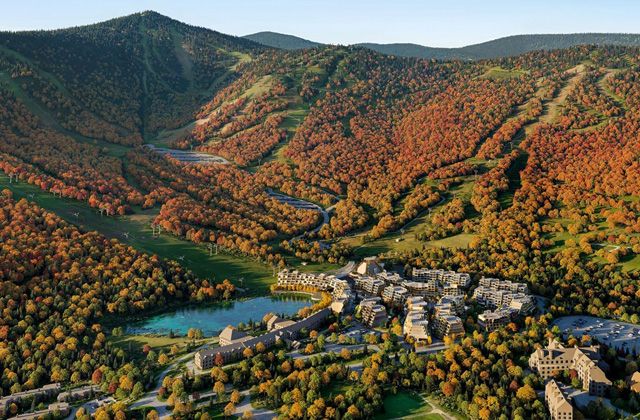
A rendering of the proposed size, scale, and layout of the new base village at Killington. To see plenty of other renderings that set the tone for the village, visit LiveKillington.com.
Ok, that last highlight was a lot to take in and likely got those stress levels up higher than any of us want on a Friday. So, for our next highlight, we’re going to flip the script and share some development news from one of our favorite stories of this past year: the evolution of Killington Mountain Resort. This week, Vermont Public Radio shared a really in depth piece of reporting that brings us all up to speed in regards to the latest plans surrounding the development of a base village at the ski resort. Before we dive into some of those details though, allow us to take a couple of paragraphs to retell the story of how we got here, as this piece of news is really the merging of two separate stories that have been developing at the resort in recent years.
First things first, just a quick reminder that Killington Mountain recently became an independently owned resort. That happened back at the end of August, when POWDR Corp announced that they were selling off part of their ski resort portfolio, starting with Killington. The buyers in that agreement were identified as a group of local businessmen. We’ll circle back on that in just a second.
The other story is that of a decades-long effort to build a ski village at the base of Killington, which has only recently begun to take shape as a result of a cooperative effort between the resort, investors, and most importantly, the town itself. While the goal to develop a village dates back decades, it began gaining serious traction just after Covid, as an influx of residents ultimately led locals to approving the use of $47 million in funds to help implement the infrastructure needed to support the development of a village. While that $47 million package includes plenty of line items, the highlights involved a new municipal water source as well as updates to the mountain road. All of this effort was already underway when POWDR announced the sale of Killington in the fall of 2024, leading many to wonder how, or if, the sale would impact the village plans.
This week, thanks to Vermont Public Radio, we have some answers in regards to how the two stories are coming together. First, and perhaps most interestingly, buried in this story is the crucial anecdote that the development group that is hoping to build Killington’s base area is actually a part of the investment group that purchased Killington. In other words, our initial belief that POWDR had sold to local investors who would now be working in parallel with the village development group wasn’t entirely accurate. Instead, the development group, known as Great Gulf, also owns part of Killington. This is crucial because it means a portion of the group that owns the resort is also the developer of the base village. That means the development operation should go smoothly as the interests are aligned.
Beyond that detail, we also learned plenty about how the plans have shifted along with the new ownership group. While the overarching goal is the same, the new owners hired a new architecture firm to review the plans and make adjustments to improve them. Now, the new plans have seen modifications such as the creation of one XL size lodge rather than two lodges, the introduction of a massive “snow beach”, and the implementation of numerous walking trails around the property. All told, the plans are seen as an improvement over the previous drafts.
Despite all of the excitement surrounding the updated plans and cohesion amongst ownership, there is one slight drawback at play here though. Because the plans have been adjusted, the new group must once again apply for Act 250 approval before they can begin building. Due to that, the start of construction has been delayed an additional year. Still, for such a monumental development, and for a project that’s already taken decades to begin, one more year isn’t all that bad. All told, it remains an interesting and exciting time for the Killington region. To learn much, much more about the latest updates from this project, check out the full report from Vermont Public Radio.
#4: Final Totals from Local Legend Noah Dines’s Record Setting Season:

An image shared by Noah’s sponsor, Fischer, back in October when he surpassed 3 million vertical feet. Let’s hope they update the graphic to reflect his entire 3.59 million feet! Image shot by @acarterclark, shared by @fischerski
Finally, we end this week’s highlight reel with the final chapter in a saga we’ve covered once or twice over the course of the last year. That saga, of course, is the story of our hometown hero Noah Dines, who broke the record for most uphill vertical feet skied in one year back on September 3, 2024, when he announced that he’d broken the 2.5 million foot threshold. At that time, Noah made it known that while he’d broken his friend Aaron Rice’s record, he still had approximately 500,000 more vertical feet to climb in order to break his own personal goal of 3 million vertical feet. As such, his plan was to continue climbing until midnight on December 31st, eager to see just how far he could push himself.
This week, on January 1st, Dines made an Instagram post announcing not only his final vertical, but a number of other statistics related to his yearlong journey. For instance, to achieve his goals, Noah burned through 5 pairs of skis, 12 sets of skins, and 3 pairs of boots. He also logged 6,082 total miles of skiing, over the course of 2,268:34 hours of effort. In order to maintain his pace year round, Noah also had to travel. A lot. In total, he skied in 6 U.S. states and 4 countries, sleeping in his truck for two months while driving 6,962 miles total. As you review the Instagram post and take in all of the statistics, you begin to realize something about Noah’s accomplishment: skiing was only half the battle. Or, to put it in Noah’s words, consider his response to the question of, “How is your routine going to change after January 1, 2025?” In his words, “...I’m excited to say ‘Yes’ to things, whether that’s just going out for dinner or a drink or going to go ski something fun, or going to a wedding. There’s been a lot of saying ‘No’ because I’m so focused.” To say that Noah’s goal took some personal sacrifice would be an understatement.
Oh, and as for his final number? The big one? Noah officially logged 3,590,097’ this season, breaking Aaron Rice’s record of 2.5 million by over a million feet, and shattering Greg Hill’s original record of 2 million. So on that note, all there is left to say is, “Congratulations Noah. That was sick.”