

Top Five Fridays: September 6, 2024
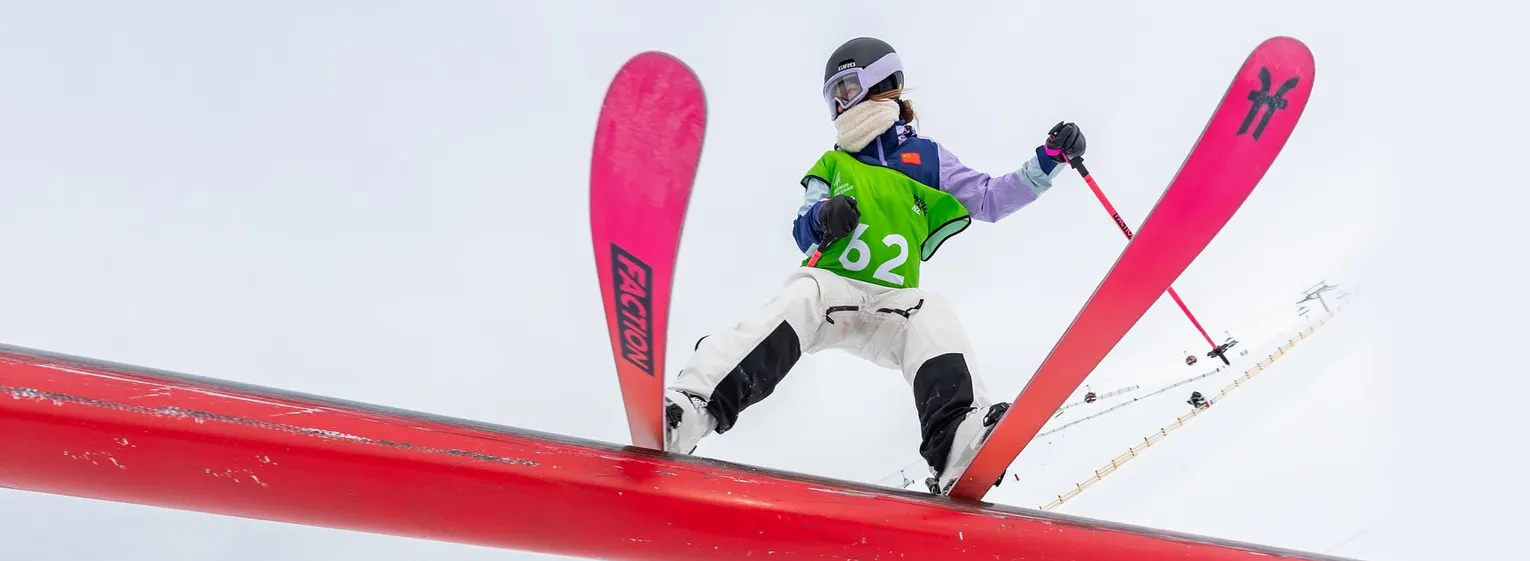
With the Winter Games NZ all but wrapped up, it’s time to take a look at who competed in this year’s games! More on that below. Image: Winter Games NZ on Facebook
#1: There’s Certainly Smoke, Will There Be Fire? Reports Suggest Alterra is Also Interested in LAAX and Other Swiss Resorts:
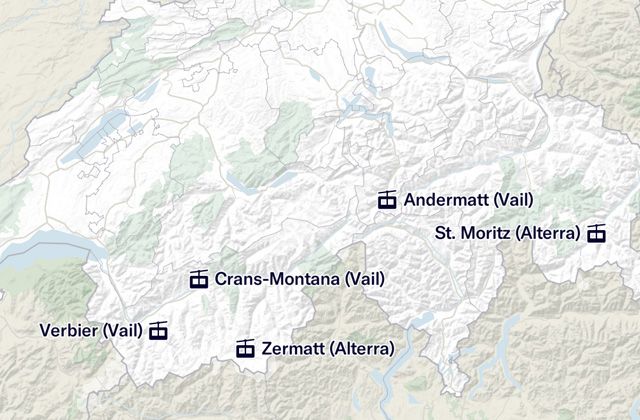
The lay of the land: even without any additional acquisitions, Vail and Alterra either own or are partnered with 5 of the 10 largest ski resorts in Switzerland. Image sourced from NZZ.ch, created using Openstreetmap and Maptiler
Hello, and welcome to Top Five Fridays, the September 6, 2024 edition! This week’s coverage is full of updates to stories that we’ve previously covered, undoubtedly highlighted by further rumblings from Europe regarding the imminent presence of America’s mega resorts.
If you checked in with us last week, you already know that there’s been plenty of talk regarding Vail’s interest in making inroads in Switzerland, specifically through the acquisition of LAAX. We use italics there because unlike most of the news we cover, this story is based entirely on speculation. The “news” that we know for sure, is that Vail has essentially been contacting Swiss ski resorts, trying to get a feel of what’s for sale and for how much. Last week, those discussions morphed into full on rumors as Swiss news outlets reported that Vail is specifically interested in LAAX, despite their chairman of the board of directors denying that there are any ongoing negotiations.
This week, the rumor mill shifted into an even higher gear as an editorial style game of telephone has occurred, resulting in claims that Alterra is also eying an acquisition or partnership with LAAX. Because things are starting to heat up with this story, we want to attempt to do two things with it this week: separate what we know to be true from what is currently just speculation, and then share the underlying story that’s unfolding.
First, let’s start with the rumors, so we can get an idea of where this story originated and how it’s drifted from the truth. Earlier this week, following last week’s reports regarding Vail, Swiss publication “NZZ am Sonntag,” which is the reputable New Journal of Zurich’s Sunday paper, shared a pretty comprehensive breakdown of their understanding of the situation unfolding regarding Vail and Alterra’s interest in European ski resorts. We’ll circle back to this report shortly, but for now the important piece is this series of sentences:
“Last week, rumors were circulating that Laax could be taken over next. However, the ski resort has denied this.
Research by the "NZZ am Sonntag" has now revealed that arch-rival Alterra is also exploring the market.”
It’s important to note the paragraph break before the last sentence as it indicates a separation of thought on behalf of the writer. That break in thought was either overlooked or ignored, and now the news has been reported by other publications as the NZZ having specifically said that Alterra has also tried to purchase LAAX. As a result, additional headlines read, “Vail Resorts and Alterra have their sights set on mountain railways in Laax,” which at the very least is a blurring of the truth.
So, if this all amounts to a rumor mill that’s spun out of control, why are we reporting on it? Well, because beneath the flurry of in-the-moment reporting, there actually seems to be some weight to the idea that both Vail and Alterra are looking to compete with each other by expanding into Switzerland. Not only that, but just like in America, they’re taking slightly different approaches to achieving their goals. One thing we do know for sure is that Vail is pursuing resorts in an acquisition based model. There’s proof of that in their acquisition of Crans-Montana last December. Ikon, on the other hand, has not made any actual acquisitions, and appears to instead be following more of a partnership based approach. This week’s coverage from NZZ.ch explains the nuances of this approach in great detail, and why it might be more appealing to Swiss ski resorts. While we absolutely recommend giving their coverage a read to get the local perspective on the story, the long and short of it is basically that by forming a partnership rather than selling outright, resorts can tap the massive Ikon Pass market while retaining their businesses. In other words, it’s kind of like when lottery winners have to choose between one massive payout, or smaller monthly payouts for the rest of their lives. Between Vail and Alterra, Swiss resorts are essentially being faced with the choice of selling to Vail for one massive lump sum, partnering with Alterra to add revenue on top of their existing business, or, perhaps most nobly, rejecting both offers and retaining full possession of their business and way of life.
Regardless of what you make of the rumors, this week’s update from NZZ.ch makes one thing perfectly clear: the next chapter in the story of Alterra and Vail’s ongoing competition will likely be written in Europe. To learn more about Alterra’s angle, and to gain some excellent local perspective, we recommend giving the report from NZZ a read.
#2: Changes is in the Air With Ski Patrol in America, as the National Ski Patrol Looks to Increase Membership:

The National Ski Patrol played a crucial role in the history of skiing in America for several decades. Now, as times and expectations change, the organization must adapt to stay relevant.
In other news updates this week, we caught a headline from the National Ski Patrol that parlays itself into another big picture discussion, this time regarding the trajectory of both the organization and the career of patrolling itself. First, let’s start with the headline: the National Ski Patrol (NSP) has just opened up its membership requirements to accept applications from those holding additional certifications such as Wilderness First Responders (WFRs) and Emergency Medical Technicians (EMTs). This breaks from the NSP’s historical stance that members had to be certified through the organization’s own Outdoor Emergency Care (OEC) program. This move, while subtle, highlights the danger facing the NSP, as a decrease in membership has forced second year CEO Stephanie Cox to take measures to cast a wider net for eligible applicants. In her words, “The pressure and the need for more patrollers is real, and so when I looked at the landscape of the industry, I thought, well, how can we help meet that need? And one way to do that is to help recruit new patrollers and bring them into the NSP.” For Cox, that’s what this move is really about: removing a barrier to entry and having access to a wider pool of applicants.
While there’s plenty to be said about both the NSP’s incredibly important history within America’s ski culture, equal amounts could be said about slow decline in recent decades, as well as its uncertain future.
If you follow along with ski news, you probably know that in recent years there’s been a significant trend toward unionization amongst patrols. At that same time, while interest in unionization is trending upwards, interest in the longstanding National Ski Patrol is trending downwards. While the earliest signs of trouble date all the way back to the late 1970’s, when the workload between volunteer and non-volunteer members became way out of whack, the organization more or less kept itself together until the early 2000’s. Since then, tumultuous disagreements within the organization, a decrease in partnerships with resorts, and changing perceptions regarding the value of patrol work have led to a further decrease in the organization’s size and influence. Now, while the National Ski Patrol is facing a decline in interest, unionization efforts amongst patrol units are seeing a surge in popularity. By all measures, it feels like times are changing in the world of ski patrol.
All of that said, if there’s ever a chance for the NSP to rescue itself, that time is now. Under Cox’s leadership, the NSP has a chance to reinvent itself and stake a claim for its relevance. The loosening of requirements to become a ski patroller is certainly a step in the right direction. Expanding on that move is Cox’s vision to increase the scope of ski patrollers - essentially eliminating the word “ski”, and simply referring to themselves as a “patrol” organization. While no significant announcements have been made in that regard, one early sign of this potential path forward is the inclusion of “Bike Patrols” under the NSP umbrella, as more and more ski areas begin offering bike operations in the summer.
All in all, this week’s news isn’t just about an adjustment to the required certifications for new National Ski Patrol members. Rather, it’s a story about a historic organization looking to reinvent itself as times and expectations continue to change. To learn about this week’s update, check out the report from Powder. To gain some insights regarding the history of the National Ski Patrol, we highly recommend giving this article from Ski Area Management a read. Despite being written a decade ago, it does an excellent job telling the history of the organization and explaining how it found itself in this position.
#3: It’s Official: Noah Dines is a New Record Holder:
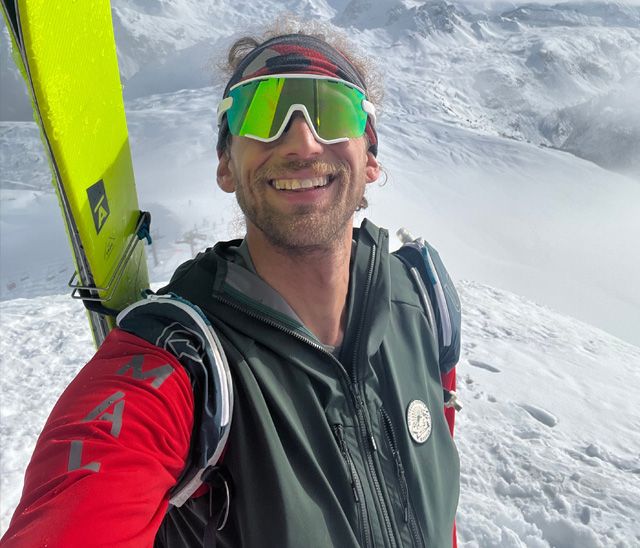
This week, Stowe local Noah Dines broke the record for most uphill feet skied in a year, with over 115 days to spare. From here, he has his sights set on his ultimate goal: skinning 3 million feet in a year. Image: Noah Dines's Substack
Alright, that’s enough heavy lifting for this week. Let’s shift gears a bit and talk about something a little more fun: Noah Dines has just broken the world record for the most vertical feet climbed on skis in a year. On Tuesday, September 3rd, Noah took to Instagram to announce that he’d climbed 2,506,500 vertical feet, having crossed the threshold at Chile’s El Colorado Ski Resort. In doing so, he broke the previous record set by fellow Stowe local Aaron Rice, set back in 2016.
While we��ll refer you to our coverage of Noah from earlier this summer to get the full story behind his efforts, we do want to take a moment to call out two highlights regarding this accomplishment. First, we can’t help but reiterate his unique approach to accomplishing this goal. When Salomon athlete Greg Hill first broke the 2 million foot mark back in 2010, it was heralded as a seemingly impossible accomplishment, and Hill’s legendary status was cemented. It was also achieved by summiting massive mountains. What we love about Noah’s effort is that he took an entirely different approach. Rather than knocking off massive chunks of vertical at a time, Noah took the work-horse approach, with a goal of averaging 10,000 vertical feet a day, oftentimes with multiple ascents and descents of the same peak. As a result, he’s not only shattered Hill’s benchmark with plenty of time to spare, but he’s surpassed the unofficial record with about three months to spare. Which leads to our next point: Dines isn’t done. From here, he’ll look to surpass his personal goal of 3 million vertical feet in a year. With 117 days left in the year, and at an average of 10,000 vertical feet, it stands to reason that Dines is theoretically on pace to hit roughly 3,676,500 feet. Now, we’re not suggesting that Dines will continue this pace and hit that mark, but we are suggesting that he’s in excellent position to hit the 3 million mark by 11:59 PM on December 31st. When he does, we selfishly hope it’s right here in Stowe, where the effort began. To learn more about Dines’s new record and his ongoing effort, check out his announcement on Instagram, our coverage from earlier this summer, or his Substack.
#4: The Results Are (Mostly) in! Here’s a Recap From the FIS Action in New Zealand:
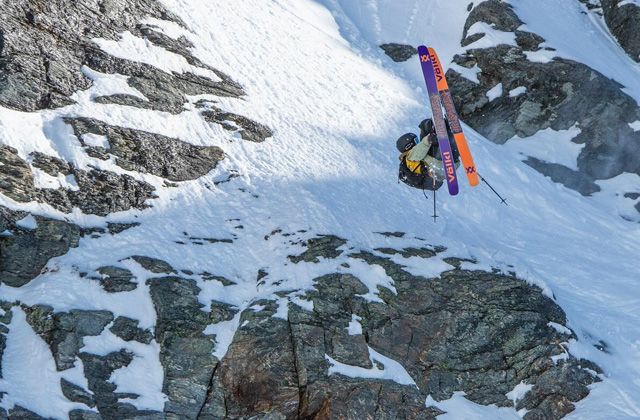
With the potential for Olympic inclusion in the coming years, now’s the time for Freeride to bolster the talent pipeline. That effort is well underway, as proven by the 2* and 4* events held at this iteration of Winter Games NZ. Image: Winter Games NZ on Facebook
Finally, rounding out this week we want to briefly share some coverage from New Zealand, where the Winter Games are starting to wrap up. At the time of this writing, all events have been held, with the exception of freeskiing halfpipe finals, although we do have qualification rounds to discuss.
As you might recall from our earlier coverage of this event, one of the things that makes the Winter Games NZ so unique is that it’s generally an open invite to all FIS competitors, regardless of skill level. As a result, you have a series of competitions in which the best in the world could theoretically compete against athletes just beginning their career journeys. In fact, if it hadn’t been for the FIS’s new wild card rule for alpine athletes, we likely would’ve seen Marcel Hirscher compete in slalom events against a whole roster of names that we don’t (yet) recognize. While we unfortunately missed out on that opportunity, something similar is happening in halfpipe as names like Eileen Gu and Kelly Sildaru are competing in the women’s field, while a slew of big names such as Alex Ferreira, Birk Irving, Hunter Hess, Aaron Blunck, and Nico Porteous are all competing in the men’s field. Outside of these names though? Again, a whole roster of athletes whose names we’re not familiar with yet, although we suspect that someday we will be. While it’s too soon to say how those competitions will end up, results from qualifiers suggest that there’s a good chance one of these new names could end up on the podium next to well known athletes.
The other event that caught our attention from this edition of the Winter Games was the 4* Freeride contest held at the Remarkables Ski Area. Run as part of the Freeride Qualifiers series, this event marked the first 4* event of the 2025 season, making it the first point earning opportunity for athletes hoping to make the jump to the Challengers series, and then onto the Freeride World Tour itself. As such, it’s also very much a yardstick in terms of measuring how the next round of up and coming athletes shape up against each other. For Team America, the outcome of the event is that we have a new name to keep an eye out for: Kelly Hilleke. At just 18 years of age, Kelly is fresh off the Junior circuit, with this 4* event being his first chance of ascending through the adult rankings. He took home 7th, earning 1,300 points, and putting himself in a strong position to make a push for the Challengers series this season. With Freeride now being an officially recognized FIS sport, and expectations that Olympic inclusion is on the horizon, now’s the time to start keeping an eye on names like Hilleke as this is the generation of athletes that will likely be amongst the first to compete in the Olympic games.
On the alpine racing side of things, it appears as though the U.S. Team largely opted out of the event as the results sheets are devoid of any official team members. With the World Cup season looming, our assumption is that the team decided to opt out of competing in favor of continued training. To see full coverage from the games, check out the official website.