

Top Five Fridays: July 10, 2026
Whiteface Mountain, NY. Home to the 1980 Winter Olympic Alpine Races, the 1994 FIS Junior World Championships, and now, the 2027 FIS Junior World Championships. Oh, and to some amazing freeride terrain as well. Image: Whiteface Mountain on Facebook
Hello, and welcome to Top Five Fridays, the July 10, 2026 edition! We’ve got another fun one for you this week, as we finally have an announcement regarding Freeride skiing that we’ve been anticipating for weeks, months, and even years. We’ll bring you up to speed with the latest news from that world before moving onto some additional exciting world-level news coming out of Whiteface Mountain, an update from Nederland, CO regarding the ongoing process of purchasing Eldora, and a dense but important story regarding how data centers are threatening the electrical reliability of ski areas. Once you’re done downloading this week’s updates, we’ll reward you with a trio of summertime ski edits. With lots to go over, let’s jump right in.
#1: Four Years After the FIS Purchased the FWT, Freeride Has Officially Made it to the Olympics:
First up this week is a massive announcement, and one that we’ve been anticipating for weeks now: Freeride Skiing and Snowboarding have officially made the cut for the 2030 Winter Olympics in the French Alps. Now, there’s a lot to consider here, so let’s just start with the details of the announcement itself. As it turns out, that part’s pretty straightforward as very few additional details were provided. What we know for sure is this: in 2030, for the first time ever, there will be 4 Freeride events: Men’s and Women’s, Skiing and Snowboarding. We also know that, keeping inline with their new gender-equality athlete quotas, there will be a total of 22 men and 22 women competing in these events. Beyond that, there aren’t any additional details. We don’t know for instance if snowboard and ski disciplines will feature the same number of athletes. We also don’t know country quotas yet - meaning how many athletes will compete for each country, and we most certainly don’t know specific venue options yet. Regardless, despite how few additional details were shared alongside the announcement, the announcement itself is a game changer.
Those within the sport have met the news in overwhelmingly positive fashion, emphasizing the legitimacy and exposure that the Olympics bring to the sport. In the words of current FWT Champion Ben Richards, “The Olympics is the biggest show in sports, so to have Freeride included in there I think will really help legitimize the sport. Putting more eyes on what we are doing will bring more opportunities for the next generation.” In addition to giving freeride athletes the chance to compete on a global stage and to make appearances on tv screens across the world, it’s ultimately the “opportunities” aspect of this that’s the most exciting for many people.
Prior to this announcement, there hasn’t been any kind of formal support for professional freeride athletes. For those that made the World Tour, competing came with the prerequisite funding of their own travel in order to compete at the highest level of the sport. While veteran athletes could often rely on sponsors to help fund their season, it’s not at all uncommon for Tour rookies to have to fund their own competition season, often through fundraising events and personal savings. With this announcement though, the doors have been flung open for national governing bodies (aka the U.S. Ski Team and equivalent organizations) to begin supporting these athletes. When that happens, these world class athletes will receive not only financial aid to support their travel, but also the help of trainers and coaches to further develop their skills.
The real impact of the announcement however is the ripple effect that it will have on the entire developmental community. Here in North America, just the anticipation of this announcement alone has already begun transforming the development landscape of the sport in recent years as more and more junior programs and athletes have been getting involved in the sport each season. At the adult level, colleges have stepped up and begun to create freeride teams, with support from the IFSA in the form of collegiate rankings and a collegiate championship. Now that the sport has become an Olympic event that promises to create real opportunities for world class athletes, it’s easy to imagine how these endeavors will spur further growth as concepts such as collegiate coaches and scholarships become more intriguing - creating not only exciting opportunities for athletes, but also long term career paths for those who decide to move from competing to coaching.
Of course, not everyone is in favor of Freeride joining the Olympics, and just like we saw when the FIS first purchased the Freeride World Tour back in December 2022, there are many in the ski world who have met the news with deeply rooted concerns over what this means for the future of the sport. While it would be unfair to dismiss these concerns, it’s worth noting that by and large they’re coming from skiers who aren’t actively involved in competitive freeride. For those who are in the sport, this is widely seen as a positive development. To exemplify this, we’ll leave you with these comments made by FWT rookie Kelly Hilleke to the Colorado Sun: “This is such a good thing for so many up-and-coming athletes who want to make a career in freeride skiing…I don’t think the Olympics will change what makes freeride special. It will just give more people a chance to discover why we fall in love with this sport in the first place.”
For more on this, check out the official announcement from the Olympics, coverage from the Colorado Sun, or this report from Powder. For crowd reactions, simply check the comments of your favorite ski social media account.
#2: The 2027 FIS Junior World Championships Will Be Hosted by Whiteface Mountain, Returning for the First Time Since 1994:
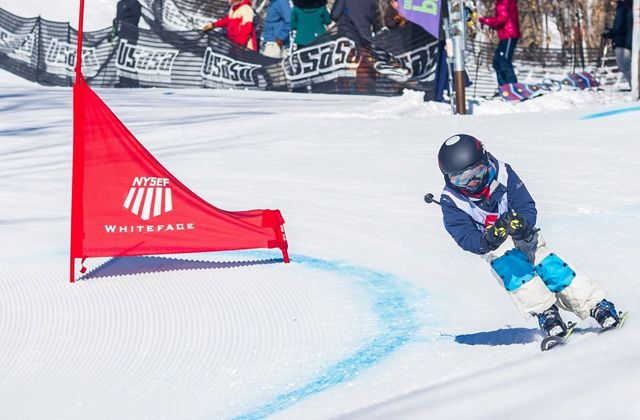
The last time the FIS Junior World Championships were held at Whiteface, it was a wildly successful event for North Americans. Will that trend repeat itself in 2027? Only time will tell. Image: Whiteface Mountain on Facebook
In other world-level competitive ski news this week, we caught another exciting announcement from the world of FIS Sports: the upcoming 2027 Junior Worlds event will be held at Whiteface Mountain, New York. Now, for whatever reason, this isn’t an event we’ve discussed all that much here on Top Five Fridays. It did however come up briefly back in May when we discussed U.S. Ski Team rookie athlete Beatrice May’s path to being nominated. With that detail in mind, it’s easy to recognize the importance of this event.
Taking place on an annual basis, the FIS Junior Worlds is a multi-day event in which the top junior alpine ski racing athletes from all over the world compete to earn top honors. As we saw in our previous coverage, it also provides an excellent opportunity for athletes to earn their nomination to the U.S. Ski Team, and presumably other national governing bodies as well. In other words, this event is as big as it gets for junior level ski racing.
Next year, the Junior World Championships will return to Whiteface for the first time since 1994. That year, as fate would have it, proved to be historically successful for North American athletes. In the Men’s Downhill event, Canadian Kevin Wert took home the gold while American Jason Rosener finished third. In the Men’s Slalom, American Chip Knight (who is now the USST Alpine Development Director) took home second. Ultimately though, it was Canadian Melanie Turgeon who stole the show, taking home a medal in all five of the events she competed in: first place in GS and combined, second place in Super-G, and third place in Downhill and Slalom. To date, it remains one of the most impressive Junior World Championship performances.
Whether or not North America will repeat its dominant performance is yet to be seen. If they do, you can bet it will earn at least some Americans a nomination to next year’s U.S. Ski Team. We’ll know more about this upon the conclusion of the event, which is currently unscheduled but we expect to occur sometime in early March. As always, be sure to check back for more details. For more on this week's announcement, click here.
#3: Tensions Rising in Nederland as the Municipality Accumulates Debt in Effort to Buy Eldora Mountain:
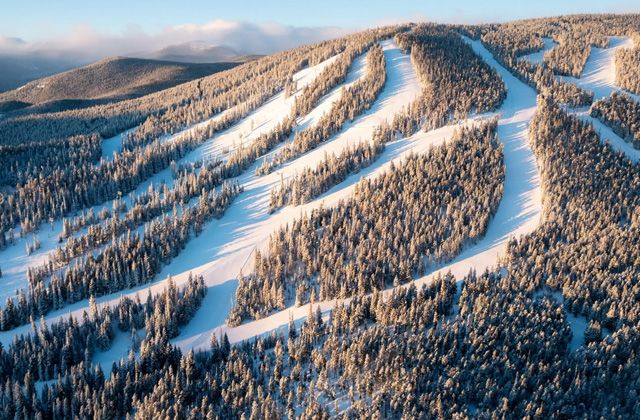
At this point Eldora Mountain will come to mean one of two things for the town of Nederland: an economic windfall, or one of the biggest missteps in the municipality’s history. Image: Elodra Mountain on Facebook
Moving away from competitive news this week, we have an update to a story that we first began covering back in the fall of 2024, but haven’t heard an update from since January. As it turns out, we’re not alone in that as the residents of Nederland, CO are also beginning to wonder what’s happening with the municipality's plans to purchase the ski area. That’s part of this week’s story.
On Wednesday of this week, we caught an article from The Mountain Ear that brings us up to speed on the latest from Nederland’s plans to purchase Eldora. Now, before diving in, it’s worth noting that the last time we covered this story was back in January, when the town’s board of trustees had just voted unanimously to approve a purchase agreement for the ski area. At that time, it felt like it was just a matter of time before the ski area changed hands. Now, 7 months later, that exchange still hasn’t happened and a once unblemished story is starting to show some cracks.
This week, we learned that the board of trustees has just approved a new service agreement with Stifel, Nicolaus & Company, a professional company that will be helping the town navigate the legal requirements of acquiring and setting up operations of the ski resort. The bill for these services comes to $325,000, with a service agreement that lasts until 6/30/2027. Payment for the bill will be deferred and can be paid using the sale of bonds - the fundraising method being used by the municipality to afford the purchase. That’s generally all well and good, except for one thing: it compounds upon other significant expenses that have accumulated over the course of the planning stages. In addition to this new $325,000 bill, it’s been reported by the Denver Post that an additional $830,000 has already been spent in the planning phase, bringing the pre-purchase cost to $1.1 million. Again, a majority of this additional $830,000 is payable via the sale of bonds, so overall the status of this effort is still ok.
That said, concerns are quietly growing within the town. To fully appreciate these concerns, we have to take an important detail into account: it was initially expected that the municipality would close on the ski area a full two months ago. Now, not only has that sale not gone through, but communication as to why it hasn’t has been limited, while pre-purchase expenses continue to grow. That combination alone is slowly ratcheting up anxiety around the project, spearheaded by one major unanswered question: if the town doesn’t close on the ski area and the sale doesn’t go through, who is responsible for footing the bill for the $1.1 million in professional services? The townsfolk are rightfully worried that they might find themselves footing the bill for a $1 million project that never happened. Furthermore, there’s growing concern that this lingering sales process is becoming a distraction from other important projects in the town, such as the implementation of fire sirens and the creation of an emergency evacuation egress.
Still, while tensions are turning up even a modest amount, the town’s board of trustees remains committed to purchasing the resort. At this point, it’s hard to imagine what might be standing in the way of closing, and should that day finally come, it’s likely that the purchase of the ski area will prove to be a significant windfall for the mountain town. For the sake of everyone involved in this story, we hope that happens. To learn more, check out the coverage from The Mountain Ear.
#4: The Ski Industry is Once Again Leading the Charge for Change. This Time, Aging Electrical Grids Are the Focal Point:
To help give this story a little more context, check out this video from Arapahoe Basin that does a great job of getting specific about the resort’s electricity usage.
While we typically like to round each week out with a lightweight article, the nature of this week’s newscycle has led us to the exact opposite conclusion: a story that’s dense with details from a very nuanced world. Coming to us by way of Trellis.net, we caught a story this week that once again highlights the outsized role that the ski industry plays in policy making here in the United States. This time, the story focuses on the nation’s aging power grid, as once again ski resorts find themselves uniquely situated to be the agents of progress. Here’s why:
As we all know, ski areas of all sizes tend to be located in rural communities, far, far away from municipalities containing tens of thousands of people. As such, the electrical grids that these ski areas rely on are often both older and lower capacity than modern grids located in and around cities. While ski resorts themselves are actually somewhat low energy all things considered, they still lean heavily on the local grids to supply power for things like chairlifts and snowmaking. Over time, these grids have aged while power demands have grown. That inverse relationship is quickly approaching a breaking point, largely due to the growing development of data centers in similar areas. Those high-power facilities are putting added stress on rural grids, while also increasing the cost of electricity for the area. In some cases, like that of Bridger Bowl in Montana, the added strain is so bad that the mountain is concerned that local utilities will turn to fossil fuels to create additional energy. For an industry that’s in the midst of battling climate change, the idea of utilizing fossil fuels to create electricity is particularly troubling.
As a response to this trend, the ski industry has been taking action in recent months and years to push for reform at the legislative level. From ski resorts like Aspen and Arapahoe Basin, to industry representatives at the National Ski Areas Association, lobbyists have been hard at work pushing lawmakers to enact legislation that will force an updating of rural power grids. Being the capitalistic society that it is, these advocates are encouraging U.S. lawmakers to consider the economic value that mountain town tourism has for these rural communities.
Specifically, ski industry advocates are asking lawmakers to support them in efforts to upgrade the grid at the macro level. In the words of NSAA Director of Sustainability Courtney LaBrie, “Ski areas are doing their part by investing in energy efficiency upgrades, on-site clean energy and infrastructure projects to help mitigate potential reliability concerns, including transformer upgrades, working with local utilities and metering and sub-metering... Still, we need the macro-level support of federal legislation to increase transmission capacity and ensure grid reliability on a broader scale, especially in the mainly rural areas where we operate.”
All in all, we found this to be yet another interesting story that highlights the ski industry’s unique and important role in continuing to push policy makers in a positive direction. For more on this, check out the full article from Trellis.net.