

Top Five Fridays: June 27, 2025
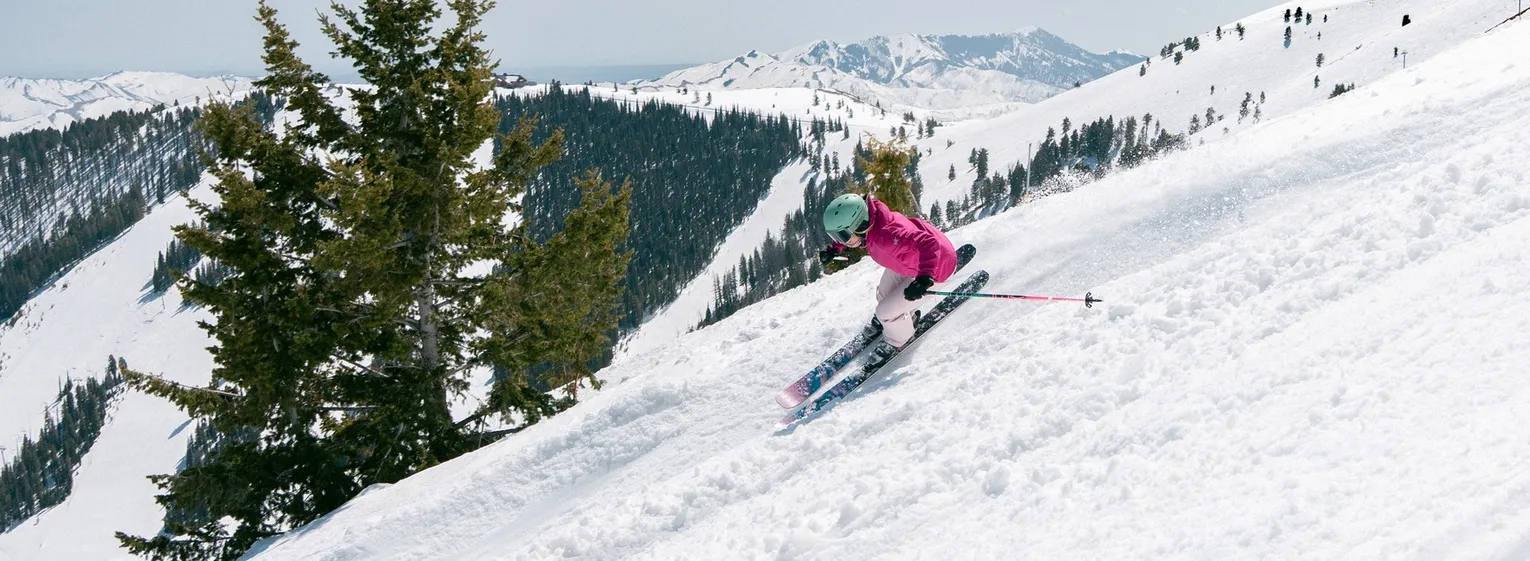
There’s reason to rejoice in Sun Valley this week, as a lawsuit testing the ski area’s liability has just been thrown out - a win for those watching with concern as the insurance situation unfolds in Oregon. Image: Sun Valley Resort on Facebook
#1: Sale of Public Land Looking Unlikely, Thanks to a Little Known Member of Government:
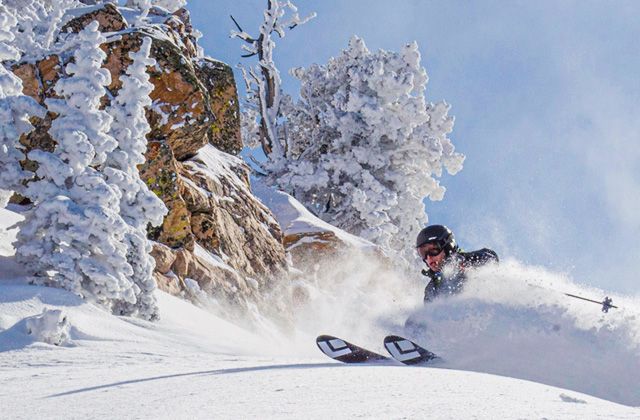
After last week’s swift and significant pushback, all USFS land has been removed from the proposal to sell public lands, marking a significant blow to the entire plan. Image: US Forest Service on Facebook
Hello, and welcome to Top Five Fridays, the June 27, 2025 edition! This week is something of a “follow-up” week, as our first three highlights all bring us updates to stories we’ve covered here on Top Five Fridays, either recently or within the last three years. If the idea of denser topics scares you, go ahead and skip to highlight #4, where we debate the fine line between ski trash and treasure before bringing you into the weekend with a round of excellent edits! If on the other hand, dense ski news does speak to you, then keep reading as we’re just about to get started with highlight #1: an update regarding the potential sale of federal land.
In case you missed last week’s TFF report, the top news was that of Utah Senator Mike Lee, who announced plans to introduce legislation that would require the sale of .5%-.75% of US Forest Service (USFS) and Bureau of Land Management (BLM) land to private developers. Without diving too deeply into a recap, the long and short of it is that Lee proposed the measure as a way to convert unused federal land into housing for areas that need it. While that concept sounds good in theory, critics of the proposal were concerned about the very real risk that land sales could get out of control, resulting in the sale of highly desirable public land into the private sector. In theory, this could potentially include the land that many ski resorts lease and operate upon. Last week when we covered the issue, people of all political affiliations were upset, while the ski community became one of the loudest opponents.
This week, the story has changed considerably as Lee’s efforts have taken a substantial hit. On Tuesday of last week, Senate Parliamentarian Elizabeth MacDonough ruled that Lee’s provisions could not be attached to the Big Beautiful Bill. Now we’ll stop ourselves before we spiral into a deep dive on government bureaucracy, but the one thing you should know about the Senate Parliamentarian, is that they have the power to remove things from bills that they deem unrelated to the bill’s primary purpose. Or, in other words, MacDonough’s job is to keep each bill “on task.” On Tuesday, MacDonough ruled that Lee’s provisions were off task, and could not be included. As such, Lee is currently reshaping his pitch.
As it stands, Lee has withdrawn his desire to sell USFS land and has altered the language of the bill to only include federal land within five miles of “population centers.” In theory, this greatly diminishes the land that would be eligible for sale, but once again, the vague phrasing of “population center” leaves many suspicious about what this would look like in practice.
Despite Lee’s promise to reshape his provision and push for its inclusion, it seems unlikely that he’ll be able to garner support for it. This week, the New York Times published an article that explains why his effort faces so much push back. To do so, they visited one of the epicenters of skiing in America: Summit County, CO. There, they found that despite the very obvious housing shortages, residents from all political backgrounds strongly favored having access to the outdoors over the development of natural spaces. In the article, multiple Summit County residents are quoted as citing the environment as the biggest draw for living in the area. With that in consideration, they’d rather work challenging jobs and live in less than ideal living situations in favor of keeping the area less developed.
In addition to these personal anecdotes, the article also does a great job of explaining the practical challenges facing development in the area. To put it succinctly, the takeaway is that even if the government were to sell its land to developers, the process of actually developing that land is long, challenging, and all but guaranteed.
At the moment, this story is still ongoing as Mike Lee promises to continue pushing to include the sale of natural lands in the Big Beautiful Bill. That said, thanks in no small part to last week’s outcry from the ski and greater outdoor communities, as well as the senate’s parliamentarian, the sale of these national lands is looking less and less likely. To learn more about Summit County’s response to Mike Lee’s efforts, check out the report from the NY Times.
#2: Idaho Supreme Court Strikes Down Liability Lawsuit, Easing Ski Resort Insurance Concerns For Now:
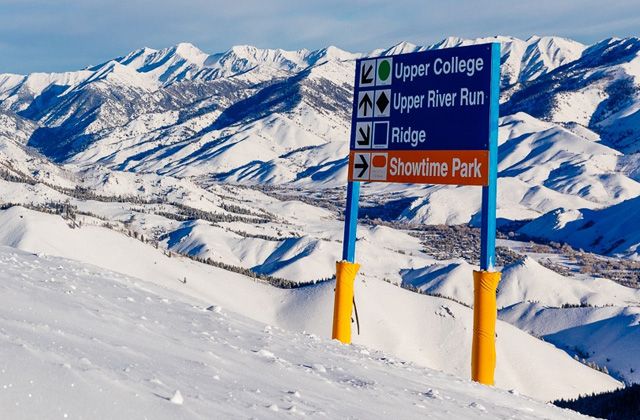
After last week’s swift and significant pushback, all USFS land has been removed from the proposal to sell public lands, marking a significant blow to the entire plan. Image: Sun Valley Resort on Facebook
In other ski news updates, our second topic expands on our coverage from last week, in which we shared the news that one of Oregon’s last remaining ski area insurers had left the state. As you’ll recall, one of the central focuses of that decision was the state’s enforcement of liability, which placed significantly more responsibility on the ski resorts than the skier. In the words of one insurance claim manager, Oregon was “an extreme outlier” in regards to a ski area’s exposure to liability lawsuits.
This week, we travel one state east of Oregon, where Idaho has been going through its own legal drama surrounding the same issue. If you joined us on February 7th of this year, then you might remember the coverage we gave to the case of Milus v. Sun Valley. In that legal case, the widow of a man who died while skiing at Sun Valley was suing the resort in what was essentially a case that looked to define the line between skier risk and ski resort liability. In February, that case was in the state’s Supreme Court as judges wrestled between the initial court decision to throw it out, and the result of an appeal which said the case should be heard by a jury. This week, the state’s Supreme Court agreed with the initial court’s decision that the case should be tossed. Specifically, they noted that the snow gun involved in this particular accident was clearly marked, indicating that the ski resort did what they reasonably could to protect their guests.
Generally speaking, this is good news for ski resort operators in Idaho who are undoubtedly aware of the growing challenges next door in Oregon. It’s not, however, perfect news. While judges in this case shot down the lawsuit, in their ruling they wrote that the state’s 1979 Ski Area Liability Act should be taken on a case by case basis, with ski resorts needing to prove that they clear the legal “standard of care” in each situation. Prior to this ruling, the 1979 act held enough power that cases were generally thrown out, giving substantial protection to ski resorts by way of the liability waivers signed by skiers. Now, as a result of this ruling, the door is open to more lawsuits moving forward as ski resorts will need to prove that they met the legal requirement for “standard of care.” Whether this is a good thing or a bad thing depends on who you talk to, but one thing is for certain: it’ll continue to put pressure on the topics of liability and insurance at ski resorts in Idaho for the foreseeable future. For more on this, check out the report from Idaho’s CDA Press.
#3: The Town of Winter Park Has Given the Resort’s Master Plan the Green Light. The Crown Jewel? A Resort to Town Gondola:
For our third “ski news update” highlight this week, we’re really going to put our readership’s recall to the test as we’re discussing a next topic that we first covered all the way back on April 29, 2022. If you read (or watched) along with our coverage that week, you might recall the excitement surrounding Winter Park’s newly proposed master plan. This week it was announced that that plan was approved by the Winter Park town council earlier this month. While that level of approval doesn’t guarantee that Winter Park’s master plan will come to fruition without restriction, it does mark the clearance of a major hurdle while also signifying that the town is interested in working with the resort and Alterra to establish the area as a major tourism destination. More on that in just a moment. First, let’s talk about what’s included in this master plan.
While the plan itself contains an incredible number of detailed upgrades - ranging from new surface lifts, to lodges, to parking area enhancements - the two highlights of the plan are a terrain expansion into Vasquez Mountain and the creation of a new gondola that would connect the resort’s base area directly to town. In regards to the terrain expansion, Winter Park is hoping to add 358 acres of skiable terrain to the Vasquez Mountain area, serviced by 3 lifts and an additional T-Bar to bring skiers and riders to the top of the Cirque. If accomplished, Winter Park would become the third largest ski area in Colorado. Additionally, overall capacity of the resort would increase by about 40% when factoring in additional lift upgrades that are planned.
As exciting as the new terrain is though, it’s the concept of the resort to town gondola that’s captured the most attention. When we covered the unveiling of the master plan back in 2022, we spent a little bit of time discussing the concept as Winter Park’s situation is somewhat similar to our own here in Stowe in that the resort is miles removed from the center of town. In terms of stimulating the local economy, it’s an interesting idea - the concept of making travel into town by those staying at the resort free and easy. As it turns out, the Winter Park town council agreed, with Mayor Nick Kutrumbos referring to it as, “transformational in the community.”
But wait, there’s more.
Once again, we’re going to challenge our readers to recall a story, although this time just over a month ago on May 9th, when we discussed Colorado’s enhanced commitment to the ski train. In that highlight, we mentioned the overwhelming success of the train’s service to Winter Park this year, signaling an optimistic future. Now, connect the dots.
When Mayor Kutrumbos called the gondola project “transformational,” he was thinking big picture. When factoring in the ski train in combination with the gondola, Winter Park suddenly becomes a destination where somebody could fly into Denver airport, take two trains, board a gondola, and be at the resort, all without needing to rent a car. While this type of travel is common in Europe, it’s a novel concept here in America, and one in which plenty of people are excited about.
To learn more about this story, check out this report from CBS News or this report from Ski Mag. Additionally, you can check out the full Winter Park master plan right here.
#4: The Mysterious World of Skier Trash - A Case Study in Breckenridge:
Whew, ok, those were some big topics. Best of luck to Bob and Jeff getting through those in the video version of TFF. To make life a little easier for them, we’re going to switch gears to a much lighter topic for our final highlight this week: skier trash.
Part PSA, part fun topic of discussion, this particular story comes to us by way of Denver’s KDVR News, who brought us the results from Breckenridge’s employees’ efforts to clean up the mountain. In a quick post to their Facebook, Breckenridge showed some of the highlights of the effort, which resulted in the collection of roughly 780 pounds of trash. Amongst the trash were plenty of usual suspects: season passes, airpod cases, Mardi Gras beads, vapes, and even skis and poles. Most amusingly though, were the oddities. A spatula with someone’s name labeled on it. An Ipod Nano. A message in a bottle. And finally, a “tiny single ski boot.”
All of this is to say two things. First, the annoying and lecturey one: when you’re out on the mountain next year, please be mindful of any accidental littering. While we realize no one is intentionally losing their passes or airpod cases, it’s worth keeping in mind that all of that small trash accumulates - to the tune of 780 pounds this season at Breck. So next year, double, triple, and even quadruple check your pockets. Try your hardest not to leave anything behind on the mountain so we can keep these spaces as natural and clean as possible.
Our second statement is more fun: if you’ve ever found anything crazy on the mountain, either during or after the season, we want to hear your story. Please let us know in the comments!
#4.5: Continuing Coverage: Ski Mag Wonders Why Americans Act Weird About Safety Bars:
Finally, we didn’t feel compelled to give this article from Ski Mag the full highlight treatment, but after noticing how engaged our audience was last week with our coverage of safety bars on chairlifts, we knew we had to pass it along. Presenting, for your consideration, Ski Mag’s “Why Are American Skiers So Weird About the Safety Bar?”.