

Top Five Fridays: May 9, 2025
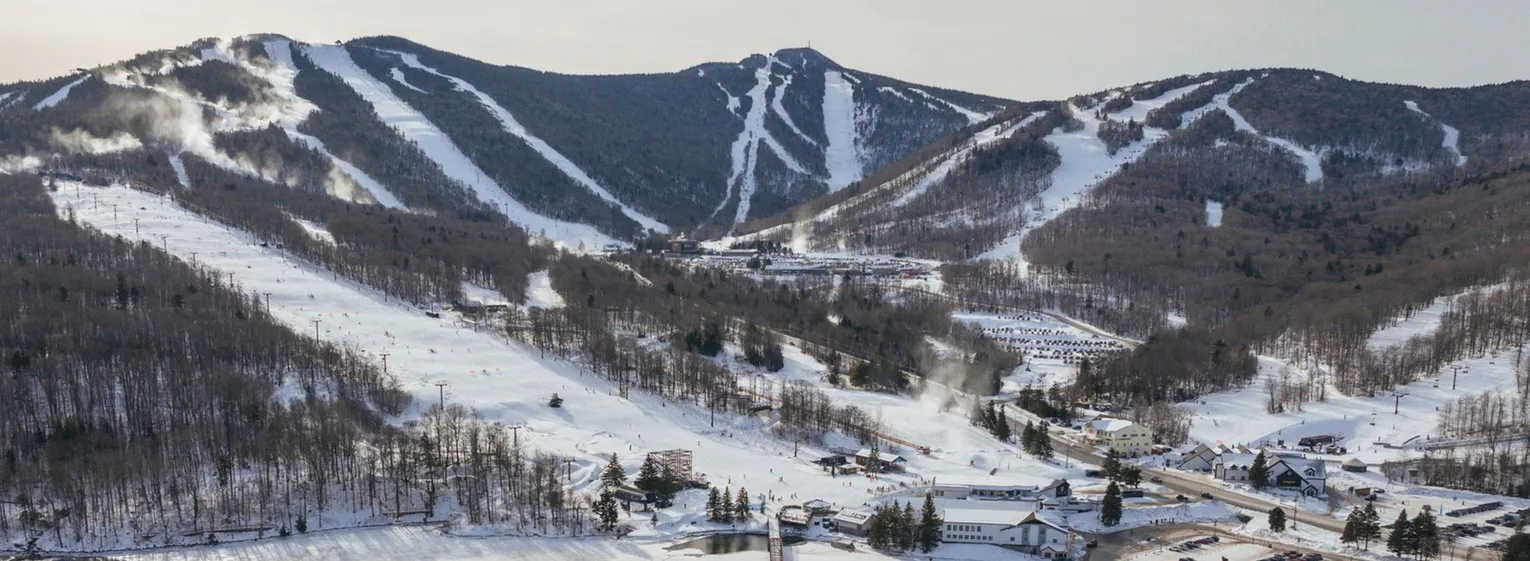
Give it 20 years and this version of Killington’s base area will be completely unrecognizable. Check out highlight #1 for the latest news from Killington’s development plans! Image: Killington on Facebook
#1: More Details Regarding Killington’s Grand Development Plans Have Been Announced:

Amongst the myriad of plans to convince east coast skiers to vacation at Killington, is an ice skating path. Image: LiveKillington.com
Hello, and welcome to Top Five Fridays, the May 9, 2025 edition! This week, there’s been plenty of developments in the world of development, and so we’ve developed a goal to use the word “develop” as much as we can in this particular recap. Just kidding. But actually - you likely will be seeing that word quite a bit this week, as we talk about $5 billion in development plans for Killington, $30 million in plans for Burke Mountain, an overhaul of the U.S. Alpine Ski team’s development pipeline, and exciting news from America’s only ski train. We’ll share all of the details about all of this week’s news as we go, but for now, let’s start in Killington - home to our second brick and mortar store, Basin Sports.
This week, the Burlington Free Press published an in depth article taking a look at the future of Killington. Now, we know you know the resort changed hands this past fall, when a group of local investors purchased the resort from POWDR Corp. What you may or may not recall though, are the massive development plans that were intended for the resort prior to its sale. In the wake of that acquisition, there were questions swirling about whether or not the previously proposed developments planned for the resort would still happen. In our January 3, 2025 Top Five Friday coverage, we shared another update on this topic, as word came to us by way of VPR that plans for the development were still on, with Canadian based real estate company Great Gulf also becoming part owners in the resort. This week, we continue to learn more about the project via Burlington Free Press, who shared a deep dive into the development company’s plans, as well as words from their president of resort residential, Michael Sneyd.
While our previous coverage of this story shared some of the exciting new developments planned for Killington, such as a massive new lodge and a snow beach, we didn’t dive too deeply into the numbers behind it or the overarching goal. This week, thanks to the BFP story, we have that information available.
First things first, let’s talk financials. The last time this story crossed our desk, the budget was an estimated $3 billion. This week, that budget has ballooned to $5 billion. With that massive investment, Great Gulf is looking to create a village called LiveKillington, which will contain 2,300 residential units, in addition to all of the amenities that we’ve previously covered, such as eateries, a skating path, an outdoor amphitheater, and of course, a ton of retail. In order to make that dream come to life, Great Gulf estimates that they’ll be hiring an incredible 2,300 construction workers over the next 20 years, and starting in approximately 10 years, another 1,500 hospitality workers. For the Killington region, this would be an incredible economic stimulus.
In addition to these insights regarding residential units and job creation, we also learned more about the grand vision for the development. At the currently proposed scale, Killington would become by far the largest ski resort and village in the east. As such, the team at Great Gulf isn’t necessarily looking at this as a project that’s meant to compete against other east coast resorts. Rather, they’re hoping to compete with massive mountain villages on the west coast, such as Vail and Park City. In their minds, they aren’t trying to draw skiers from neighboring mountains to Killington; they’re aiming to convince those who currently travel west for ski vacations to visit Killington instead. Finally, the last significantly interesting comment made by Sneyd is this one: “The best-run resorts in North America are busier in the summer than they are in the winter.” While the story doesn’t explicitly outline summer plans for the resort, it’s quite intriguing and encouraging to see that the management team behind Killington’s development has its eyes set on a year round business model. While we’ll have to wait for more details regarding offseason plans at the resort, it’s a good time to be excited about what’s going down at Killington. To learn more, check out this report from the Burlington Free Press.
#2: It’s Official: Burke Mountain Has New Owners. Owners Who’ve Immediately Announced Plans to Triple Snowmaking Capacity Before Next Season:
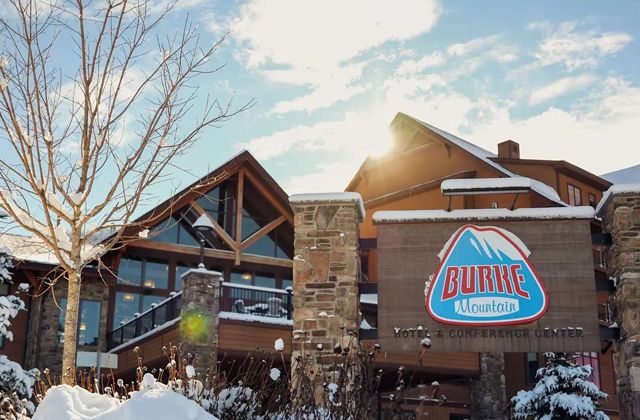
Nearly a decade after entering receivership, Burke Mountain is finally in the hands of new ownership. Image: Burke Mountain on Facebook
In other Vermont ski resort development news, we’ve also got a pretty significant update from our neighbors to our North, at Burke Mountain. The last time we checked in on this story was just about a month ago, when we learned that a group of local investors were expected to buy the resort which had been operating under federal receivership for the better part of a decade. Since then, we’ve had a couple of updates. The first one is pretty cut and dry: last Friday, a federal judge signed off on the purchase offer, officially selling Burke Mountain to a group known as the Bear Den Partners for a sum of $11.5 million. As we previously reported, that investment group is made up of Burke Mountain Academy, the Graham family (who once owned the resort), and Jon Schafer, who owns Berkshire East Mountain Resort in Massachusetts. In other words, the new owners are deeply rooted in the ski community and interested in developing the resort. That, as it turns out, brings us to the second part of this week’s update.
When we last reported on this story, there were vague mentions of making improvements to the resort without changing the culture. At that time, we didn’t have specific details regarding what that actually meant. This week, we do. Upon closing the deal, the Bear Den Partners have announced development plans totaling roughly $30 million. Most immediately noticeable on that list are plans to nearly triple the resort’s snowmaking capacity ahead of next season. In doing so, the team hopes to be able to extend the ski area’s season. The other significant announcement that was made is that the group plans on expanding the resort’s skiable terrain via the creation of newly cut trails for all ability levels. At present, the group is preparing to begin the permitting process, which as we know can be quite lengthy. New owner Jon Schafer assures us though that, “In time there will be some more transformative change.” Until then, the resort will look to make some minor lift upgrades which could expand access as early as next season. While we don’t know exactly what that means, you can bet we’ll keep you posted as more information comes to light. For now, check out the full report from VT Digger.
#3: The U.S. Alpine Ski Team Wants to Be the Best in the World. Now, There’s a 17 Page Plan to Get There:
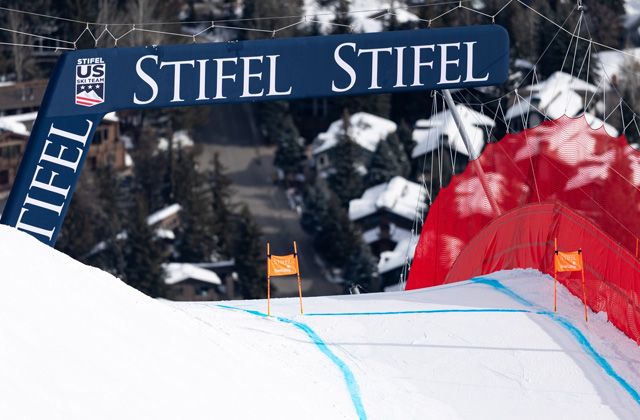
Believe it or not, the Stifel U.S. Ski Team isn’t the best in the world, despite having excellent participation and financial backing. Being the best is the goal however, and now there’s a plan to get there. Image: US Ski Team on Facebook
Moving on from Vermont ski resort development news, our next highlight this week stays in the “development” world, although changes genres dramatically. For this highlight, we’re not talking about ski resorts, we’re talking athletes.
This week, the U.S. Ski and Snowboard Team released a document called, “Performance Task Force White Paper A Playbook for the U.S. Alpine Development System.” A lengthy name for a lengthy document, this 17 page, single spaced “playbook” makes its specific purpose very clear from the jump: to chart a course for the U.S. Alpine Ski Team to win an overall Nation’s Cup - something that has never happened. In tandem with that fact, the paper also lays out this frustrating anecdote: it’s estimated that the U.S. Ski Team, universities, academies, clubs, and individuals all combine to spend more money on athlete development than any other country in the world. Additionally, the U.S. is second only to Italy in terms of the number of FIS athletes competing in races. In other words, as the business people would say, the ROI hasn’t been there for Team America, and it’s time for a change.
Enter the White Paper Playbook. As a direct result of this underperformance, and a drive to be the best, a task force was compiled of dozens of experts with experience at all angles and levels of the sport with a mission of creating a plan. This playbook is that plan. Within it, there are two overarching categories: goals and recommendations. Now, because this is a 17 page document, we’re definitely not going to be able to cover it in depth here, and so we highly recommend giving it a read in full if you’re interested. That said, here are some of the highlights.
On the goals side of things, in addition to winning an overall Nation’s Cup, there are a number of more granular, specific steps that lead up to reaching this goal. For example, the first listed goal is, “Double the number of U21 with <300 WR to 60 by 2028,” followed by, “Double the number of U23 with <100 WR to 20 by 2030.” In other words, this document has set out measurable goals that will help the team understand if they’re making progress towards developing what they hope will be the best alpine skiing nation in the world.
Perhaps even more interesting than the goals in this document though, are the methods to obtaining those goals. In the paper, there are 10 recommendations. Of those ten, recommendation number 9 grabs our attention the most, as it states, “Integrate NCAA Racing Within the U.S Alpine Development System.” If you’ve been a Top Five reader for a while now, then you might remember the summer of 2022, when we shared the Vail Daily’s “Inside the Skiing Pipeline” series, in which they discussed issues and solutions to the U.S.S.T’s alpine skiing development program. One of the most heated installments in that series was the issue of having collegiate racing separated from the U.S. Ski Team. To put the issue succinctly, it’s long been held that U.S.S.T. caliber talent forgoes college and heads right for the team, while it’s much more rare for an NCAA athlete to join the team after college. As such, a large portion of the talent pool simply never gets the opportunity to access the type of world class training that U.S.S.T. athletes do. Recommendation number 9 looks to rectify that.
Like we said, this document is far too extensive to do a deep dive into, although we do suspect that several of the ideas presented in it will receive further coverage throughout the summer. If they do, we’ll be sure to share it. For now, go give the playbook a read in full.
#4: New Agreement Lays Tracks for the Significant Expansion of Colorado’s Ski Train:
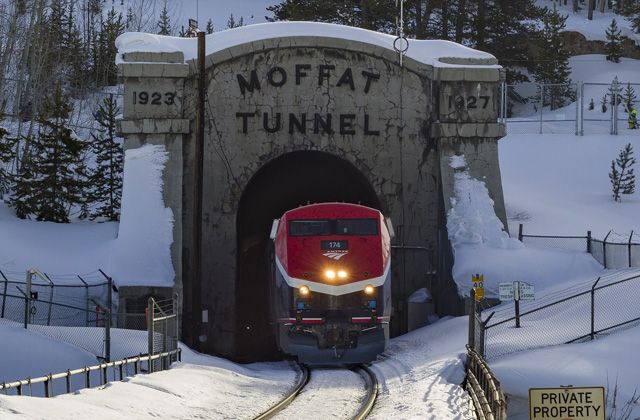
Playing a key role in this week’s news and the future of the Colorado Ski Train is the the Moffat tunnel - owned by Colorado, leased to Union Pacific. Image: Wikipedia.org
Finally, rounding out our coverage this week is a highlight for those of you who like trains. Ski trains, to be specific. Here on Top Five Fridays, we never paid much attention to the concept, until last summer, when Powder shared an article exploring the reason why ski trains are vastly more popular in Europe than America. Then, in September, we learned about an effort being spearheaded by Colorado governor Jared Polis to expand service of the existing Amtrak Winter Park Express, the only true ski train in America. At that time, Polis had a dream, but multiple votes and agreements stood between that dream and reality.
This week, Polis’s dreams took a massive step towards becoming reality as the state of Colorado signed an agreement with Union Pacific, who owns the tracks that run deep into the mountains northwest of Denver. That agreement, which is good for 25 years, came about in large part due to a weird glitch in ownership rights. You see, while Union Pacific owns the tracks that run from Denver to Craig, CO, the journey they take brings them through the 6.2 mile long Moffat Tunnel. That tunnel is owned by Colorado. For the past 99 years, Union Pacific has paid $12,000 a year to use the tunnel, but with that agreement expiring, it was time to rewrite the rules. This time around, a new agreement states that Union Pacific can continue using the tunnel for the next 25 years, in exchange for allowing Colorado to run three passenger trains per day on Union Pacific’s rails. That agreement, which was signed on Monday, clears the way for Colorado to implement and build out the expanded ski train of their dreams.
With this new contract in place, Colorado can now take the next steps in developing the 230 mile rail connector plan that would ultimately allow passenger service from Denver to Steamboat, as well as continue its existing service to Winter Park. While the exact timeline for that expansion is up in the air, we do know its budget: $3 million. In addition to the buildout budget, the state also has plans to continue subsidizing ticket prices while also expanding operations of the train. This past year, it did just that, reducing tickets approximately 40%, bringing them to just $19 each. Simultaneously, the train also ran 5 days a week this past season, up from the 3 day/week schedule it had previously been on. The result? A massive increase in ridership, going from approximately 17,000 tickets sold in the 2023-2024 season, to 44,000 tickets sold in the 2024-2025 season. In other words, market demand was proven in a big way, further paving the way for Governor Polis’s dreams to move forward. For those in Colorado who love both skiing and trains, it’s a very exciting time to be alive. To learn more about what Polis’s grand vision entails, as well as details from this week’s news, check out the report from the Colorado Sun.