

Top Five Fridays: June 28, 2024
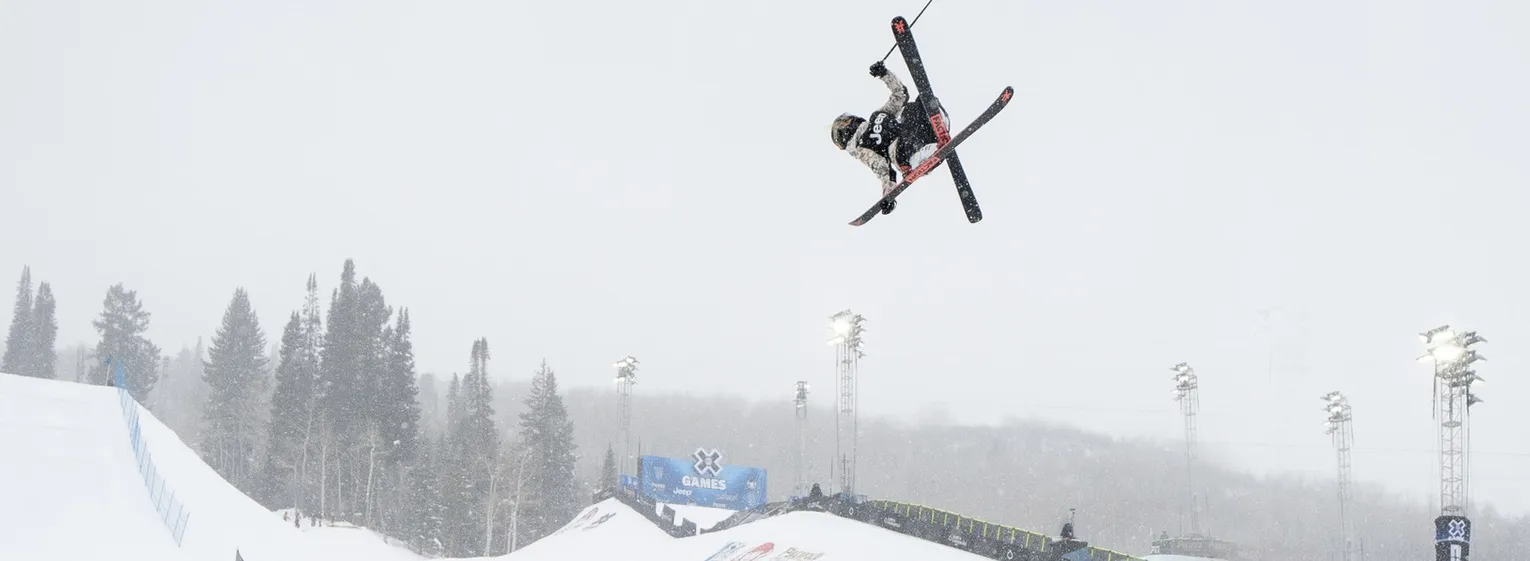
Lead Image: It’s been an unprecedented offseason for the world of freeskiing, as the X Games announced the formation of their own league three weeks ago, followed by a strategic partnership with the U.S. Ski and Snowboard Team this week. While questions remain, the future looks incredibly bright for the future of competitive freeskiing. Image: X Games on Facebook
#1: More Seismic Changes From the World of Freeskiing, as the US Ski and Snowboard Team and the X Games Announce a Strategic Partnership:
There are still plenty of questions to ask and details to be shared, but this week’s news lets us know that the X Games and USST are in alignment with their plans and goals - and that’s a huge deal. Image: U.S. Ski and Snowboard Team Website
Hello, and welcome to Top Five Fridays, the June 28, 2024 edition! Our coverage this week is once again largely focused on ski resorts themselves as it seems like this is the time of year when resorts announce new plans, developments, and sometimes even intentions to sell. We’ll bring you up to speed on the latest from the world of resort news shortly, but before we do, we have yet another big announcement coming to us from the competitive side of life.
As you likely know, it’s been a summer of seismic change in the winter action sports world, as both the X Games and Shaun White have announced intentions to create entire leagues around freeskiing and snowboarding. Upon the announcement of these new leagues, one of the biggest questions immediately became, “what impact will this have on World Cup athletes?” This week, we received some updates in that regard, although our questions are far from answered and we’re suddenly left with new ones. Allow us to explain.
Just yesterday, the X Games and the U.S. Ski and Snowboard Team (USST) announced that they’ve formed a strategic partnership to intertwine their efforts. Starting in 2026, when the XGL is set to debut, U.S. based World Cup events will be co-branded and co-promoted by both the USST and X Games. Additionally, World Cup events will act as qualifying events, with winners of the Toyota U.S. Grand Prix and Visa Big Air events receiving automatic invitations to the X Games. Furthermore, and potentially even more exciting, is that the X Games will also support both the Revolution Tour (which acts as the FIS’s freeskiing development league) and the snowboard development league by offering promotion opportunities to athletes performing well at those levels. In other words, there’s a new path for young talent to immediately make the leap to the top league. Finally, the last major piece of this announcement is the news that along with this new partnership, X Games events such as Knuckle Huck and Streetstyle competitions will also take place at U.S. World Cup tour stops.
Digesting this news a bit, we’ve got some pretty big answers, as well as some pretty big questions. First, let’s start with how this update fills in one of the biggest blanks left over from the initial announcement: how the new XGL will fit in with World Cup events. Upon its announcement, it was immediately unclear what this new league would mean for athletes already competing with the FIS World Cup circuit. With allegiances to the U.S. Ski Team, contractual obligations with sponsors, and dreams of Olympic participation, we wondered if athletes would find themselves having to choose between the USST or the XGL. Would the XGL create a new layer of conflict? Now, that answer to that predicament is clear: USST athletes will absolutely be able to do both, with the two leagues playing into each other. For the athletes, this announcement has brought some much needed clarification.
There are of course, even more questions now in the wake of this announcement, primarily focused on how the format of the XGL fits in with this new vision. If you caught the initial XGL announcement, you’ll recall that the league is set to consist of interdisciplinary teams that are formed via a draft. In that announcement, it was stated that athletes could nominate themselves for the draft, and if they went unselected, they could remain in the league as an alternate. In this week’s news, there’s a focus on competition results making athletes eligible for X Games events. In isolation, these two formats make sense, but the concept of an individual athlete being eligible for a team-based league that’s created via an annual draft leads to plenty of confusion. Fortunately, there’s still two years before the XGL launches in 2026, meaning there’s plenty of time for this concept to be further developed.
Regardless of the new questions being brought to light, this week’s news should be seen as extremely exciting for fans of the sport. One month ago, there was a singular X Games event per year, along with a couple of U.S. based FIS World Cup events, and the Revolution Tour which rarely received much press at all. Now, just a few short weeks later, we suddenly have cohesion across three leagues which essentially represent the development pipeline of the sport. While it’s likely not a perfect comparison, it feels akin to the promotion and relegation concept seen in sports leagues across the globe. As such, and with X Games’ involvement, stops on the Revolution Tour could suddenly see an uptick in interest as the results of the events have immediate implications in the XGL. Imagine an athlete emerging seemingly from nowhere on the Revo Tour and earning a promotion to the XGL to compete alongside the best of the best? That’s the kind of storyline that grabs the public’s interest and could take viewership to the next level. Again, for the moment, there are still plenty of questions to answer, but overall this is another exciting development from the world of competitive freeskiing. To learn more, check out the press release from the U.S. Ski and Snowboard Team, or check out the recap from the SummitDaily.com.
#2: The U.S.’s Only Exclusively Summer Ski Resort, Beartooth Basin, is Up For Sale:

Want to own a ski resort, but only want to operate it for about 10 weeks a year, most years? Perhaps Beartooth Basin is for you! Image: Beartooth Basin on Facebook
As promised, our next highlight this week comes to us from the world of ski resorts, where Beartooth Basin has just hit the market. If you’re unfamiliar with this ski area, it’s for a good reason: Beartooth Basin is the U.S.’s only summer-only ski resort, operating for roughly 8 weeks during May and June. That is, during summers in which the resort is able to open at all. Being situated off the seasonal Beartooth Highway that traverses the Montana/Wyoming border, Beartooth Basin remains inaccessible until late spring or early summer, when the pass thaws and road can be cleared. With that restriction in place, it makes opening dates and even season openings a gamble each and every year. This season, for example, the ski area won’t be opening at all. In fact, in the four years post-pandemic, the Basin has only been able to open for two of them.
Now, due in no small part to the aforementioned difficulties, the owners of Beartooth Basin have announced that they’re looking to sell. In an article from Powder Magazine this week, we learned a little bit more about Beartooth’s current ownership team, why they’ve come to this decision, and the outlook for the resort moving forward. For that article, Powder spoke with Austin Hart, one of six co-owners of the resort. While there are a handful of facts that have led to the decision to sell the ski area, this quote from Hart does arguably the best job of summarizing it: “A lot of the owners are up there, like, seven days a week... It's all-consuming when we're operating." In other words, Beartooth Basin is a business that requires an “all hands on deck” mentality for several weeks throughout the summer, but not the roughly 40 other weeks of the year. In other words, it’s a bit disruptive. Mix in the unpredictable nature of the resort, in which its owners are never sure whether or not they’ll be able to operate on any given year, and you can see why owning the operation is a labor of love rather than a financial windfall. As such, while the ownership group loves the community they’ve built at their ski hill, the time has simply come to sell.
With all of that said, you might be wondering whether or not the owners will be able to find someone willing to buy such an unpredictable business. While the sales effort is still young, Hart reported positive signs, saying, "There's a lot of interest out there," as indicated by inquiries from prospective buyers. Noting the challenges that the current owners face, it’ll be interesting to see who steps forward to buy the area. Our instincts tell us that it’ll likely be another ski area operator who likes the idea of having Beartooth to generate occasional off season income, but realistically, it could be anyone. One way or another, a unique resort like Beartooth will likely attract an equally unique buyer. When that happens, we’ll be sure to let you know. For now, learn more about this story from Powder Magazine.
#3: Powder Mountain Given Approval to Construct Two Chairlifts This Summer, Despite Lacking a Finished Master Plan:
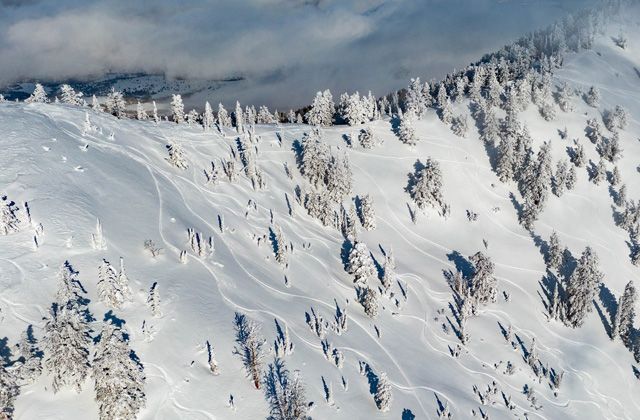
At Powder Mountain, the lack of crowds on amazing terrain is a huge selling point. In the first year of Hastings leading the charge, one thing’s for sure: a lack of crowds in open terrain will remain a feature of the resort. Image: Powder Mountain on Facebook
In other ski resort news this week, we’ve got an update from the evermore controversial Powder Mountain, the Utah ski resort with plans to go semi-private in the wake of Netflix CEO Reed Hastings’s purchase of a controlling stake in the resort. Before diving into this week’s news, here’s a quick recap of what’s been happening at the resort since Hastings bought into it last September. Upon initially taking the helm at the resort, Hastings painted a picture of the future of Powder Mountain that was an extension of its community-forward vibe, promising things like more “access” and ultra affordable $19 night skiing tickets on beginner terrain. At first, it felt like Hastings wanted to push the resort forward while also catering to its local clientele. Then, this Spring, it was announced that Powder Mountain would be moving to a semi-private model in which specific areas would only be accessible to members. Along with that news also came the announcement of four new lifts and access to new terrain. Of these new lifts, one will be private.
This week, in a move that’s sure to be seen as controversial, the Cache County Council voted 4-3 to bypass zoning measures to allow Powder Mountain to begin constructing two of the four new lifts immediately. What makes this move so unusual is that the two lifts which were approved are a part of a master plan that the resort is still working on completing. As we’ve seen time and time again in the world of ski resort development, it tends to be difficult to receive approvals for development, even with a full master plan in place. The idea of a portion of a master plan being approved before the plan itself is even completed is unheard of. This of course begs the question, “why?” Why were these lifts pre-approved, so to speak? Well, we don’t exactly have a full answer, as the coverage from the Salt Lake Tribune doesn’t speak to the incentives for Cache County, but we do know that from Powder Mountain’s standpoint, they’re hoping to have the lifts in place in time for next season so that they can transition to a semi-private mode seamlessly. Additionally, it was mentioned that delaying the decision by even a couple of weeks, “could lead to environmental issues,” meaning the council was under pressure to approve the measure quickly. Still, for the time being anyways, the result of this week’s vote clears the path for Powder Mountain to begin construction on two new lifts - one of which will be reserved for members only. To learn more about this story, check out the report from the Salt Lake Tribune.
#4: After Nearly Three Weeks, Jackson Hole’s Teton Pass is Set to Reopen:
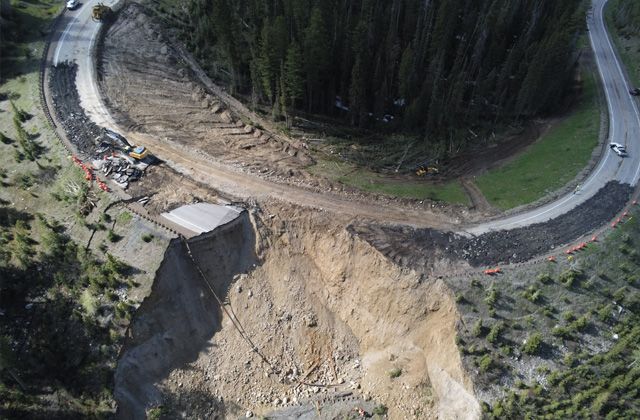
Looking down on the damaged portion of Teton Pass. Today, the route will reopen with a slightly tighter, steeper inside curve while construction crews rebuild the original road ahead of winter. Image: WYDOT on X.com
Finally, we’re rounding things out this week with just a quick update from Jackson Hole, Wyoming, where the local community is celebrating the reopening of a crucial connecting corridor. As you might remember, we shared the news just two weeks ago that the section of Highway 22 known as Teton Pass connecting Victor, Idaho to Jackson Hole, Wyoming had been closed indefinitely due to a landslide taking out a portion of the road. In our coverage of that incident, we shared the myriad of ways this was impacting local communities as a result of the significantly longer commute times between the two areas. Now, due to the overwhelming importance of Teton Pass, the Wyoming Department of Transportation has announced that the road will reopen sometime today.
In order to get the road open as soon as possible, the WYDOT has shared details regarding their temporary solution to route traffic around the damaged portion of road. Specifically, this fix is a freshly paved stretch of road that’s on the inside of the turn that was washed away. In other words, they were able to make the turn that got damaged slightly tighter and slightly steeper in order to reopen the route as quickly as possible while repairs on the main road are made.
Speaking of repairs and solutions, you might also recall that this incident led to questions about the long term plan for the road, and how significantly this issue would impact its future. Ultimately, there’s good news there as well. After examining the damaged portion of the road, engineers determined that the turn, which is built upon a man-made embankment, was built on top of a small pocket of clay. On the day of the road’s collapse, significant rain fell on the mountain’s snowpack as the temperature shot up 25 degrees. That resulted in significant runoff that, when it hit the clay pocket, created an exceptionally slick surface. That surface, which was supporting the embankment, led to the landslide. While that all sounds pretty sketchy, the good news is that now that engineers are aware of the clay, they can account for it. While the exact plan isn’t in place quite yet, there’s talk of adding steel shafts to the embankment that would penetrate deep into the ground and provide additional support. WYDOT is also working to add underground sensors to be able to monitor underground moisture in the area, alerting them to potential issues in the future. The best part of all of this though? Those involved with the project are hoping to have the road fully rebuilt in time for winter. As they say, “all’s well that ends well,” and while we’re not there quite yet, things are certainly looking up in the region. To learn more about this, we’ll turn you over to Wyofile.com.