

Top Five Fridays: June 5, 2026
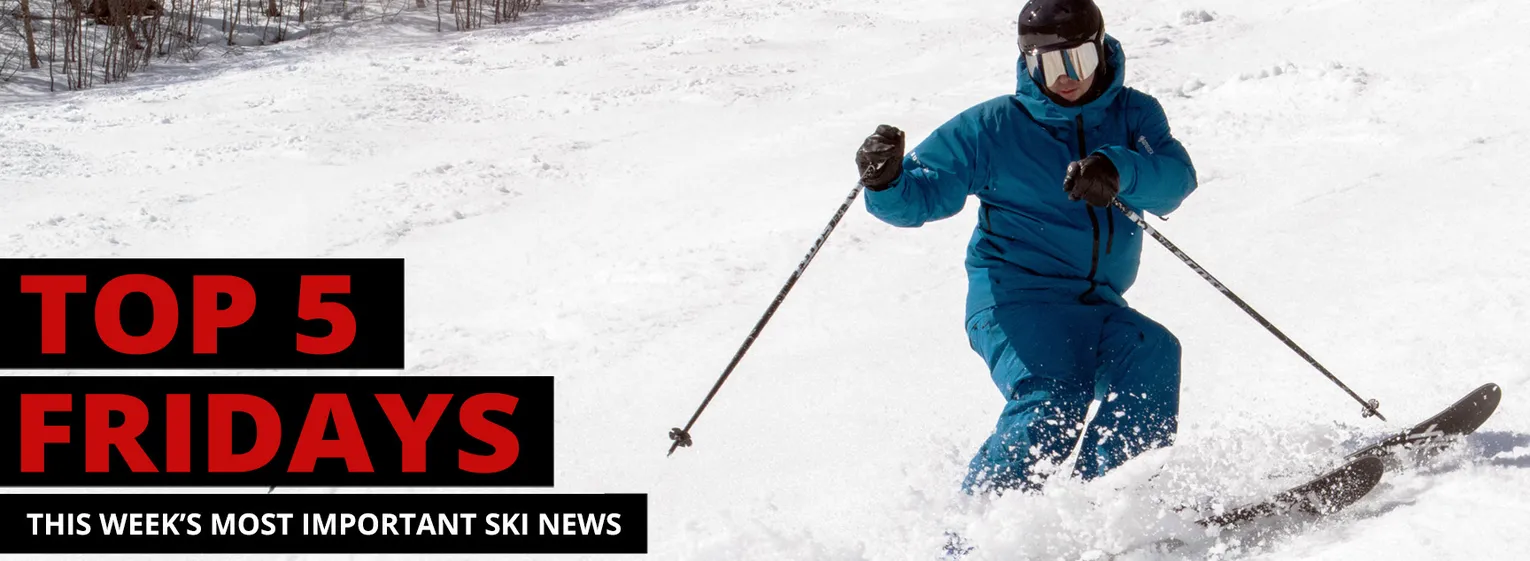
This week, two article confirmed without a doubt that snow is the most important thing in skiing. Image: Our very own Bob St.Pierre, as shot by Chris McClelland
Hello, and welcome to Top Five Fridays, the June 5, 2026 edition! This week, we find ourselves discussing the topic of the health of the ski industry quite a bit, with more insights into skier statistics from this past season, a promising new company that hopes its advancements in cloud seeding can produce more powder days, and an indoor ski center in Denver that thinks it knows what it takes to recruit more lifelong skiers and snowboarders. Once we’re done discussing these topics, we’ll round things out with news of a treasure hunt at a ski resort in Finland, followed by a couple of great edits from this week and three movies from the archives, thanks to FreeskiingMuseum.com. We know it’s June, but you found yourself here for a reason, so let’s get into it!
#1: A Tale of Two Seasons - Our Triage of the 2025-2026 Ski Season Continues With Further Analysis of Just How Bad (or Good) it Was in Two Different States:
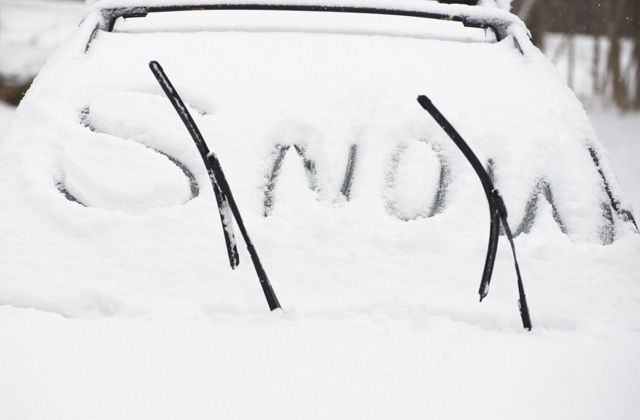
What’s the most important indicator when determining whether a season will be successful or not? We’ll give you a hint: it begins with the letter “s”. Image: Jay Peak on Facebook
First up this week is a topic that we’ll use to set the scene for highlights number 2 and 3. It’s also a topic that you’re likely well acquainted with already: this season’s skier visitation statistics were truly a tale of two seasons. For regions where snow fell, it was a season to remember. For most of the West however, it was one to forget. This week, two articles were published that give us even further perspective into this contrast, driving home just how much snow matters in this business.
Let’s start with the good news first: here in Vermont, the 2025-2026 season was the busiest in over a decade, with the roughly 4.36 million skier visits being the most in a season since 2014-2015. That figure represents a 4.7% increase over last season, as well as an 11% increase over the 10 year average. Regionally, Vermont was the busiest state in the Northeast, having grown by 4.7% compared to last year, while the region on the whole grew 3.2%. In other words, it was an excellent year here in Vermont, as well as in the Northeast.
Unfortunately, as we know, that wasn’t the case everywhere. As we discussed about a month ago, U.S. based ski areas saw a cumulative decrease of about 9 million skier visits this season, or a 15% drop. One of the main driving forces behind that drop was a severe dropoff in visits to the Rocky Mountain region, where skier traffic decreased by about 6.4 million visits, or 24%.
This week, the Colorado Sun published an article diving a bit deeper into the historical significance of those statistics, as well as the impact it had regionally. First up, historically speaking, the 24% decrease in skier visits was the sharpest downturn in traffic in 45 years. In order to find a more significant decline, you’d have to go all the way back to the infamous season of 1980-1981 when visitation fell an incredible 30%. The one commonality between that season and this season of course, was a lack of natural snow. In addition to these statistics, the Colorado Sun article also does an excellent job of diving into the nuances of this report, from analyzing the impact of season passes on the industry during a season like this, to the impact that decreased tourism had on ski town economies. To learn more about the ripple effect of a low snow season, give the full article a read. For our part, we’re going to use this opportunity to segue to our next topic: subsidizing snowfall.
#2: Startup Precipitation Manufacturer, Rainmaker, Wants to Use Drones and Advanced Weather Modeling to Create More Powder Days:
Ok, now that it’s crystal clear that the most important factor in a successful ski season is snowfall, the followup question should be, “what can we do to guarantee good conditions each year?” The answer, according to a relatively new startup called Rainmaker, is cloud seeding.
This week, we caught a story from GearJunkie.com that tells the story of the promising young company that’s looking to revolutionize the ski industry through the use of cloud seeding - the act of triggering precipitation by “injecting” clouds with particles. Now, you may very well have heard this term before as it’s not exactly new and Rainmaker isn’t the first company to use it. In fact, the concept was first invented by General Electric way back in 1946. Since then, the technology has slowly evolved and eked its way into mainstream conversations, culminating in conspiracy theories surrounding its use to intentionally cause floods last summer. While we won’t dive into that conversation, we do want to share the story of Rainmaker, a company that’s attempting to commercialize cloud seeding in an effort to create more consistent snowfall at ski resorts.
Since its inception, there have been two issues plaguing cloud seeding and preventing its use commercially. The first is that cloud seeding efforts have resulted in increased participation over wide swaths of land, to the tune of several hundred square miles. For a ski resort hoping for more snow, a little more precision is needed. The second issue is that it’s been historically hard to prove that cloud seeding efforts have a direct and measurable impact on precipitation. The story has always read something like, “yes, a cloud seeding effort was undertaken, and yes it did rain, but how can we prove that the cloud seeding caused an increase in precipitation?” By combining modern technologies, Rainmaker believes they’ve been able to solve both of these problems.
To get an understanding of how this company differs from past attempts, it helps to take a look at what the company actually does. For Rainmaker, a day of operation means they head out into the field and deploy somewhere between 2-16 drones, each one loaded with an aerosol containing silver iodide - a chemical compound whose crystal structure closely resembles that of ice. These drones are flown into the clouds where the aerosol is sprayed, allowing the moisture in the cloud to build up on the silver iodide molecules, forming snowflakes, and eventually causing precipitation. That’s the first difference with Rainmaker - the method in which they seed the clouds is much more precise than land based seeding efforts.
The second difference is that Rainmaker is using a combination of satellite data and radar to help them forecast exactly when and where the right opportunities to cloud seed are. As a result of the forecasting formula they’ve created, they’re able to cause precipitation to occur over a roughly 10,000 square acre area - drastically smaller than the hundreds of square miles that most operations impact. That precision, as it turns out, is the key to their business as it enables them to prove that their efforts are having a direct impact as the affected area is small enough that it can be reliably and consistently measured.
All of these reasons are why Snowbird decided to partner with Rainmaker this past year, and has already agreed to work with them again next year. According to president and CEO of Snowbird, Dave Fields, while he doesn’t expect Rainmaker to be a “silver bullet” solution, he sees the technology as a valuable tool in their snowmaking arsenal.
So, does this mean we’ll be seeing Rainmaker implemented at ski resorts across the country, guaranteeing endless powder days? Probably not. Not next season anyways. But as with all new technologies, they seem to be pioneering a path that could absolutely prove helpful for the industry in the future, especially considering that the methodology will only continue to become more efficient.
Lastly, before closing this out, we do want to quickly acknowledge that many of you might be having questions regarding whether or not this is safe, or what it means for the environment. For instance, if cloud seeding causes it to rain in one place, does that mean it won’t rain in another? Truthfully, we have these same questions. For what it’s worth, Rainmaker provides answers for these concerns in an FAQ on their website, which you can check out here. To read the full story over on GearJunkie.com, click here.
#3: Let’s Face it: There’s a Lot of Barriers to Entry for First Time Skiers. Denver’s Indoor Ski Area, Snöbahn, Thinks They Have the Solution:
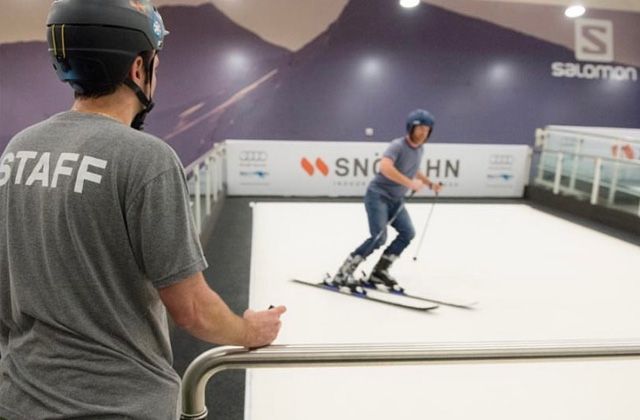
Does the future of skiing start indoors? Maybe! Image: Snöbahn on Facebook
Continuing on with the theme of skier visits, our next article this week explores another aspect of maintaining a healthy population of skiers and snowboarders: enticing new participants. If you’ll allow that snow is the first, most important factor necessary for a successful ski season, then we would argue that welcoming new participants to the sports is the second key factor for the long-term health of the industry. Despite a largely upward trend in ski visitations over the past handful of years, you might have also heard that interest in skiing has plateaued at best, or is even declining as the population of avid skiers ages out. The solution to that of course is easy: get more people on the slopes and interested in skiing. As it turns out, that’s easier said than done, and is a key reason why businesses like the Indy Pass and Epic Pass are offering special programs to incentivize first time participants. Still, despite their best intentions, these programs haven’t yet had a dramatic impact.
Enter this week’s news, a story from SkiMag.com that covers Denver’s Snöbahn indoor ski area. Now, full disclosure, this article reads a bit like a piece of paid content and comes off as an advertisement for Snöbahn. That said, there’s some genuinely interesting insights here that make the piece worthy of discussion. Let’s start with a quick rundown of what Snöbahn is.
Featuring two locations in the Denver area, Snöbahn is an indoor “ski area” that’s targeted towards beginner skiers and offers multiple carpeted treadmill style slopes to learn on, as well as indoor trampolines and ramps for the freestyle inclined. Located close to home, in a climate controlled environment, free from wind, precipitation, ice, crowds, and all of the other unpleasant aspects of the sport, Snöbahn is meant to be a learning environment where urban dwelling,first time skiers can get comfortable with the sport before making the multi-hour trek to the mountains.
Again, keeping in mind that this story is a bit advertisey, the solution that Snöbahn has offered for introducing new skiers and snowboarders to the sport is genuinely worth considering. Afterall, it’s cheaper, more convenient, more comfortable, safer, arguably a quicker learning curve - the list goes on. When looking at the problem of recruiting new skiers and snowboarders to the sport from a barriers to entry perspective, there’s quite a few challenges to overcome. According to the NSAA, even if a person can be successfully convinced to give the sport a shot, it ends up being a one time thing for roughly 80% of them, with only 20% ever returning to the slopes. Put into marketing terms, that drop off rate is quite high. What if, however, a person learned to ski before ever even making it to the mountain? That’s the bet being hedged by Snöbahn, and it’s one that we would be thrilled to see further data on. For now, it’s just a concept, and one that you can learn more about by checking out the coverage from SkiMag.com.
#4: If You’re in the Mood for a Treasure Hunt, Consider Heading to Levi, Finland This Summer, Where You Can Try Your Luck at Finding a $23,000 Gold Nugget, Hidden Somewhere on the Resort:
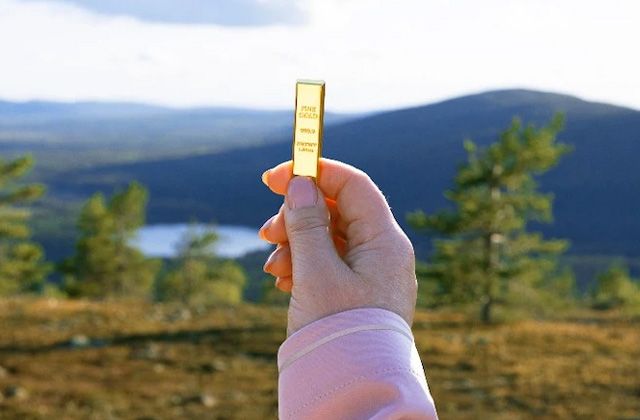
In just over a week and a half, this golden nugget valued at $23,000 will be hidden somewhere in Levi. To find it, all you have to do is look (and maybe follow some clues). Image: Visit Levi
Finally, for our last highlight this week, we bring you a pretty amusing story out of Finland, where Levi ski resort and Agnico Eagle gold-mining company have teamed up to launch a treasure hunt this summer. Located in the Arctic Circle, Levi experiences what’s known as the midnight sun. That is, from the first of June through the middle of July, the sun never truly sets. Also due to its arctic location, Levi isn’t necessarily known as a summer travel destination - its tourism mostly exists in the winter. As you might guess, the mountain, which offers an array of summer activities from biking and hiking to tennis and trampolines, would prefer if their busy season lasted year round. To solve this, they’ve decided to launch a treasure hunt.
In a move that reminds us a bit of Forrest Fenn’s recent treasure hunt, Levi has decided that the best way to entice visitors to their resort this summer is by hiding a €20,000 (about $23,000 USD) gold nugget somewhere at the resort. Starting on June 18th, the resort will begin sharing clues regarding the location of the nugget. Now, we’re not exactly sure how this will work, as a report from EuroNews.com says that these clues will “takes you to different attractions, including hiking and biking trails as well as other things you can do exclusively during the summer months.” How a clue will guide you through the tennis courts and then up a bike trail we don’t exactly know, but we digress. The point is, the hunt will consist of a series of clues, released periodically, from June 18 - August 22nd, with each clue making the treasure’s location a little bit easier to find. Additionally, it’s stated that the gold could be found at any time, and that you won’t need to dig for it.
It’ll be interesting to see how this plays out for Levi. In concept, it’s a great idea, as not only do treasure hunters get to experience Levi in the summer months, but their trip also comes with an engaging quest and a chance to make a good chunk of change. On the flipside though, there’s potential for the concept to flop, should the gold be found quickly. Spending $23,000 on a one week campaign for instance, would be a worst case scenario. Still, we applaud Levi for thinking outside of the box, as it’s safe to say this is the first time we’ve ever heard about a ski resort hosting a treasure hunt. If you’d like to participate, we’re pretty sure all you have to do is go to Levi this summer and start looking for gold, probably keep an eye on their socials for clues too. To learn more, check out MidnightSunHunt.com, or the Levi’s Instagram account.
#5: And Now, Your Edits of the Week: SkierJon Brings Us End of Season Vibes From Brighton, Featuring an Appearance by Will Wesson:
Just a Quick Reminder of How Badly You Either Do or Do Not Want to Get Into Ski Base Jumping:
We Can’t Lie, it Was a Slow Week in the World of Ski Edits. Sometimes That Happens When it’s June. So, We’re Going to Share a Couple of Edits from the Ski Archives, Thanks to FreeskiingMuseum.com. First Up, the First Ever Line Team Video, Circa 1998:
Followed by Rastafaride 1 - Candide Thovex’s Debut Feature Length Film:
Finally, Check Out “Super Park The Movie”, Which Documents One of the First Annual Park Building Events in Skiing:
Huge shout out to FreeskiingMuseum.com for sharing these! Be sure to check out their website to keep exploring freeskiing’s history.