


Top Five Fridays: October 9, 2026
Breezy Johnson is just one of a dozen athletes who qualified for the U.S. Women’s Alpine A Team based on the merits of her results. With the World Cup calendar getting underway in just two weeks, we’ll bring you up to speed with the latest updates ahead of the season in highlight #1! Image: U.S. Ski and Snowboard Team on Facebook
Hello, and welcome to Top Five Fridays, the October 9, 2026 edition! This week, we have plenty to talk about, as each highlight either contains multiple stories, or is part of a much bigger conversation. For example, in highlight #1, we share the news that the U.S. Ski Team has announced the official roster for three of its teams. But, that’s not where the story stops. With the roster releases, and with new news from Mikaela Shiffrin, pre-season intrigue is running rampant just weeks before the first races of the season.
From there, we’ll bring you an update from Loon Mountain, who has just announced another massive expansion, although federal approval is still required. Next, we’ll share with you two stories regarding chairlift safety bars which reflect the widely different viewpoints regarding their relevance in different regions. Finally, we’ll round things out with a historical story that, while not exactly new news, does provide several valuable insights that help explain the current state of the ski resort industry, as well as what might be coming next. If you’re looking to load up on ski related talking points ahead of the weekend, then you’re in the right place! Let’s jump on in.
#1: With the World Cup Alpine Season Just Weeks Away, the U.S. Ski and Snowboard Team Has Shared Multiple Roster Announcements. Meanwhile, Mikaela Shiffrin Has Made a Major Decision:
Believe it or not, the first World Cup action is just two weeks away, meaning we’re truly on the verge of winter. With that initial race weekend on the horizon, we find ourselves sharing a triple header of highlights this week. With so much to cover, it’s likely that we won’t be able to get into too many details, but don’t worry, we’ll provide plenty of links.
First things first, the prerequisite piece of news here is that the U.S. Ski Team has just announced its full roster of athletes for the U.S. Cross Country Ski Team, U.S. Alpine Ski Team, and U.S. Snowboard Team. Again, given that we don’t have space for a deep dive into each team, we’ll defer you to the U.S. Ski and Snowboard website to see full rosters for the XC Ski Team and the Snowboard Team.
For the U.S. Alpine Team however, there are plenty of intriguing storylines to be had. For us, the most immediately noticeable storyline is the sheer strength of the women’s team. If you’ll recall our coverage of the alpine team nominations criteria, then you’ll remember that the team rankings are merit based. In other words, there are specific, result based criteria for making each team. It’s not like a team sport where coaches make the call on who starts and who rides the bench - on the U.S. Ski Team, the breakdown is determined purely by results. As such, it’s absolutely shocking to see that the Women’s team has twelve athletes on the A Team roster. That’s up from last year’s count of 9 A Teamers, and more than double the number of A Team members on the men’s roster, which sits at 5. The takeaway here is both obvious and not at all surprising: the U.S. Women’s alpine team is absolutely loaded with talent, and we expect to see another big year for them. To see the full list of athletes for each team and each gender, click here.
The other big storyline coming out of the women’s roster is the inclusion of Lindsey Vonn on the A Team. While the kneejerk reaction to that news is to begin asking if Vonn will race this season, the reality is that, while she does hope to return to the sport, it’s unlikely to be this year. In reporting from Olympics.com, we learn that Vonn is expecting to have surgery on her ACL this November, which is presumably the last step in her recovery from back to back devastating crashes at the end of last season. With surgery scheduled for November, Vonn expects to be out of commission for about 9 months, after which she’ll make a final decision regarding her return to racing. That said, given her “one more run” comments from back in April, as well as her efforts to begin rehabbing less than one month after nearly losing her leg, it would seem likely that Vonn fully intends to at least try to return to racing. With this week’s news that she’s made the A Team, the U.S. Ski Team has also signaled their support for the athlete. To learn more about this, check out the story from Olympics.com.
Finally, for the third U.S. Ski Team story this week, we have news from Mikaela Shiffrin, who made a very intriguing announcement this week: after a season in which Shiffrin won 11 out of 12 slalom races, and placed second in the one race she didn’t win, she’s decided to shift her focus away from Slalom and towards GS and Super-G races. In a classically transparent episode of her “What’s the Point” podcast, Shiffrin shares that this move isn’t about feeling bored with Slalom, or that it’s become too easy for her. Instead, it’s more about who she is as an athlete, and wanting to honor the pull that she’s feeling towards pushing herself in these other disciplines. Plus, taking the calendar into consideration, focusing on these two disciplines will allow her to manage her schedule better - providing more time at home, and more international training blocks with less constant traveling between events. Of course, this isn’t to say that Shiffrin won’t be racing Slalom events at all. In fact, she intends to compete in them when it makes sense, primarily as a way to keep her ranking so that she can continue to compete in the event in the future if she desires. All in all, this very much seems like the type of decision that an absolutely dominant athlete would make after achieving GOAT status well before they’re ready to retire. For more on this, we highly recommend giving Mikaela’s podcast a watch. If you’re short on time however, this recap from the New York Times should suffice.
#2: It’s Deja Vu All Over Again as Loon Mountain Announces its Second Set of Expansion Plans in Just Five Weeks:
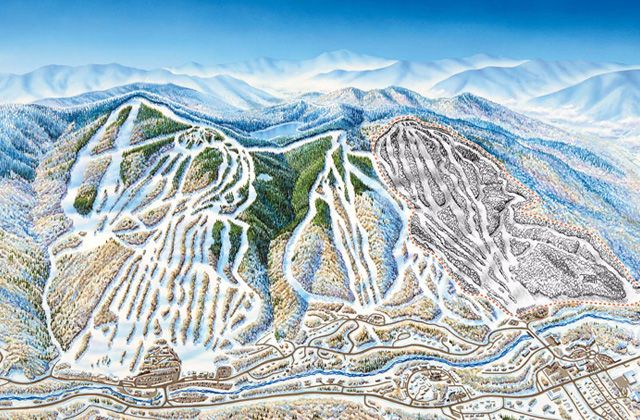
An artist rendering of what the proposed expansion to the looker’s right of Loon might look like. For a larger version, click here.
Next up this week, is even more news out of Loon Mountain, New Hampshire, where the ski resort has just announced plans for another major development. Regular readers of ours might recall our September 4th coverage, when we shared the news that Loon was set to begin glading out terrain in an area known as Black Ridge, officially adding 242 acres to the ski area. In doing so, the resort is set to become the largest in New Hampshire, increasing its skiable acreage from 403 to 675 skiable acres. That plan is locked in, and set to be skiable in the 2027-2028 season.
This week, Loon made a second expansion announcement, and this one could prove to be even more significant. Located on the other side of the resort from Black Ridge, “Peak 4” is an undeveloped peak to the West of the resort. While expansion into this terrain has never come to fruition, it was actually a part of the original vision for the ski resort, as outlined back in the 1960s. At that time, it was conceived that Peak 4, which overlooks Lincoln, NH, would serve as the entry point for the resort. Now, approximately 60 years after the original vision for Loon was laid out, the mountain is finally turning its attention towards fulfilling it.
Under the newly announced plan, expansion onto this peak would be comprehensive, including the installation of four lifts to access the approximately 280 acres of skiing on the 1,500’ vertical mountain. As for the terrain itself, Loon is pitching it as a gap-filler, helping beginner and intermediate skiers grow their skills into upper intermediate, advanced, and expert terrain. Of the 280 acres, it would be a nearly even split between trails and glades, with 145 acres becoming trails and 135 remaining glades. Additionally, there are plans for a mountain top lodge and restaurant, as well as a mid mountain lodge. Perhaps most transformative though, would be a gondola that would connect the town of Lincoln directly to the base area of this new peak.
Now, before getting too excited about this development, it’s worth noting that while the Black Ridge expansion is definitely moving forward, the Peak 4 expansion is still pre-approval. In order for it to proceed, it will need to receive approval from the National Forest Service as the land in question sits within the White Mountain National Forest. As such, it will be up for environmental reviews and plenty of public scrutiny - much of which will be absolutely valid. As is always the case with ski resort development news, the excitement of new opportunities must be balanced with a holistic view of the project’s impact. For now, the weighing of pros and cons is in the hands of the U.S. Forest Service, who has accepted the plan for formal review. To learn more about this project, check out the press release from Loon Mountain.
#3: Bar Up, Bar Down, or No Bar at All? The Chairlift Safety Conversation Continues as Blue Mountain, Ontario Installs New Safety Bar Monitoring Devices, While an Oregon Judge Throws Out a $3.6 Million Lawsuit:
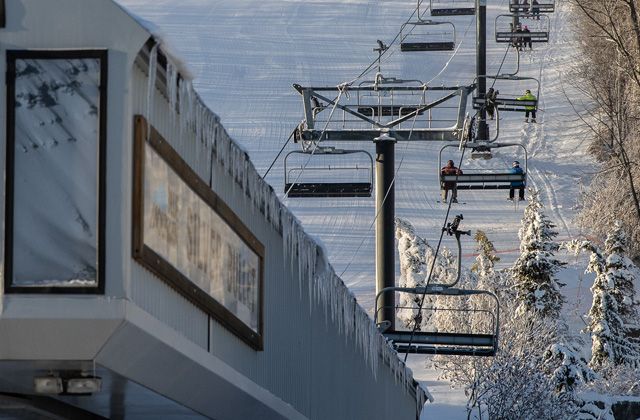
At Blue Mountain in Ontario, new safety bar detection technology is coming to its Silver Bullet Express. Image: Blue Mountain
Moving onto our third highlight this week, we have a safety bar double header! For whatever reason in recent years, safety bars have become a hot topic of conversation, with public opinion ranging from “bar down, always,” to some western chairs not having a bar at all. This week, we caught an article from Blue Mountain, Ontario, where the opinion is “bar down, or we’re stopping the lift.”
This week, Blue Mountain announced that they’ve added a new safety system on their Silver Bullet Express detachable quad that will monitor the use of the safety bar as well as whether the riders on the chair are seated properly. Now, before reading too far into this concept, it’s worth noting that this system is only active in the loading area, and reportedly only monitors the safety bars until the first lift tower. As such, this isn’t a “if you put your bar up halfway up the mountain, they’ll know and pull your pass,” scenario. Rather, this new system is meant to alert lift operators of issues arising during the loading process. Whether or not that means the lift will stop or if you’ll be yelled at to lower the bar if you haven’t yet by the first pole remains to be seen. It also, of course, raises questions about whether or not this system is a one off, or if it’s set to become industry standard. To learn more about this and other mountain updates, check out the Blue Mountain website.
In other ski lift safety bar news, a judge in Oregon has just thrown out a $3.6 million lawsuit against Willamette Pass, alleging negligence on the part of the lift operators. In this story, 65 year old Paul Richmond was riding the ski area’s Peak 2 triple chair during windy conditions. This lift notably does not have a safety bar, and so lowering it was never an option for Richmond. Unfortunately, on this day, Richmond says that the wind blew so strongly that he fell out of the chair just after the second tower. While he was fortunate enough to be able to grab a hold of the chair, he was only able to hold on for a few seconds before losing his grip and falling 25-40 feet to the ground. Upon impact, he compressed and fractured 4 vertebrae, ultimately requiring back surgery. As a result of the incident, Richmond filed a lawsuit for $3.6 million, saying that the chairlift should not have been operating.
While we don’t know the details of why the lawsuit was thrown out this week, it’s interesting to note that the lawsuit never questioned whether or not the resort was liable for not having a safety bar on the lift. As it turns out in Oregon, the state where ski areas struggle to find insurance, while new and relocated lifts are encouraged to have safety bars under federal regulations, it’s not a state law and it certainly doesn’t apply to lifts such as the Peak 2 triple, which was installed back in 1992. As such, the lack of a safety bar was never a part of the conversation - just the decision to operate the lift during high winds.
The takeaway here? Well, these two stories come at the safety bar issue from dramatically different sides and with dramatically different outcomes. With that in mind, our only real takeaway is this: safety bar regulations vary widely from region to region. If you’re taking a ski trip this season, it might be worth a quick Google to see what the safety bar culture is in the region you’re visiting if this is an issue that concerns you!
#4: In the 1980s, George Gillett Brought a Golden Age to Vail While Mentoring Michael Shannon, a Man Who Would Go On to Cofound Alterra, Vail Resort’s Biggest Competitor. Now, Shannon Thinks its Time to Return to Local Ownership:
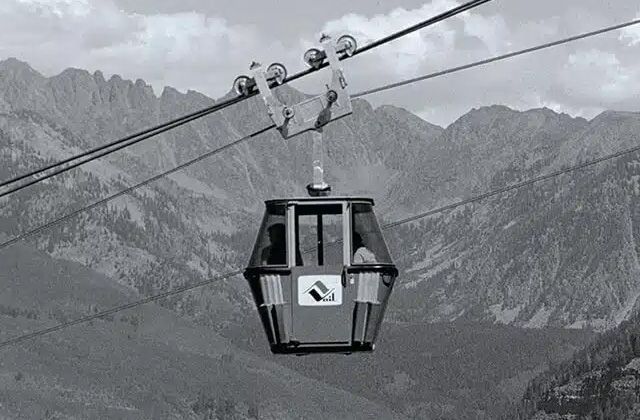
The story of ski resort conglomeration in North America can trace its roots to Vail Resort in the late 1980s. The owner of the resort at that time would go on to sell it to a private equity group that would become the first to begin conglomeration, while the president would eventually go on to cofound Alterra. Image: Discover Vail
Finally, rounding things out this week we have an interesting story from the Vail Daily that gives us some very important historical context to consider as we think about the current state of ski resort corporations and multipasses. Before fully diving into this week’s story though, we want to start by rewinding the clock just a few weeks, to September 23, 2026, when the sad news broke that one of the most beloved owners in Vail’s history, George Gillett, had passed away at the age of 87.
While Gillett was neither the first nor most recent owner of Vail, he was arguably the most transformative. After owning shares of the Miami Dolphins and Harlem Globetrotters from the mid 1960’s through the 1970’s, Gillett went on to own a number of successful endeavors, ranging from car dealerships, to meatpacking plants, and local television networks. Ultimately though, it was in 1985 that Gillett finally found the business he was most passionate about: ski resort ownership. That year, he bought Vail and Beaver Creek for $110 million, and dove head first into the ski lifestyle, reportedly living 100 yards from the lifts and skiing 135 days his first year at the helm. Over the course of the next 7 years, Gillett invested heavily in the resorts, adding new terrain, on-mountain restaurants, and lodges. Perhaps most notably though, he landed the contract to host the 1989 Alpine World Championships at Vail, the first time it had been held in North America since 1950. All of this is to say, that while Gillett came from a big business background, his tenure at Vail had the vibe of a local owner who was deeply invested in not only the mountain itself, but in creating a prosperous mountain community.
Unfortunately, this golden era was somewhat short lived as financial issues related to his other business ventures forced Gillett to sell the resort in 1992. As it would happen, that transaction marked the beginning of a new era in ski resort ownership as a private equity group purchased Vail from Gillett, operating it under the banner Apollo Ski Partners. This group would go on to become the first instance of ski resorts forming conglomerates as they acquired Ralston Resorts in 1996, bringing Keystone, Breckendridge, and Arapahoe Basin under their ownership (although they would quickly let go of Arapahoe Basin due to Antitrust concerns). Then, in 1997, the group took Vail public, ultimately paving the way for the quarterly earning reports you’ve undoubtedly come to love learning about.
Circling back to this week’s news, we have a story from the Vail Daily that shares insights from Mike Shannon - the man who worked directly under Gillett, taking on the role of president of Vail Resorts when he was just 28 years old. As it turns out, Shannon’s story is equally intriguing.
When Gillett sold Vail resorts in 1992, Shannon took what he’d learned about resort ownership, partnered with a group called Kohlberg Kravis Roberts & Co., and started a company called KSL Recreation. Sound familiar? Over the course of the next 12 years, Shannon and his partners made a killing buying underearning spas, hotels, and various resorts and transforming them into notable destinations. In 2004, KSL Recreation was purchased for $2.4 billion. After that, Shannon pivoted back to the world of skiing, starting the similarly named KSL Partners. From there, business continued to boom as KSL Partners became one of the largest multi-resort owners in the business, taking on stakes in resorts like Whistler, Mammoth, Squaw Valley, and several others. Then, in 2017, KSL teamed up with Henry Crown & Company to purchase Intrawest resorts, ultimately forming Alterra.
In other words, just to clarify our story here, Michael Shannon, the one time 28 year old president of Vail Resorts, would go on to create the company’s biggest competitor: Alterra.
This week, in the wake of his mentor’s passing, Shannon, who is no longer on Alterra’s board but remains a shareholder, has shared his thoughts on the current state of the ski industry with Vail Daily. The long and short of it? He sees value in ski resorts returning to local ownership.
In his comments, Shannon reflected on a time during the 1970s when corporations were becoming more involved in the ski industry, causing ski areas to lose their soul. According to his account, “Chrysler had a number of ski resorts (in the ’70s) … and ultimately these large public companies lost track of the individuality and the authenticity of these western-oriented ski resorts that really were a combination of a great town and a great mountain.”
Again, sound familiar? For many, the idea of large public companies losing track of the “ individuality and the authenticity” of ski resorts is precisely what’s occurring today. For Shannon, who was both a part of Vail’s local-first vibe of the ‘80s as well as the golden era of conglomeration, what happens next is all but obvious: a return to local ownership.
While not directly addressing ongoing stories regarding activist investors at Vail, or any potential financial headwinds facing Alterra, Shannon does offer this insight regarding Gillett’s success at Vail, “I think Vail was better because George Gillett and his family moved to Vail.” It’s simple, it’s concise, and it says everything: with the great multipass experiment beginning to show fractures, the answer according to one of the movement’s founders may be as simple as embedding resort owners back into the mountain’s community.
All told, while this isn’t exactly “new news”, we found it to be a fascinating story that shares insights that quite literally only one man in the industry is qualified to give. Whether or not his forecast proves to be accurate is yet to be seen. For now, head over to Vail Daily to give the story a read.