

Top Five Fridays: September 26, 2025
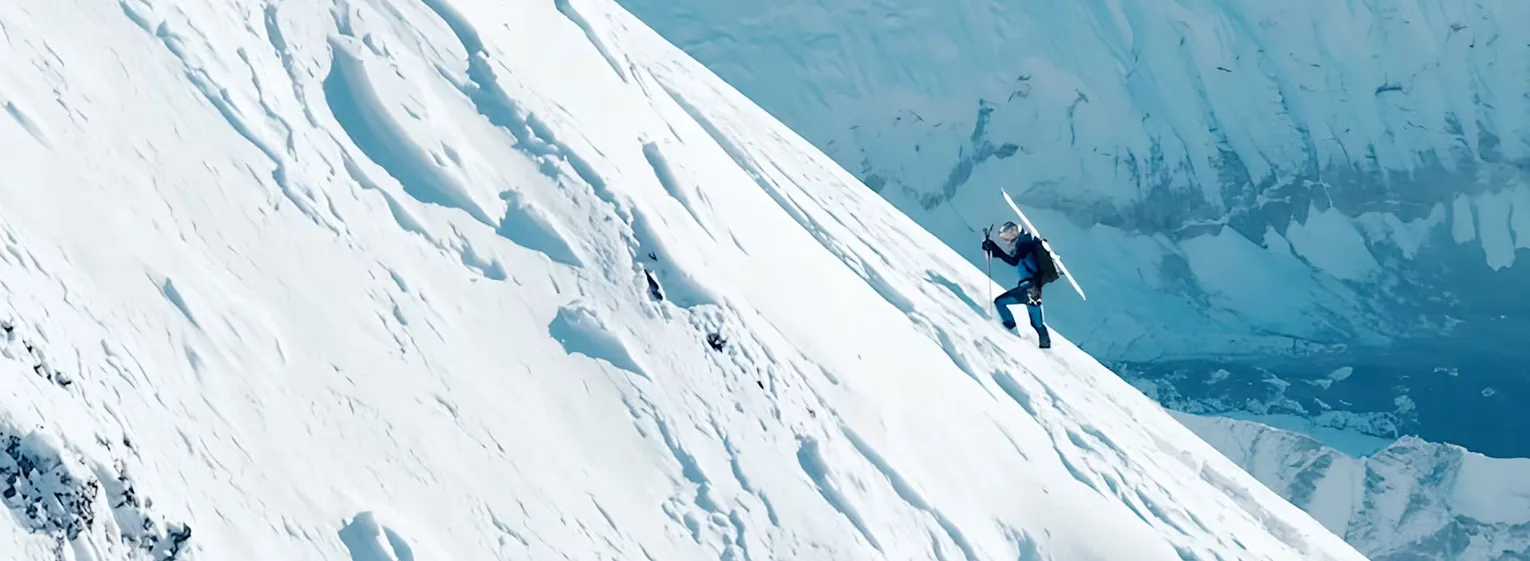
Andrzej Bargiel on his summit push to the top of Everest - likely well over 15 hours into his journey. Photo by his brother Bartłomiej for Red Bull Content Pool.
#1: The X Games Has Launched a New Website & Logo, Along With New Details Regarding the X Games Leagues:
Hello, and welcome to Top Five Fridays, the September 26, 2025 edition! This week’s news is once again a bit of an off-season grab bag, but one that’s packed with stories you’ll want to read. From significant new details regarding the X Games’s new league format and first ever ski descents of Everest, to Hall of Fame inductees and fraud resolutions, this week’s news is sure to give you whiplash (hyperbolically speaking). We’ll take you through the details of each of those stories before rounding things out with several short trailers and a couple of great edits to round out the week. Now that the table’s set, let’s dig in.
First up this week is new news from the X Games, who turned several heads this week with the release of a new brand identity and website. A stark contrast to the previous iconic red X logo, the new X Games logo is a simplified X with the center hollowed out. In addition to this update, the website for the games was also updated to feature a more “in your face” style of design, along with a new slogan in which the games declare their athletes are “ALL IN”.
What’s even more interesting to us though, is that behind the loud visuals, the X Games also released more details regarding their plans for the X Games League (XGL). While we’ve known the rough outline of this plan since June of last year, that initial announcement left us with plenty of unanswered questions. At the time of its announcement, the XGL was said to be a new global league in which athletes would be drafted to interdisciplinary teams, all competing against each other in a season-long competition.
This week, the outlines of this concept started to get filled in with some broad brushstrokes. In an explainer video posted to YouTube (and accompanying this highlight), the X Games outlined the structure of the league as well as the points format for the competitions. In short, it works like this: there are two seasons - Summer and Winter. Within each season, there are X Games clubs. This is where the league is taking its biggest leap of faith as it attempts to bring the concept of “teams” to an otherwise individual sport. In this club format, regional clubs will exist all over the world in the same way that soccer clubs do. These clubs will be responsible for drafting athletes that make up their team. Then, throughout the season, clubs will field teams for each event where their athletes can earn points. For instance, a first place finish is worth 100 points. Just like in any FIS event, these points are cumulative, allowing both individual athletes and teams to be crowned champions at the end of the season.
The hope of the XGL, and again, this is their biggest leap of faith, is that these clubs will generate their own form of fandom in the same way that teams like Arsenal, the Boston Celtics, or the New York Yankees might. For instance, there might be a “Rocky Mountain Rippers” (editor’s note: this is a totally made up name - not one that’s actually being discussed) team based out of Denver. That team will be responsible for drafting athletes in order to field teams for each of the snow disciplines: Superpipe, Big Air, Slopestyle, and Knuckle Huck - for men and women, ski and snowboard. As a result, you might get someone like Matej Svancer on the same “club” as snowboard legend Jamie Anderson. To be sure, this aspect of the new league is intriguing, although the amount of buy-in from both fans and athletes themselves has yet to be seen. In other major sports, there’s a certain loyalty and pride amongst fans and athletes of a team, and achieving that emotional dedication will likely prove to be the biggest challenge for the XGL.
In addition to these details, a new “vibe” is also starting to emerge from the games. As we know, Jeremy Bloom has suddenly found himself deeply committed to AI in sports as the experimental use of it in last winter’s snowboard superpipe has led to the formation of a new company: Owl AI. This company is all about bringing AI into sports to eliminate subjectivity. That love for AI is impossible to ignore as a familiar version of it was used for the voiceover in the explainer video. Additionally, AI judging was included as the second bullet point in a recent press release regarding the XGL.
Beyond AI, Bloom is also leaning heavily into younger market trends. For example, his stated goal is to allow athletes to use the XGL as a platform to increase their influence, noting how important influencer marketing has become for their income streams. On the subject of income, Bloom is also looking to leverage fantasy sports and sports betting to engage with fans of the sport by giving them some skin in the game - something that’s proven wildly successful in the NBA and NFL landscapes.
With all of these changes in mind, it’ll be interesting to see how the market responds. In a lot of ways, Bloom seems to be doing all of the right things to modernize the X Games, elevate athletes’ platforms, and increase fan engagement. But, between the AI judging, introduction of sports betting, and even the new logo, there are a lot of core fans who are already turned off by all of the changes. (Warning: forum post may contain explicit language) With the first season of the XGL set to kick off in Summer 2026, we won’t have to wait much longer to see the early results of this experiment. To learn more, head over to the X Games website.
#2: He’s Finally Done it: Andrzej Bargiel Has Become the First Person Ever to Summit & Ski Everest Without Supplemental Oxygen:
Next up in ski news this week is a story from the extreme other end of extreme winter sports. Rather than taking place on manmade features in front of a massive audience, this next story takes place in one of the most remote places on earth: Mt. Everest.
Last week, we caught some headlines letting us know that legendary ski mountaineer Andrzej Bargiel was making his way to the summit of Everest in hopes of becoming the first person to ascend and descend the world’s tallest mountain, without oxygen, and on skis. This week, he did exactly that.
In an excellent writeup from none other than Red Bull, we learn all of the juicy details you’d hope to hear about this kind of venture. For starters, it’s important to note that Bargiel waited until after the expedition season ended to begin his journey. Doing so was a bit of a double edge sword, but necessary. While waiting for the mountain to be empty allowed him to avoid the notoriously congested summit stretch, it also meant he’d be making his way through untracked terrain - requiring significantly more energy and technical ability to accomplish. In the end, the risk paid off, as Bargiel was able to find a weather window to make a 16 hour push from Base Camp directly to the summit. That in and of itself is an insane accomplishment. To hike for 16 hours straight would be a herculean task for most of us, let alone in what’s known as the “death zone,” at elevations of above 8,000 meters and across treacherous terrain - all without supplemental oxygen.
The kicker to all of this of course is that Bargiel didn’t just summit Everest in 16 hours without oxygen, but once he got to the top, he strapped on his skis and began descending. Fortunately for us, Bargiel was accompanied not only by his helmet mounted POV camera, but also his brother Bartek, who was operating a drone. The result is that we not only know of his descent, but we get to see it as well. Based on the clip accompanying this highlight, we’ve gotta say, the conditions up there honestly look pretty darn good too.
As for the descent itself, Bargiel broke it into two stretches. With his summit effort taking longer than expected, the lighting had devolved before Bargiel could safely make it through the Khumbu Icefall. Instead, he opted to spend the night above the icefall at Base Camp II before continuing on in the morning. The next day, he successfully navigated the icefall with the help of his brother who was piloting a drone to help scout lines. Again, in watching the accompanying video, you can see why. Without having eyes on the entire face, it would be easy to get trapped in a no-exit situation.
All in all, this is an incredibly impressive feat, and one that will go down as a capstone in Bargiel’s career. A lifelong dream of his, Bargiel first attempted the feat back in 2019, and then again in 2022. Finally, in 2025, the elements aligned and his dream was realized. While he’ll undoubtedly continue his adventurous ways, it goes without saying that this feat will be quite literally impossible to top. To learn more about this expedition, check in with Red Bull.
#3: The Final Chapter: Burke Investors Set to Receive Investment Rebates:
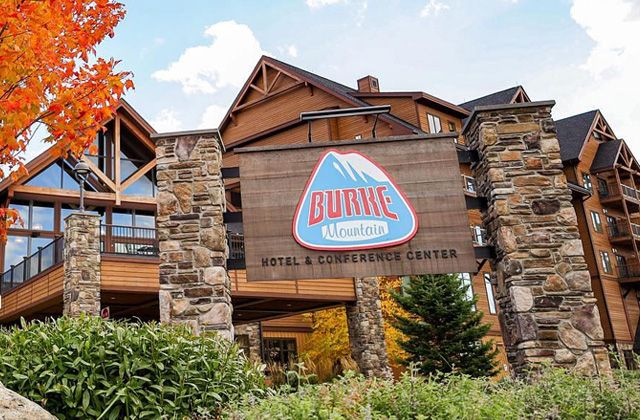
A look at Burke Mountain’s Hotel & Conference center - one of many projects paid for in part by EB-5 investors. Image: Burke Mountain Resort on Facebook
Our third topic this week is unfortunately significantly less fun, but one that’s important to share nonetheless as it brings a sense of closure to a story that we first started telling 11 years ago. That story, of course, is the EB-5 fraud incidents at Jay Peak and Burke Mountain here in Vermont. By now, you should be well aware of this story, so we’re just going to skip the details and cut to this week’s news: court-appointed receiver Michael Goldberg has just received approval to send payments to each of Burke’s defrauded investors.
Going back in time just a little bit, you might recall our coverage from late Spring, when it was announced that Goldberg had finally found a buyer for the resort. That process in and of itself was a bit complicated as one of Goldberg’s primary objectives was to sell the mountain for as much as possible in order to recoup funds for the investors who’d lost money on the deal. That, mixed with Goldberg’s desire to sell the mountain to a group that would have the community’s best interest in mind, meant the transaction took a bit longer than expected. Ultimately though, the resort was sold to a group called the Bear Den Partners consisting of local community leaders for $11.5 million.
This week, the story finally comes to a close, as the approval of Goldberg’s distribution plan signals the final chapter in resolving this decade long drama. All told, Goldberg was able to recoup a total of $22 million; $11.5 million from the sale of the resort, and another ~$10 million from a settlement with financial firm Raymond James who had handled transactions for former Jay Peak owner (and fraudster) Ariel Quiros. These funds are set to be distributed equally amongst the 121 foreign investors who contributed to the project, with each one receiving checks for $183,322 each. While it’ll certainly be nice to get that check in the mail, it’s worth noting that these investors each contributed at least $500,000 initially, meaning that the least they could’ve lost on this would be $316,678, not to mention their hopes and dreams of acquiring permanent U.S. Residency through the EB-5 program.
While it may not be the outcome that either the investors or Burke Mountain locals had hoped for back in the early 2010’s when Quiros sold them all a grand vision, at the very least the story has some resolution. For the investors, it’s a lesson learned, and at least some funds have been recouped. For locals, the future suddenly looks much, much brighter with new local leadership in place. To learn more about this final chapter, check in with VTDigger.org.
#4: Sit-Ski Pioneer Bob Meserve to Be Inducted into the Colorado Snowsports Hall of Fame This Weekend:
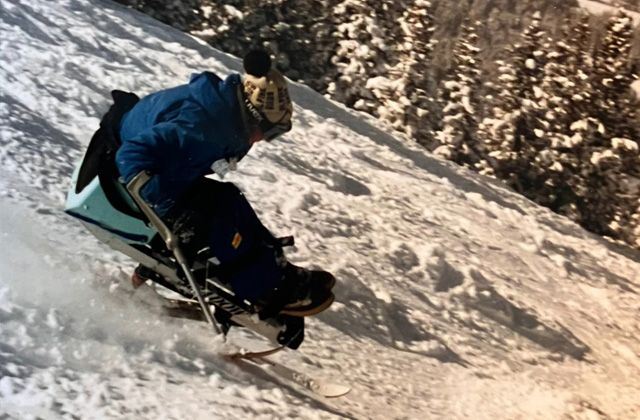
Bob Meserve, ripping a sit-ski in a day and age when they were still rudimentary machines. Image: Bob Meserve on Instagram
Finally, our last story this week is part “current news” and part “people you should know,” as legendary sit-skier Bob Meserve is set to be inducted into the Colorado Snowsports Hall of Fame. If you don’t know the name, no worries, we didn’t either until this week, when we were pleasantly surprised to learn his story. It goes like this:
As a kid, Bob Meserve had something in common with all of us: an immense love for skiing. Unfortunately, things took a turn for him in 1983 when a ski accident left him paralyzed from the waist down. As you might imagine, there wasn’t a whole lot available in the world of sit-skiing at the time as the concept was very new. Still, Meserve’s passion for the sport persevered, leading him to an incredible lifetime worth of achievements.
Upon beginning this new chapter, Meserve pretty quickly made an impact. In this recent interview with Colorado Public Radio, he retells the story of how he was involved in the development of the original sit-skis at Winterpark Resort. At the time, the technology was so new that it was essentially a seat, mounted on a car’s leafspring, mounted on a monoski. In other words, it was archaic and unruly. But, committed to the cause, Meserve returned to the resort time and time again, providing feedback while slowly learning the best ways to balance and position the components of the machine. Eventually, it worked well enough that he moved onto Vail, becoming the first ever sit-skier allowed at the resort. From there, both Meserve’s abilities and accomplishments continued, as he joined the United States Disabled Ski Team in 1989. Over the course of the next four years, Meserve won multiple Paralympic medals. Surprisingly, this is just the start of his story.
In 1994, the U.S. Disabled Ski Team was running low on funds. Seeing the dire situation, Meserve called his friend Steve Raymond who was working at ESPN and serving as president of the Rocky Mountain Chapter of the Cable and Telecommunications Association for Marketing at the time. In that call, Meserve told Raymond that the team desperately needed money and that without an increase in funding, it was at risk of ending. Quickly, the two hatched a plan: they would start an annual fundraising event called Adaptive Spirit, utilizing Raymond’s network to secure financial support. A seemingly simple decision, Raymond and Meserve were able to raise $100,000 that initial year, ultimately saving the team. Buoyed by the success, Adaptive Spirit grew in subsequent years, continuously seeing an uptick in fundraising.
In 2011, the fruits of those efforts paid off in a big way as the U.S. Disabled Ski Team officialyl became the U.S. Paralympic Ski Team - the governing body for U.S. Paralympic skiers. In other words, thanks to the efforts of Meserve, Olympic level paralympic skiing was saved in America. Nowadays, the annual Adaptive Spirit event brings in over $1 million annually, contributing nearly 40% of the U.S. Paralympic Ski Team’s budget. In doing so, Meserve's efforts and legacy continue to open doors for those who refuse to be held back by paralysis.
This week, Bob Meserve, a man who we’ve only just come to know, will be inducted into the Colorado Winter Snowsports Hall of Fame - a much deserved honor.
To learn more about his story, we recommend listening to this recent episode of Adapt and Thrive, from Colorado Public Radio.