TOP FIVE FRIDAYS: SEPTEMBER 4, 2020
#1: With Reservation Systems Officially in Place, Backcountry Ski Organizations Share Their Hopes and Concerns for the Season Ahead:
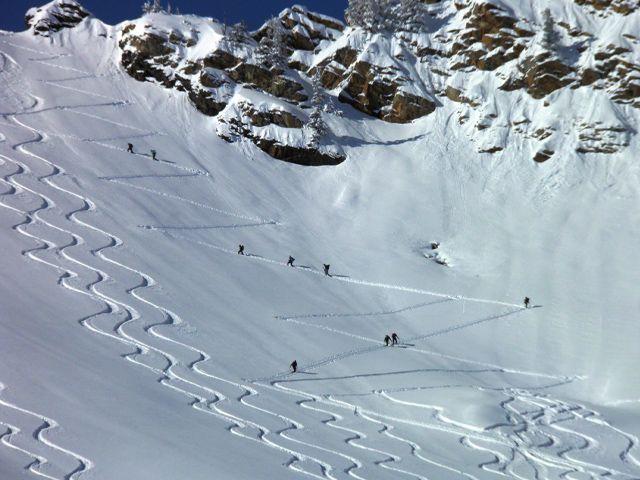
Once rarely visited, popular backcountry zones are expected to become heavily trafficked in the year ahead. Image: Utah Avalanche Center on Facebook
Last week, we found ourselves with an opportunity to cite Isaac Newton’s third law of motion, and in particular how it seems to apply to life as well as physics. This week we waste no time in showing you yet another example of a real life action causing an equal and opposite reaction. As you’ve likely heard by now, Vail has officially announced a reservation system at all Epic Pass resorts for the foreseeable future. For skiers who tend to enjoy the sport at least in part for the freedom it provides, the concept of a reservation system has been a tough pill to swallow. As such many previous pass holders have found themselves suddenly reconsidering their options. One of the most obvious options? Electing to spend the season in the backcountry.
That notion was presented in an article from the Aspen Times this week that taps into a number of perspectives from those involved in the backcountry ski scene, all of which indicate this could be a tricky year in the backcountry. Kicking off that conversation is Jon Miller, the founder of Backcountry United who points out that we already saw signs of an explosion in backcountry popularity last spring after resorts were forced to close down. While there were certainly more crowds in the backcountry here on the East, out West, in places like Colorado and Utah, the impact was even more noticeable as backcountry parking lots began overflowing with cars. As with all things, this sudden increase in backcountry traffic carries a number of side effects, some good, some bad.
On the plus side, this sudden uptick in backcountry use means there’s a significant increase in demand for backcountry and side country gear, a segment of the ski market that had already been growing and is now looking at a season of astronomical growth. Beyond anecdotal evidence, this notion is backed up by a substantial increase in orders of backcountry gear such as boots, bindings, and skins from brick-and-mortar retailers. For those such as ourselves who’ve been championing uphill skiing for years as a great way to escape the resorts and gain some tremendous winter exercise, this sudden shift is welcome.
It does, however, come with some significant concerns. In the same article, Summit County ski mountaineer and backcountry guidebook author Fritz Sperry voices his concerns surrounding safety, particularly in the early months of the season. As new participants of the sport find themselves eager to get out there with their new gear, he fears that low snow could lead to a higher rate of injuries, citing the fact that, “in shallow snowpack, which tends to be more hollow, people are going to be punching through if they don’t know where they are going and know what’s underneath the snow.” Similar notions have also been echoed by avalanche agencies such as the Colorado Avalanche Information Center and the Utah Avalanche Center, both of which are working on expanding their ability to share knowledge in the midst of a pandemic.
So what’s the takeaway here? Ultimately the push towards more backcountry skiers could be a good thing, potentially becoming the pivotal moment in ski culture when backcountry skiing really gains momentum and becomes a much more popular form of skiing. Of course the other side of the coin is that we urge those new to the sport to start slow, be cautious, and learn as much as you can in regards to staying safe while out in nature’s rawest elements. For more on this dynamic, check out the report from the Aspen Times.
#2: Australia’s Mt. Buller Announces Industry Leading Pass Refund Policy:
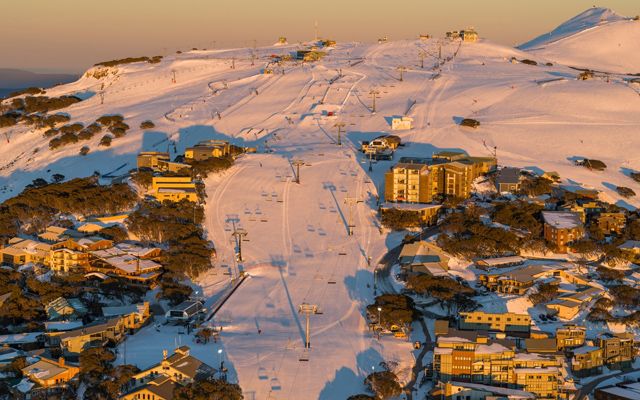
A shot of Australia's Mt. Buller Resort, currently leading the industry in offering the best covid-closure related refund policies. Image: Mt. Buller on Facebook
In other current event ski news this week, we caught a pretty amazing story from Australian ski resort Mt. Buller, who just announced what’s undeniably the best covid-related season pass refund policy in the ski industry. Located just 3 hours outside of Melbourne, Mt. Buller was forced into an exceptionally abbreviated season as stage 3 restrictions (the same ones that forced Vail to shut down the lifts at Falls Creeks and Mt. Hotham) resulted in just 44 days of operations. As you can imagine, that lack of business has indefinitely impacted their finances, putting economic strain on the business while simultaneously leaving pass holders feeling unfulfilled. To be fair, this isn’t the first time this difficult dynamic has popped up as North American ski resorts faced this same dilemma last season, albeit less dramatic due to a longer operational period. Still, Mt. Buller’s method of handling it is both gutsy and admirable. So, what is their solution exactly? They’ll let their pass holders decide how much of a refund or credit they’d like to receive. That’s pretty much it. Recognizing the fact that a myriad of different situations likely exist amongst their pass holders, Mt. Buller is asking them to choose how much of their pass they’d like refunded or used as a credit towards next season’s pass, ranging from 0% - 100%. While many might jump to the conclusion that this could spell disaster for the resort, their announcement cites, “the trusted relationship we hold with our Members; these are passionate individuals and families who share our commitment to this mountain.” Although it’s too soon to say for sure whether or not this gamble will play out favorably, we’re inclined to think that pass holders will appreciate Mt. Buller’s generosity, recognize their difficult situation, and ask for an appropriate refund. To read Mt. Buller’s official announcement, visit their website.
#3: The Decision is in: Burke Mountain and Jay Peak Tax Assessment Update:
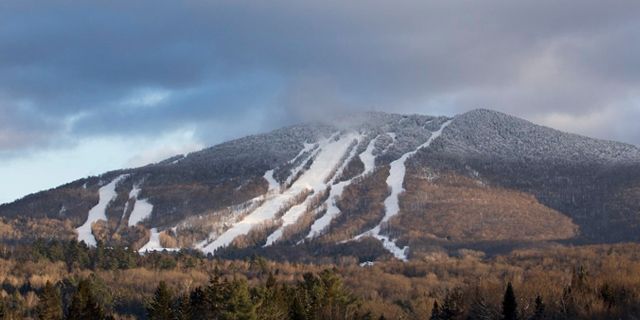
A look at Vermont's Burke Mountain Resort. Fun fact: Burke is home to the Burke Mountain Academy, one of the premier ski racing schools on the East and one-time training ground for Mikaela Shiffrin. Image: Burke Mountain on Facebook
Next up this week is an update to a story that we shared just a couple of weeks ago, when we brought you the news that Jay Peak and Burke Mountain had set forth a motion requesting their respective town tax boards to reduce their property values by a considerable amount. You can go back and read that story for all of the details, but the succinct version is that both resorts have been on the market for the past couple of years, and neither have received an offer equating to its assessed value. As a result, the resorts were hoping to have their assessments reduced, ultimately saving a significant amount of money in annual property taxes. In Jay Peak’s case, their desired reassessed value would result in over $1 million in annual taxes, representing nearly two-thirds of the town’s tax revenue. As you might imagine, this reduction would have a dramatic impact on the town’s budget.
This week, we learned the outcomes of these efforts, at least in regards to the most recent decision. In the independent cases of both Jay Peak and Burke Mountain, town boards rejected the resorts’ efforts to reduce their values. Not only that, but in both cases the town upheld the estimated values in their entirety, offering no compromise. In Burke’s Board of Civil Authority’s official decision, they stated that Burke’s attempt at offering their own assessment, “does not take into consideration all of the assets of the mountain; it only considers those that produce income… Burke owns over 1,600 acres and many of those acres do not produce income but have value. Land values in Burke have increased substantially over the last few years and the income approach does not take this appreciation into consideration.” Ultimately, this reflects a difference in metrics being used to measure value. For Burke and Jay Peak, the value of the resort should be reflected by what the market is willing to pay for it. For the town boards, the value of the resorts should be the sum of all of its assets, regardless of purchase offers. Seeing as both sides seem to have legitimate cases, it’s unlikely that these latest rulings will put an end to the saga. Instead, considering the amount of money each resort stands to save, it seems likely that the decisions will be appealed. In the meantime, residents of the town will wait with bated breath as the ultimate decision stands to have a major impact on their future tax bills. For more on the Jay Peak decision, check out this article from VTDigger. For details on Burke, check out this article, also from VTDigger.
#4: Once a Promising Outdoor Ski Community, Colorado’s Granby Ranch Has Devolved into a Story of Financial Chaos:
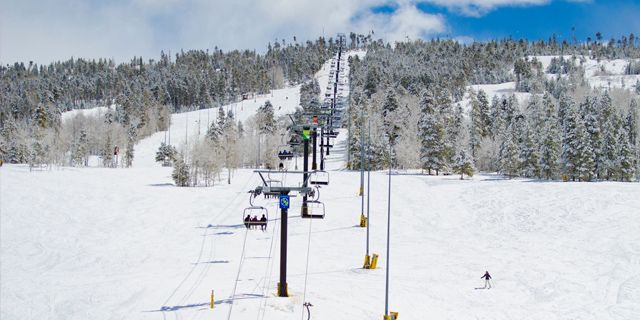
Looking up at Granby Ranch: a great place to ski, not necessarily a great place to buy a home at the moment. Image: Granby Ranch on Facebook
Finally, we close out this week with another article highlighting a tumultuous situation between a ski resort and its residents. This week, the Colorado Sun shared an article telling the ongoing story of Granby Ranch, where recent financial hardships have led to a catastrophic outcome for property owners in the area. Before we get to this week’s part of the story though, we should rewind the tape and give you some background info on the area. Started by Marise Cipriani, the Granby Ranch was created with the intention of developing an outdoor community that would provide an escape from city life for its residents. Centered around a ski hill, the ranch community also has access to private rivers for fly fishing, a golf course, and a vast amount of hiking and walking trails. Unfortunately, despite the idyllic setting, the legal framework of the community features far less beauty, and has in fact turned into an ugly mess.
While a myriad of complicated and poorly planned tax districts and community management policies exist in the area, the pinnacle of difficult centers around an agreement between property owners and former resort owners to eventually shift control of assets to homeowners. Starting in 2005, the Granby Ranch entered a 49-year lease purchase agreement with homeowners in the area which would ultimately see them taking ownership of the resort’s ski and golf assets, including the base lodge and golf clubhouse. A major part of that deal was a one time $10,000 amenity fee to be paid by each homeowner. In total more than $8 million in dues had been paid towards that agreement.
This more or less sets the scene for this week’s news: on the heels of a successful, albeit incredibly complex foreclosure sale, Granby Prentice Granby Holdings, the new owners of the resort, have sent a letter to the roughly 800 property owners at the Granby Ranch letting them know that they are terminating the lease-purchase agreement deal. The reason for doing so is because the deal itself was seen as a significantly prohibitive factor for the ranch owners to be able to find a new owner. As the current owners of the property, Granby Prentice Granby Holdings has made no effort to hide their ultimate intention of posturing the property for resale to an eventual buyer. As such, while they intend to keep the area’s economic drivers such as the ski resort and golf course operational, they’re also intent on making business decisions that will allow for the eventual resale of the property. For residents in the area, this also means they’re out about $8 million with little legal recourse. Unfortunately, at least in the present moment, this story seems to be yet another that highlights the delicate balance that exists between ski resorts and the communities that host them. To read plenty more details regarding this complex story, we’ll turn you over to the Colorado Sun.
#4.5: Don't Forget, Our 2021 Ski Test is Now Live!