

Top Five Fridays: September 5, 2025
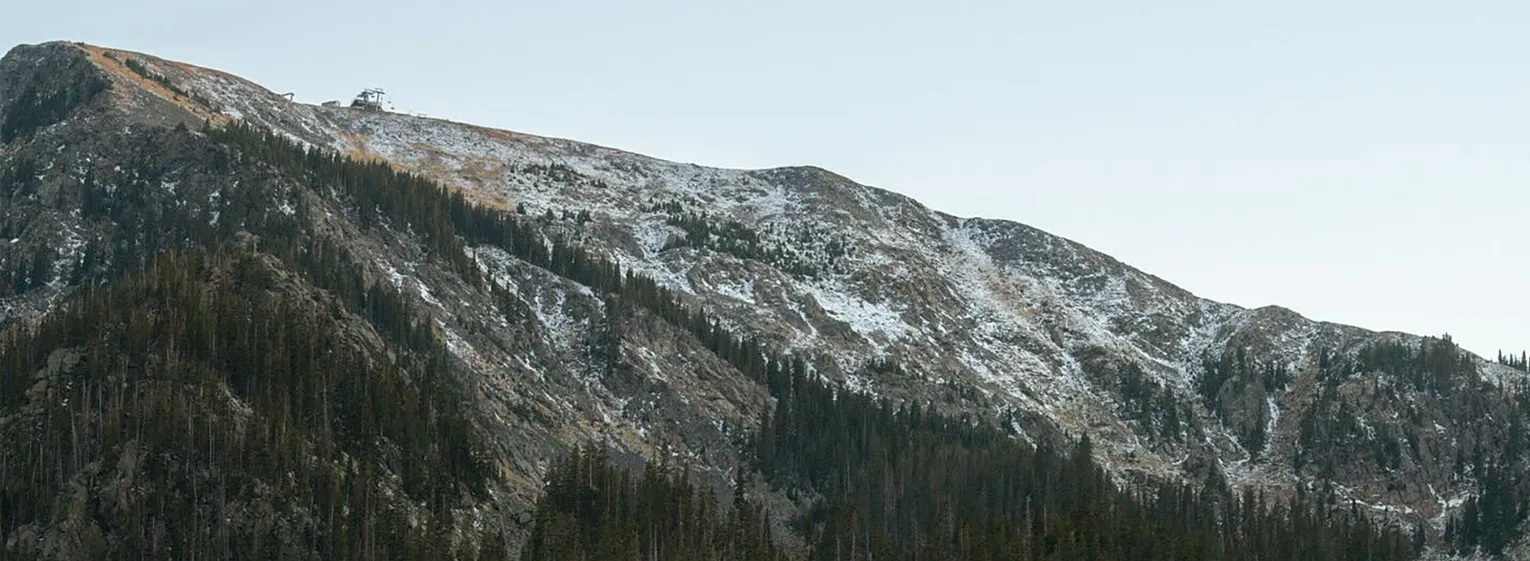
Just a dusting? No. This early snowfall at Taos means much, much more than that to us skiers. Image: Ski Taos on Instagram
#1: Despite Outrage and Pushback, U.S. Ski and Snowboard Team President and CEO Sophie Goldschmidt Wants to Add Surfing to the Team’s Roster:

Surfing? On a ski blog? We can hardly believe it either, but months after news broke in the surf world, we finally caught word that the U.S. Ski Team is actively pursuing non-snow sports - starting with surfing. Image: USA Surfing's Official Website
Hello, and welcome to Top Five Fridays, the September 5, 2025 edition! This week, we continue to creep ever closer to winter as we’ve just seen the first signs of snow at a U.S. ski resort. We’ll share some details there later, but before we do, we’ve got three dense, and at times tense, topics to discuss. First on that list: a story that’s managed to fly under the radar for at least seven months.
This week, we caught a surprising story from LAist.com: the U.S. Ski and Snowboarding Team wants to become the national governing body (NGB) for the U.S. Surf Team.
Now if this isn’t new news to you, that makes sense as the story actually broke way back in April. In the surf world, the announcement (please pardon this inevitable pun here) made massive waves for obvious reasons. On the winter side though, there has been such little press that we’re just now learning about it - and we read a lot of ski news. So, keeping that in mind, get ready to hunker down for this one as we have quite a bit of catching up to do in what’s a pretty complex story with a number of intertwining plotlines. Let’s get started.
Back in 2017, two major things happened in the surf world. At the global level, Sophie Goldschmidt became the World Surfing League’s CEO, beginning a wildly successful four year term. During her time there, Goldschmidt greatly expanded the sport’s visibility through expanded broadcasts, created equal pay for male and female athletes, introduced ocean conservation efforts through the league, and signed a 10 year agreement with the World Professional Surfers - the representative body for professional surfers worldwide. In other words, Goldschmidt accomplished tremendous things for the global sports league before joining the U.S. Ski and Snowboard Team in 2021.
During that same time frame, a very different story was being written by an organization known as USA Surfing. In 2017, that organization was designated as the sport’s national governing body ahead of surfing’s debut in 2021. Just as a reminder, every Olympic sport is represented by a national governing body within each participating country. These organizations are tasked with developing athletes as well as creating a competitive system that allows athletes to progress through the ranks, ultimately earning the right to represent their team at the international level. In skiing and snowboarding, the USST is our national governing body, helping develop athletes while also selecting competitors for both World Cup events as well as the Olympics.
Getting back to the story at hand, in 2017 USA Surfing became the NGB for, you guessed it, American surfers. That was a short-lived affair however, as in 2019 an audit by the U.S. Olympic and Paralympic committee (the organization that selects NGBs for its sports) discovered several conflicts of interest, undocumented use of funds, and general disarray. As a result, the organization voluntarily gave up its designation following the 2021 games.
Since 2021, U.S. surfers have operated without an NGB. Despite that, USA Surfing has continued to act as the supporting group while going through a complete overhaul internally. Now, with the 2028 LA Olympics looming, the time has come for the U.S. Olympic and Paralympic committee to decide who will be surfing’s governing body for the games. As part of that process, they initiated a window for bids to be submitted. Unexpectedly, the U.S. Ski and Snowboard Team submitted a bid, launching the surf world into a frenzy.
This is where the story gets divisive. A quick check in with USASurfing.org shows that the world of surfing is strongly in favor of re-awarding the title to USA Surfing, while Sophie Goldschmidt argues that the USST is better suited to support the sport. While the surf world has endless arguments in their favor, such as the simple fact that Southern California is a more sensible place for surfers to train than Park City, Utah, Sophie Goldschmidt has a simple counter argument: the USST has significantly better infrastructure to support the team. In addition to their training facilities in Utah, the USST also has significantly better sponsorship connections, enabling them to provide better financial support for athletes. On a similar note, the USST also has a much, much larger budget. While USA Surfing brought in just under $900,000 in revenue in 2024, the USST took in over $38 million.
And thus we find ourselves with a story as old as time. Surfing, a sport fueled by passion more so than money, has become a desirable commodity that a much bigger organization with much deeper pockets now hopes to acquire.
Our takeaway from all of this? We’re actually going to dodge the question of whether the USST should or shouldn’t win the bid to represent surfing, and instead focus on the fact that it’s even a conversation at all. For us, that’s the interesting aspect of this story: the simple fact that the USST is interested in bringing in non-winter sports. In an email with LAist, Goldschmidt is quoted as having said, “When you look at the heart of what we do — supporting elite athletes and growing action sports — it makes complete sense.”
Action sports.
For us, that’s the headline for us as skiers. In her fourth year at the helm of the USST, Goldschmidt has made it clear that her vision for the organization is to expand beyond winter sports, ultimately becoming the home for all international action sports athletes based in the United States. That’s a pretty big shift. While we’ll have to wait to see what happens with her bid to adopt surfing, it feels like this is a story that’s just getting started.
To learn more, check out this report from the LAist, as well as the USST’s official bid to become the NGB for surfing.
#2: In Steamboat Springs, Broken Promises and Massive Financial Commitments Highlight the Give & Take Relationships That Exists Between Mountains and Municipalities:
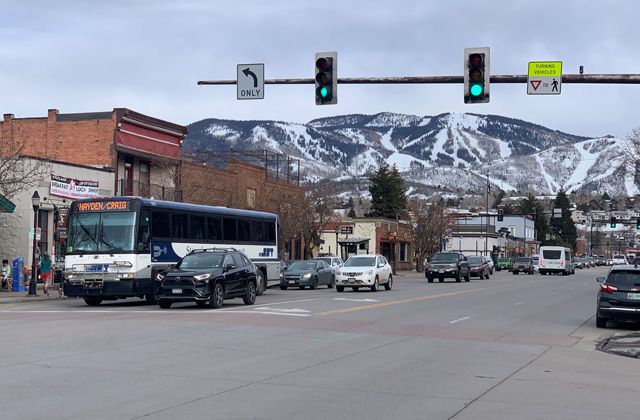
Transportation has quickly become a hot topic in Steamboat Springs, as the resort recently pulled back on a significant funding pledge made to a regional agency, while simultaneously committing to a much larger, more local agreement. Image: Steamboat Springs Municipal Website
If you’re a hater of dense topics, we’ve got some bad news for you: we’re just getting started. Our next topic this week is an equally thick story coming to us by way of Steamboat Springs, where tensions are running high between the city’s Alterra owned resort and a coalition of regional municipalities who are attempting to create a regional transportation agency. We’ll do our best to unpack the drama as succinctly as possible here, but again, this one’s pretty dense.
From what we can tell, trouble in Steamboat Springs started just over a year ago, when Steamboat Ski & Resort Corp. pledged $1 million a year for the next 20 years to a proposed Regional Transportation Authority (RTA). If it should come to fruition, this newly founded transportation agency would service the Yampa Valley, home to three towns, two cities, and of course, Steamboat ski resort. Years in the making, this effort has taken significant coordination between the five municipalities, as well as the county they call home and the resort itself. In other words, organizing this effort to improve public transportation in the area has been something of a herculean task, involving a considerable amount of planning, research, and communication on the government level - all coming to a head when the public votes on the concept this November.
Over the course of the campaign, organizers behind the RTA have been doing a considerable amount of public outreach in an effort to win over voters. One of the more obvious concerns that voters have is the cost of the program. To help ease that pain, they’ve been sharing the information that Steamboat Springs has pledged $1 million a year for the next 20 years to support the RTA. This is an amount that Steamboat Ski & Resort Corp. has signed off on in multiple documents, allowing government officials to feel comfortable sharing the figure with the public. That is, until recently.
A few weeks ago, Steamboat Ski & Resort Corp. rescinded their commitment of a 20 year term, scaling it back to a commitment of just $1 million for the next 1 year. While representatives for the ski area have stated that they remain open to funding the project for the next 20 years, they say that the 20 year aspect was simply too much for Alterra to commit to without further due diligence. In other words, upper management got cold feet regarding the longevity of the commitment.
This abrupt change in commitment infuriated the RTA planning committee, who has until today (September 5th) to submit the final language on their ballot item. To them, the rug has been pulled out from under them at the 11th hour as Steamboat has pulled out of terms that have been agreed upon for over a year, just weeks before the ballot item was to be finalized. Not only does this mean they’d spent an entire year misleading the public, but it left a hole in the long-term funding of the program. After a contentious meeting between the council and the resort on August 19th, in which Steamboat representatives said they simply needed more time to examine the details before committing to a 20 year term, the resort compromised and offered to pledge $1 million a year for the next 3 years, with the intention of exploring the possibility of expanding their pledge to the initial 20 years. With the final ballot language due for submission today, it’s our expectation that this agreement is what will make the final cut.
Before putting a bow on this story for now though, there is one additional layer to this story that’s begging to be shared. Just 12 hours before Steamboat pulled way back on their agreement to fund the RTA, they signed another agreement: a 20 year, $2.75 million annual commitment to fund Steamboat Springs Transportation. This agreement came about as a way for the resort to avoid a lift-ticket tax, instead opting to directly fund the city’s transportation at a flat rate each year. While Steamboat representatives say this agreement was independent of their decisions regarding the RTA, it’s hard to ignore both the timing, as well as the fact that the agreement with Steamboat Springs is a 20 year term - the exact length of time that the resort had taken issue within its negotiations with the RTA.
As you might expect, there’s far more to this story than we have time to share here. To get a full scope of events, you’ll want to check in with the Steamboat Pilot for their coverage. Click here to learn more about the resort’s 20 year agreement with Steamboat Springs, here for coverage of the resort’s initial retreat, or here for the paper’s most recent update.
#3: Colorado Adds to the Liability Conversation as the State’s Supreme Court Finds Crested Butte 75% Responsible in Recent Lawsuit:
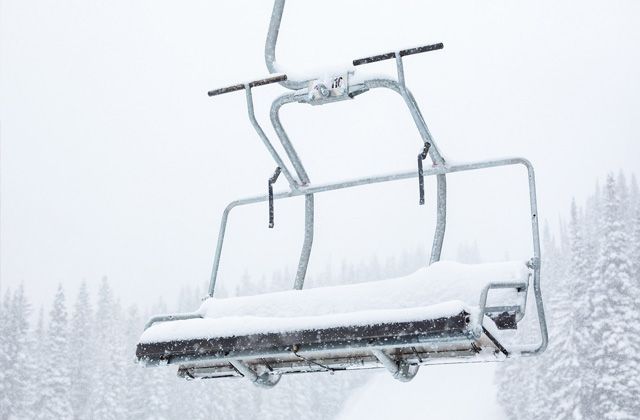
A vacant snow covered chair hangs at Crested Butte. Image: Crested Butte on Facebook
Moving into our third topic this week, we bring you coverage of a story coming out of Crested Butte that once again challenges the legal system to find the line between liability and responsibility at ski resorts. Our summertime readers are likely familiar with this theme, as we’ve covered it multiple times this summer with stories from Oregon and Idaho. While those individual stories differ, the common theme is simple: the effectiveness of liability waivers at ski resorts is being tested, and as a result, insuring them has become a perilous business.
This week, Colorado joins the conversation as a verdict has just been made in a liability lawsuit concerning Crested Butte. There, plaintiff Annie Miller has just been awarded $20 million in a successful suit against the resort. Miller’s story goes like this: back in 2022, when she was just 16, she left her home state of Oklahoma and visited Crested Butte for a ski trip with her church group. On the second day of the trip, she had trouble getting on the Paradise Express Lift and wasn’t able to get herself fully seated before the chair rose into the air. Despite efforts made to get back on the lift or to get the attention of the lift attendants, the lift continued running until Annie fell 30 feet directly onto a hardpack trail below. Ultimately, she was left paralyzed from the incident.
After the accident occurred, Annie initially sued the resort in December 2022 in district court, citing violations of duty of care, negligence and gross negligence, seeking $14 million in compensation. Initially, a judge threw out the first two charges, specifically saying that the liability waiver absolved the resort from its responsibility. Then, after an appeals process, the state’s Supreme Court ruled that the liability waiver didn’t protect the ski area from illegal acts of negligence. In other words, if the resort wasn’t operating within the state’s safety regulations, they could be held liable.
This week, we learned that’s exactly what happened. In a final verdict that was arrived at by jury, a panel of 6 found that the resort had violated state regulations and was therefore guilty of negligence. They didn’t, however, find the resort to be guilty of gross negligence. Perhaps most interestingly though, their ruling assigned a specific numerical value to the power of a liability waiver, saying that because Annie Miller signed a waiver, she was 25% responsible while the resort’s negligence was 75% responsible for the accident.
As this storyline continues, it’s interesting to see the nuanced ways that different states handle claims regarding ski area liability. There’s no doubt that when deciding cases like this, judges reference precedents set in other states, which is why this case is potentially more impactful than a simple case between Ms. Miller and Crested Butte. With the introduction of a liability ratio, we have a whole new set of questions. In particular, how is this ratio determined, and how minute can it get? As is always the case, these are questions that only time knows the answer to. For now, we’ll simply turn you over to CourtHouseNews.com to learn more about this particular case.
#4: So Close You Can See it: Celebrate With Us as Taos Ski Valley is the First North American Ski Resort to Report Snowfall This Season:
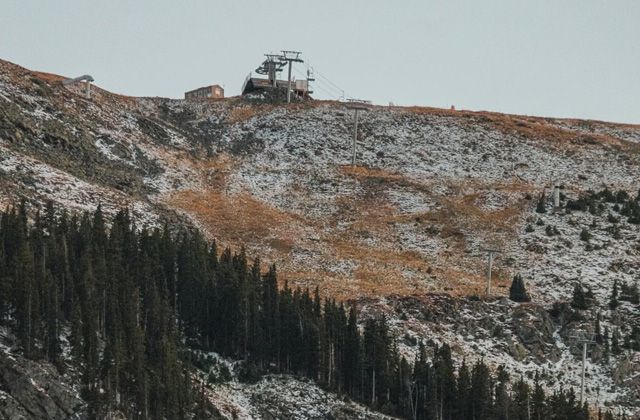
A mere dusting to many, the pairing of this sign of snow and Labor Day have us ready to go full send into winter. Image: Ski Taos on Instagram
Finally, with our first three highlights being as dense as they were this week, we want to tap the brakes and round things out with a quick, easy story. This week, for the first time of the 2025/2026 season, a North American ski resort saw snow. Now, it wasn’t measurable, it was a mere dusting, but still: Taos Ski Valley saw its first snow of the year.
For us as skiers though, it’s not just a dusting. Coming to us on Labor Day, which happened to be the first day of September this year, the early snowfall adds momentum to the preseason hype train as we all know the first actual snowfalls of the year are just mere weeks away. From there, we’ll likely see a couple of early openings from ski resorts next month, with locations like Wolf Creek, CO and Arapahoe Basin being candidates for the first major mountains to open. Of course as we’ve seen in recent years, it might actually be a small ski area in an unlikely location that beats the major players to the punch, as Massachusetts’s Ski Ward has claimed the title of first North American ski area to operate for each of the last two years. Hot on their heels however are Trollhaugen, Wild Mountain, and Andes Tower Hills - all in Minnesota.
So yes, technically the snowfall at Taos was immeasurably small by meteorological standards, but that doesn’t mean its impact on the skier psyche isn’t immense. More than a surface to slide on, this is a sign that winter is coming, and with it, a whole new season of memories just waiting to be made.
To celebrate this dusting yourself, check out the post on the Taos Ski Valley Instagram page.