


2026 Dynastar M-Free 100 Ski Review
The 2026 Dynastar M-Free 100 is the culmination of almost 25 years of twin tip technology and design. I remember my first-ever twin tip was a Dynastar Concept in the winter of 2000-2001. It was a 180 cm rocket that carved better and wiggled through bumps and trees with more precision and speed than anything I’d ever been on. Since then, I’ve always had an affinity for the Distorter, Trouble, Sixth Sense, Slicer, and Menace skis, so it’s no wonder that continues into the M-Free line, most notably this latest M-Free 100. They’ve always been big on having a sturdy, strong twin with vertical sidewalls and a feeling that’s more than just park. This evolution makes sense, providing advanced and expert skiers with a lot to like in terms of all-mountain/freestyle/freeride skiing. Twin tips are insanely useful and fun, and when they’re paired with the latest in smooth and energetic ski construction technology, then so much the better. We’ve loved the blend of power, precision, and playfulness in the all-new 2026 Dynastar M-Free 100. Additionally, with a sweeping range of amazing skis in the 100 mm category, it’s tough to stand out but Dynastar does a fine job here.
We’ve seen the writing on the wall here ever since the M-Cross 88 gained popularity. Dynastar’s new Hybrid 2.0 core started infiltrating all of their high-end skis soon after the 88’s success. Starting with M-Cross, and then moving to M-Pro and finally into M-Free, this new core construction is a fantastic blend of energy and smoothness—two qualities that are EASY to find in any Dynastar ski with this build. Over the years, they’ve done a great job incorporating Polyurethane, or PU, into the core of the ski. At first, they used it sparingly along the sides in their Legend series but then started moving it more and more into the sidewalls of the ski, eventually having this PU material take up almost half of the overall core construction. In the center chord of the ski, Dynastar has always used some type of wood blend to deliver the power, but only recently did this M-Free 100 receive the 2.0 version. By taking three layers of poplar wood, Dynastar stiffens and energizes the ski with far less epoxy and resin, thus increasing performance while lowering waste. We get one horizontal poplar laminate running along the bottom of the ski and then two more layers that are milled and joined together with friction to increase the stiffness and rigidity. Paired with the light and smooth PU along the sides of the ski, the M-Free 100 blends power and silence quite effectively. This ski is quite stiff in the mid section and moderately flexible in the tips and tails. With a weight at about 2000 grams in the 185, it’s right there with some of the heftier and damper directional skis in this zone.
At a Glance:
2026 Dynastar M-Free 100 Skis

| AVAILABLE SIZES | TURN RADIUS | SIDECUT | WEIGHT | PRICE |
|---|---|---|---|---|
| 162, 170, 178, 185, 192 cm | 17 m @ 178 cm | 130 / 100 / 122 mm | 1,800 g @ 178 cm | $699.95 |
And then add a twin tip and a robustly fun rocker profile! This is where the ski separates from the competition. We don’t see a huge variation here from the outgoing M-Free 99 in terms of drama. The new 100 features dimensions of 131/100/123 mm, as contrasted by 128/99/120 split from last year. That 99, in the 185, produced an 18-meter turn radius, and was more flexible so it was easier to access. We did notice that the 185 measured a bit short, though. This new ski, with wider dimensions overall, in a similarly “short” 185, also adheres to that 18-meter arc. The tip shape is sharper and more angular than most, while the tail has a flatter, stubbier appearance. This is in line with the wider 108 and 112’s in terms of overall footprint, lending more of a big mountain feel in a narrower overall package. There’s still a ton of rocker, camber, and splay to the profile of the ski, with monster shaping throughout. On one hand, this allows for creative and freestyle-inspired skiing, while on the other hand, if you’re looking for stronger and smoother directional performance, there are flatter skis out there that cut through crud and chop with far more ease. These fall on the bouncy and poppy side of the spectrum to be sure, rather than a ski like the M-Pro 100 from Dynastar or the Armada Declivity X 102, which are smoother sailors when it comes to variable conditions. These M-Free's are more dramatic at every turn, highlighting a very enthusiastic character—one that is willing and capable of variation, creativity, and playfulness. The build keeps it grounded, but the shape opens its soul.
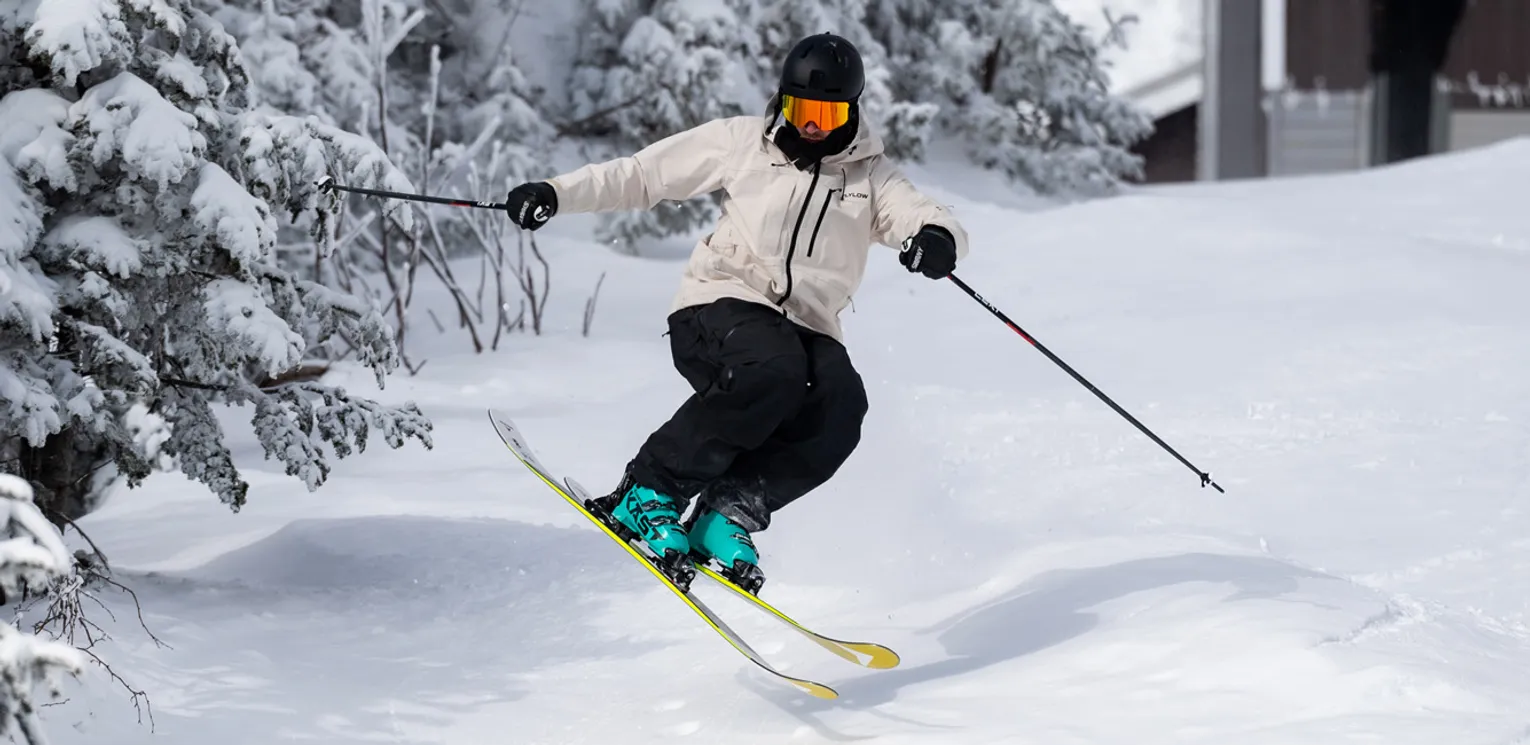
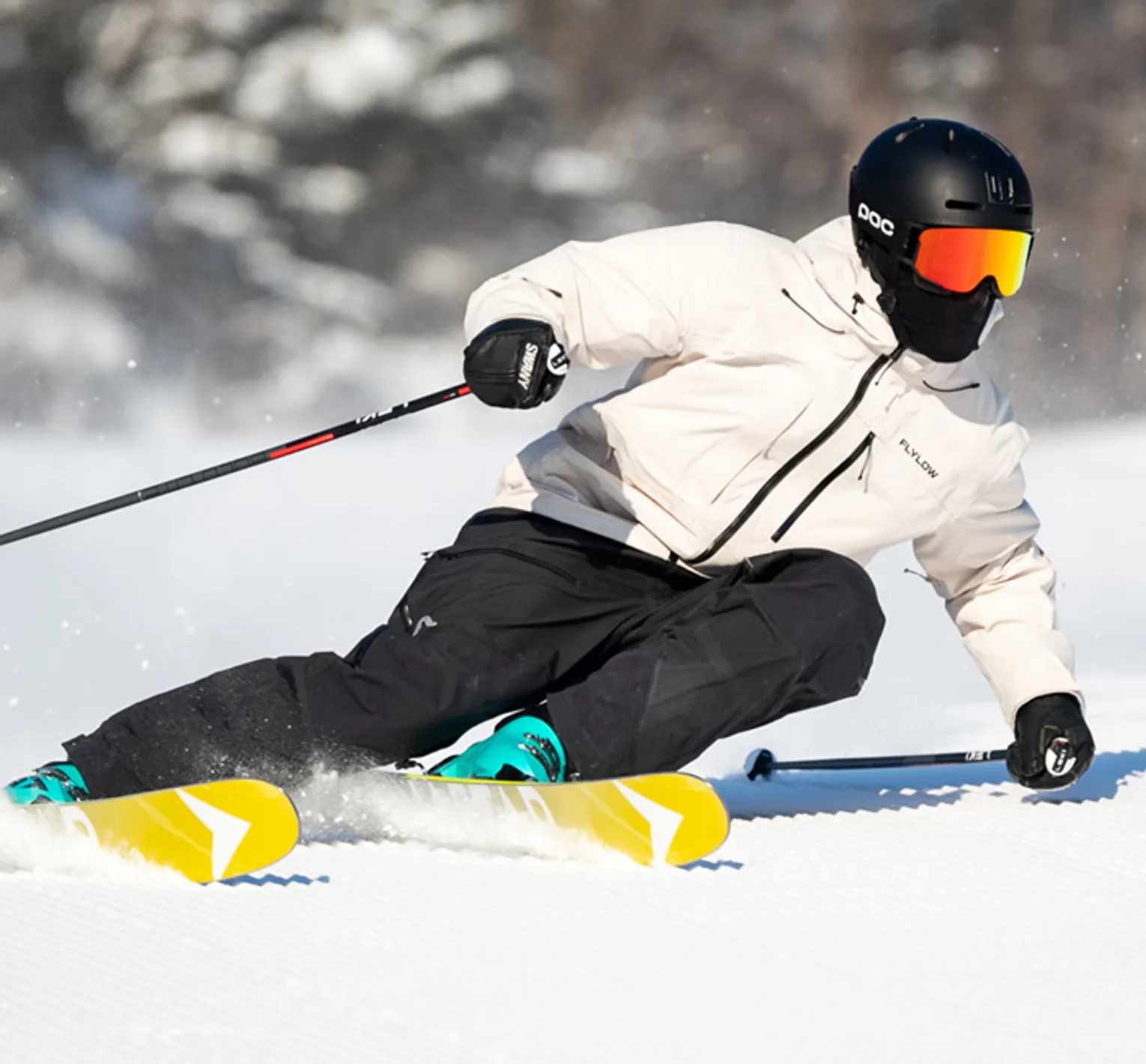
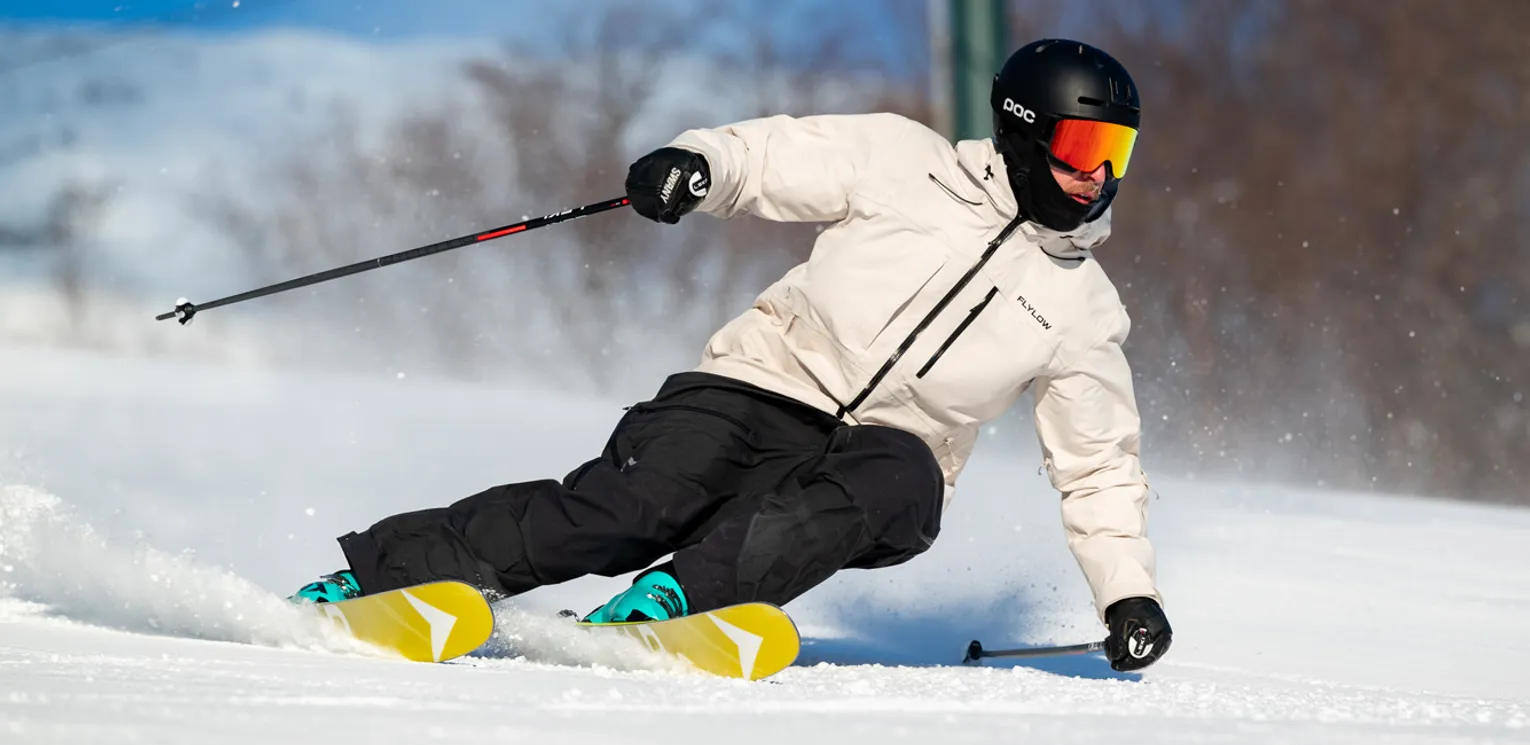
We said it about the new Volkl Revolt 101, and I think it applies here to the M-Free 100 as well: It seems like there’s no way a twin tip without metal, at 100 mm underfoot should carve as well as this ski does on-trail and in a groomer format. On paper, it just doesn’t make sense. When you get out there, though, the M-Free 100 absolutely lights it up. The camber and thicker wood core underfoot have a lot to do with it. The tips are easy and smooth to load with energy, and then the camber does a lot of the work from then on, gripping tight to the snow and releasing lots of energy on the back end of the carve. We have had great success in showing the energy of this ski, as it is a rocket launcher when it comes to rebound. Matt does an awesome job demonstrating this in some of the clips, where he must travel 20 feet in the air in between turns, landing perfectly set for the next one. Does it carve clean and easy turns like the M-Cross 88? Not remotely. That ski has a much longer shovel and a shorter radius that allows it to excel in pure front side performance. Nobody’s buying this ski for an exclusive carving ski, but it’s very nice to know that it’s a wonderful by product. There’s certainly a limit here, as the 100 is just too darn wide and too metal-free to be perfect on firm snow—that's where a ski like the Nordica Enforcer 99 has it beat. But for anything remotely soft, this thing lights it up. It’s not as quick or mobile as it was in the past, so shorter turns and more skidded turns aren’t as relatable as with the older 99, but it still does just fine. Because it’s stiff and there’s a good amount of camber, it is on the demanding side when you’re trying to shorten and tighten the arc—you simply need to put a bit more muscle in it. This is one of the main differences between this 2026 model and the previous 2025—this new one requires about 20% more oomph than the older 99.
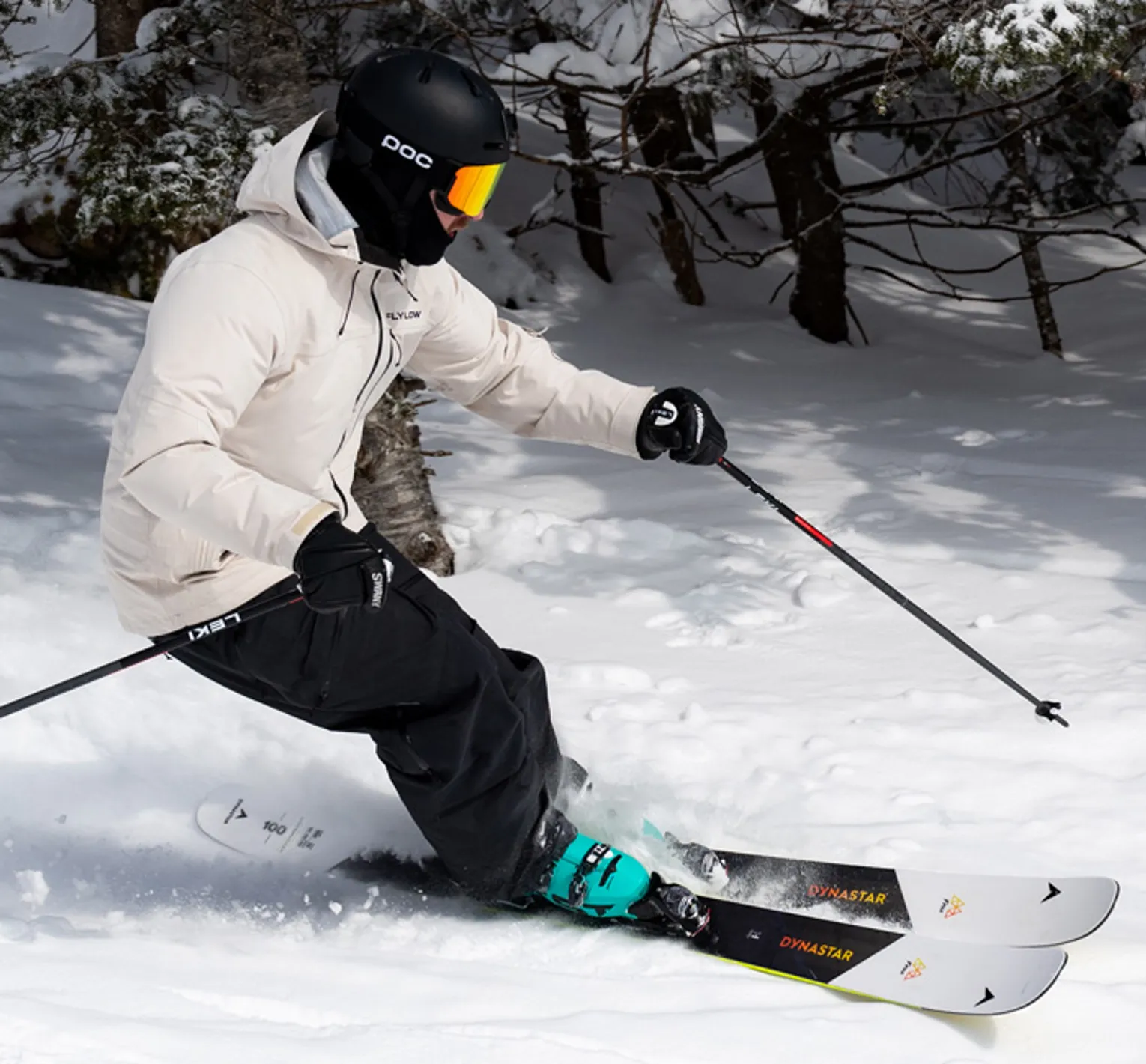
When the snow gets softer and the terrain gets more interesting, that’s where the M-Free 100 comes into its own. The rocker profile and taper shape activate, creating truly captivating ski experiences. The best part is that this ski is able to seamlessly transition from crud and chop to powder and trees with no hesitation. The smoothness of the PU in the core combined with the energy of the wood and the creativity of the shape offer something different than other competitors in this class. At the very least, there aren’t many/any skis out there with this type of splay in the tips and tails that act like the M-Free 100. On one hand, these skis are fun, poppy, floaty, and smeary, but on the other, you do have to put the effort in, and you have to be cognizant of the amount of splay you’re dealing with here—in the trees or other tight spaces, it’s easy to cross or clack the tails together due to the tail height. It’s not stopping most skiers from doing anything, but worthy of note, especially if you’re not used to such drama in the tail rocker profile. Adding to the list of potential drawbacks, the height of camber combined with the stiff underfoot flex can be a distraction from smeary and surfy skiing with ease. Someone with strong legs and good skills won’t notice this as much, and they’ll appreciate the upside of those characteristics elsewhere, but some other skiers may find it somewhat disruptive compared to a smearier ski like the Elan Playmaker 101. It’s all about preference. While the increase in groomer and carving performance is noted, the older 99 felt more amenable to trees and softer snow with a more flexible nature. If you want to use this ski in the park, go right ahead. There are certainly better and worse skis out there for freestyle use. This 100 falls on the directional, stiff, and hefty side while others like the Head Oblivion 102, Line Chronic 101, or Atomic Bent 100 feel better suited to slopestyle.
Overall, the implementation of the most modern and advanced core construction to the M-Free 100 is a move in the direction of improvement, especially from a performance standpoint. It’s all about adding sophisticated technology to an already fun and useful shape and profile. Dynastar has a long-storied history with the development and implementation of twin tips as all-mountain skis, relying on full sidewalls, progressive flexes, and innovative shaping to get them where they are right now. It’s tough to argue that there’s been a better Dynastar twin built, and that’s saying a whole lot.
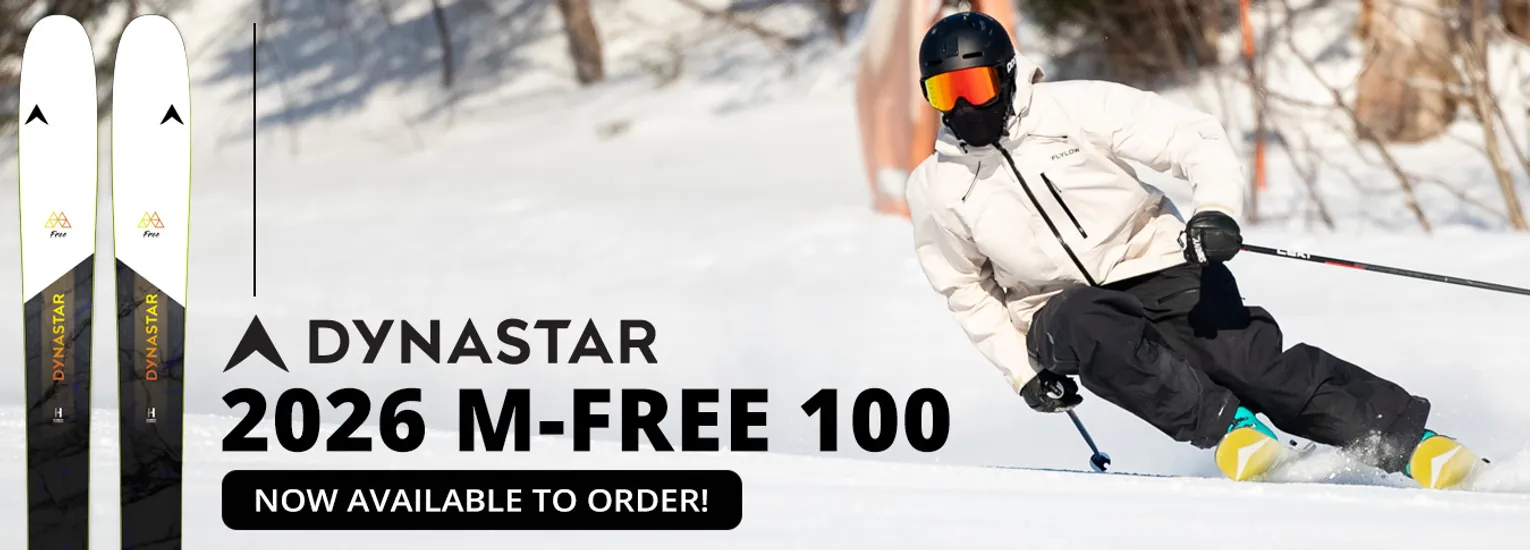
Now Available for Pre-Order: