

Top Five Fridays: July 24, 2026
Skiers at La Parva assess their options in some premium Chilean terrain. Image: La Parva on Facebook
Hello, and welcome to Top Five Fridays, the July 24, 2026 edition! This week, we’re bringing you ski news from around the world, with updates coming to us from not only here in the U.S., but also South America and south Africa. Yes, you read that right - south Africa. We’ll make sense out of that shortly, but before we do, let’s head to Chile, where once exciting news has since come to pass.
#1: Mountain Capital Partners’s Dream to Build a Chilean Mega Resort Has Come to an End:
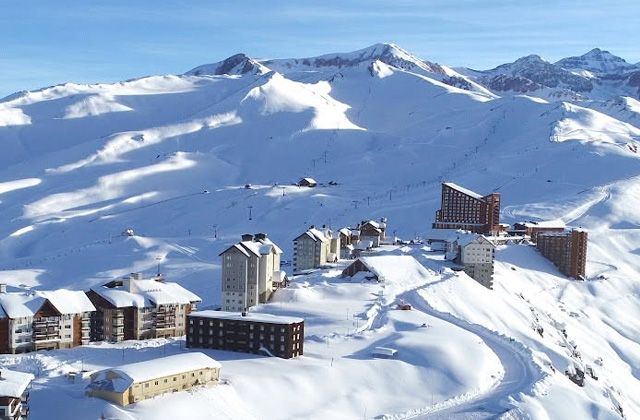
A view of Valle Nevado, one of the four ski areas located just outside of Sanitago, with geographic potential to form a mega resort. Image: Valle Nevado on Facebook
Kicking off this week’s mid-summer ski news, is an update from the southern hemisphere, where exciting plans to unite the three largest ski areas in the country have just fallen through.
If you were reading along with us at about this time last year, you likely caught the news that Mountain Capital Partners, the third largest ski resort operator in North America, had announced intentions to purchase a controlling interest in Andacor S.A., the owner of four Chilean ski areas. In doing so, MCP was set to add not only two remote ski areas in Southern Chile, in Volcán Osorno and Pillán, but also Parque Farellones and El Colorado just outside of Santiago. Ultimately, it’s the second two resorts on this list that were highly intriguing to MCP, as they already own and operate La Parva and Valle Nevado - the other two ski areas in the Farellones region. With the expected controlling interest acquisition in Parque Farellones and El Colorado, MCP would have been able to connect all four resorts, creating one of the largest ski areas outside of Europe, with over 7,000 skiable acres. Unfortunately, the outlook for this project has changed dramatically this week.
While news of this story first broke about a year ago, the transaction itself hadn’t gone through yet. Before that could happen, the sale itself needed to be reviewed and approved by Chile’s National Economic Prosecutor's Office (FNE). Unfortunately, the proposal didn’t pass this process as it was flagged for violating antitrust laws. In order for the deal to receive approval, MCP would have to sell one of the three key ski areas in the Farellones region, either El Colorado, La Parve, or Valle Nevado. Seeing as bringing the three resorts under one owner in order to seamlessly connect them was the centerpiece of the plan, the forced sale of one would ruin the vision. As such, both MCP and Andacor S.A. decided to withdraw the deal. Moving forward, MCP will continue to operate La Parva and Valle Nevado, while Andacor will continue operating El Colorado and Parques Farellones.
For those of us who seek silver linings, there is a hint of good news for those who were hoping to see the 4 resorts unite: it sounds like both owners are keen to continue working together to make it happen, despite different ownership. In a joint statement put out by the two parties, they say, “Our commitment to developing mountain tourism in Chile and the vision that has inspired this initiative remains fully in effect… We are convinced that integration would have represented the best alternative for local consumers, for the national economy, and for the sustainability of ski centers.” In other words, while the deal was blocked, both parties remain interested in continuing to build the region as a means of increasing ski tourism in Chile, and both saw the fully connected model as the best way to do that. Despite the legal setback, combining those two viewpoints, it’s easy to see how both parties would remain invested in working together to bolster tourism in the area. For more on this, check out the report from Ski Area Management.
#2: What Happens When Your Sport Gets Excluded From The Olympics? As the Nordic Combined Community Will Tell You, You Find a Silver Lining:
Next up in our global ski coverage, is yet another story about decisions made regarding which sports are being included in the 2030 Winter Games. Those of you following along with us this summer know that it was announced that Skimo has been approved for a second round of inclusion, while Freeride Skiing & Snowboarding was given the greenlight for the first time ever. Astute readers will also remember that the Games have committed to full gender parity in upcoming iterations, with the 2030 games promising 56 women’s events, 55 men’s events, and 15 mixed events. Across those events, there will be 1,525 female and 1,521 male athletes. Keep that in mind for just a second.
While our coverage of Olympic decisions has been chalk full of excitement thus far, there is one sport that’s feeling the exact opposite: Nordic Combined. This sport, which has been in every Winter Olympic games since its debut in 1924, tasks athletes with competing in both ski jumping and cross country skiing - two very different skillsets. While intriguing, the sport has also been struggling to maintain widespread global interest, with its viewership being amongst the lowest of any Olympic sport. Additionally, the sport struggled with medal equality issues as only a few countries ever ended up on the podium, as well as gender equality issues, as it was the only sport in the 2026 Games in which there wasn’t a women’s discipline. As a result of these factors, the sport was excluded from the 2030 Games.
Over the past few weeks, we’ve shared the excitement coming from the Skimo and Freeride communities, as their sports continue to blossom and provide new opportunities for their athletes. This week, we have the task of sharing the opposite side of that story: what happens when a sport is ruled out of the Olympics.
In a piece from the Colorado Sun, we’re treated to a behind the scenes look at the hopes, dreams, and heartbreak shared by the Nordic Combined community. While there’s a lot to take in here, one of the most surprising aspects of this story focuses on gender equality. On the surface, it makes sense that the sport would be excluded from the 2030 Games if only because it hasn’t historically had representation for women. What we’ve learned in this article though, is that the Nordic Combined community has been actively working to correct that issue, with more and more female athletes competing. Prior to this recent announcement, the community had hoped that the IOC would approve a women’s division in the 2030 Games. Instead, they got the opposite, with the men’s division losing its chance to compete.
Now of course, the community is left wondering what’s next. In the Freeride community, Olympic inclusion represents new possibilities, new hopes, and new dreams. As you can imagine, exclusion can easily represent the exact opposite: hopelessness and no sense of direction. In many ways, it’s easier for a sport to exist if it’s never been on the World Stage. Its way of life has always lacked things like support from NGB’s or the promise of global exposure and corporate partnerships. But for a sport that’s had those opportunities for 100 years, to suddenly lose them? That’s how you lose a sense of purpose. With this sport in particular, where athletes compete in both ski jumping and cross country skiing, it’s easy to see how they could simply decide to pick a lane and the sport of Nordic Combined would evaporate into thin air. But, it doesn’t sound like that’s what’s happening.
To continue our contrast with the sport of Freeride, members within the Nordic Combined are beginning to feel excited for all of the exact reasons that some Freeride skiers fear Olympic inclusion. That is, freedom.
Now that the Olympics are no longer the endgame, Nordic Combined has the freedom to operate independently. Gone are the National Governing Bodies (which, it should be noted, the U.S. Team lost support from back in 2014) and IOC restrictions. Now, rather than cater to what the Olympics demands of their sport, Nordic Combined is free to build their global community on their own terms. In that, members of the community are beginning to see the excitement.
Ultimately, as with all things in life, this story is far more complex than what the surface read might tell you. Yes, of course there is disappointment in the exclusion, but there is also hope and resilience. If you’re someone who’s into such themes, we recommend giving the full story from the Colorado Sun a read.
#3: When the Sky Doesn’t Snow, Ski Town Suffer, But Is There Any Federal Aid Available? Kind Of:
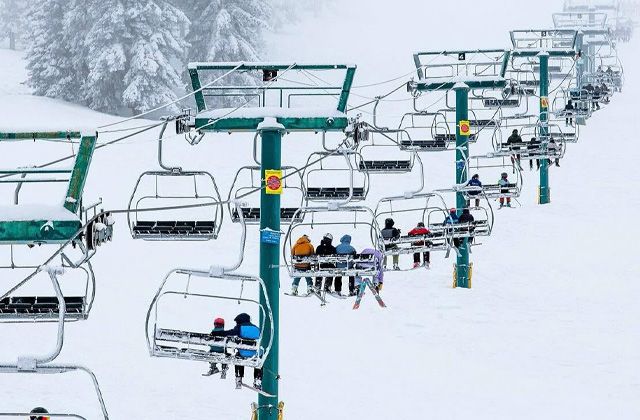
Most seasons, the chairlifts at Loup Loup Ski Bowl are filled with locals seeking affordable fun. This year, the ski area was unable to open at all, much to the detriment of the local economy. Image: Loup Loup Ski Bowl on Facebook
For our third highlight this week, we’re sharing a report that caught our attention from an unexpected source: the GAO, or the U.S. Government Accountability Office. According to this government agency’s about page, the GAO, “examines how taxpayer dollars are spent and provides Congress and federal agencies with objective, non-partisan, fact-based information to help the government save money and work more efficiently.” In other words, they’re a bridge between the public and the government, helping monitor taxpayer programs to make sure that they’re working effectively. As you can imagine, the work of the agency is widereaching, with part of their job to ensure that the public is aware of programs that are available to them. As you might guess, that’s where this week’s news comes in.
On Tuesday of this week, the agency’s website published an article called, “Low Snowfall Sets Ski Resort Communities Adrift—A Federal Program Could Help.” The purpose of this article is to share outcomes from a report that was put together focusing specifically on what aid programs are available, if any, to ski town businesses that suffered an economic downturn as a result of low snowfall. As it turns out, the answer isn’t exactly straightforward.
Starting with the original question, the short answer is no, there aren’t currently any relief programs in place due to a lack of snowfall. As we all know, winters have become more inconsistent in recent years regardless of where you are, and the economic impacts reach far beyond the resort boundaries. As we’ve illustrated time and time again here on Top Five Fridays, mountain town economies and the mountains themselves are tightly connected, meaning that when the snowgods don’t deliver, the mountain doesn’t bring traffic, and businesses across town - from lodges, to restaurants, to retailers - all suffer. As such, a low snow year often means much more than just a lack of powder days; it means a lack of income and employment too. As such, it would make sense for there to be an economic relief program specifically suited for these scenarios. Unfortunately, there is not.
That said, the report does provide some potentially very helpful additional information: while there is no federal aid available for a lack of snowfall, there is a program in place for drought conditions. Under the Small Business Administration’s (SBA) Economic Injury Disaster Loan program, businesses that are in an area under a drought declaration can apply for loans to help pay bills until normal business resumes. While you may not typically associate droughts with wintertime, the fact of the matter is that they can be connected to snow just as much as rainfall, as exhibited by Washington this year, where an official statewide snow drought was declared on April 8th. As such, every ski area or small business in the state could potentially be eligible for federal assistance. For a ski area like Loup Loup Ski Bowl, which was unable to open for the first time in 50 years, a program like this could represent an essential lifeline.
In addition to providing information regarding currently available resources, the report from the GAO also includes a discussion regarding what it would take to introduce low-snow specific programs. In short, it wouldn’t be easy, as the changes would need to go through congress and would require several layers of consideration for things like eligibility and the pros/cons of using taxpayer money to subsidize businesses. In other words, it’s unlikely to happen any time soon.
All in all, we simply found this to be an interesting report that provides some niche knowledge for many of us, but also some potentially important information for any of our readers who might own a small business in a ski town. To read this full 6 page report detailing your options, click here.
#4: In Africa, the Continent’s Only Sub-Saharan Ski Area is Thriving:
Finally, we’re rounding out our coverage this week with an update from Africa, whose ski culture we last checked out back in 2022. At that time, we introduced you to Afriski, the only ski area in sub-saharan Africa, located in the country of Lesothos. While it might seem hard to believe that Africa can play host to a ski area, it’s worth noting that the entire country of Lesothos, which is surrounded on all sides by South Africa, exists well above sea-level, with its lowest point clocking in at 1,400 meters or 4,593 feet. Afriski itself is located even higher, at approximately 10,500 feet above sea level, where mid-winter temperatures can get as low as 18 degrees fahrenheit. With stats like that, it’s a bit easier to understand how this place exists.
When we last reported on this ski area, it was mostly a, “hey, did you know Africa has a ski area?” type of highlight. This week though, we’re pleased to share an updated report from the Associated Press that shares a bit more detailed information regarding the ongoing success of the ski area, as well as its importance to the region.
In this week’s report, the Associated Press paints Afriski not as a ski resort that’s fortunate enough to get by and opens when it can, but as a popular destination for those in the region who are curious about winter. According to the report, approximately 70% of the skiers at Afriski are South African, with the remaining 30% primarily coming from residents of Lesothos or other African countries. As word from these guests begins to spread, the resort’s popularity has continued to increase and it’s beginning to grow as a legitimate mountain town. So far this year, the most popular day has seen 1,400 guests, while last year topped out at 1,600 guests in a day. Additionally, the ski area can also provide rooms for up to 420 guests a night. As a result, the resort has been able to hire a total of 227 full-time seasonal employees, roughly 200 of which are Lesothos nationals. For a country that the world bank cites as one of the poorest in the world, Afriski has become a legitimate economic engine for the region.
Here at Top 5 Fridays one of our favorite games to play is “connect the dots”. Taking a step back for a moment, we want to connect a few themes that we’ve been seeing which create some interesting speculation regarding the future of skiing in Africa. First, it’s worth noting once again that the Olympics are continuing to find ways to support the global development of winter sports. While Africa seems like an unlikely source for winter athletes, it wasn’t so long ago that China was also underrepresented at the games. This past year, they took home 15 medals, including 5 golds. In the 1994 games, they earned 3 total. In other words, it can be done, which brings us to our next point: the rise of indoor skiing. Last October, we reported that China had opened multiple massive indoor skiing facilities, some of which had earned FIS certification. In other words, with a rise in interest in winter sports, China found a way to build facilities to support the development of athletes in these sports, to the point where they’re becoming legitimate winter sports contenders. Now, are we saying that Lesothos is on the verge of becoming a Winter Olympic super power? Not at all. But what we are saying is that we’ve seen people catch the ski bug in some pretty unlikely places before, and while it’s not a reality yet, we wouldn’t be at all surprised to share news of an indoor ski area coming to Africa someday. Until then, we’ll send you over to the Associated Press to learn more about Afriski.